

Why Aquarium Lighting Is One of the Most Important Decisions You'll Make for Your Tank
Aquarium lighting is one of the most misunderstood aspects of fishkeeping, and it is easy to see why. When you walk into a store or browse online, you are immediately faced with a massive wall of options. You will find light-emitting diodes, fluorescent tubes, reef spectrums, plant spectrums, and various temperature ratings.
Many beginners select a light based solely on how bright it looks to the human eye. However, making the correct lighting decision goes far beyond simple aesthetics. The light you choose directly affects the biological balance of your entire aquatic ecosystem.
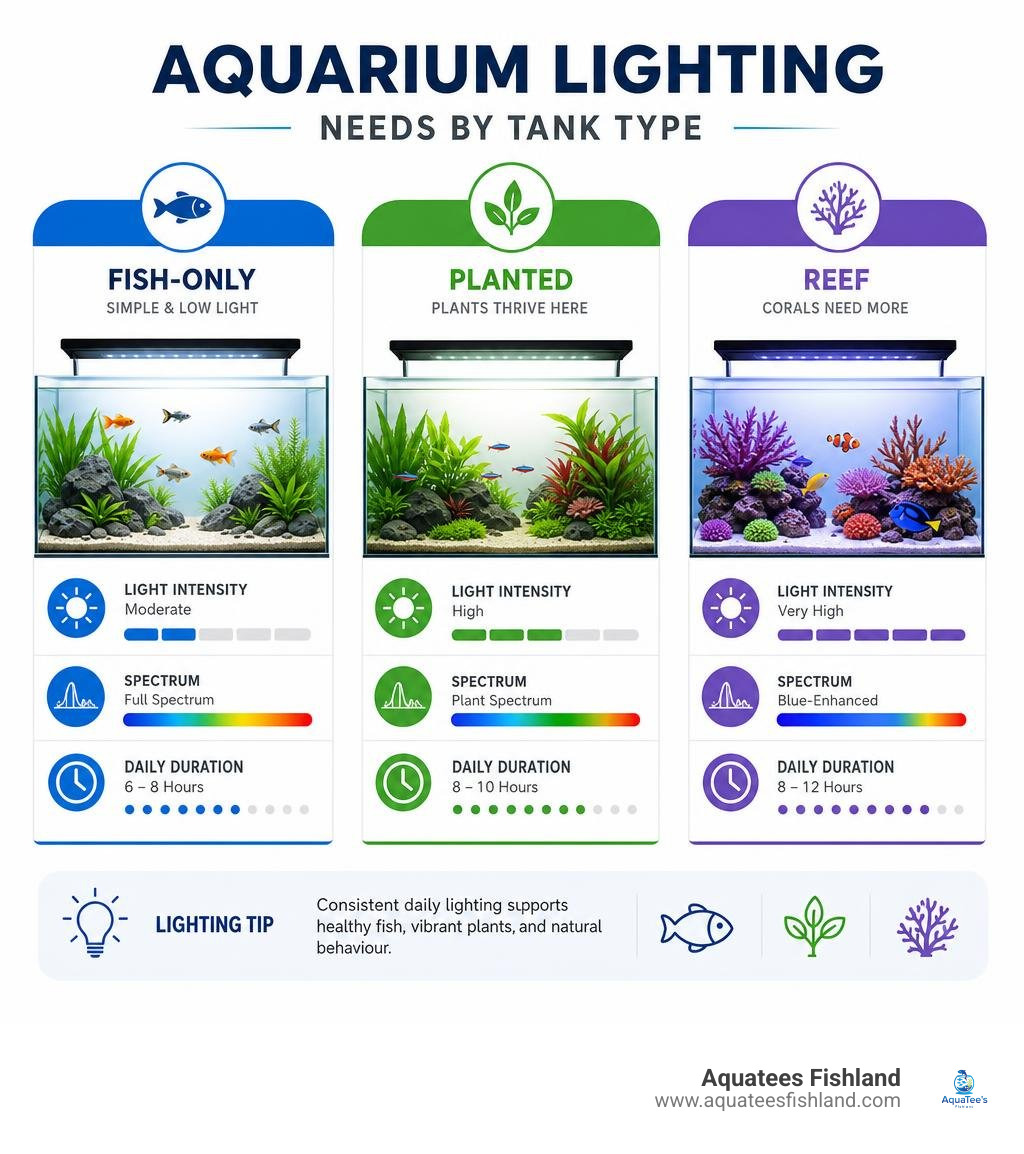
Different aquarium setups require specific lighting configurations to thrive:
- Fish-only systems require moderate light for six to eight hours daily.
- Freshwater community tanks benefit from balanced full-spectrum light for eight to ten hours daily.
- Planted freshwater aquariums need higher intensity plant-spectrum light for eight to ten hours daily.
- Reef and marine systems require blue-enhanced light for eight to twelve hours daily.
The correct light drives plant photosynthesis, supports coral health, and enhances natural fish colouration. It also helps maintain the natural day and night rhythm that your livestock depends on for long-term health. Getting this decision wrong can lead to stressed fish, struggling plants, or persistent algae blooms.
This guide breaks down the technical aspects of lighting in plain language. This will help you make a confident and informed choice for your specific home setup.
I am Naim Ibn Nahshid, part of the eCommerce team at Aquatees Fishland. I have spent the past two years helping customers navigate lighting decisions across all kinds of freshwater and marine setups. By handling real customer situations, I have learned what actually works to keep aquatic systems stable.
Choosing the Right Aquarium Lighting for Your Setup

Selecting the right aquarium lighting setup depends on your tank depth, the species you keep, and your budget. Our local climate means we must keep a close eye on water temperature. Summer heatwaves can easily push an aquarium past its safe thermal limits if your equipment runs too hot.
Modern light-emitting diode systems are up to 75 percent more energy-efficient than traditional fluorescent options. They also run incredibly cool, which prevents harmful water temperature fluctuations. This saves your fish from heat stress and reduces the rate of water evaporation in your tank.
When choosing your light, water penetration is a key factor to consider. Water filters out light quickly, meaning a deep tank requires a fixture with focused lenses to push light to the bottom.
Different setup goals require specific lighting priorities:
- Fish-only setups prioritising natural viewing and low heat run best with basic light-emitting diode strips.
- Planted tanks prioritising photosynthesis require full-spectrum red, green, blue, and white light-emitting diodes.
- Reef tanks prioritising coral growth require high-output light-emitting diodes or hybrid systems.
- Deep tanks over 50 centimetres require strong water penetration using focused lenses.
What Does Aquarium Lighting Do for Fish and Plants?
Aquarium lights provide the essential energy required for plant photosynthesis and support the biological processes of your fish. For live plants, light acts like food, allowing them to convert carbon dioxide and water into oxygen and sugars. High-output fixtures can support robust plant growth deep below the water surface.
For fish, a proper light cycle reduces stress by establishing a clear day and night rhythm. This mimics their natural equatorial habitats, where tropical species typically receive around 12 hours of light per day.
In marine aquariums, corals depend on symbiotic algae called zooxanthellae, which live inside their tissues and use light for photosynthesis. Many corals respond especially well to violet and blue wavelengths, which support healthy growth and strong colouration. This is why reef lighting needs more than simple bright white output.
Uncontrolled lighting can lead to algae issues, though excessive algae growth is primarily caused by nutrient imbalances in the water rather than bright lighting alone. Maintaining a clean tank with proper filtration is your best defence.
Comparing Aquarium LED Lights and T5 Fluorescent Systems
Light-emitting diode technology has become the industry standard due to its longevity, energy savings, and customisation options. These systems allow you to adjust individual colour channels, dim the intensity, and program natural sunrise and sunset cycles. They also eliminate the need for yearly bulb replacements, lasting up to 50,000 hours.
Fluorescent systems remain highly valued by experienced hobbyists, particularly reef keepers. Fluorescent bulbs provide an exceptionally even, diffuse light spread that eliminates harsh shadows under large coral colonies. However, they lack the dynamic shimmer effect that point-source light-emitting diodes create, which mimics sunlight dancing through ocean waves.
Many advanced keepers use hybrid fixtures that combine both technologies. This approach pairs the wide, even coverage of T5 fluorescent lighting with the controllability, efficiency, and shimmer of LEDs, helping support strong plant or coral growth while keeping the aquarium visually bright, balanced, and natural.
Determining Your Tank's Aquarium Lighting Requirements
To determine your tank's requirements, you must evaluate the specific needs of your livestock. Low-light plants like Anubias and Java Fern can easily thrive under basic, low-intensity lights. In contrast, high-light plants or demanding corals require intense, specialised illumination to survive and maintain their vibrant colours.
Here is a quick guide to help you categorise your tank's needs:
- Low-light plants include Anubias, Java Fern, Cryptocoryne, and Java Moss.
- Moderate to high-light plants include Ludwigia, Rotala, Monte Carlo, and Dwarf Hairgrass.
- Low-light corals include Zoanthids, Mushroom Corals, and Hammer Corals.
- High-light corals include Acropora, Montipora, and Pocillopora.
If you are running a high-tech planted tank with high-light plants, you will also need to balance your intense lighting with carbon dioxide injection and liquid fertilisers to prevent massive algae outbreaks.
Recommended Lighting and Aquarium Light Brackets
Getting the light over your tank safely and at the correct height is just as important as the light itself. Proper mounting improves light spread, reduces shadowing, and keeps your equipment safe from salt spray and moisture.
If you are looking for a reliable mounting solution, the Dymax RX Lamp Bracket Professional is an excellent choice. Constructed entirely from anodised, corrosion-resistant aluminium, this bracket is built to withstand the humid conditions above both freshwater and saltwater tanks.
_compressed.webp?alt=media&token=601d70b8-2530-474b-92be-fe9113873aba "user-inserted")
It features a dual-direction mounting design with adjustable height and width, allowing you to position your pendant or hanging lights precisely where they need to be. It fits tank glass thicknesses up to 20mm and includes integrated cable management clips to keep your power cords tidy.
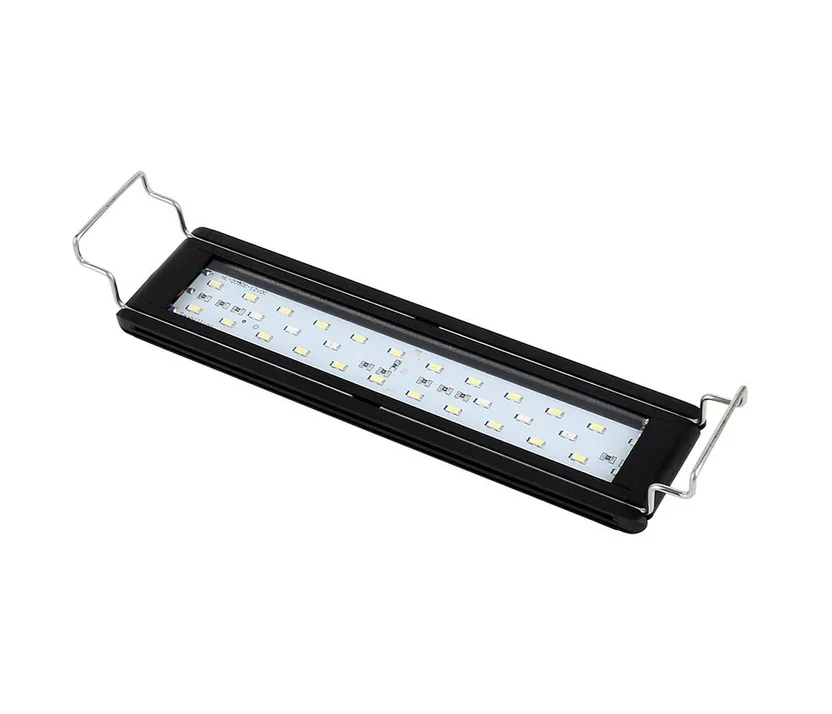
For a versatile light fixture, the Aquatees Aquarium LED Lights HL-30B Series offers a fantastic balance of white and blue light-emitting diodes. This series is designed for both freshwater and marine setups, featuring extendable brackets that make installation on various tank sizes incredibly simple.
The blue and white combination enhances the natural colours of your fish while providing the necessary spectrum to support low-demand corals and freshwater plants. It comes with an Australian standard power plug and a dual-switch setting for easy day and night control.
For those who prefer the proven performance of fluorescent systems, the Aqua Medic Aqualine T5 Reef White is a 10,000K daylight lamp. This bulb simulates tropical sunlight, enhancing the natural colours of your fish while providing the essential light energy needed for healthy coral and plant growth.
It pairs beautifully with a blue bulb for marine tanks, or a plant growth bulb for lush, freshwater planted aquascapes.
Choosing the Best Aquarium Lighting for Long-Term Success
Choosing the right aquarium lighting is one of the most rewarding decisions you can make for your fish tank. By matching your light's spectrum, intensity, and coverage to the specific needs of your fish, plants, or corals, you create a stable, thriving ecosystem that is a joy to look at every single day.
Avoid the temptation to buy the brightest cheap light you can find. Instead, focus on quality, control, and proper mounting to ensure your tank remains healthy, cool, and free from persistent algae issues. When you invest in the right equipment, your aquatic pets will thank you with active behaviour and stunning, natural colours.
If you are ready to upgrade your setup or need some friendly, expert advice, explore our full Aquatees Fishland Aquarium Lighting Collection. For more practical guides on aquarium care, water quality, and equipment selection, check out the Aquatees Fishland Latest Blogs.
Does Every Fish Tank Need Lighting?
Yes, most fish tanks benefit from dedicated lighting to maintain a healthy environment. While fish do not require light for photosynthesis, a consistent light cycle is essential for maintaining their natural circadian rhythm, reducing stress, and allowing you to view and monitor their health easily. If a tank is kept in a dark room with no ambient light, a basic light fixture is highly recommended.
How Long Should Aquarium Lights Stay On Each Day?
Generally, aquarium lights should stay on for 8 to 10 hours per day to mimic natural daylight cycles. Fish-only tanks can run on a shorter 6 to 8-hour photoperiod, while demanding planted or reef aquariums may require up to 12 hours of light. Using a simple plug-in timer is the easiest way to ensure consistency, which is your best defence against sudden algae blooms.
FAQs
Are LED aquarium lights better than fluorescent lights?
Yes, light-emitting diode lights are generally better for most modern hobbyists because they are highly energy-efficient, produce very little heat, and do not require yearly bulb replacements. They also offer unmatched control over colour spectrums and dimming schedules. However, fluorescent lights remain highly popular for larger reef tanks because they provide an exceptionally even light spread that reduces shadows.
Can aquarium lighting help fish colours stand out?
Yes, the correct lighting spectrum can make your fish's natural pigments look incredibly vibrant. Full-spectrum lights that include red, green, blue, and white light-emitting diodes will highlight the deep reds of Bettas, the bright blues of Neon Tetras, and the complex patterns of Discus, making your display tank look much more dynamic.
What colour light is best for a reef aquarium?
A combination of actinic blue and crisp white light is best for a reef aquarium. Blue light wavelengths are essential for coral photosynthesis and make corals fluoresce beautifully, while white light provides a natural, bright appearance for viewing.
Can too much light cause algae growth?
Yes, leaving your lights on for too long or running them at an intensity that exceeds your plants' needs will often trigger an algae bloom. To prevent this, keep your daily light cycle to a consistent 8 to 10 hours and ensure your water parameters are balanced.
Why is the aquarium light mounting position important?
Proper mounting ensures that light is distributed evenly across the entire surface of the water, preventing dark spots and reducing shadows. It also allows you to adjust the height of the light to control the intensity reaching your plants or corals.
What should I consider before buying aquarium lighting?
You should consider your tank dimensions, the depth of the water, the types of plants or corals you want to keep, your budget, and whether you prefer an easy-to-use light-emitting diode strip or a highly customisable pendant system.
Can the Aquatees Aquarium LED Lights HL-30B Series be used in both freshwater and marine aquariums?
Yes, this light features a balanced blue and white light-emitting diode combination that is highly versatile, making it suitable for freshwater community tanks, planted setups, and basic marine or mixed reef aquariums.
Is the Dymax RX Lamp Bracket suitable for all aquariums?
The Dymax RX Lamp Bracket is designed primarily for rimless aquariums up to 20mm thick. It is not suitable for euro-braced tanks or tanks with wide plastic rims that prevent the mounting clamp from securing properly.