

Why the Best Tank Filter Is the Heart of Your Aquarium
Finding the best tank filter for your aquarium is one of the most important decisions you'll make as a fish keeper, and one of the most confusing. With dozens of filter types, brands, and size ratings on the market, it's easy to end up with the wrong one.
Here's a quick breakdown to match you with the right filter fast:
| Filter Type | Best For | Tank Size |
|---|---|---|
| Sponge Filter | Beginners, shrimp, fry, bettas | Under 40L |
| Hang-On-Back (HOB) | Beginners to intermediate, community tanks | 20L–200L |
| Internal/Submersible | Compact setups, starter aquariums | 20L–100L |
| External Canister | Large tanks, planted tanks, heavy stocking | 100L–600L+ |
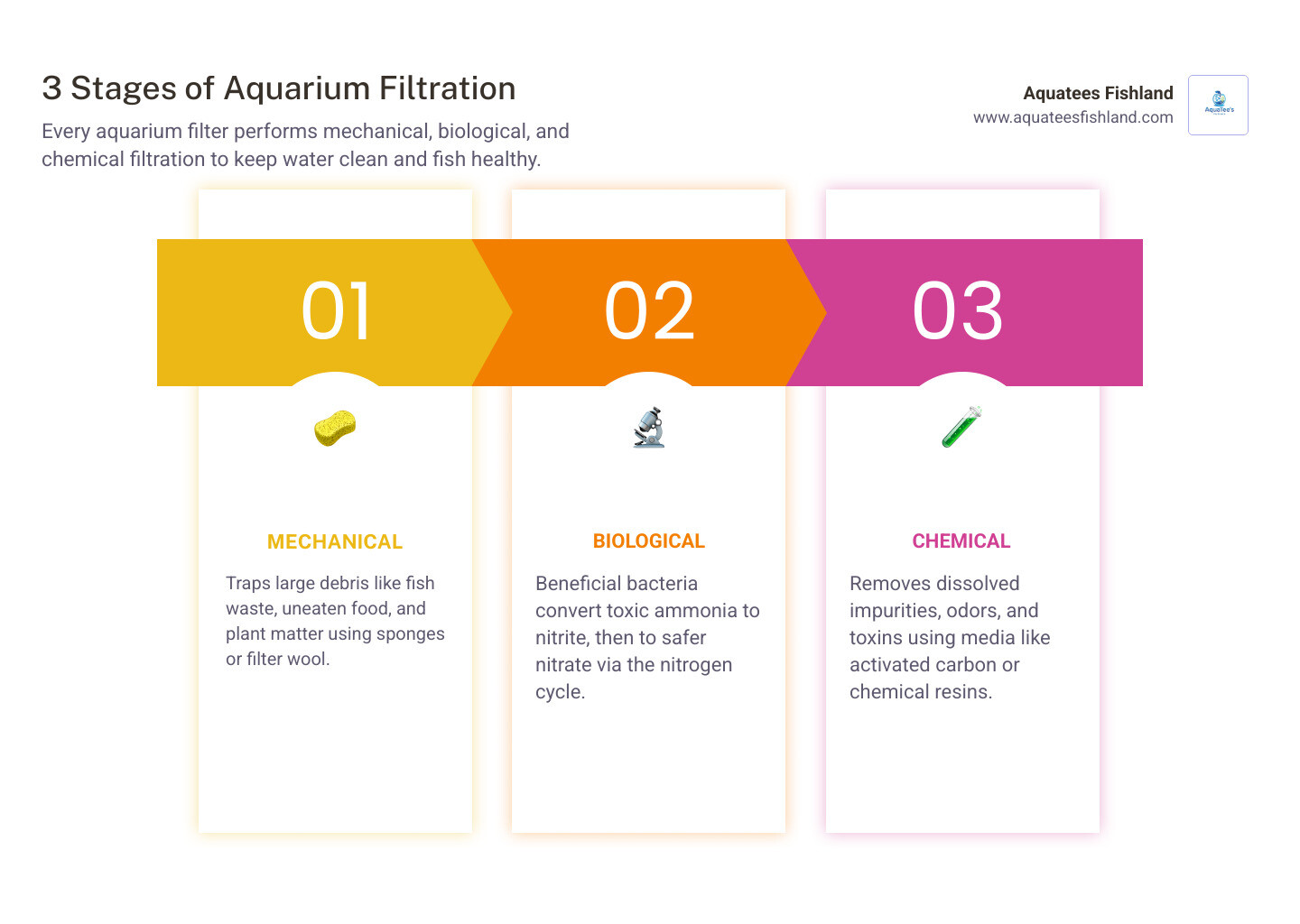
Your filter does three jobs: it removes physical waste (mechanical), houses the beneficial bacteria that detoxify your water (biological), and strips out dissolved chemicals and odours (chemical). Get it right, and your water stays clear, your fish stay healthy, and your maintenance becomes a whole lot easier. Get it wrong, and you're chasing water quality problems that never seem to go away.
Most beginners don't struggle because they chose a bad filter; they struggle because they chose the wrong type for their setup. An undersized filter in a heavily stocked tank, or a high-flow filter in a betta tank, can cause just as many problems as having no filter at all.
I'm Nemo Sulaiman, part of the eCommerce and warehouse team at Aquatees Fishland, and I've spent the last two years helping customers across Australia find the best tank filter for their specific setup, from nano shrimp tanks to large planted displays. In this guide, I'll walk you through each filter type, what it's actually good for, and how to match it to your tank.
Why Aquarium Filtration Matters More Than Most Beginners Realise
In the wild, fish live in massive bodies of water where waste is naturally diluted and carried away. In an aquarium, we are dealing with a closed system. Without the best tank filter for the job, toxic chemicals build up quickly.
The biggest threat is ammonia. Fish waste, uneaten food, and decaying plant matter all produce ammonia, which is highly toxic to fish. A properly functioning filter acts as a biological processing plant. It houses billions of beneficial bacteria that convert toxic ammonia into nitrite, and then into less harmful nitrate.
Beyond chemical safety, filtration provides:
- Mechanical Cleaning: Removing floating debris so your water looks crystal clear.
- Oxygenation: Breaking the water surface to allow oxygen in and carbon dioxide out.
- Circulation: Preventing "dead spots" where waste can settle and rot.
To get your system started safely, we always recommend using a Water Conditioner like Seachem Prime to remove chlorine from your tap water. To speed up the biological setup, products like FritzZyme 7 Nitrifying Bacteria and Seachem Stability introduce the live bacteria needed to "cycle" the tank, making it safe for fish in days rather than weeks.
Understanding the Different Types of Aquarium Filters
There is no single "perfect" filter. The best tank filter for a 20-litre Betta fish bowl is vastly different from what a 400-litre African Cichlid tank requires. When choosing, we look at three main factors:
- Tank Size: Larger tanks need higher flow rates (measured in Litres Per Hour or LPH).
- Bioload: "Messy" fish like goldfish or turtles produce more waste and need "over-filtration."
- Fish Type: Delicate swimmers like bettas hate strong currents, while river-dwelling fish love them.
At Aquatees Fishland, we’ve curated a range that covers every hobbyist's needs, from budget-friendly basics to high-end German-engineered systems. You can Browse Aquarium Water Filters to see the full variety available at our Melbourne warehouse.
Sponge Filters: The Best Tank Filter for Beginners

Sponge Filters are the unsung heroes of the aquarium world. They are incredibly simple: an Air Pump pushes air through a weighted sponge sitting inside the tank. As bubbles rise, water is pulled through the sponge.
Why they are great:
- Safety: There is no intake to suck up tiny baby shrimp or fish fry.
- Biological Power: The entire sponge becomes a massive home for beneficial bacteria.
- Gentle Flow: Perfect for Betta fish, who struggle to swim in heavy currents (it's like trying to swim in a ballgown!).
Aquatees Jumbo Bio Sponge Filters XY-Series are a smart pick for beginners, breeders, shrimp keepers, and anyone running a gentle-flow tank. They offer strong biological filtration with simple mechanical waste capture, all at a budget-friendly price. Just keep in mind that sponge filters need an air pump to run, so many aquarists pair them with dependable options from Fritz for quiet, consistent performance.
Pro Tip: Never wash your sponge in tap water! The chlorine will kill your bacteria. Always squeeze it out in a bucket of old tank water during your water change.
Hang-On Filters (HOB/Hanging Filters)
Hang-On-Back (HOB) Filters are the most popular choice for mid-sized community tanks. They sit on the rim of the aquarium, sucking water up a tube and returning it via a "waterfall" over the back.
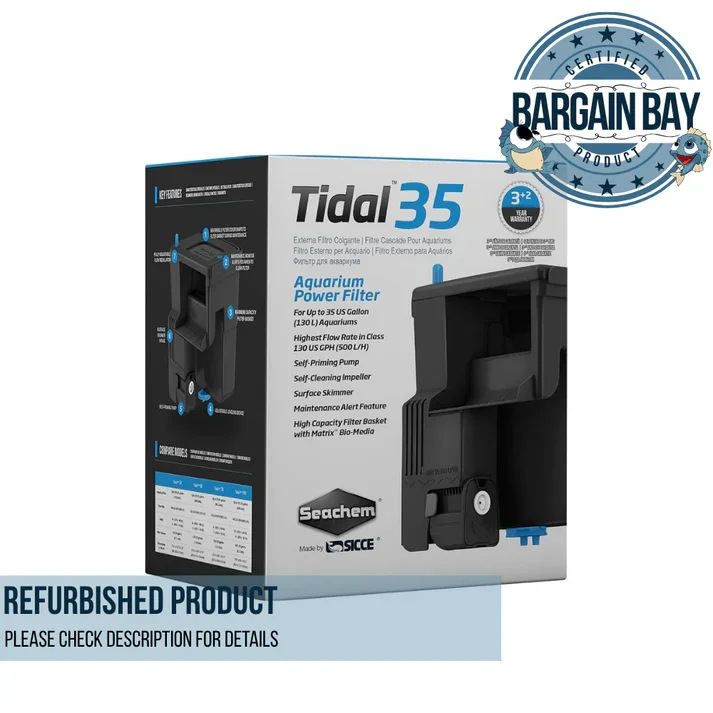
The Seachem Tidal series is widely considered the gold standard here. Unlike cheaper HOBs that use flimsy disposable cartridges, the Tidal series features a large, removable media basket that you can customise.
- Seachem Tidal Power Filter 35: A strong pick for smaller aquariums, with a self-priming pump, adjustable flow, and surface skimming that helps keep the top of the tank clean and clear.
- Seachem Tidal Power Filter 55: Better suited to medium community tanks, offering more room for filter media and the extra flow needed for a higher fish load.
- Seachem Tidal Power Filter 75: A smart option for larger aquariums, delivering stronger circulation, more filtration capacity, and improved surface agitation for better oxygen exchange.
Internal and Submersible Filters
If you have a lid that doesn't allow for a hanging filter, or if your tank is in a tight corner, an Internal Filter is the answer. These sit entirely underwater, usually attached to the glass with suction cups.
The CHANING Submersible Water Filter is a smart all-in-one choice for smaller aquariums and simple starter setups. It combines a pump and filter media in one compact unit, which helps save space and keeps installation straightforward. Many internal filters also include directional nozzles, so you can aim flow where it is needed and reduce low-circulation areas. If you want a more premium internal option, Hygger also offers well-made, quiet-running filters.
External Canister Filters: The Best Tank Filter for Large Aquariums
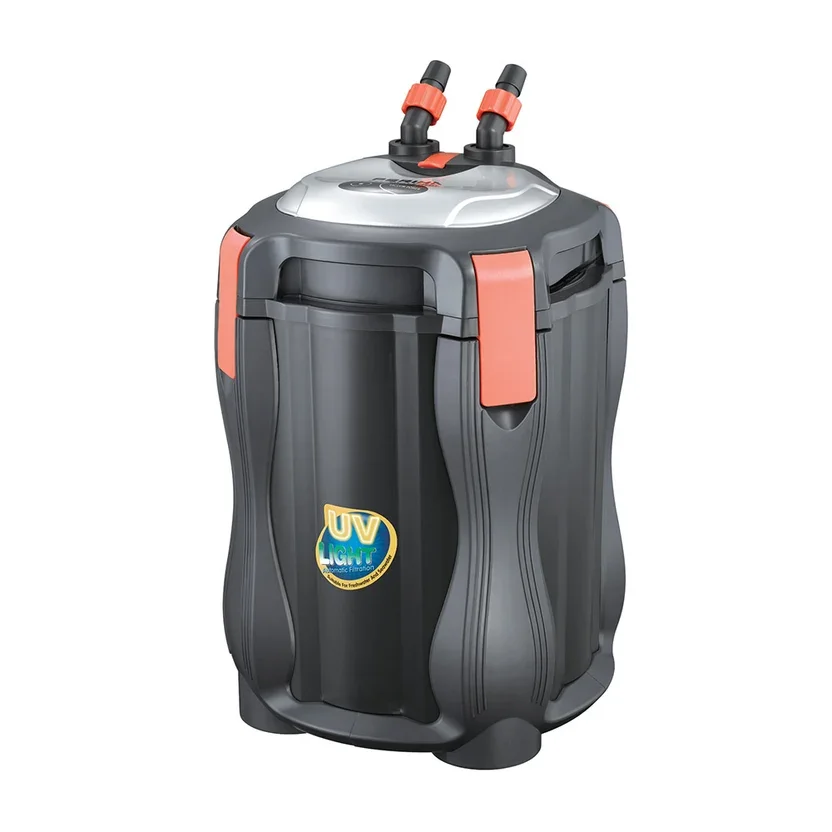
When you move into large tanks (150L and above), or if you are running a high-tech planted tank, a Canister Filter is the ultimate choice. These sit underneath your tank in the cabinet. Two hoses run into the aquarium, one for intake and one for return.
The Benefits:
- Huge media capacity: Canister filters hold far more filter media than most internal or hang-on units, which gives you more space for biological media like Seachem Matrix.
- UV support on selected models: Some Periha EC External UV Canister Filters include built-in UV, which can help reduce free-floating algae and improve water clarity.
- Cleaner look in the tank: With the filter body stored in the cabinet, you usually only see the inlet and outlet pipes, which keeps the display neater and leaves more room for fish, plants, and hardscape.
For the best results, we recommend layering your canister with Seachem Purigen to remove organic waste before it turns into ammonia, ensuring your water stays polished and odour-free.
Choosing the Best Tank Filter for Your Aquarium Size
One of the most common mistakes is buying a filter that is "just enough." In the aquarium world, there is no such thing as too much filtration (though there is such a thing as too much flow!).
| Tank Volume | Recommended Filter Type | Example Setup |
|---|---|---|
| Nano (Under 40L) | Sponge or Small Internal | Aquatees Sponge + Fritz Air Pump |
| Medium (40L-150L) | HOB or Medium Internal | Seachem Tidal 55 |
| Large (200L+) | External Canister | Periha EC-30 with UV |
| High Bioload | Oversized Canister | Periha EC-50 for Goldfish/Turtles |
To keep your fish visible and healthy, pair your filtration with Dymax Lighting. Good light helps you spot debris that needs cleaning. Also, what goes in must come out! Feeding high-quality, highly digestible food like Hikari reduces the amount of waste your filter has to process in the first place.
A Quick Beginner Guide to Aquarium Filter Media
Think of your filter as a house. The "media" is the furniture inside that does the work.
- Mechanical Filtration (Sponges/Wool): This is the "sieve." It catches fish poop and uneaten food. Use coarse sponges first, then fine filter wool to polish the water.
- Biological Filtration (Ceramic Noodles/Matrix): This is the most important part. These porous materials provide surface area for bacteria to grow.
- Chemical Filtration (Carbon/Resins): This removes smells, yellow tints, and medications.
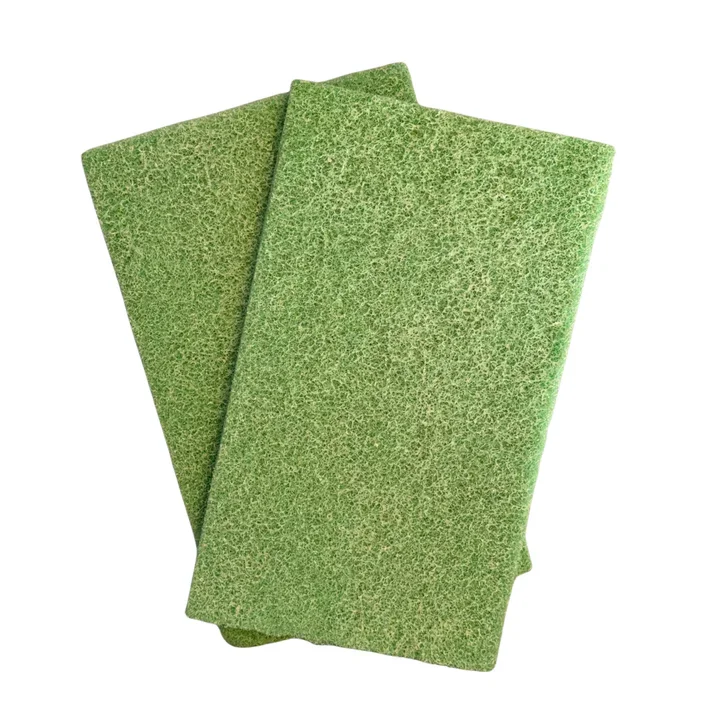
We stock a huge range of premium media from Sera and AquaVitro at our warehouse, ensuring you can customise your filter for maximum performance.
Frequently Asked Questions about the Best Tank Filter
What is the best aquarium filter for beginners?
For most beginners with a standard 40L to 80L tank, a Hang-On-Back filter like the Seachem Tidal 35 is the winner. It's easy to set up, easy to clean, and very reliable. If you are starting a very small tank or keeping shrimp, a Sponge Filter is the safest and most affordable entry point.
Do sponge filters need replacing?
Generally, no! This is a common myth. You should only replace a sponge filter if it has physically started to crumble or lose its shape (which can take years). Replacing it unnecessarily throws away all your beneficial bacteria, which can crash your tank's ecosystem. Just rinse it in old tank water every few weeks. You can Shop Sponge Filters at Aquatees for long-lasting options.
What size aquarium filter do I need?
Look at the LPH (Litres Per Hour) rating on the box. As a rule of thumb, you want a filter that can turn over your entire tank volume 4 to 6 times every hour. For example, if you have a 100L tank, you want a filter rated for at least 400-600 LPH. If you have messy fish like goldfish, aim for 10 times the volume.
Are canister filters noisy?
Modern canisters, like the Periha series, are designed to be extremely quiet. Because the motor is submerged or encased in a thick plastic housing and usually tucked away in a wooden cabinet, they are often much quieter than HOB filters, which can have a "trickling" water sound.
Conclusion
Building a thriving underwater world starts with the right foundation. Whether you’re setting up a small desktop tank or a massive 6-foot display, the best tank filter is the one that matches your tank's specific biological needs.
At Aquatees Fishland, we aren't just a shop; we are an aquarium warehouse based in Melbourne, Australia, dedicated to helping you avoid expensive mistakes. We believe in "stronger, cleaner, better" filtration, which is why we stock exclusive brands like Fritz and Seachem at prices up to 50% off retail.
Ready to clear up your water?
Happy fish keeping!