

Why Your External Filter Pump Is the Heart of a Healthy Aquarium
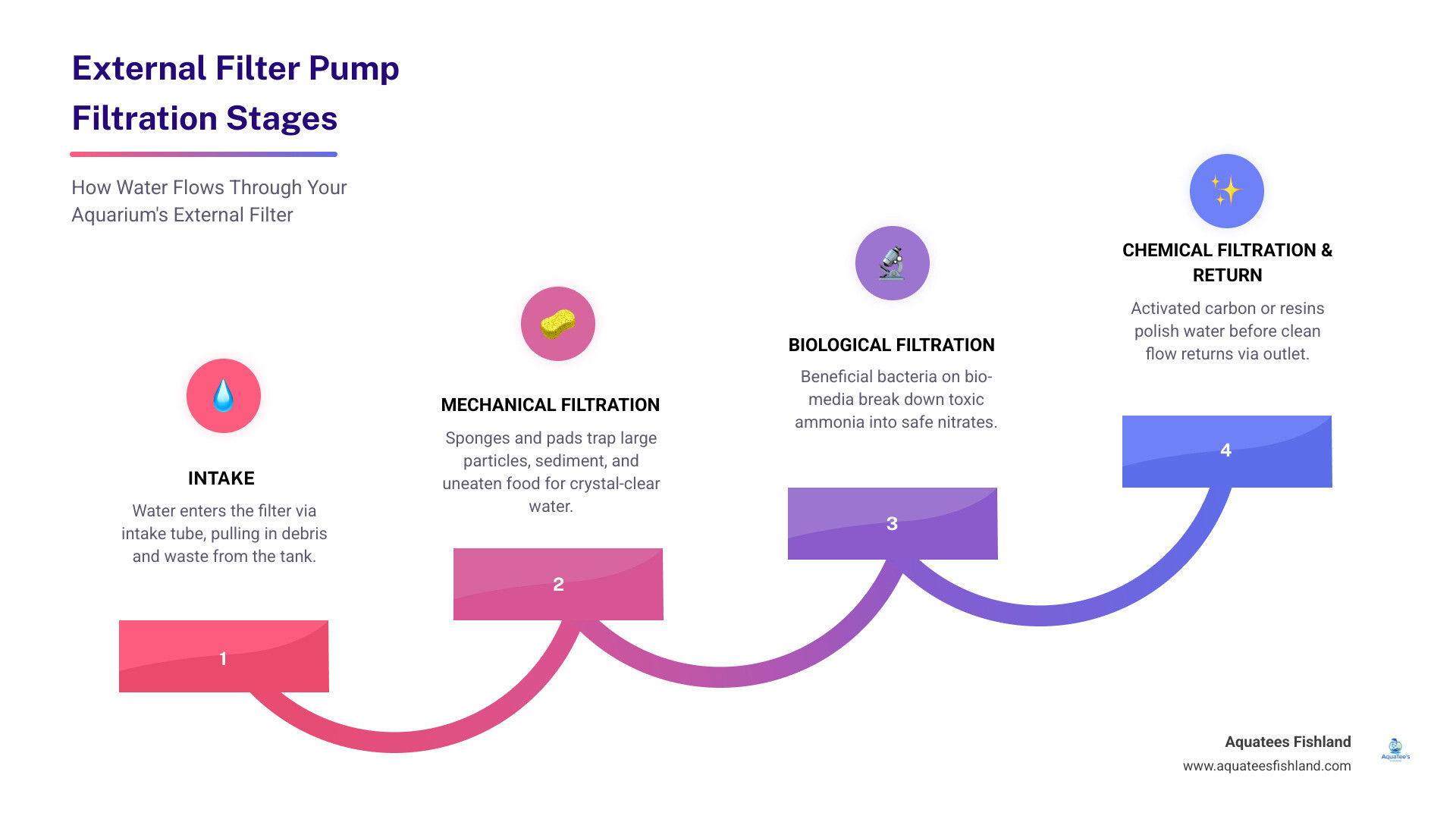
An external filter pump is one of the most important pieces of equipment you can put on your aquarium. It sits outside the tank, draws water through a sealed canister packed with filter media, and returns clean, clear water back to your fish.
Here's what you need to know at a glance:
- What it does: Runs water through multiple filtration stages: mechanical, biological, and chemical — all outside the tank
- Why it's better than internal filters: More media capacity, quieter operation, easier maintenance, and no equipment cluttering the inside of your tank
- How to size it: Aim for a flow rate of at least 4–6x your tank volume per hour (e.g., a 200L tank needs at least 800–1200 LPH)
- How often to maintain it: Rinse mechanical sponges every 2–4 weeks; deep clean every 3–6 months
- Works for: Freshwater, saltwater, reef, and even turtle setups
Most water quality problems — cloudy water, ammonia spikes, bad smells — trace back to a filter that's either the wrong size, poorly maintained, or set up incorrectly. This guide walks you through everything you need to keep your external filter running at its best.
I'm Nemo Sulaiman, and through my hands-on work at Aquatees Fishland handling everything from product orders to customer troubleshooting, I've seen how the right external filter pump setup — and the right maintenance habits — make the difference between a thriving tank and a constant headache. Let's get into it.
Choosing the Right External Filter Pump Size for Your Tank
Choosing an external filter pump isn't just about matching the number on the box to the size of your tank. We always recommend looking at the "Gallons Per Hour" (GPH) or "Litres Per Hour" (LPH) rating. A common industry standard is to have your entire tank volume cycled through the filter at least four to six times every hour.
However, the "fish load" or biological load is often more important than the water volume. If you have "messy" fish like goldfish, large cichlids, or turtles, you'll need significantly more power. For example, a high-quality unit like the Periha EA is rated for specific volumes, but if that tank is heavily stocked, you might find yourself needing a larger unit to keep up with the waste.
When you browse external canister filters for aquariums and fish tanks, a larger canister usually means more media capacity. More media equals more surface area for beneficial bacteria, which is the real "engine" of your aquarium's health.
Best External Filter Media Order for Canister Filters
How you stack your media inside the external filter pump determines how clean your water stays and how long your pump lasts. If you put the fine pads at the bottom, they’ll clog in days. If you put the biological media first, it gets covered in "gunk," and the bacteria suffocate.
The Golden Rule of Media Order:
- Coarse Mechanical (Bottom/First Entry): Use coarse sponges to catch large debris like fish waste and plant leaves. This protects the rest of your media from clogging.
- Fine Mechanical (Middle): Use fine poly-floss or pads to "polish" the water by catching tiny particles.
- Biological Media (Middle/Top): This is where products like Seachem Matrix thrive. By placing this after mechanical filtration, you ensure the porous stones stay clean, allowing oxygen-rich water to feed the nitrifying bacteria.
- Chemical Media (Top/Final Exit): This is for specific water "fixes." Seachem Purigen is fantastic for removing organic waste before it turns into ammonia, while activated carbon removes odours and medications.
Using high-quality products from Fritz or Seachem ensures that your biological stages are as efficient as possible.
Signs Your External Filter Pump Is Too Small
It is a common mistake to undersize a filter to save money, but it often leads to more work in the long run. Here is how to tell if your current pump isn't cutting it:
- Debris settling quickly: If you see "poop" and waste sitting on the sand despite the filter running, the circulation is too weak.
- Cloudy water: A milky haze often indicates the biological media can't keep up with the waste.
- Frequent ammonia spikes: If your water tests constantly show ammonia, you don't have enough surface area for bacteria.
- Weak circulation/Dead spots: If plants in the corners aren't moving at all, the flow is insufficient to distribute oxygen.
Why Periha Canister Filters Stand Out in 2026
In May 2026, we are seeing a shift toward more robust, long-lasting equipment. The Periha EC (UV) and Periha EA models have become our top recommendations at Aquatees Fishland.
Why? Because compared to many standard brands, the Periha service life is up to 5 times longer. These units are abrasion-resistant and incredibly quiet. They feature a sophisticated 6-stage filtration system that covers everything from coarse mechanical scrubbing to biological housing.
The Periha EC model even includes a built-in UV steriliser. This is a game-changer for single-tank systems because it kills free-floating algae, helps control harmful bacteria and parasites, and does it without the need for extra plumbing.
Advanced Features to Look For
When shopping for an external filter pump, look for features that make your life easier:
- Self-priming: This allows you to start the filter with a simple button push or lever, avoiding the old-school "sucking on the hose" method.
- Aquastop Valves: These allow you to disconnect the hoses without water spilling all over your cabinet.
- UV Control: The ability to turn the UV lamp on or off independently is vital for maintaining a balanced ecosystem.
- Lighting Integration: Some modern setups even coordinate with Dymax Lighting systems to create a streamlined look.
Energy Efficiency and Running Costs of an External Filter Pump
Since your filter runs 24/7, energy consumption adds up. Modern filters often use brushless DC motors, which are significantly more efficient than older AC models. High-efficiency external pumps are designed specifically for low-head, high-volume flow.
Lower wattage doesn't just save money on your power bill; it also means less heat is transferred to your aquarium water, which is crucial during Melbourne's summer months.
The Ultimate Maintenance Schedule for External Filters
Consistency is the secret to a crystal-clear tank. If you wait until the water is brown to clean your filter, you're already in trouble.
We recommend using Seachem Prime during every water change to detoxify tap water. To boost your bacterial colony after a filter clean, adding FritzZyme 7 (for freshwater) or Seachem Stability provides the "safety net" your fish need.
Maintenance Task Frequency
| Maintenance Task | Recommended Frequency | Why It Matters |
|---|---|---|
| Rinse mechanical sponges | Every 2–4 weeks | Prevents waste from rotting and releasing nitrates. |
| Replace chemical media | Every 4–6 weeks | Carbon and Purigen become saturated and stop absorbing toxins. |
| Inspect/Clean Impeller | Every 2–3 months | Slime buildup on the magnet slows down the motor. |
| Deep clean hoses | Every 3–6 months | Algae and biofilm in hoses can reduce flow by up to 50%. |
| Inspect O-rings/Seals | Every clean | Prevents leaks; dry seals can crack and cause floods. |
Common External Filter Pump Mistakes to Avoid
- Cleaning all media at once: Never do this! You will wash away your beneficial bacteria and cause a "cycle crash." Rinse sponges in a bucket of old tank water, not tap water.
- Using tap water on bio-media: The chlorine in tap water kills the good bacteria instantly.
- Dry starting: Never turn on your external filter pump before it is filled with water. The water acts as a lubricant for the impeller; running it dry will melt the plastic or snap the ceramic shaft.
- Overtightening fittings: Most aquarium gear is plastic. Hand-tight is usually enough. Using tools to crank down on fittings often leads to cracks and leaks.
- Feeding low-quality food: If you feed "dusty" food, your filter has to work twice as hard. High-quality options like Hikari produce less waste and keep your filter cleaner for longer.
Troubleshooting Common External Filter Pump Issues
External Filter Pump Problems and What They Usually Mean
| Symptom | Likely Cause | Fix |
|---|---|---|
| Reduced water flow | Clogged hoses or media | Clean the intake strainer and scrub the inside of the hoses. |
| Grinding/Rattling noise | Air trapped or dirty impeller | Tilt the canister gently to purge air; clean the impeller magnet. |
| Cloudy water after clean | Bacteria disrupted | Add FritzZyme 7 to restore the colony. |
| Water leaks | Damaged or dry O-ring | Apply food-grade silicone lubricant to the main seal. |
| Bad smell from filter | Dirty mechanical media | Rinse sponges more frequently; check for dead fish in the intake. |
If you're still stuck, you can browse more info about aquarium filter systems on our site or contact our team for expert advice.
How to Fix Leaks and Noise
Most noise issues are caused by "air locks." If you hear a burping sound, air is trapped in the media. Gently rocking the canister side-to-side while it's running usually coaxes the bubbles out. If the noise is a constant rattle, it's likely the impeller. Open the head, pull out the magnet, and wipe it clean.
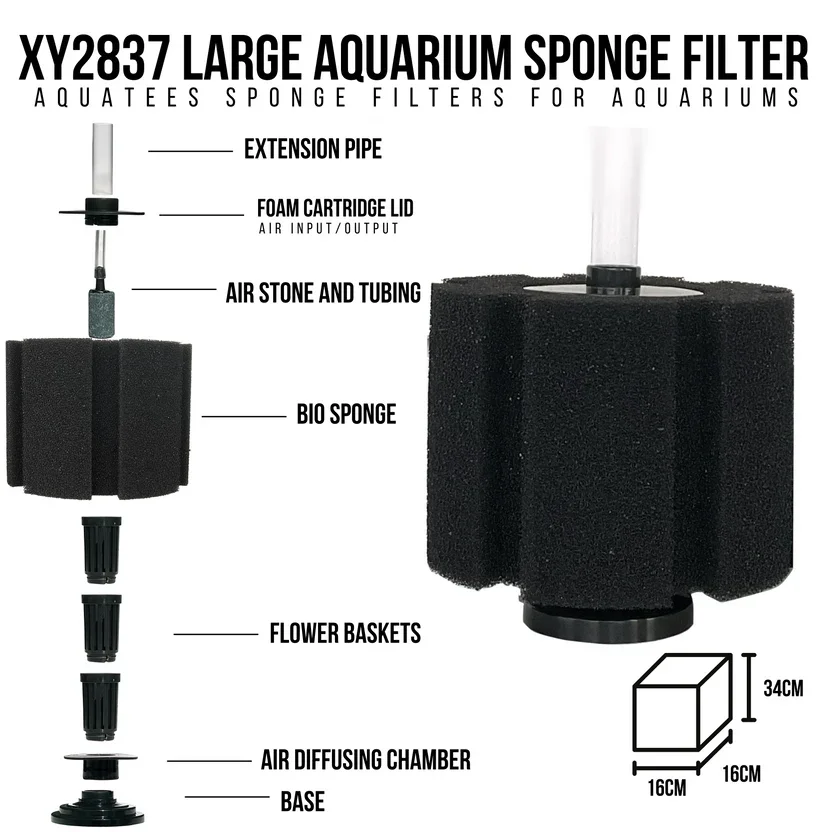
For leaks, the culprit is almost always the main head O-ring. Over time, these dry out. We suggest keeping a spare or using a dedicated aquarium lubricant to keep the rubber supple. If you need supplementary filtration during a repair, Aquatees Jumbo Bio Sponge Filters are an excellent, low-cost backup to keep your bacteria alive.
Restoring Flow Rate in an External Filter Pump
If your flow has dropped to a trickle, check your hoses first. It's amazing how much "gunk" can grow inside a clear tube. A dedicated hose brush can restore your flow rate instantly. Also, check the spray bar holes; they often get plugged with small bits of debris or calcium.
Frequently Asked Questions about External Filter Pumps
How often should you clean an external canister filter?
For most tanks, a quick rinse of the mechanical sponges every month is perfect, with a full "deep clean" of the hoses and impeller every three months. If you have messy fish like Oscars or Turtles, you may need to do this every two weeks.
Why is my external filter pump losing flow?
The most common causes are clogged intake strainers, dirty hoses, or media that has been packed too tightly. If you compress your filter floss too much, the pump has to work much harder to push water through, which reduces flow and can overheat the motor.
Can you over-clean aquarium filter media?
Yes! If you scrub your ceramic rings until they look brand new using hot tap water, you have effectively killed your biological filter. The goal is to "rinse," not "sterilise." Always use dechlorinated water or old tank water for this task.
Keep Your Aquarium Thriving with the Right Filtration Habits
At Aquatees Fishland, we believe that a high-quality external filter pump is the best investment you can make for your aquatic family. By choosing the right size, following a proper media order, and sticking to a simple maintenance schedule, you can enjoy a beautiful, clear aquarium with minimal stress.
Whether you are looking for the latest Periha technology or need to stock up on more info about aquarium water conditioners, we're here to help you succeed. Happy fishkeeping!