

Why Aquarium Setup Matters More Than Most Beginners Think
Setting up your first aquarium is exciting, but it can also feel confusing. You may be asking questions like: What size tank should I buy? Do I need a filter? When can I add fish? Why do people keep talking about cycling?
The simple answer is this: a healthy aquarium starts before the fish go in.
A fish tank is not just a glass box filled with water. It is a small living ecosystem. Fish produce waste, leftover food breaks down, and the water chemistry changes every day. If the tank is not prepared properly, harmful ammonia and nitrite can build up quickly and stress or kill your fish.
That is why aquarium setup matters so much. When you choose the right tank size, install the right equipment, cycle the tank, and add fish slowly, you give your aquarium a stable foundation from day one.
For beginners, the goal is not to create a perfect aquarium overnight. The goal is to build a simple, safe, easy-to-maintain setup that helps your fish settle in and gives you confidence as a new fish keeper.
In this guide, Aquatees Fishland walks you through the full beginner aquarium setup process in a clear, practical order so you know exactly what to do next.
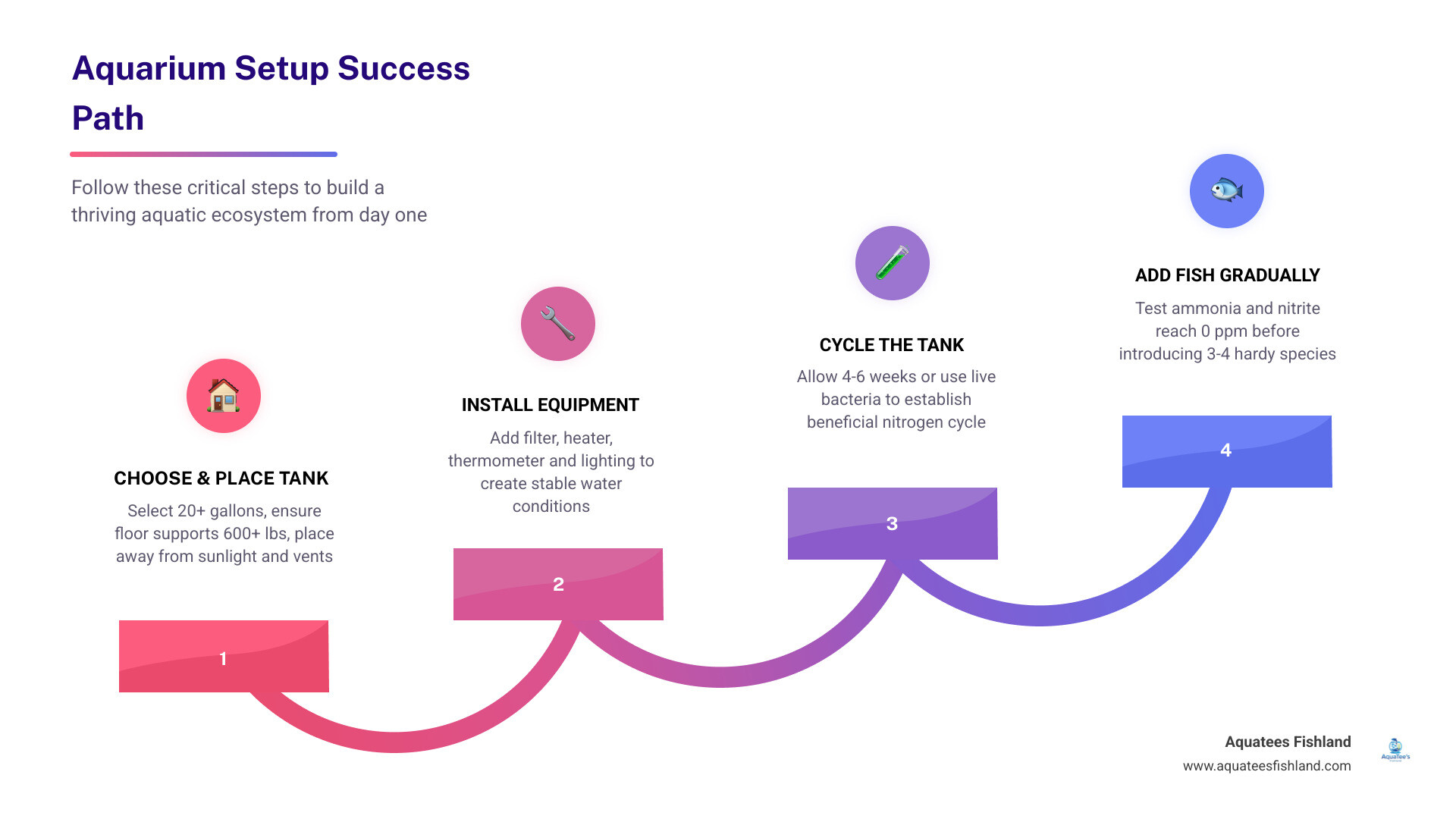
What You Need Before Starting Your Fish Tank
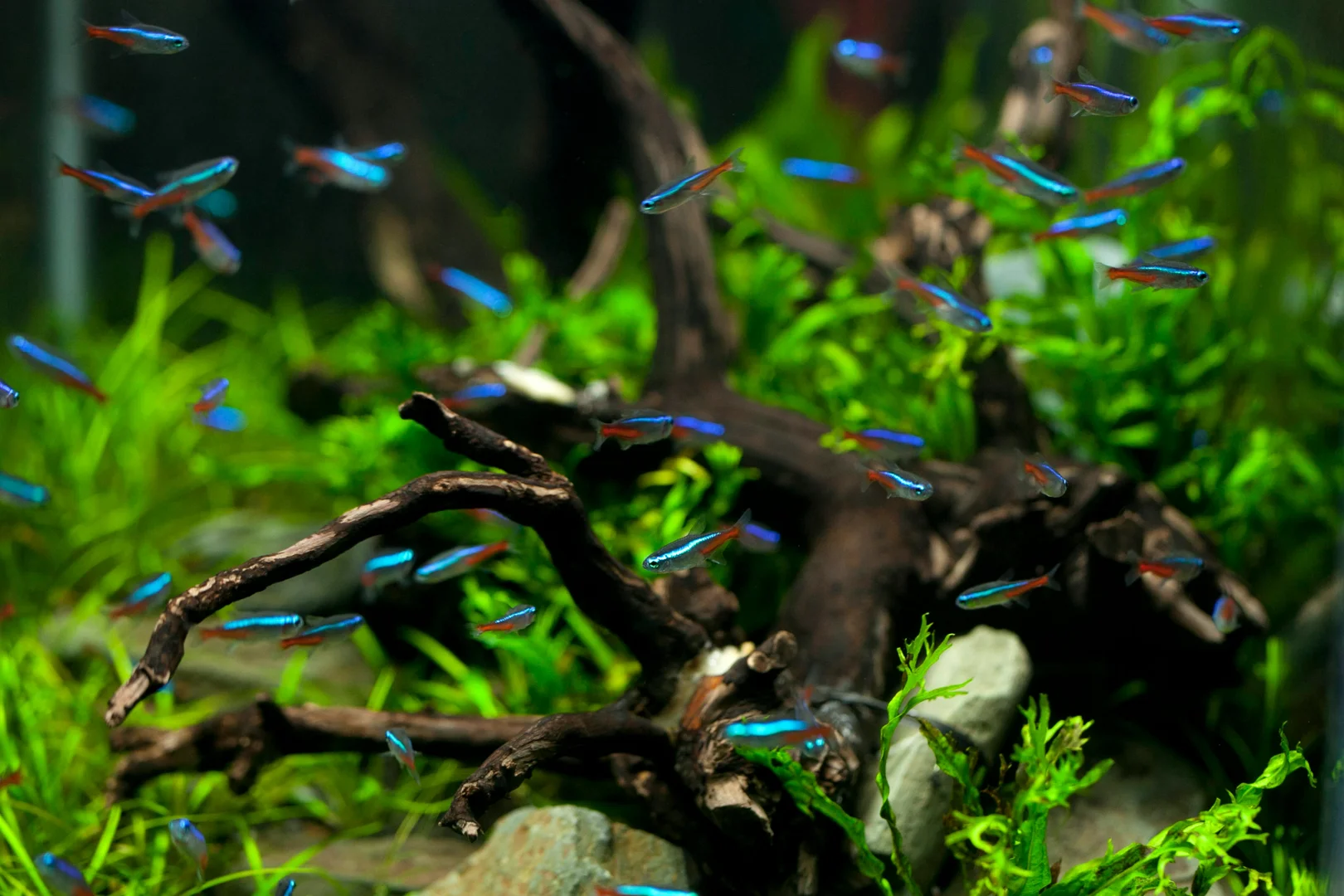
Before you buy fish, gather the basic equipment your aquarium needs to stay clean, warm, stable, and safe.
Beginner Aquarium Setup Checklist
Here is what most first-time fish tank owners need:
- Fish tank: A 20-gallon / 75-litre tank or larger is easier for most beginners to manage.
- Aquarium stand: Use a stand designed to hold the full weight of the tank, water, substrate, and decorations.
- Filter: Your filter removes waste and gives beneficial bacteria a place to grow.
- Heater: Needed for most tropical fish so the water temperature stays stable.
- Thermometer: Helps you check the water temperature at a glance.
- Water conditioner: Makes tap water safe by treating chlorine and chloramine.
- Substrate: Gravel, sand, or planted-tank substrate for the bottom of the aquarium.
- Lighting: Helps you view the tank and supports live plants if you choose to keep them.
- Test kit: Lets you measure ammonia, nitrite, nitrate, and pH.
- Fish food: Choose food that matches the species you plan to keep.
- Net, bucket, and siphon: Essential for cleaning, water changes, and safe fish handling.
A tank filled with water is much heavier than many beginners expect. Water weighs about 1 kilogram per litre, so even a medium aquarium can become very heavy once filled. Place your tank on a strong, level surface away from direct sunlight, heaters, air conditioners, and busy walkways.
If you are starting from scratch, a complete starter kit can be a good option because it often includes the tank, lid, lighting, and basic filter. If you want a planted aquarium, large fish, or a more advanced display, choosing each item separately gives you more control.
Browse our Fish Tank Collection
Helpful Products for a Simple First Setup
For lighting, Dymax Lighting can help create a clear day/night routine for your fish and plants. For biological filtration, Seachem Matrix gives beneficial bacteria a large surface area to grow inside your filter.
A simple setup with reliable equipment is usually better than a complicated setup you do not yet understand. Start with the basics, learn how your tank behaves, and upgrade later if needed.
Choosing the Right Fish Tank Size
Many beginners think a small fish tank is easier. In reality, very small tanks are often harder to keep stable.
In a small aquarium, uneaten food, fish waste, and temperature changes affect the water quickly. A small mistake can cause a big problem. In a larger tank, changes happen more slowly, which gives you more time to notice and fix issues.
For most new aquarium owners, a 20-gallon / 75-litre tank or larger is a sensible starting point. It gives you more room for stable water, better fish choices, and easier maintenance.
Common Beginner Tank Size Mistakes to Avoid
Avoid these common first-tank mistakes:
- Buying a tiny bowl or very small tank because it looks easy to manage.
- Choosing fish before choosing the tank, then discovering the fish grow too large.
- Overstocking the aquarium with too many fish too quickly.
- Ignoring adult fish size and only looking at how small the fish are in the shop.
- Using furniture instead of a proper stand, which can bow, weaken, or fail under weight.
- Placing the tank in direct sunlight, causing algae growth and temperature swings.
Simple Tank Size Guide for Beginners
| Tank Size | Beginner Suitability | Best For |
|---|---|---|
| Under 5 gallons / 19 litres | Difficult | Shrimp or very limited nano setups only |
| 5-10 gallons / 19-38 litres | Moderate | One betta, shrimp, or small planted tank |
| 20 gallons / 75 litres | Great beginner size | Small community fish, easier water stability |
| 30+ gallons / 114+ litres | Excellent if space allows | More fish options and stronger stability |
| Large tanks | Best with planning | Bigger fish, aquascapes, or long-term hobbyists |
A good beginner aquarium should make fish care easier, not harder. If you have the space and budget, choose the largest practical tank you can safely support.
Step-by-Step Aquarium Setup Process
Setting up a fish tank is easier when you follow the right order. Do not rush this stage. A slow setup is usually a safer setup.
Step 1: Choose the Tank Location
Pick a flat, strong, level surface. Keep the aquarium away from windows, direct sun, vents, heaters, and doors. Make sure you can access the tank for feeding, cleaning, and water changes.
Step 2: Rinse the Tank, Substrate, and Decor
Rinse gravel, sand, rocks, and decorations with clean water before adding them. Do not use soap, detergent, or household cleaners because residues can harm fish.
Step 3: Add Substrate and Decorations
Add your substrate first, then place decorations, rocks, driftwood, or plants. Create hiding places so fish feel secure. If you plan to keep bottom feeders, avoid sharp gravel that may damage their barbels or bellies.
Step 4: Fill the Tank With Treated Water
Add tap water slowly so you do not disturb the substrate. Always use a water conditioner such as Seachem Prime to make tap water safe for fish and beneficial bacteria.
Step 5: Install the Filter, Heater, and Thermometer
Set up the filter according to the instructions and make sure water is moving properly. Install the heater if you are keeping tropical fish. Use a thermometer to confirm the water stays stable, usually around 24-26°C for many tropical species.
Step 6: Start the Nitrogen Cycle
This is the most important step. The nitrogen cycle is the natural process that turns toxic fish waste into less harmful nitrate.
| Water Parameter | What It Means | Beginner Goal |
|---|---|---|
| Ammonia | Toxic waste from fish and rotting food | 0 ppm before adding fish |
| Nitrite | Toxic compound created during cycling | 0 ppm before adding fish |
| Nitrate | Less harmful end product of the cycle | Keep low with water changes |
Cycling a tank naturally often takes 4 to 6 weeks. You can add an ammonia source through fishless cycling or use live nitrifying bacteria to help seed the filter faster. FritzZyme 7 Freshwater Bacteria can help introduce beneficial bacteria into a new freshwater aquarium. For marine tanks, FritzZyme 9 Saltwater Bacteria is designed for saltwater systems.
_compressed.webp?alt=media&token=1508d8d4-35e3-4dce-b695-bdaaefd08efd "user-inserted")
Step 7: Test the Water Before Adding Fish
Use a test kit to check ammonia, nitrite, nitrate, and pH. Do not guess. Clear water does not always mean safe water.
Step 8: Add Fish Slowly
Once the tank is ready, add a small number of fish first. Wait, test the water, and let the filter adjust before adding more. Adding too many fish at once is one of the fastest ways to crash a new aquarium.
How to Know When Your Tank Is Ready for Fish
Your aquarium is ready for fish when the water is stable and the biological filter can process waste.
Signs Your Aquarium Is Ready
Before adding your first fish, check that:
- Ammonia reads 0 ppm
- Nitrite reads 0 ppm
- Nitrate is present but controlled
- Water temperature is stable for the species you plan to keep
- The filter has been running continuously
- The water has been treated with conditioner
- The tank has completed cycling or has been safely seeded with bacteria
Cloudy water is common in new tanks and is often caused by a bacterial bloom. It may clear on its own as the aquarium balances. However, if ammonia or nitrite is present, do not add fish yet.
Why Testing Matters
Many beginners rely on how the water looks, but dangerous water can still look clean. A test kit gives you a clear answer. If ammonia or nitrite is above 0 ppm, wait, continue cycling, and test again.
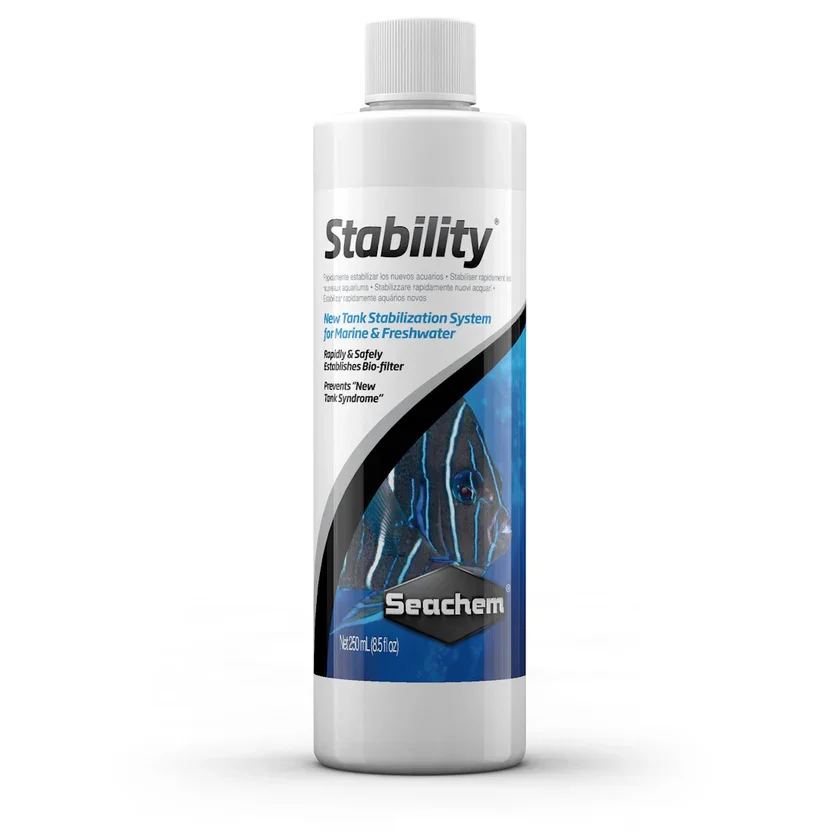
Use Seachem Stability after water changes or when adding new fish to support the biofilter. If you need to condition tap water and add a safety buffer, Seachem Prime is a helpful option for new aquariums.
The safest beginner rule is simple: test first, add fish slowly, and never rush the cycle.
Choosing Your First Fish
The best beginner fish are hardy, peaceful, and suitable for your tank size. Do not choose fish only by colour. Think about adult size, behaviour, water temperature, feeding needs, and whether the fish prefers to live alone or in a group.
Beginner-Friendly Fish Species
| Fish Type | Why Beginners Like Them | Important Note |
|---|---|---|
| Betta | Colourful, interactive, good for smaller heated tanks | Keep one male betta per tank |
| Neon tetra | Peaceful schooling fish for community tanks | Keep in groups, not alone |
| Corydora catfish | Helpful bottom-dwelling community fish | Needs smooth substrate and sinking food |
| Guppy | Active, colourful, hardy | Can breed quickly |
| Platy | Peaceful and beginner-friendly | Does well in small groups |
| Zebra danio | Hardy and active | Needs swimming space |
| Goldfish | Popular and hardy | Needs much more space and filtration than many expect |
For a 20-gallon / 75-litre beginner community tank, a simple starting plan could be a small school of tetras or danios with a few corydoras once the tank is mature enough. Add fish in stages rather than all at once.
Feeding Your First Fish
Most beginners overfeed. Feed only what your fish can finish in about 30 to 60 seconds. Remove obvious leftover food so it does not rot and raise ammonia.
Good food choices depend on the fish:
- Community tropical fish: Aquatees Premium Tropical & Cichlid Food
- Bettas: Dymax Betta Glory
- Bottom feeders: Dymax Bottom Feeder Elite
- Goldfish: Aquatees Premium Goldfish Flakes
- Larger cichlids: Dymax Flower Horn Food
Vacation Feeding Tip
Healthy adult fish can often go 2 to 3 days without food. For longer trips, an automatic feeder is usually safer than slow-release vacation blocks, which can break down and affect water quality.
Common Beginner Aquarium Problems and Simple Fixes
Every beginner runs into problems at some point. The key is to stay calm, test the water, and fix the cause instead of guessing.
Cloudy Water
Likely cause: New tank bacteria bloom, overfeeding, or disturbed substrate.
Simple fix: Test ammonia and nitrite. Reduce feeding, avoid overcleaning the filter, and give the tank time to settle. If levels are unsafe, do a partial water change with conditioned water.
Green Water or Algae
Likely cause: Too much light, direct sunlight, excess nutrients, or overfeeding.
Simple fix: Move the tank away from direct sun, reduce lighting time, feed less, and keep up with regular water changes. Healthy plants and stable water help reduce algae over time.
Fish Gasping at the Surface
Likely cause: Low oxygen, ammonia or nitrite spike, high temperature, or poor water movement.
Simple fix: Test the water immediately. Increase surface movement, check the filter, and perform a partial water change if ammonia or nitrite is present.
Fish Hiding All the Time
Likely cause: Stress, bright lighting, lack of hiding places, aggressive tankmates, or a new environment.
Simple fix: Add plants or decor for cover, keep lighting gentle, avoid tapping the glass, and make sure tankmates are peaceful.
Bad Smell From the Tank
Likely cause: Rotting food, dead plant matter, dirty substrate, or poor filtration.
Simple fix: Remove debris, vacuum the substrate during water changes, reduce feeding, and check that the filter is running properly.
Sudden Fish Deaths
Likely cause: Uncycled tank, ammonia or nitrite spike, temperature shock, chlorine in tap water, or adding too many fish too fast.
Simple fix: Test the water, use conditioner, do a partial water change if needed, and stop adding fish until ammonia and nitrite return to 0 ppm.
Products such as Seachem Purigen can help polish yellow or stained water, while Aquatees Bio-Top Natural Fish Supplements can support mineral balance in established aquariums.
Beginner Aquarium Setup FAQ
How long should I wait before putting fish in a new tank?
Most new aquariums need 4 to 6 weeks to cycle naturally. Your tank is ready when ammonia and nitrite both test at 0 ppm and the temperature is stable. Live bacteria products can help speed up the process, but you should still test before adding fish.
Can I put fish in a tank the same day I set it up?
It is safer to wait until the tank is cycled. Same-day fish stocking can lead to ammonia spikes if the filter does not have enough beneficial bacteria. If you must add fish quickly, use live bacteria, add only a few hardy fish, and test the water often.
What is the easiest fish tank size for beginners?
A 20-gallon / 75-litre tank or larger is usually easier for beginners than a very small tank. Larger water volume keeps temperature and water chemistry more stable.
Do I need a filter for my fish tank?
Yes. A filter helps remove waste, moves oxygen through the water, and gives beneficial bacteria a place to live. Most beginner aquariums should run a filter 24 hours a day.
Do I need a heater for my aquarium?
You need a heater if you keep tropical fish that require warm, stable water. Many tropical community fish do well around 24-26°C. Coldwater species, such as some goldfish, may not need a heater, but they still need stable conditions.
How often should beginners change aquarium water?
Many beginner tanks do well with a partial water change of about 20-30% once a week, but the exact schedule depends on tank size, stocking level, feeding, and test results. Always treat new tap water with conditioner before adding it.
Why is my new fish tank cloudy?
Cloudy water in a new tank is often a bacterial bloom. It usually happens while the aquarium is balancing. Test the water, avoid overfeeding, and do not replace all the filter media at once.
What are the best beginner fish?
Good beginner fish often include bettas, guppies, platies, zebra danios, neon tetras, and corydoras, depending on tank size and water conditions. Always check adult size, group needs, and compatibility before buying.
How many fish can I add at once?
Add only a few fish at a time, then wait and test the water before adding more. Adding too many fish at once can overload the filter and cause ammonia or nitrite spikes.
What should I do if ammonia or nitrite is high?
Stop feeding for a short period, do a partial water change with conditioned water, check that the filter is running, and add beneficial bacteria if needed. Do not add more fish until ammonia and nitrite return to 0 ppm.
Build a Healthy Aquarium
A successful aquarium does not happen by luck. It starts with the right tank size, safe equipment, treated water, a cycled filter, and patient fish stocking. If you are new to fishkeeping, keep your first setup simple, test your water often, and make small changes instead of rushing.
The most important beginner takeaways are:
- Choose a tank that is large enough to stay stable.
- Use a filter, heater when needed, thermometer, conditioner, and test kit.
- Cycle the aquarium before adding fish.
- Add beginner-friendly fish slowly.
- Fix problems by testing the water first.
Ready to take the next step?
- Browse beginner-friendly fish tanks
- Explore Seachem water care products
- Shop fish food for your first aquarium
- View Fritz Aquatics bacteria and setup support
Aquatees Fishland is here to help you build a clean, stable, confidence-boosting aquarium from the very first step.