

The Most Common Fish Tank Size Mistake Beginners Make
Choosing the right fish tank size is one of the most important decisions you will make as a new aquarium owner, and it is also where most beginners go wrong.
Before we get into the details, here is a quick answer if you need it fast:
| Situation | Recommended Tank Size |
|---|---|
| Absolute beginner, first tank | 40–80 litres (10–20 gallons) |
| Recommended starter for stability | 80–120 litres (20–30 gallons) |
| Small community fish (tetras, guppies) | 60–120 litres |
| Single betta fish | Minimum 20 litres (5 gallons) |
| Goldfish (first fish) | Minimum 80 litres (20 gallons) |
| Oscars or large cichlids | 280+ litres (75+ gallons) |
The short version: start with at least 40 litres, and aim for 80 litres or more if you can. Bigger tanks are actually easier to maintain, not harder.
Most people assume a small tank means less work. It does not. Small tanks have less water, which means temperature swings faster, waste builds up quicker, and a single mistake can wipe out your fish before you even notice something is wrong. A larger volume of water gives you more time to catch problems before they become serious.
Think of it this way: a single drop of ink in a glass of water turns the whole thing dark instantly. The same drop in a bucket barely registers. That is exactly how waste and toxins behave in your aquarium. The more water you have, the more forgiving the system is.
I’m Nemo Sulaiman, and I work with customers at Aquatees Fishland to help them choose the right fish tank size for their needs. It’s one of the first and most important decisions in setting up an aquarium, and something we talk through with beginners every day.
Tank size has a direct impact on water stability, maintenance effort, and fish wellbeing. This guide is based on those real discussions and practical setups, aimed at making the process clearer and more manageable for anyone starting out.
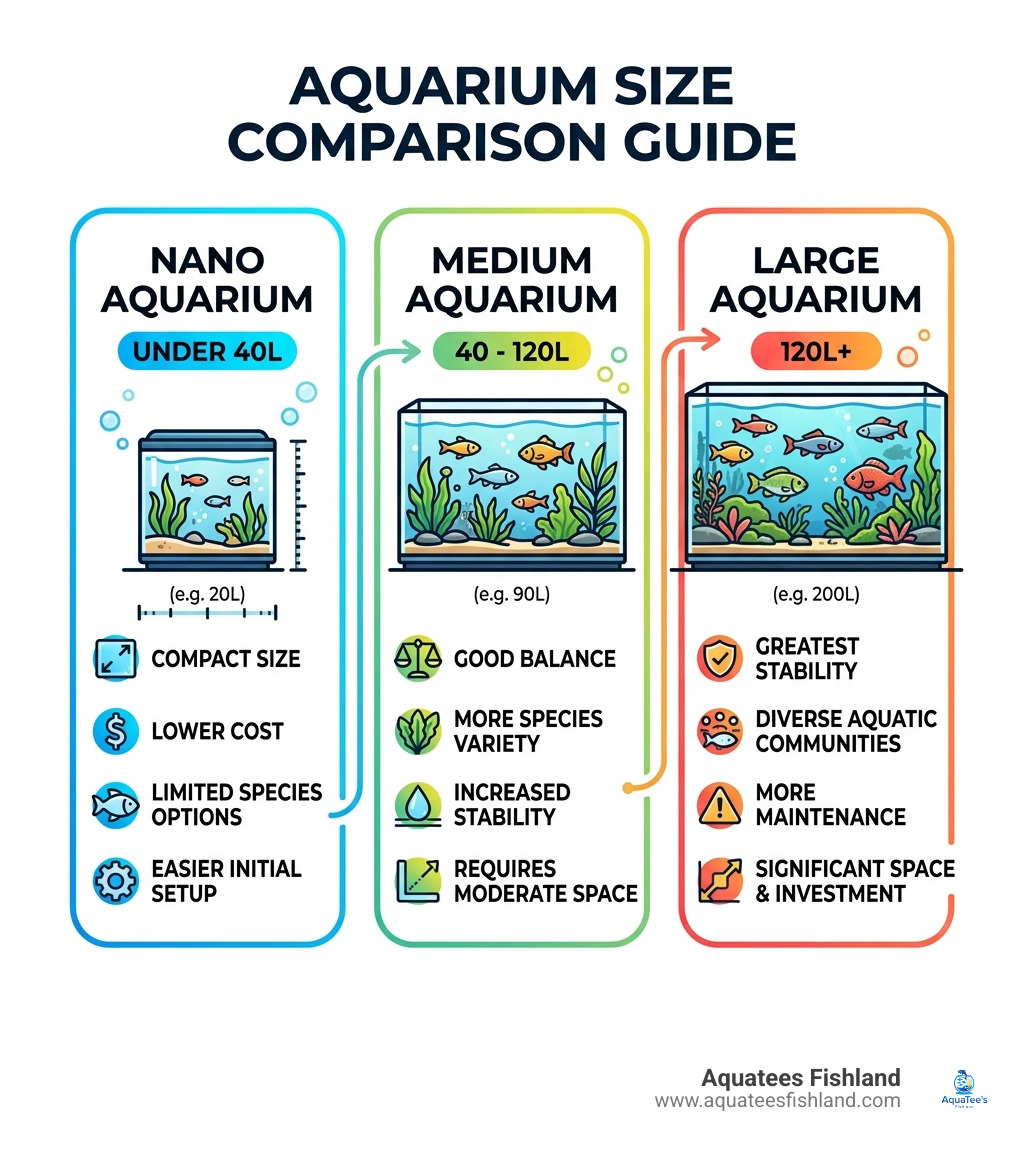
Why Bigger is Better: The Science of Water Stability
In the aquarium world, we often say "the solution to pollution is dilution." This is the fundamental reason why a larger fish tank size is superior for beginners. When you have a greater volume of water, you have a massive chemical and thermal buffer. In a tiny 10-litre bowl, the ammonia produced by a single fish can reach toxic levels in hours. In an 80-litre tank, that same amount of waste is diluted to a point where it is far less harmful.
Stability is the key to keeping fish alive. Small tanks are prone to "crashing," a term we use when water parameters like pH or temperature swing so wildly that the beneficial bacteria die off, leading to "new tank syndrome." By choosing a larger tank, you are essentially buying yourself an insurance policy against small mistakes.
To help establish this stability from day one, we always recommend using live nitrifying bacteria. Products like FritzZyme 7 Nitrifying Bacteria or Seachem Stability are essential. These aren't just chemicals; they are living colonies that jump-start your nitrogen cycle, turning toxic ammonia into safer nitrates.
The "Solution to Pollution" Concept
Waste management in an aquarium is a constant battle. Every time you feed your fish, they produce waste. This waste breaks down into ammonia, which is lethal. A larger fish tank size provides a larger "sink" for these toxins. This means you don't have to be a chemist to keep your fish healthy; you just need enough water to keep things diluted while your filter does its job.
For those starting out, we carry a wide range of water conditioners to ensure your tap water is safe before it ever touches your tank. Even a trace of chlorine can kill the beneficial bacteria you're trying to grow.
Choosing Your Fish Tank Size: Dimensions, Weight, and Floor Load
When you step into our Melbourne warehouse or browse online, you'll see tanks in all shapes. But the fish tank size isn't just about how many litres it holds; it's about the physical space it occupies and the weight it puts on your floor.
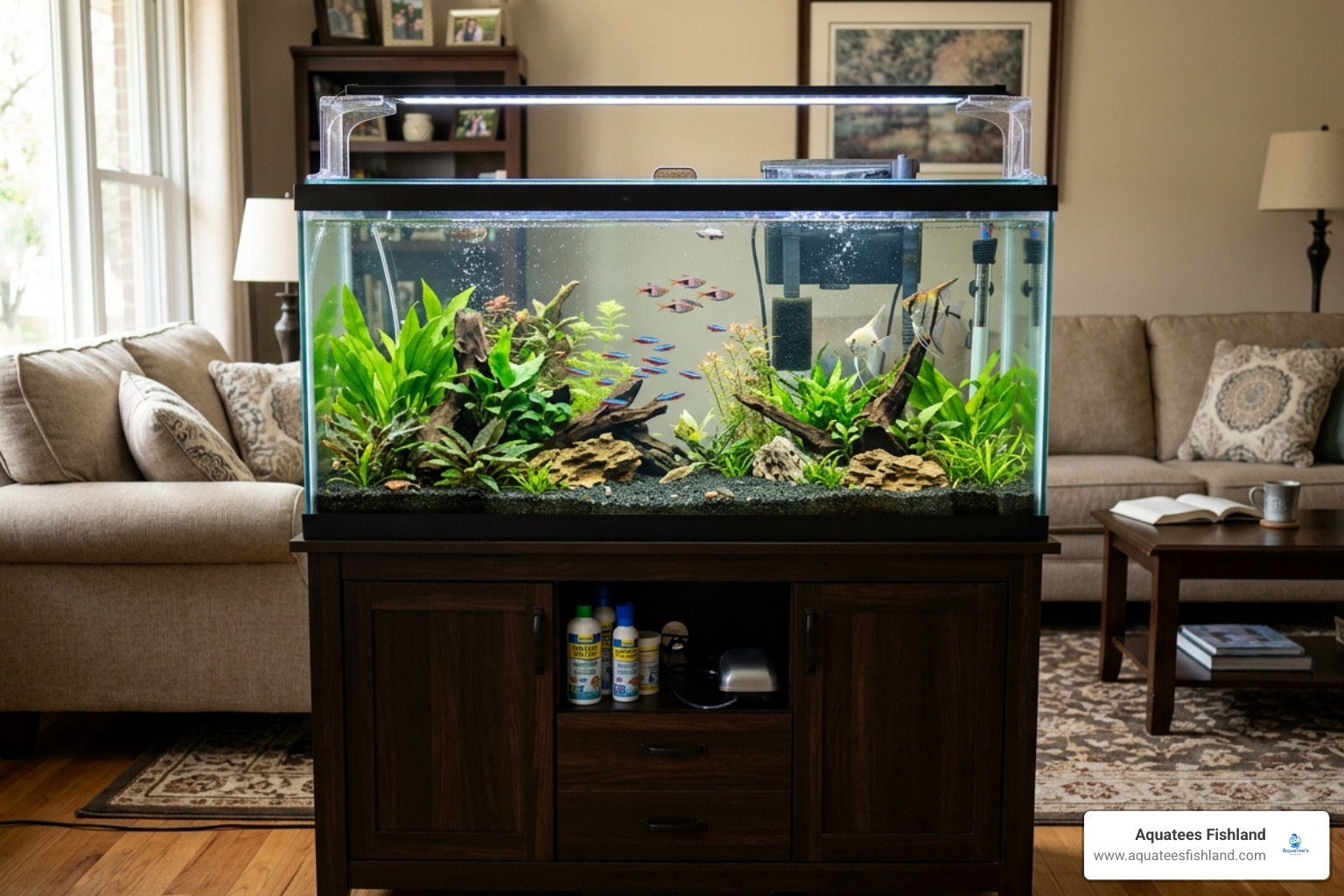
A common oversight is the "footprint"—the length and width of the tank. This determines how much surface area is available for oxygen to enter the water. Additionally, you must consider the glass thickness; larger tanks require thicker glass to withstand the immense pressure of the water.
Here is what you can expect from common sizes:
| Tank Capacity | Dimensions (Approx.) | Empty Weight | Filled Weight |
|---|---|---|---|
| 10 Gallon (38L) | 50 x 25 x 30 cm | 5 kg | 50 kg |
| 20 Gallon (75L) | 60 x 30 x 40 cm | 11 kg | 102 kg |
| 29 Gallon (110L) | 75 x 30 x 45 cm | 18 kg | 150 kg |
| 55 Gallon (208L) | 120 x 33 x 53 cm | 35 kg | 283 kg |
Calculating Volume and Surface Area for Your Fish Tank Size
To work out how much water your tank holds, use this simple formula: (Length x Width x Height in cm) / 1000 = litres. This gives you the tank's total internal volume and helps you plan stocking, filtration, and maintenance more accurately.
However, surface area is often more important than total volume. Oxygen exchange happens at the surface. A tall, narrow tank might hold 100 litres, but a long, shallow tank holding the same amount will actually support more fish because it has a better "breathable" surface. If you're ready to pick your footprint, you can browse our fish tanks to find the perfect fit for your room.
Understanding Filled Weight and Structural Safety for Your Fish Tank Size
One gallon of freshwater weighs about 3.78 kg (8.34 lbs). Once you add aquarium sands and gravel, rocks, and heavy timber decor, a 200-litre tank can easily weigh over 250 kg.
Standard residential floors in Australia are typically built to handle significant weight, but if you are planning a "monster" tank (300L+), you should place it against a load-bearing wall or consult a builder. Never place a medium or large aquarium on a standard bookshelf or coffee table; they are not designed to handle the constant, heavy load of an aquarium.
Debunking the "One Inch Per Gallon" Myth
You might have heard the rule: "One inch of fish per gallon of water." In May 2026, we are telling you: forget this rule. It is a dangerous myth that leads to overstocked, stressed tanks.
The problem is metabolic scaling. A 10cm Oscar produces vastly more waste than ten 1cm Neon Tetras. Their bodies are thicker, their appetites are larger, and their impact on water quality is massive. Furthermore, the rule doesn't account for swimming behaviour. A fast-swimming Danio needs a long tank to zoom around, even if it's small, whereas a sedentary Betta might be fine in a smaller space.
To manage the bioload of your fish, we rely on high-quality chemical filtration like Seachem Purigen and biological media like Seachem Matrix. These help remove nitrogenous waste that the "inch per gallon" rule completely ignores.
Why Shape Matters More Than Volume
When choosing a fish tank size, always prioritise length over height. A "20-gallon long" tank is almost always better than a "20-gallon high."
- Long tanks: Provide more horizontal swimming room and better gas exchange.
- Tall tanks: Are great for fish like Angelfish or Discus that have tall bodies, but they offer less surface area for oxygen.
Proper lighting is also affected by depth. If you have a very tall tank, you'll need powerful Dymax Lighting to ensure the light reaches the plants at the bottom.
Planning for Adult Growth
The biggest tragedy in fishkeeping is "stunting." This happens when a fish is kept in a tank that is too small. While the fish's outer body might stop growing, its internal organs often continue to develop, leading to a painful and premature death.
Never buy a fish based on its size in the shop. A 5cm Goldfish will grow to 30cm. A 5cm Oscar will reach 35cm in about a year. Always research the adult size first. If you don't have the space for the adult version, don't buy the baby. Robust aquarium filters can help manage waste, but they cannot provide physical swimming room.
Matching Species to Tank Volume
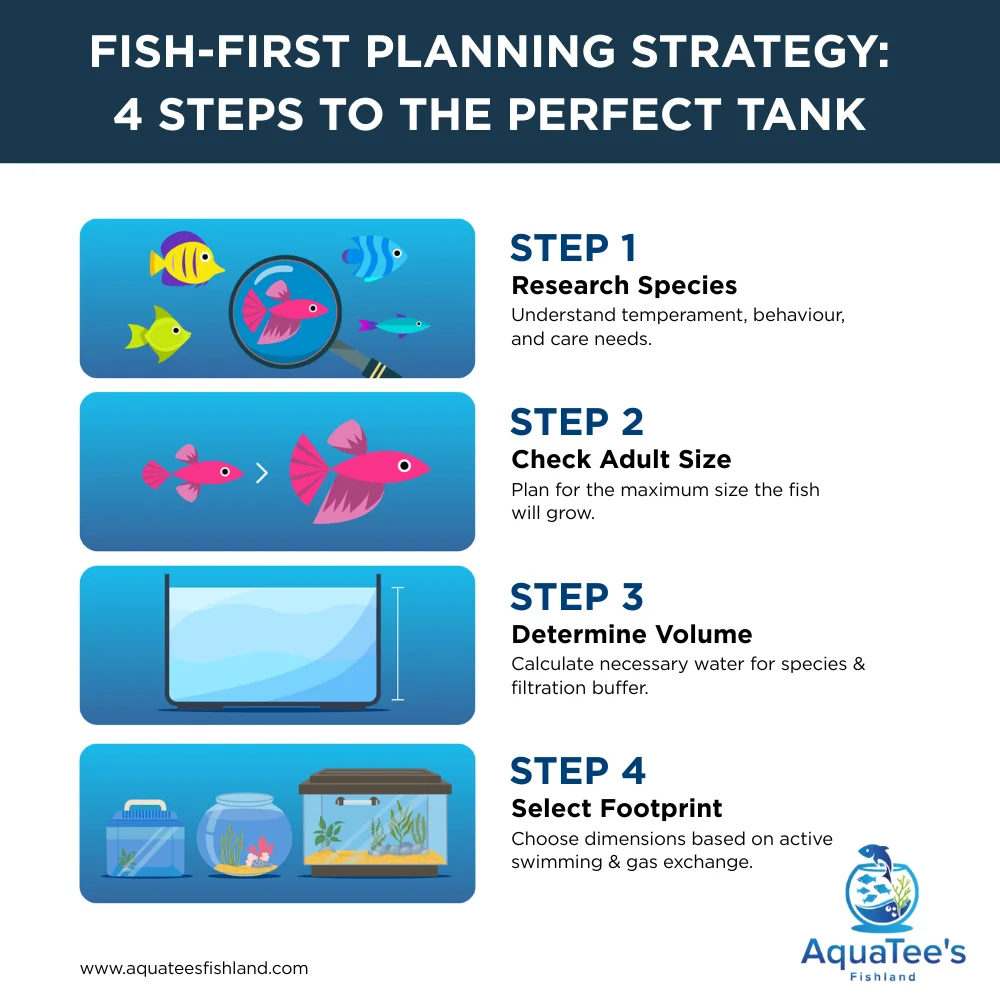
Choosing your fish and your fish tank size should happen at the same time. We call this the "Fish-First" strategy.
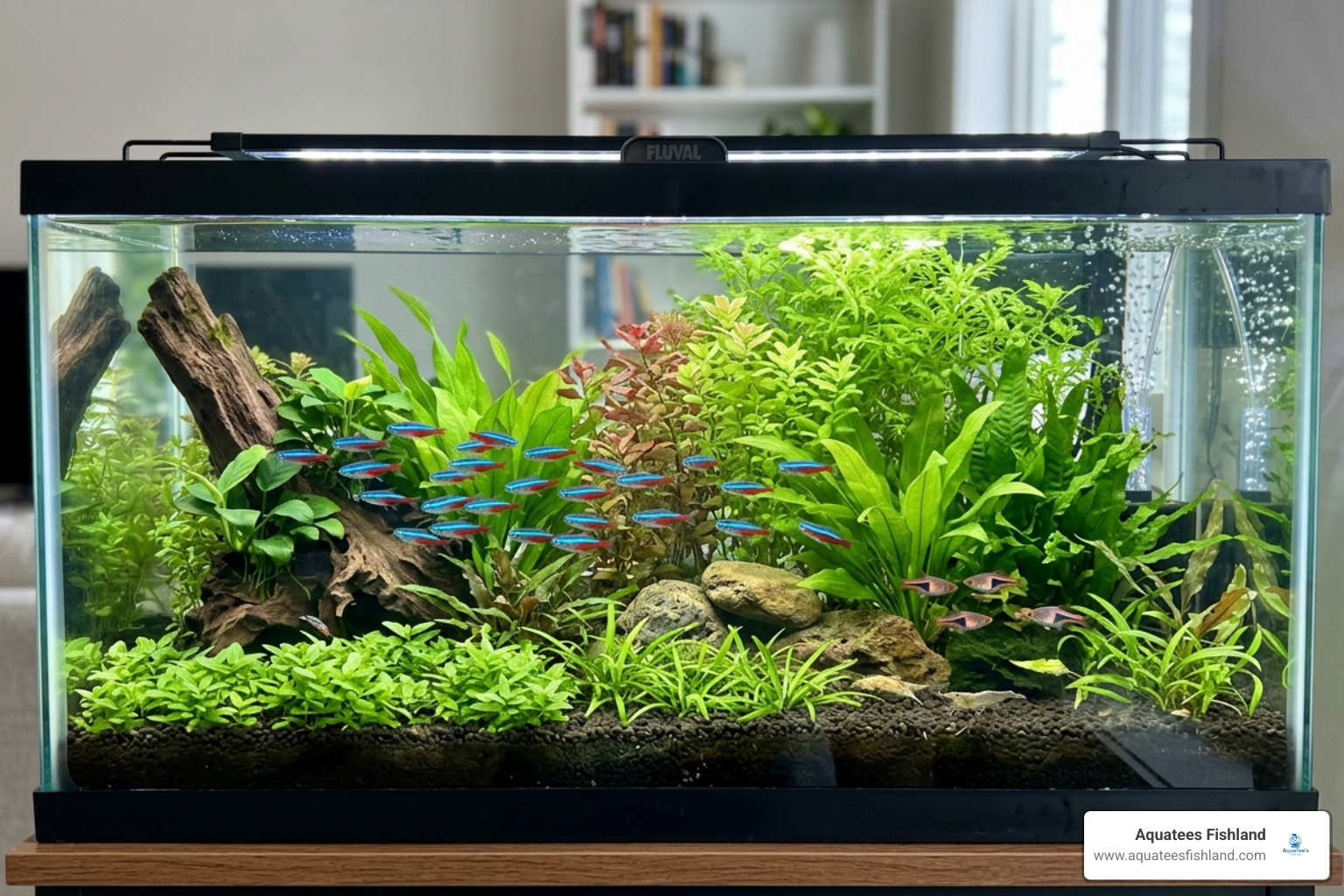
Best Fish for Small and Nano Tanks (Up to 40L)
Anything under 40 litres is considered a "nano" tank. These are beautiful but require a disciplined hand.
- Betta Fish: The classic choice, but they still need a heater and filter.
- Cherry Shrimp: Fascinating to watch and have a very low bioload.
- Endlers Livebearers: Colourful, active, and small.
Why Temperature Matters So Much in Nano Tanks
Small aquariums are far more sensitive to environmental changes than larger tanks. Because there is less water volume, temperature shifts happen quickly, sometimes within hours. Even a 1–2°C swing can stress fish in a nano tank. Choosing the right aquarium heaters is vital to prevent temperature shocks.
Ideal Temperature Ranges (Nano Tank Basics)
Most common nano tank species fall into these ranges:
- Betta fish: 25–28°C (needs consistent warmth)
- Tropical shrimp (Cherry Shrimp): 20–26°C (prefers stability over heat)
- Endlers Livebearers: 22–26°C (adaptable but still sensitive to swings)
The key is not just hitting the right number but keeping it steady.
Why Nano Tanks Lose Heat So Quickly
Small tanks are more vulnerable because:
- Less water = less thermal mass (heat disappears faster)
- Room temperature changes have a bigger impact
- Lights and filters can slightly warm water during the day
- Night-time drops are more noticeable
Heating Best Practices for Nano Setups
To keep things stable:
- Use a reliable adjustable aquarium heater (not preset-only models)
- Match heater wattage properly (too strong can overshoot temperature fast in small tanks)
- Place the tank away from windows, air-conditioning, and direct sunlight
- Use a thermometer to monitor daily fluctuations, not just “set and forget” heating
- Keep the heater near water flow (so heat distributes evenly)
A small change in placement or equipment quality can make a big difference in stability.
Requirements for High-Waste and Large Species
Some fish are "messy eaters" or just biologically heavy. Goldfish, for example, do not have stomachs; food passes through them quickly, leading to constant waste production. For these setups, or for saltwater transitions, you need heavy-duty bacterial support like FritzZyme 9 Nitrifying Bacteria to handle the ammonia spikes.
- Goldfish: Need at least 75-100 litres for the first fish.
- Oscars: Require a 280-litre tank minimum to accommodate their size and aggression.
- African Cichlids: Often kept in "overstocked" conditions to manage aggression, which requires massive filtration and a large tank footprint.
For these high-energy species, we recommend premium diets like Hikari to ensure they get the nutrition they need without excess fillers clouding your water.
Frequently Asked Questions about Fish Tank Size
What is the ideal minimum tank size for a beginner?
We recommend starting with at least 40 to 80 litres. While a 20-litre tank is tempting, the water chemistry is simply too unstable for someone still learning the ropes. An 80-litre (roughly 2-foot) tank is the "sweet spot" where you have enough volume for a nice community of fish but it's still easy to clean during your weekend maintenance.
Does a fish only grow to the size of its tank?
No, this is a dangerous myth. A fish's growth is determined by its genetics and its environment. If a tank is too small, the fish's growth may be "stunted," which causes severe internal health issues and a shortened lifespan. Always size your tank based on the fish's maximum adult size.
Why are long tanks better than tall tanks for most fish?
Fish generally swim left-to-right, not up-and-down. A long tank provides more "runway" for active species to exercise. More importantly, a long tank has a larger surface area at the top, which allows for better gas exchange, letting oxygen in and carbon dioxide out.
Final Thoughts: Choosing the Right Fish Tank Size
Choosing your fish tank size is about more than just finding a spot on your desk; it's about building a sustainable home for living creatures. By starting a bit larger, you give yourself the "buffer" needed to succeed and enjoy the hobby rather than constantly fighting water quality issues.
Whether you are looking for a sleek Seachem setup or want to explore the exclusive range of Fritz products, we are here to help. Future-proofing your choice now means you won't have to buy a new tank in six months when your fish grow or when you decide you want more species.
At Aquatees Fishland, we pride ourselves on being more than just a shop; we are an aquarium warehouse for the Melbourne community and all of Australia. From luxury cabinet sets to bargain essentials, we have everything you need to start your aquatic journey.
Helpful categories to explore: