

How to set up a fish tank is much easier when you treat it as a simple setup process rather than a rush to add fish. For most beginners, a freshwater aquarium is the easiest place to start because the equipment, water care, and cycling steps are more straightforward to learn.
This guide breaks the process into three clear stages: choose the right tank and location, set up your equipment and water, then cycle the tank before adding fish. Getting those steps right helps keep the aquarium more stable, gives your fish a safer start, and makes day-to-day care easier once the tank is running.
Hi, I'm Nemo Sulaiman. I’m part of the eCommerce and warehouse team at Aquatees Fishland, and I've spent the past years helping customers choose fish, aquarium equipment, and supplies. I've seen plenty of beginners get stuck on the same questions, so here's how I'd approach setting up a new freshwater tank for the first time.
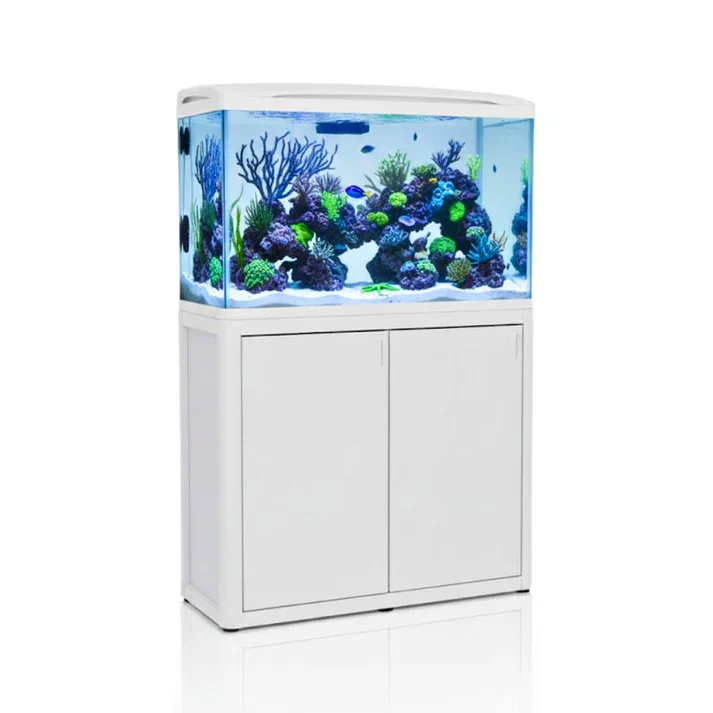
Choosing the Right Tank and Location
Choosing the right tank and location is the first step because it affects how stable, safe, and easy your aquarium will be to look after. Pick the tank around the fish you want to keep, then place it somewhere level, strong, and away from direct heat or sunlight.
For beginners, a slightly larger tank can be more forgiving than a very small one. More water usually means small changes happen more slowly, which gives you more time to notice and fix issues with temperature or water quality.
A standard 20-gallon (approx. 76-litre) or 55-gallon (approx. 208-litre) horizontal tank can give beginner hobbyists useful swimming room and more options for suitable community fish.
The shape of the tank also matters. A wider tank gives fish more usable swimming space and creates more surface area where oxygen can enter the water. Think of the water surface as an open window that helps the aquarium breathe naturally.
Before adding water, make sure the tank has strong, level support. A filled aquarium becomes heavy very quickly once you add water, gravel, rocks, glass, and equipment. Using a dedicated, level aquarium stand helps prevent uneven pressure on the glass or silicone seams over time.
Proper location selection helps your setup remain stable and easy to maintain throughout the year:
- Place the stand on a flat, level floor away from direct sunlight, which can fuel nuisance algae and cause unwanted temperature changes.
- Keep the aquarium clear of drafty entryways, heating vents, and air conditioners to maintain steady water temperature.
- Allow enough clearance behind the tank to comfortably access your filter, hoses, and electrical cords.
- Form downward electrical drip loops on each power lead before plugging into a surge protector so stray moisture cannot track along cables into wall sockets.
Browsing curated collections of Fish Tanks can help you compare aquarium sizes, shapes, and glass styles before committing to a setup.
Setting Up Your Equipment and Water
Setting up your equipment and water means preparing the tank, adding the right gear, treating the tap water, and checking that everything runs properly before livestock goes in. This step gives your fish a cleaner, safer environment from day one.
Essential Fish Tank Equipment
Reliable equipment supports clear water, steady temperature, and healthier fish. For a beginner freshwater setup, the main items are usually a filter, heater if keeping tropical fish, thermometer, light, substrate, water conditioner, water testing kit, and suitable décor or hardscape.
The filter is one of the most important choices because it helps keep water moving and gives helpful bacteria a place to grow. A sponge filter gives gentle flow and can suit certain small setups, fry, shrimp, or bettas. A hang-on-back filter is accessible and straightforward for many beginner tanks. A canister filter can be useful for larger or more demanding setups where extra media space and flow are helpful. An internal filter is a compact option for smaller aquariums where simple installation matters.
Choose aquarium gear around the tank size, fish species, and manufacturer recommendations. Aquatees Fishland's water filter range, Aquarium Heaters & Chillers, and Aquarium Lighting collections make it easier to compare the main equipment discussed here without turning the setup guide into a product list.
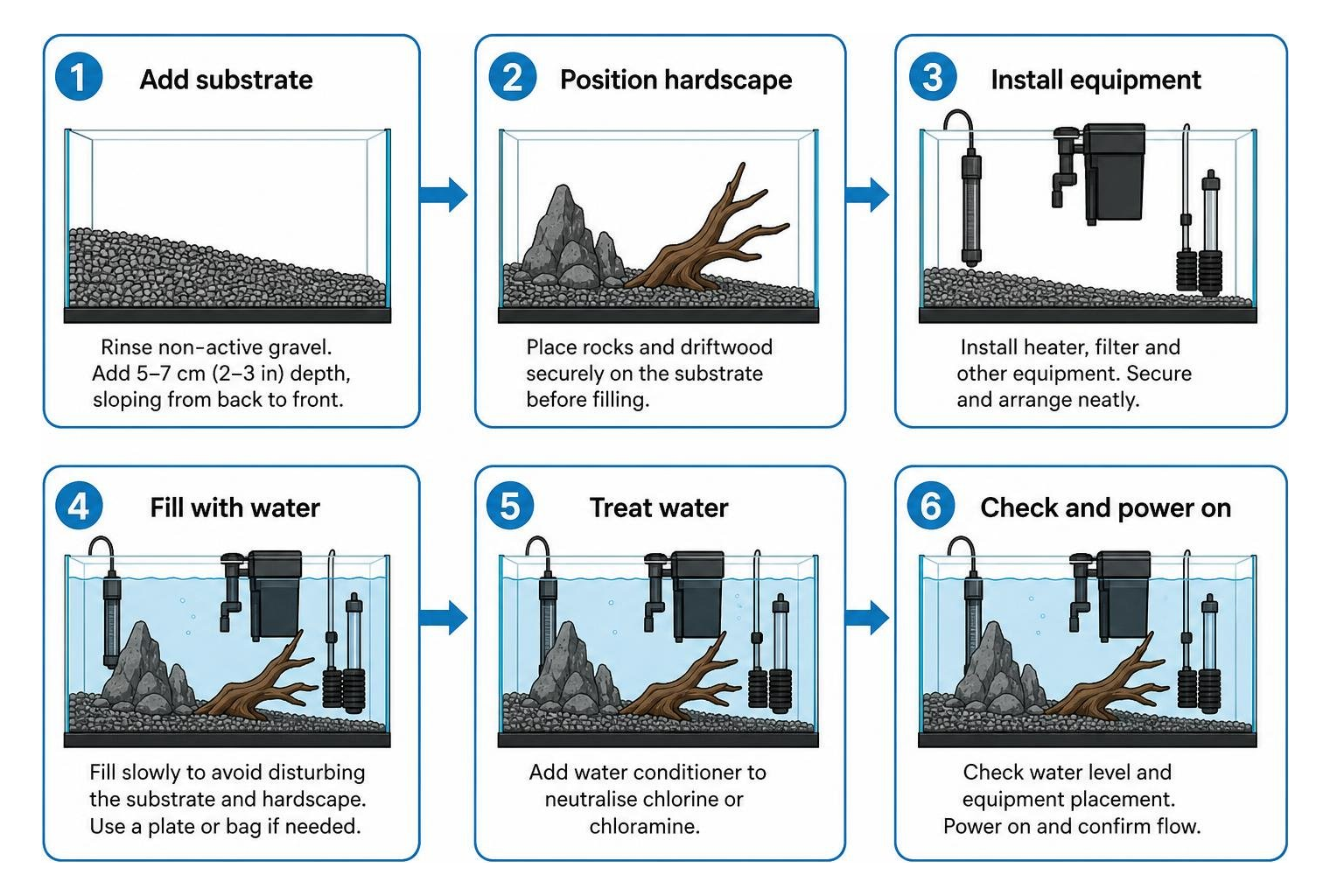
When preparing your base layer, choose substrate to suit the livestock and plants you plan to keep. Smooth inert gravel, nutrient-rich plant soil, or fine sand can all work in the right setup. Rinse non-active gravel thoroughly in clean water until the runoff is clear. Add enough substrate to cover the base properly and create the look you want, following manufacturer recommendations for planted or specialised substrates. Carefully inspect natural decorative materials and follow manufacturer guidelines rather than collecting unverified outdoor items or boiling stones.
Preparing and Conditioning the Water
Conditioning tap water removes toxic chemical disinfectants and makes the aquarium safer for helpful bacteria and fish. Raw tap water contains chlorine or chloramines that can irritate fish and harm the bacteria you want growing in the filter.
Treat raw tap water with suitable Water Conditioners, dosed according to the product label, before it goes into the aquarium. Check with your local water authority to understand whether chlorine or chloramines are present in your municipal supply.
Pour conditioned water into the tank gently by placing a clean ceramic plate over the substrate to soften the flow and avoid stirring everything up. After filling, install the filter, heater, thermometer, and light, then turn the equipment on and check for steady flow, correct temperature, leaks, and safe cable placement.
Cycling the Tank Before Adding Fish
Cycling the tank before adding fish is the step that makes a new aquarium safe to live in. A tank can look clean on day one, but it still needs helpful bacteria in the filter to deal with waste.
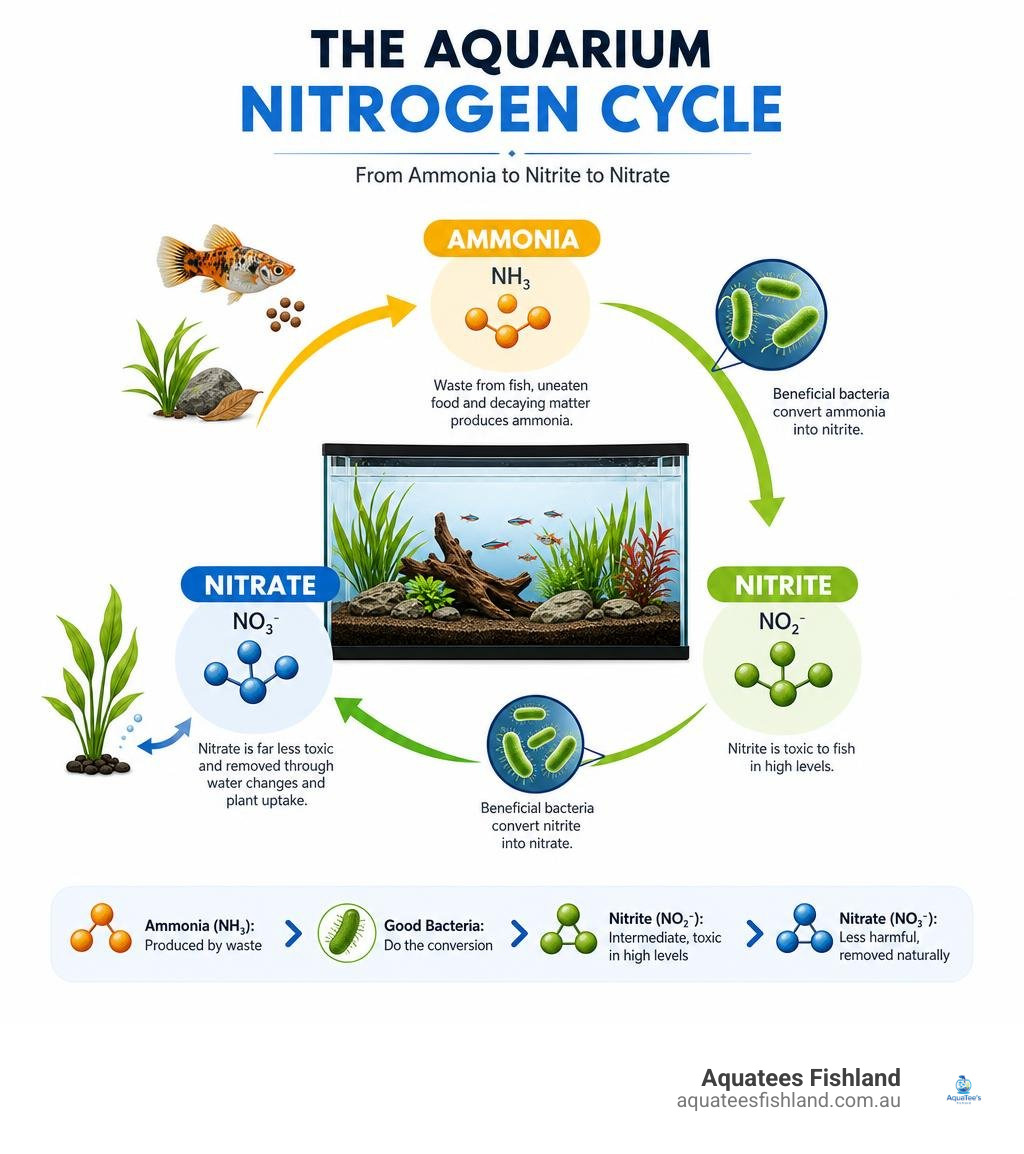
The nitrogen cycle is the natural process that handles fish waste. Waste creates ammonia, bacteria turn ammonia into nitrite, and a second group of bacteria turns nitrite into nitrate. Nitrate is usually managed with regular testing and water changes.
Beneficial bacteria products can help seed the filter media, but cycling time can still vary depending on the aquarium, water conditions, filter media, temperature, and how consistently ammonia is available for the bacteria. Aquatees Fishland stocks FritzZyme products online in Australia, including FritzZyme 7 in 236 ml, 473 ml, 946 ml, and 3.7 L options.
The cycling process is easier to understand when you think of it as training the filter before fish arrive:
- Add an ammonia source: Add a suitable fishless ammonia source according to the product directions.
- Let the first bacteria develop: Helpful bacteria consume the ammonia and convert it into nitrite, which is also toxic to aquatic life.
- Let the second bacteria develop: Other bacteria then convert nitrite into nitrate, which is usually managed through water changes.
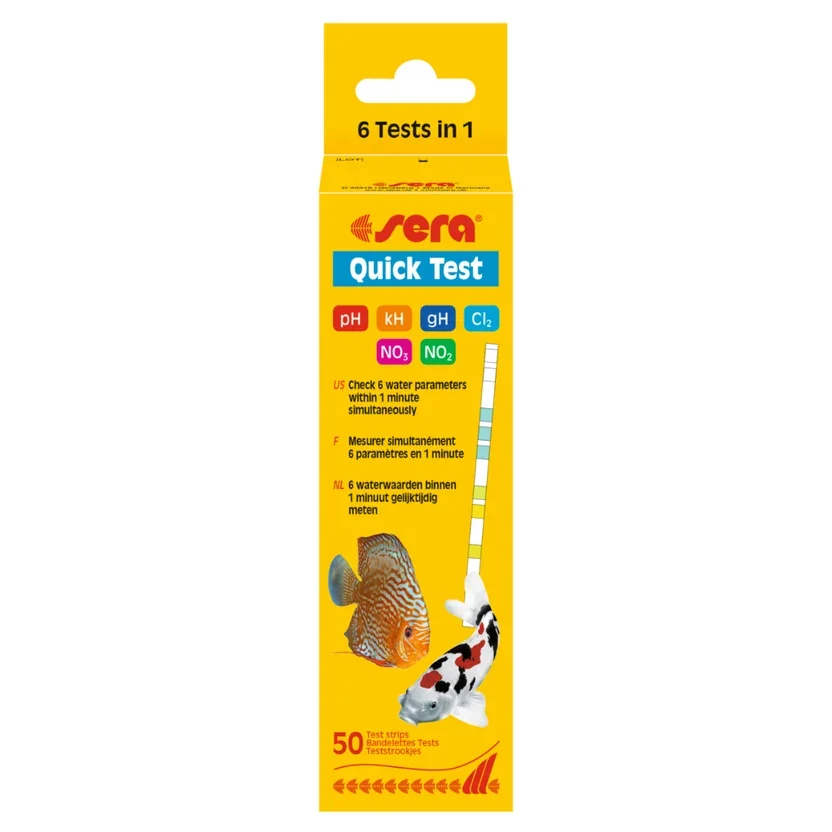
- Test before adding fish: The tank is usually ready when testing shows it can process the added ammonia into nitrate, leaving 0 ppm ammonia and 0 ppm nitrite. Testing is a better guide than a fixed number of days.
Adding Fish for the First Time
Adding fish for the first time should happen slowly once testing shows the tank is ready. Choose species suited to the tank size, add a small number at first, and avoid stocking the aquarium to full capacity straight away.
Acclimatising new fish safely requires gradual temperature balancing and water chemistry blending rather than rushing the fish straight into the tank. Float the sealed transport bag on the water surface until temperatures have had time to even out. Slowly add small amounts of aquarium water into the transport bag to help livestock adjust to the pH and hardness levels.
Avoid tipping store transport water into your display aquarium, as it may harbour parasites, unwanted algae spores, or pathogens. Use a soft net to transfer fish gently into the aquarium.
After release, keep the tank lights dim and wait until the fish have had time to settle before offering small pinches of quality fish food from respected manufacturers like Hikari or Dymax.
Monitor your new arrivals closely for signs such as rapid gill movement, lethargy, or clamped fins, which could suggest lingering parameter shifts. If a fish shows ongoing incompatibility or outgrows the space, explore internal rehoming solutions first by transferring the fish to a larger or dedicated alternative home tank before considering external options like rehoming through trusted local hobbyist groups.
Frequently Asked Questions About How to Set Up a Fish Tank
Keeping a beginner freshwater aquarium healthy comes down to regular testing, steady routines, and knowing what the water readings mean.
What do I need to set up a fish tank?
You usually need a suitable aquarium, level stand, filter, heater for tropical fish, thermometer, light, substrate, water conditioner, test kit, and safe décor or hardscape. The exact equipment depends on tank size, livestock, plants, and manufacturer recommendations.
How long does it take to cycle a new fish tank?
Cycling a new fish tank does not have one guaranteed timeframe. It can take several weeks in many setups, and some tanks may take more or less time depending on factors such as filter media, water conditions, temperature, stocking plans, and whether suitable bacterial products are used. Testing matters more than the number of days.
How do I know when my tank is ready for fish?
Your tank is usually ready for fish when reliable liquid drop tests show 0 ppm ammonia, 0 ppm nitrite, and manageable nitrate after the filter has processed an ammonia source. Clear-looking water is not enough, because harmful ammonia and nitrite can be invisible.
Can I put fish in a new tank straight away?
Putting fish in a new tank straight away is generally not recommended for beginner freshwater setups. Without established colonies of helpful bacteria, fish waste can build up quickly and cause stress or mortality.
What are the most common fish tank setup mistakes?
Common fish tank setup mistakes include overfeeding livestock, washing filter sponges under unconditioned tap water, running lights for too long each day, and neglecting routine partial water changes. Feeding more food than fish consume quickly can affect water clarity and place extra pressure on the filter.
How to Set Up a Fish Tank Successfully: Key Takeaways
Setting up a beginner freshwater fish tank successfully comes down to three practical steps: choose the right tank and location, set up the equipment and water properly, then cycle and test the tank before adding fish.
A good setup starts before the fish arrive. A level stand, suitable filtration, steady heating where needed, conditioned water, and regular testing all help create a safer home for livestock from the beginning.
Once you know what your aquarium needs, Aquatees Fishland can help you find the main equipment and supplies discussed in this guide: