

Is an Internal Tank Filter the Right Choice for Your Aquarium?
An internal tank filter is one of the most practical and beginner-friendly filtration solutions available for home aquariums. Here is a quick summary to help you decide if it suits your setup:
| Filter Type | Ideal Setup | Key Benefit | Best For |
|---|---|---|---|
| Internal Power Filter | Small to medium tanks (up to 200L) | Compact, easy install, no external hoses | Beginners, community tanks |
| Sponge Filter (Air-Driven) | Nano, breeding, shrimp tanks | Gentle flow, high biological capacity | Fry, shrimp, quarantine tanks |
| External Canister | Tanks over 150L, heavy bioloads | Large media volume, superior water clarity | Advanced setups, large fish |
If you have a small to medium aquarium, want a simple setup with no external plumbing, and need a filter that handles mechanical, biological, and chemical filtration in one unit, an internal filter is very likely the right fit.
Getting filtration right is honestly one of those things that makes or breaks your tank from day one. Most of the questions we get at Aquatees Fishland come down to water quality, and a huge part of that traces back to whether the filter is doing its job properly. A reliable internal tank filter is usually where the answer starts, especially for hobbyists who are setting up their first aquarium or running a dedicated quarantine system.
I'm Nemo Sulaiman, part of the eCommerce and warehouse team here at Aquatees Fishland, and after working hands-on with a wide range of filtration products and helping customers troubleshoot real tank issues every day, I have seen first-hand how much difference the right internal filter makes to long-term water stability. This guide covers everything you need to know to make a confident decision for your setup.
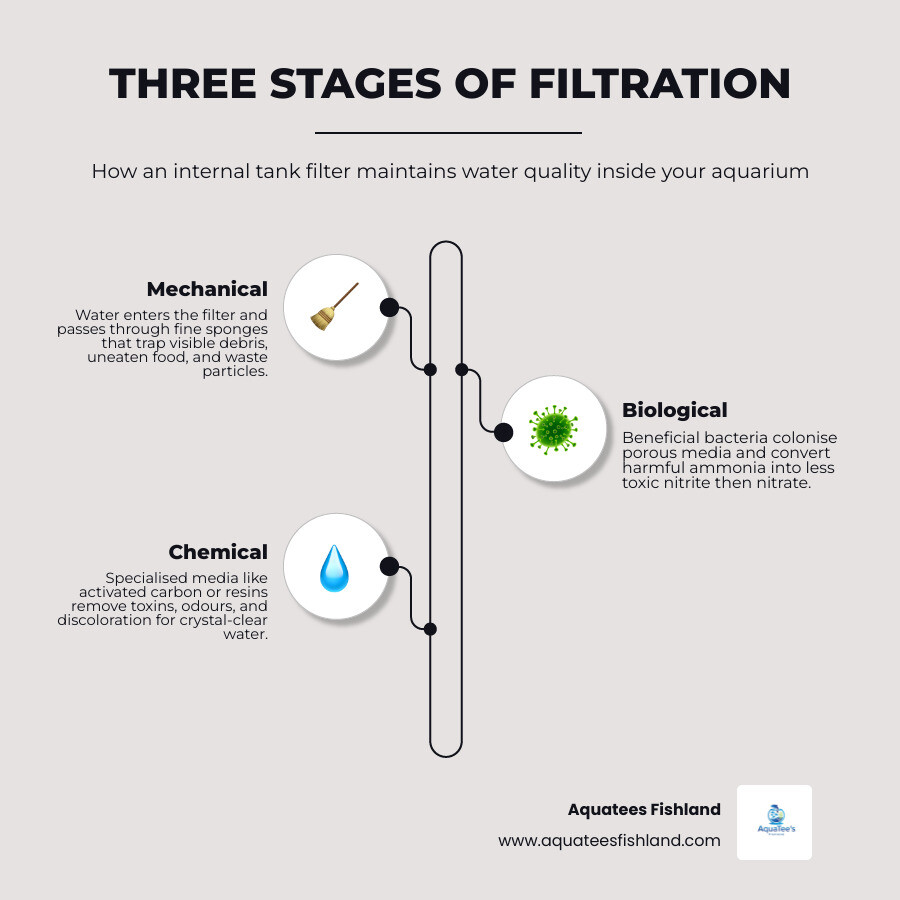
Mini Definition: Internal Tank Filter An internal tank filter is a submersible filtration unit placed entirely inside an aquarium. It uses an integrated pump or air supply to draw water through internal media sponges or cartridges to remove waste and support beneficial bacteria.
What is an Internal Tank Filter and How Does it Work?
An internal tank filter is essentially the "engine room" of your aquarium, tucked away in a corner of the glass. Unlike external canister filters that sit in a cabinet below, or hang-on-back (HOB) filters that perch on the rim, these units are designed to be fully submerged. They are fantastic for keeping your setup sleek and tidy, which is perfect if you do not have a dedicated cabinet to hide bulky equipment.
The Mechanics of an Internal Tank Filter
The magic happens via a small, quiet motor and an impeller. The motor creates suction, pulling water from the bottom or sides of the unit into a chamber filled with filter media. Once the water has been scrubbed clean, the impeller pushes it back out, often through a nozzle or a spray bar.
At Aquatees Fishland, we often recommend starting with a high-quality mechanical layer. Water first passes through Dymax White Wool Sponges to trap physical debris like uneaten food and fish waste. This keeps the water looking crystal clear. Many modern units, such as those from the Oase or Sicce ranges, feature adjustable flow rates ranging from 65 GPH to 238 GPH, allowing you to dial in the perfect current for your specific fish.
Understanding the Three Stages of Filtration
To keep your fish healthy in May 2026, your internal tank filter must handle three distinct tasks:
- Mechanical: Trapping floating particles.
- Biological: This is the most important stage. It uses porous media like Seachem Matrix to provide a massive surface area for nitrifying bacteria. These bacteria process waste through the nitrogen cycle to remove toxic ammonia and nitrite.
- Chemical: Using specialised media like Seachem Purigen to remove organic pollutants, tannins, and odours that mechanical sponges miss.
When setting up a new filter, we highly recommend using FritzZyme 7 Nitrifying Bacteria. It jump-starts the biological cycle, ensuring your new filter is ready to protect your fish from day one.
Types and Categories of Internal Filtration
Not all internal filters are created equal. Depending on what you are keeping, whether it is a high-energy school of tetras or a delicate colony of crystal red shrimp, you will need to choose the right category.
Internal Power Filters vs Sponge Filters
Internal power filters are the heavy lifters. They have a built-in pump and are great for creating surface agitation, which increases oxygen levels. If you have a 50-gallon tank, a powerful model like the OQTTNEO can move up to 320 GPH, ensuring every drop of water is processed multiple times per hour.
On the other hand, air-driven options like the Aquatees Mini Aquarium Sponge Filter are the "gentle giants" of filtration. They rely on an external air pump to pull water through a sponge. They don't have moving parts inside the tank, making them incredibly safe for tiny fry or shrimp.
Species-Specific Filtration Needs
We always tell our Melbourne customers to match the filter to the fish.
- Bettas: Prefer very low flow. A sponge filter or a power filter with a spray bar is ideal.
- Goldfish: They are "messy" eaters. You need serious biological capacity, which is where Aquatees Jumbo Bio Sponge Filters shine.
- Breeding Tanks: A sponge filter is non-negotiable here to prevent babies from being sucked into an impeller.
Suitability and Application for Your Tank
One of the most common questions we get at our warehouse is: "Is my tank too big for an internal tank filter?" While they are most famous for smaller setups, they are surprisingly versatile.
Filtration for Nano and Small Aquariums
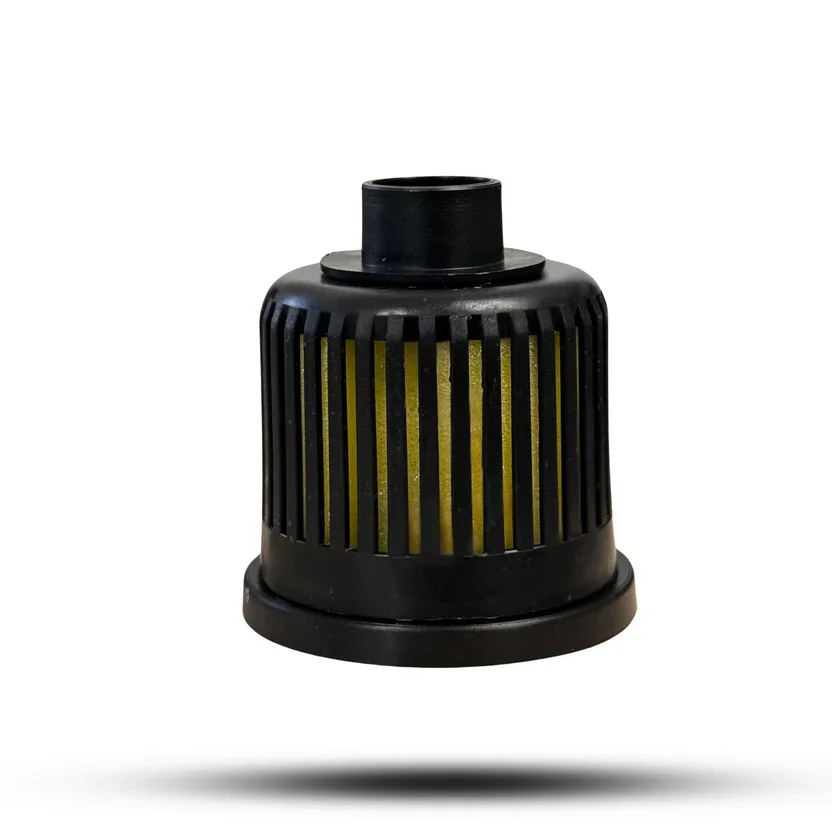
For nano tanks (10L to 40L), internal filters are king. They are compact and often include "all-in-one" cartridges that make maintenance a breeze. Using a Mini Sponge Filter in a small desktop tank provides excellent biological stability without taking up half the swimming space.
Handling Medium Tanks and High Bioloads
In tanks up to 150L or 200L, an internal filter can still be the primary workhorse. However, as the fish load (bioload) increases, you need more surface area for bacteria. The PK-220 Medium Bio Sponge Filter is a fantastic choice for 200L setups.
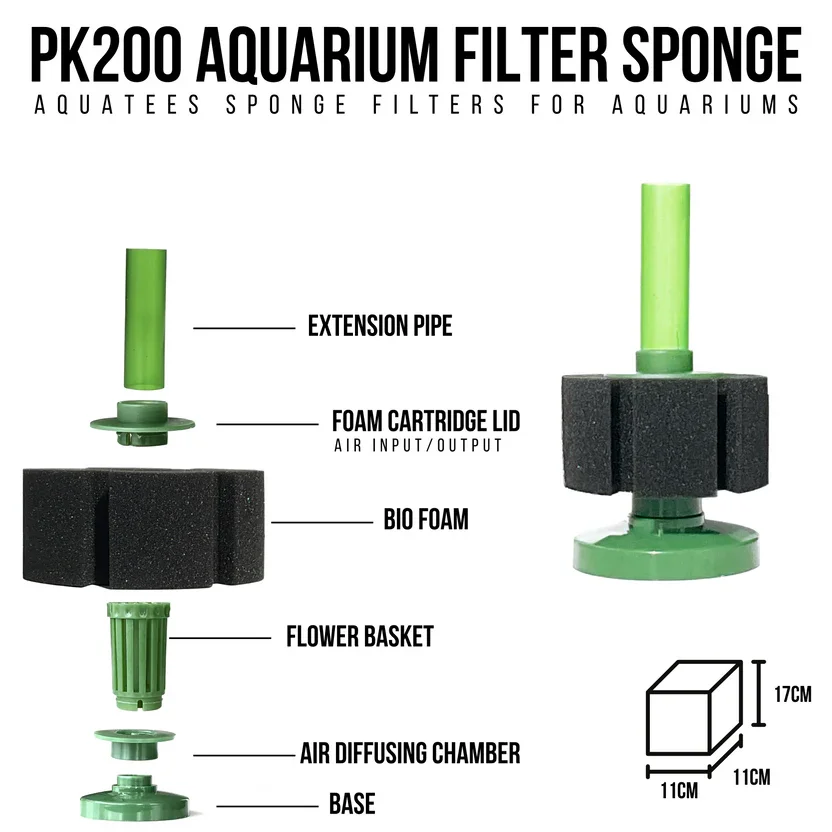
If you struggle with algae in these medium tanks, adding an Aquatees Phosphate Sponge Pad to your filter chamber can help strip out the excess nutrients that fuel green water.
Pros and Cons of Internal Tank Filters
Every piece of equipment has its trade-offs. Here is the honest breakdown from our expert team.
Advantages of Internal Systems
- Leak-Proof: Since the whole unit is inside the tank, there are no hoses that can perish or leak onto your floor. This is a huge win for renters!
- Silent Operation: Water is a natural sound insulator. Most internal pumps are whisper-quiet.
- Built-in Aeration: Many models include a "venturi" feature, which is a small air tube that pulls bubbles into the outflow to oxygenate the water.
- Ease of Setup: It is literally "plug and play." No priming or complex plumbing required.
Potential Drawbacks to Consider
- Visual Footprint: They do take up space inside the aquarium. You will need to use plants or rocks to hide the unit if you want a natural look.
- Limited Media: You cannot fit as much Seachem Matrix in an internal filter as you could in a massive external canister.
- Wet Maintenance: You have to reach into the tank to pull the filter out for cleaning, which can be a bit of a splashy affair.
Maintenance and Water Quality
Maintenance is where most hobbyists go wrong. If you treat your internal tank filter well, it will keep your water pristine for years.
Routine Cleaning and Media Care
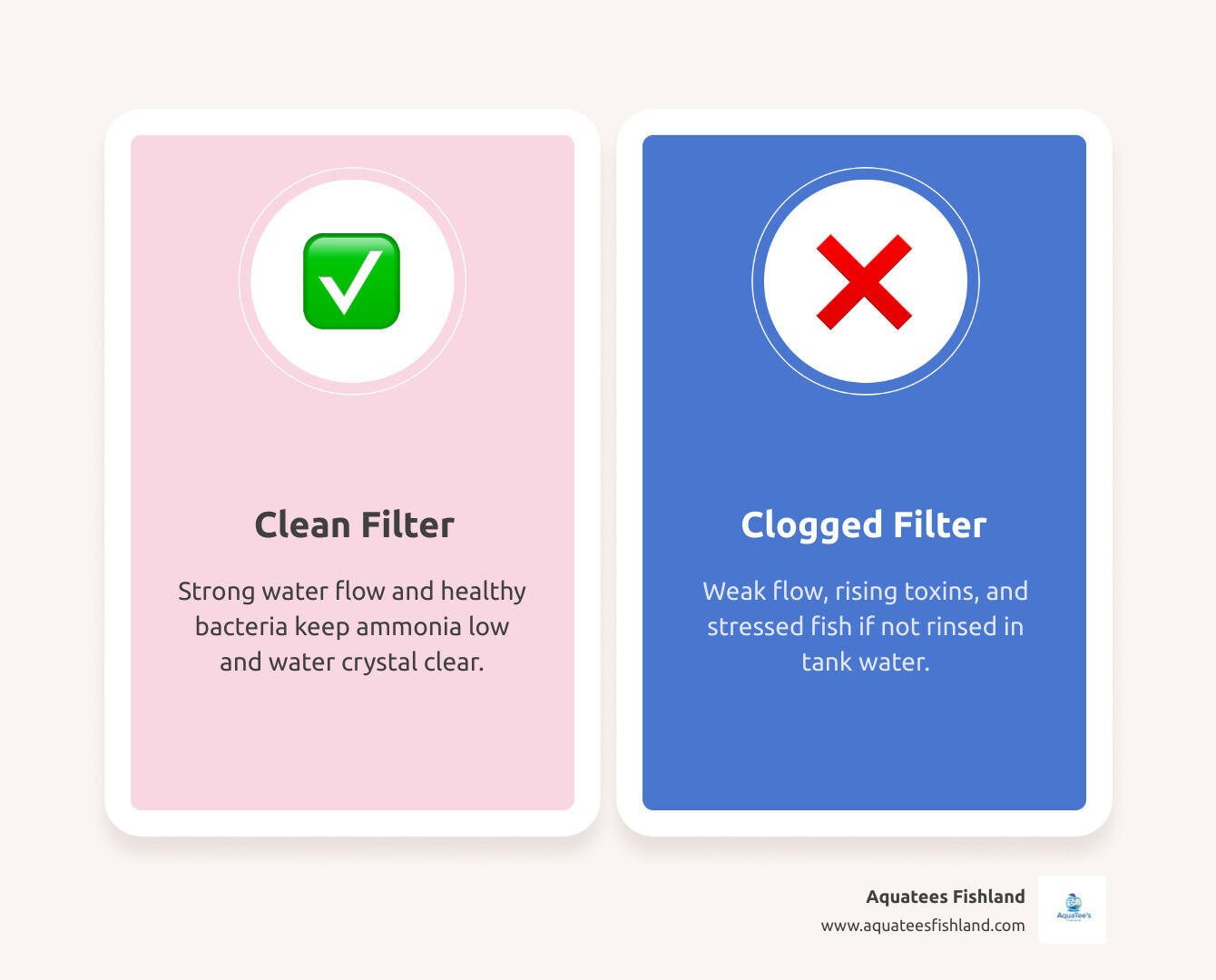
You should check your filter every 2 to 4 weeks. If the flow starts to slow down, the mechanical sponges are likely clogged. Crucial Tip: Never wash your filter sponges under the tap! The chlorine in tap water will kill your beneficial bacteria. Always rinse them in a bucket of water you’ve just siphoned out of the tank.
If your sponges are falling apart, it’s time for a refresh. The Dymax Black Bio Sponge is a high-quality replacement that can be cut to fit almost any internal unit.
Ensuring Long-Term Stability
Whenever you do a water change or clean your filter, always use Seachem Prime. It detoxifies any stray ammonia and neutralises chlorine instantly.
At Aquatees Fishland, we take quality seriously. Every filter and bottle of conditioner is inspected before it leaves our Melbourne warehouse. We also offer secure, fast shipping across Australia—you can read the full details in our Shipping Policy.
Alternatives to Internal Filtration
Sometimes, an internal filter just isn't enough. If you are moving into "pro" territory with a massive 300L tank or a high-tech aquascape, you might look at other options.
When to Choose a Canister Filter
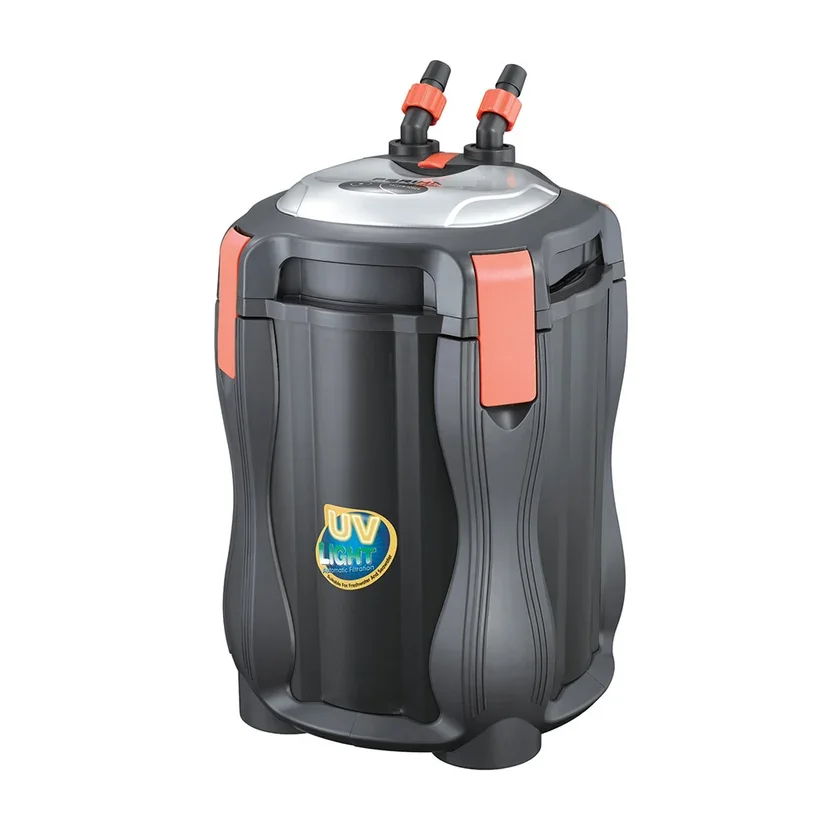
If you have a very large tank or high-waste fish like Oscars, an external system is better. The Periha EC External UV Canister Filters offer massive media capacity and built-in UV sterilisers to kill floating algae and pathogens. They keep the equipment out of the tank, giving your fish more room to swim.
Sump Systems and Hang-on-Back Options
Sumps are the gold standard for marine tanks but can be complex to set up. Hang-on-back filters are a middle ground, as they save internal space but can be a bit noisier due to the "waterfall" effect. For most Australian homes, however, the simplicity and quiet nature of a high-quality internal tank filter remain the top choice.
Frequently Asked Questions about Internal Tank Filters
How often should I clean my internal filter?
You should aim to clean the mechanical sponges every 2 to 4 weeks, depending on how many fish you have. If the water flow looks weaker than usual, it is a sign that debris is blocking the intake. Always remember to use used tank water for rinsing to keep those "good" bacteria alive!
Are internal filters noisy for bedroom tanks?
Generally, no. Because the motor is submerged, the water dampens the vibration. If your filter is making a loud buzzing sound, check that it isn't vibrating against the glass. Often, simply adjusting the suction cups or cleaning the impeller (the little spinning fan inside) will fix the noise.
Can I use an internal filter in a saltwater aquarium?
Yes, you can, but they are usually used as "supplemental" filtration in salt water. They are great for running chemical media like Seachem Purigen to polish the water. Just ensure the model you choose is rated for marine use so the salt doesn't corrode the internal components.
Finding the Best Filtration Solutions
Aquatees Fishland is more than just a shop; we are an aquarium warehouse dedicated to helping Australian hobbyists succeed. Whether you are looking for a gentle Mini Sponge Filter for a betta or a high-flow internal unit for a community tank, we have the stock and the expertise to guide you.
We pride ourselves on offering the best brands, like the exclusive Fritz Aquatics range, at prices that make the hobby accessible. Every order is packed with care right here in Victoria to ensure it arrives safe and sound at your door.