

Why Is Your Aquarium Water Cloudy?
Why is aquarium water cloudy is one of the most common questions we hear from hobbyists at every level, and the good news is that it almost always has a straightforward cause.
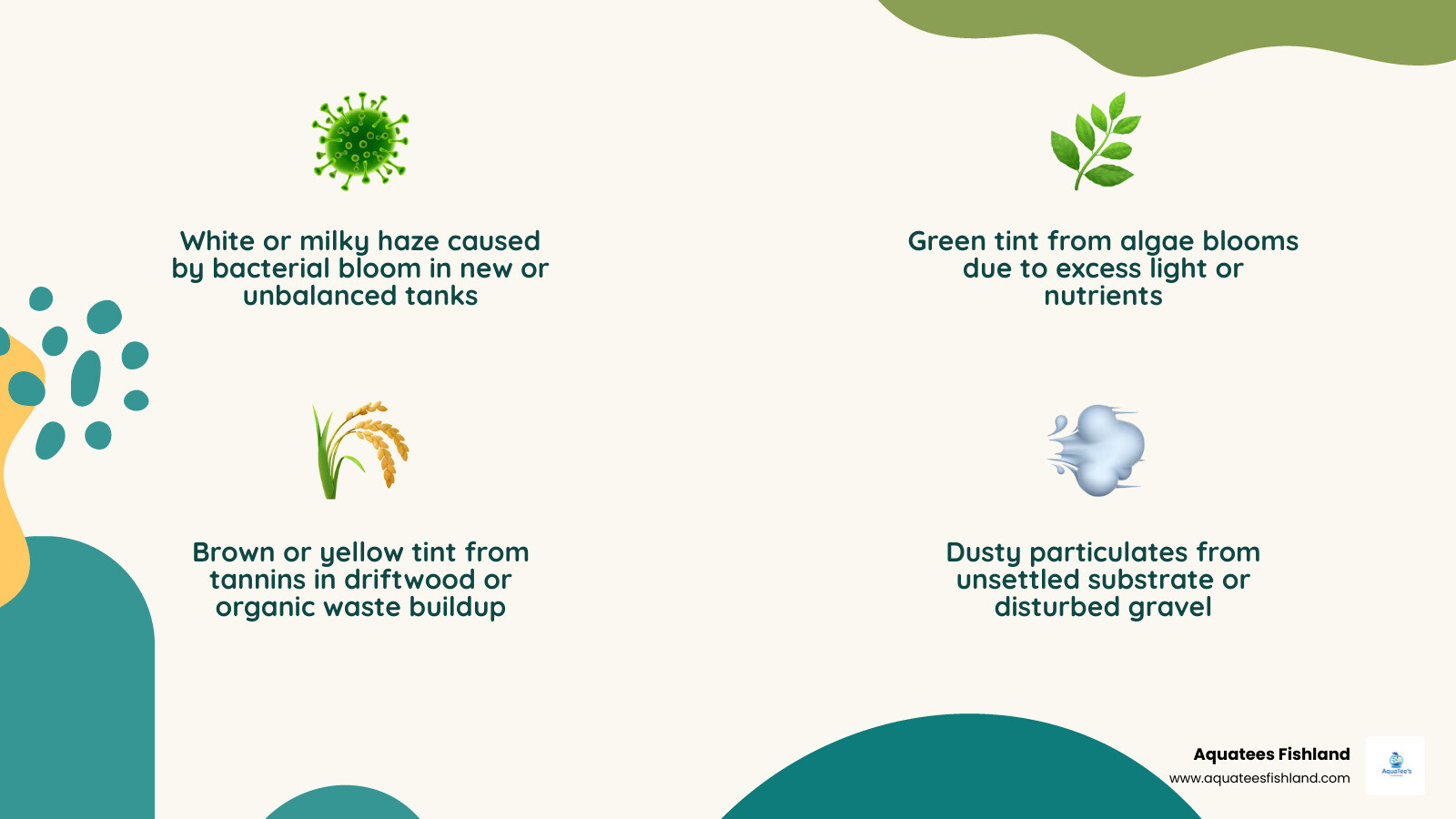
The most common reasons your fish tank water is cloudy:
| Cloudiness Type | Most Likely Cause |
|---|---|
| White or milky haze | Bacterial bloom (especially in new tanks) |
| Green tint | Algae bloom from excess light or nutrients |
| Brown or yellow tint | Tannins from driftwood, or organic waste buildup |
| Dusty or particulate | Unsettled substrate or disturbed gravel |
In most cases, cloudy water is a sign that your tank's biological system is still finding its balance (not that you've done something terribly wrong).
One of the most frustrating experiences in fishkeeping is putting in all the effort: doing your water change, feeding carefully, even swapping out the filter, and still waking up to water that looks like someone poured milk into your tank. You're not alone. It happens to beginners and experienced hobbyists alike, and it's rarely a sign that your tank is beyond saving.
Cloudy water is best understood as your aquarium sending you a signal. Something in the system is out of balance, whether that's a bacterial population finding its footing, a filtration setup that isn't keeping up, or a feeding habit that's quietly overloading the water column. The key is identifying which type of cloudiness you're dealing with before reaching for a quick fix, because the wrong response can actually make things worse.
In this guide, we'll walk through every cause, every colour, and every practical fix, so you can stop guessing and start clearing.
I'm Nemo Sulaiman from Aquatees Fishland, and having worked hands-on with a wide range of aquarium products and helped countless customers troubleshoot why aquarium water is cloudy, I've seen how the same handful of root causes show up again and again across all kinds of setups. Whether you're dealing with a brand-new tank or an established system that's suddenly gone hazy, what follows is the practical breakdown you need.
Why Aquarium Water Turns Cloudy
When we see that dreaded haze, our first instinct is often to panic. However, understanding the science behind the "fog" makes it much less intimidating. There are five primary culprits that explain why is aquarium water cloudy:
- Bacterial Bloom (New Tank Syndrome): This is the #1 cause for new setups. Heterotrophic bacteria multiply at lightning speed to consume organic matter, creating a white, milky appearance.
- Poor Mechanical Filtration: If your filter pads are clogged or the micron rating is too coarse, tiny particles of fish waste and uneaten food stay suspended in the water instead of being trapped.
- Overfeeding: Extra food doesn't just sit there; it rots. This provides a massive feast for bacteria, leading to a population explosion that clouds the water column.
- Tap Water Impurities: Depending on where you are in Melbourne, tap water can contain high levels of phosphates, silicates, or heavy metals that react when added to the tank.
- Unwashed Substrate: If you didn't rinse your aquarium sand and soil thoroughly before filling, fine dust particles will float for days.
Heterotrophic Bacteria
These are the "cleanup crew" bacteria. Unlike the slow-growing nitrifying bacteria that live in your filter, these guys live in the water column and eat dissolved organics. When they have too much food, they multiply so fast they become visible as a white cloud.
Identifying the Type of Cloudiness
Before you can fix the problem, you need to play detective. The colour of the water tells you exactly where to look for the solution:
- White or Gray Haze: Almost always biological. It’s a bacterial bloom or "New Tank Syndrome."
- Green Water: An algae bloom. This is caused by too much aquarium lighting or high phosphate levels.
- Brown or Tea-Coloured: Usually tannins leaching from driftwood or a build-up of organic waste (mulm) in the gravel.
- Particulate (Dusty): Physical debris. You can literally see the "dust" floating around. Check out our water tests and treatments to help narrow down the chemical cause.
Why is aquarium water cloudy after a water change?
It feels like a betrayal, doesn't it? You clean the tank, and it looks worse. This usually happens for three reasons:
- Substrate Disturbance: Your siphon or the new water flow kicked up settled debris from the gravel.
- Mineral Precipitation: If your new water has a different pH or hardness than the tank, minerals can "fall out" of the solution, creating a white mist.
- Chlorine Impact: If you forgot to use a high-quality conditioner like Seachem Prime, the chlorine in the tap water may have killed off a portion of your beneficial bacteria, triggering a mini-cycle.
The Danger Level: Is Your Fish in Trouble?
Is cloudy water dangerous? Not always, but the cause can be.
A white bacterial bloom consumes a massive amount of oxygen. If your fish are gasping at the surface, you need to increase surface agitation immediately. Furthermore, cloudiness often coincides with ammonia or nitrite spikes. We always recommend using Seachem General supplies to test your levels if the water isn't crystal clear.
| Warning Sign | Action Required |
|---|---|
| Fish gasping at the surface | Increase aeration/air stones |
| Clamped fins or lethargy | Test for Ammonia (Target: 0ppm) |
| Red or inflamed gills | Perform a 25% water change with Prime |
How Filtration Actually Fixes Cloudy Water
Filtration isn't just one process; it's a three-stage system designed to keep your ecosystem stable, and each stage plays a specific role in maintaining clarity.
| Filtration Type | What it Does | Best For |
|---|---|---|
| Mechanical | Traps physical particles (dust, waste) | Clearing "dusty" or particulate water |
| Biological | Bacteria break down toxic ammonia | Fixing white bacterial blooms |
| Chemical | Adsorbs dissolved toxins and tints | Removing yellow tannins or smells |
Proper aquarium filter systems are the backbone of clarity. If your mechanical stage is too weak, the biological stage gets overwhelmed with sludge.
The Role of Biological Filtration in Aquarium Stability
Your filter is a "bacteria house." To keep water clear, you need as much surface area as possible for nitrifying bacteria to grow. This is where Seachem Matrix shines; its high porosity provides a massive area for the "good guys" to live. Using Fritz General products alongside quality media ensures that your nitrogen cycle remains robust enough to outcompete the cloudy-water-causing heterotrophic bacteria.
Why is aquarium water cloudy despite having a filter?
If you have a filter but the water is still murky, check for these "Filter Fails":
- Bypass: Water is flowing around the sponges instead of through them.
- Clogged Media: If the sponge is full of goop, the flow rate drops, and waste stays in the tank.
- Low Flow Rate: Your filter should turn over your tank volume at least 4-6 times per hour.
- Inadequate Media: Standard carbon pads often aren't enough. Upgrading to Periha EC Canister Filters provides the space and UV power needed to kill free-floating algae and bacteria on contact.
Callout Box: The Filter Cleaning Mistake Never rinse your filter media under the tap! The chlorine in Melbourne's tap water will kill your beneficial bacteria instantly. Always rinse your sponges in a bucket of old tank water.
Best Aquarium Filters to Fix Cloudy Water

At Aquatees Fishland, we believe in using the best tools for the job. If you are struggling with persistent cloudiness, it might be time to upgrade your hardware.
Reverse Osmosis Systems for Pure Water Control
If your tap water is the source of the problem, you need to stop the impurities before they enter the tank.
- Aqua Medic Easy Line 190 Reverse Osmosis Unit Water Filter: This unit removes up to 98% of dissolved solids, including the nitrates and silicates that fuel algae blooms. It's the "Best for preventing cloudy water before it even starts."
- Aqua Medic Premium Line Reverse Osmosis Unit Water Filter: A high-performance system with built-in pre-filtration. "Best for serious hobbyists and larger setups" who want total control over their water chemistry.
Internal Reactors and Polishing Filters
For water that is already cloudy, you need a "polisher."
- Aqua Medic Multi Reactor All-In-One Filter System: This system is "Best for polishing already cloudy water quickly." You can fill it with Seachem Purigen to remove organic waste before it even has a chance to turn into ammonia.
- CHANING Submersible Water Filters: Excellent for adding extra mechanical filtration to a tank that just won't clear up.
Sponge Filters for Biological Clarity
Simple, effective, and reliable.
- Aquatees Jumbo Bio Sponge Filters: "Best for large or heavily stocked aquariums." These provide massive biological support and oxygenation.
- Aquatees Corner Bio Sponge Filters XY-Series: "Best for stable, long-term water clarity in smaller tanks," especially for fry or shrimp setups where gentle flow is required.
Best Filtration Setup for Cloudy Aquarium Water
To fix why is aquarium water cloudy for good, we recommend these expert combinations:
- The New Tank Starter: Use a Bio Sponge Filter + FritzZyme 7 (for freshwater) or FritzZyme 9 (for saltwater). These "live" bacteria products are significantly stronger than competitors and jump-start your cycle.
- The Emergency Clear-Up: If your tank is a mess, add an Aqua Medic Multi Reactor filled with Purigen and perform 20% water changes every two days until clear.
- The High-Tech Solution: Use an RO water system for all top-offs and water changes, paired with a Periha EC Canister filter for UV sterilization.
Step-by-Step: Clearing a Bacterial Bloom Fast
If your tank looks like milk, follow this protocol:
- Stop Feeding: Don't worry; your fish can safely fast for 2-3 days. This cuts off the bacteria's food supply.
- Add Beneficial Bacteria: Use Seachem Stability daily for 7 days to help the "good" bacteria outcompete the "cloudy" bacteria.
- Increase Air: Add an air stone or point your filter output at the surface.
- Wait: Most blooms clear on their own within 5-10 days if you don't over-clean the filter.
How to Prevent Cloudy Water in Future
Prevention is always easier than the cure. A crystal-clear tank is the result of consistent habits:
- Lighting Control: Keep your Dymax Lighting on a timer for 6-8 hours. Excess light is the fast track to green water.
- Quality Food: Feed high-quality Hikari pellets. They are designed to be highly digestible, meaning less waste ends up rotting in your water.
- Regular Maintenance: Don't wait for the water to get dirty. Weekly 10-20% water changes are the gold standard for aquarium care.
The Importance of Proper Stocking and Feeding
One of the biggest mistakes is overstocking. More fish equals more waste, and every filter has a limit. When aquascaping your dream tank, plants act as natural filters, consuming the nitrates that otherwise fuel cloudiness.
Overfeeding Warning
If there is food hitting the bottom of the tank that your fish aren't eating within 2 minutes, you are overfeeding. This is the #1 cause of "mysterious" cloudy water in established tanks.
Quick Answers for Cloudy Fish Tank Water Problems
How long does it typically take for cloudy water to clear up?
It depends on the cause. Substrate dust usually settles in 24-48 hours. A bacterial bloom in a new tank typically takes 5 to 14 days to resolve as the nitrogen cycle stabilizes. Green water can take weeks unless treated with a UV sterilizer or a total blackout.
Should I clean or replace my filter media when the water is cloudy?
No! This is a common mistake. If you have a bacterial bloom, your filter is trying to grow the "good" bacteria needed to clear it. If you replace the media, you reset the cycle and make the cloudiness last longer. Only gently rinse sponges in old tank water if the flow is visibly reduced.
Are chemical clarifiers safe for my fish and plants?
Yes, high-quality clarifiers (flocculants) like the Fritz Clarifier are safe. They work by clumping tiny particles together so your filter can catch them. However, they are a "band-aid." They won't fix a bacterial bloom or an ammonia spike because only proper biological filtration can do that.
Build a Healthier, Clearer Aquarium Long-Term
Understanding why is aquarium water cloudy is the first step toward becoming a master hobbyist. Whether it's the natural growing pains of a new setup or a sign that your maintenance routine needs a tweak, patience and proper filtration are your best friends.
At Aquatees Fishland, we are more than just an aquarium shop; we are your partners in the hobby. From our exclusive Fritz Aquatics range to our high-performance RO systems, we have everything you need to keep your water crystal clear and your fish thriving.
Ready to clear the fog? Explore our latest news and blogs for more expert tips, or visit our Melbourne warehouse to see our full range of luxury setups and bargain deals. Happy fishkeeping!