

Essential Aquarium Equipment for a Healthy Fish Tank
Setting up a thriving aquatic habitat requires choosing the right hardware across several essential categories. A well-balanced system relies on water movement, effective filtration, stable temperature control, and suitable substrate to support beneficial bacteria and fish health. For beginner setups, matching equipment to your tank's volume and stocking plan helps maintain stable water parameters over time.
Filtration represents just one critical component alongside heating, lighting, conditioning, and hardscape materials. Selecting compatible equipment tailored to your specific livestock ensures a resilient environment where freshwater fish or invertebrates can flourish with minimal stress.
I’m Naim Ibn Nahshid, also known as Nemo Sulaiman, and I’m part of the eCommerce and warehouse team at Aquatees Fishland, with two years of experience helping customers choose fish, equipment, and products. Day to day, I see how selecting suitable hardware, establishing proper biological filtration, and maintaining a consistent routine keeps an aquarium clean and stable.
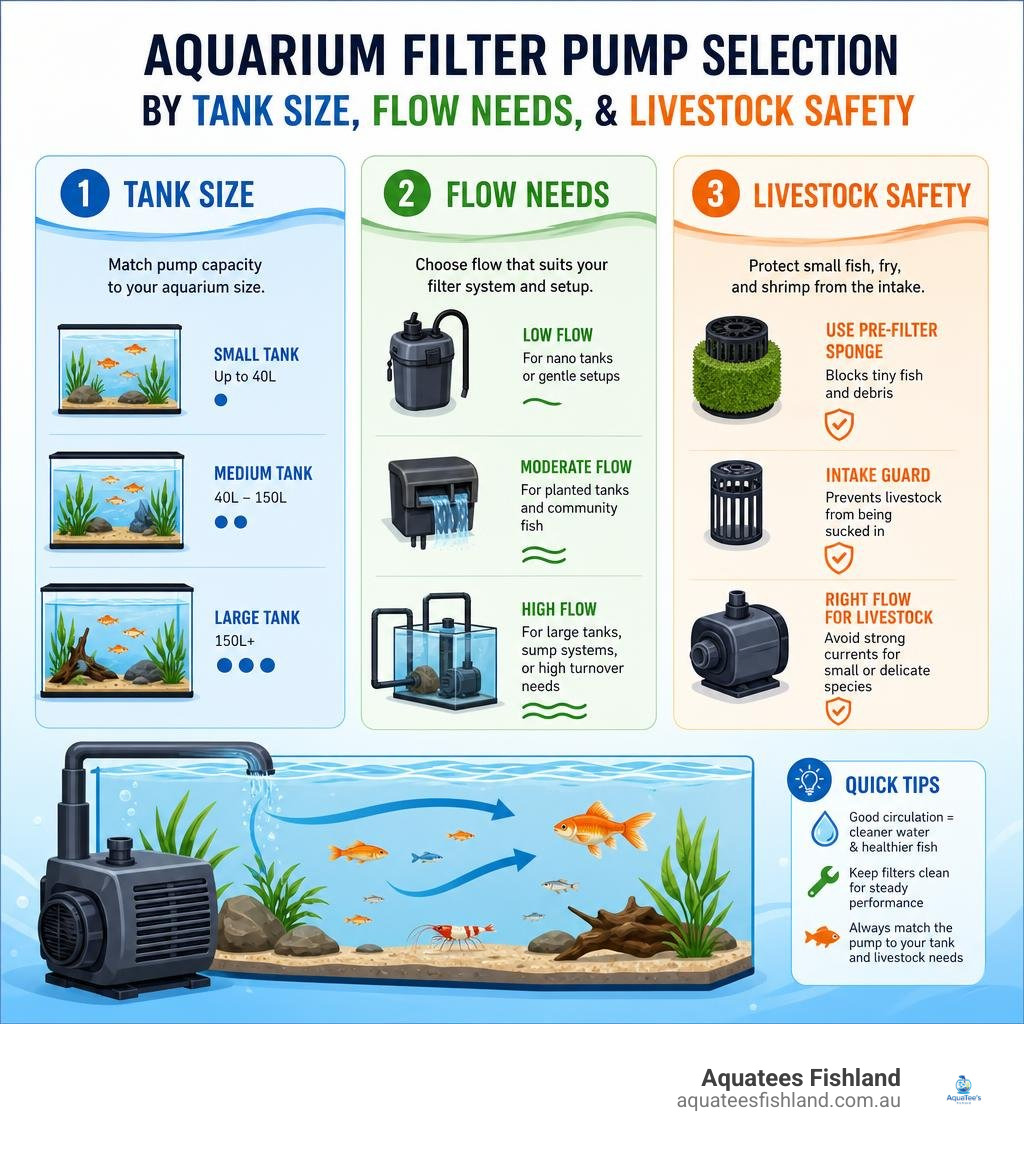
The Aquarium Essentials Every Beginner Needs
Setting up an aquarium for the first time is easier when you separate true essentials from equipment that depends on the fish, tank style, and room conditions.
Most beginners should prioritise a suitable tank, dependable filtration, safe treated water, regular water testing, appropriate food, and temperature control where the chosen livestock requires it. Lighting, chillers, decorative hardscape, and specialist accessories can be useful, but they are not all day-one essentials for every aquarium.
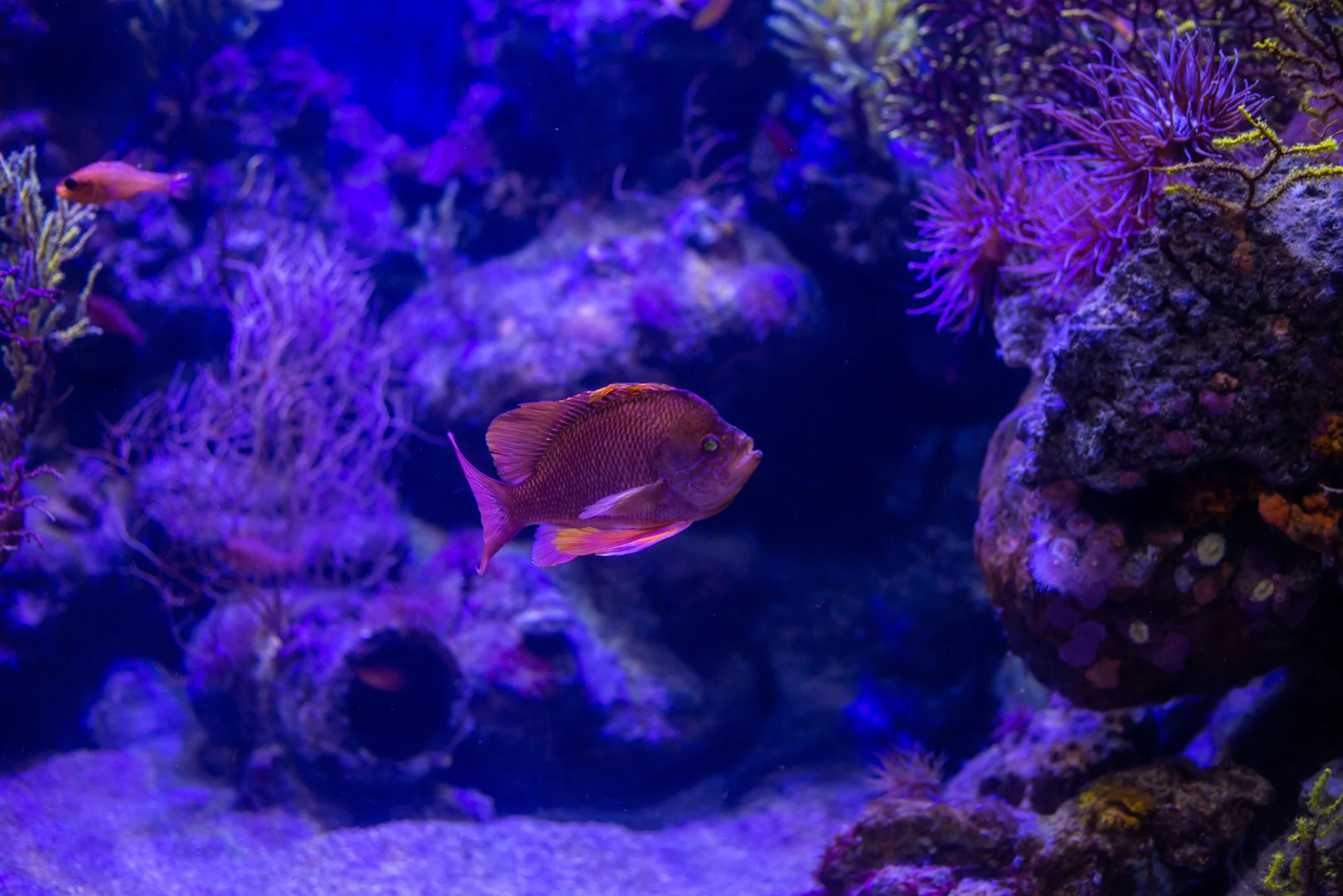
The table below shows how common Aquatees Fishland catalogue categories fit into a beginner setup:
| Category | What it does | Essential or setup-dependent? | Beginner consideration |
|---|---|---|---|
| Fish Tanks | Provides the aquatic environment and swimming space | Core essential | Choose size around adult fish needs, stocking level, and behaviour |
| Water Filters & Pumps | Moves water, catches debris, and supports filtration | Core essential for most tanks | Match filtration to aquarium volume, livestock, media capacity, and filter design |
| Bio Filter Media | Provides surface area for beneficial bacteria | Core part of filtration | Clean gently so the biological colony is protected |
| Water Treatments & Conditioners | Makes tap water safer for aquarium use | Core essential | Treat new water before adding it to the tank |
| Water Tests | Checks ammonia, nitrite, nitrate, pH, and other parameters | Core essential | Test regularly, especially while establishing a new aquarium |
| Fish Food | Provides species-appropriate nutrition | Core essential | Feed suitable portions to reduce waste buildup |
| Heaters & Chillers | Helps manage temperature | Setup-dependent | Heaters suit many tropical tanks; chillers are for heat-sensitive setups, warm rooms, or seasonal temperature spikes |
| Aquarium Lighting | Improves visibility and supports some plants | Setup-dependent | Fish-only tanks may need less specialised lighting than planted aquariums |
| Substrate & Hardscape | Supports layout, shelter, and some plant needs | Setup-dependent | Choose materials that suit the fish and tank style |
Choosing the Right Filtration System
Filtration is one important aquarium category, not the whole setup. A filter helps catch debris, move water, and support beneficial bacteria, but it works alongside water conditioner, testing, suitable food, temperature control where required, and ongoing maintenance.
Filtration usually includes mechanical and biological stages. Mechanical filtration catches floating debris and organic waste, while biological media provides surface area for beneficial nitrifying bacteria to process ammonia and nitrite. Chemical media, such as activated carbon or resins, may also be used for specific water-quality goals.
Selecting the right system depends on the aquarium size, bioload, livestock, filter design, and media capacity. Rather than relying on a fixed flow-rate rule, beginners should choose filtration that suits the actual setup and follow the manufacturer's guidance.
Aquatees Fishland's aquarium water filters category includes internal units, hang-on-back designs, and external canisters suited to different aquarium sizes and stocking plans.
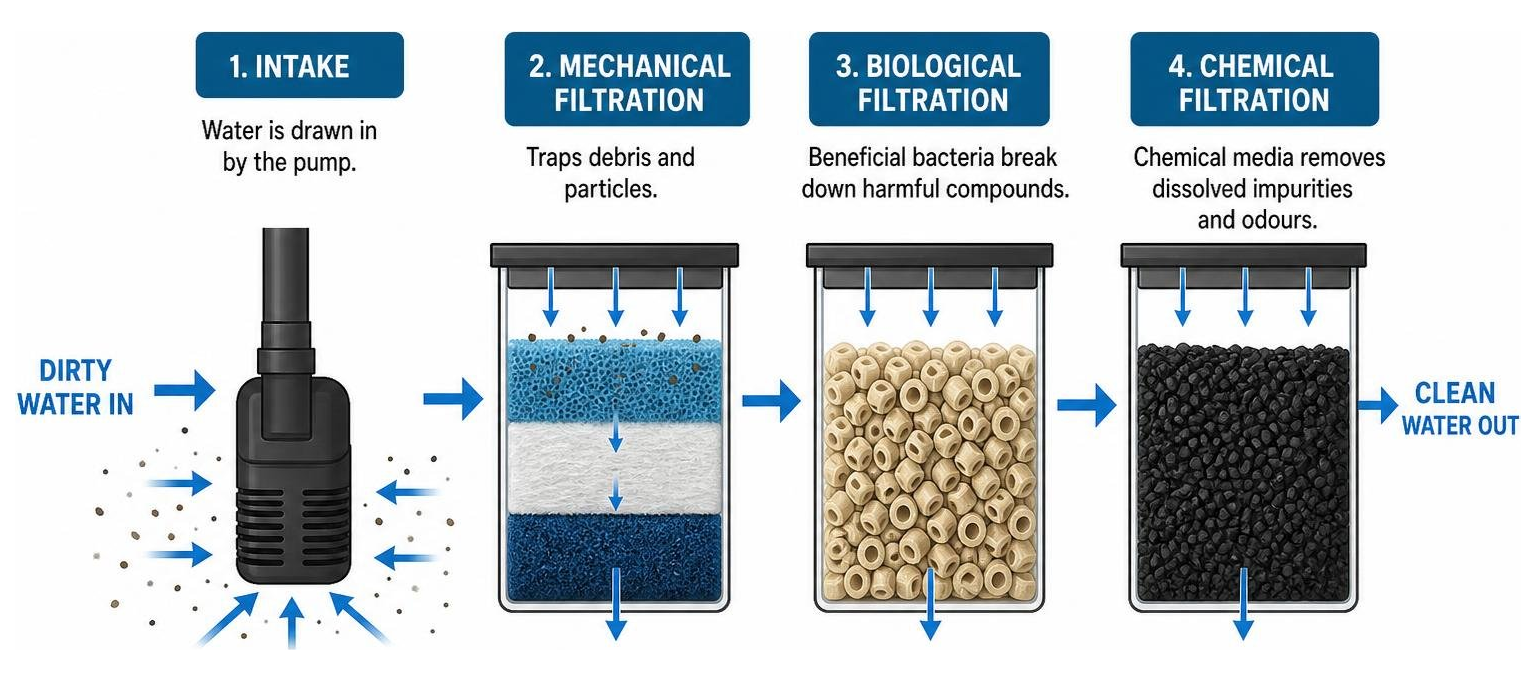
If you are planning an internal setup without external plumbing lines, the internal tank filter guide can help you decide whether an all-in-one submersible filter unit suits your space and livestock.
Water Conditioning, Testing, and Temperature Essentials
Water conditioner and testing are beginner essentials because clear water is not necessarily safe water. Before adding municipal tap water to any aquarium, a suitable conditioner helps neutralise chlorine, chloramines, and some heavy metals that may stress fish or affect beneficial bacteria. Aquatees Fishland's water conditioners category supports this first step and routine water changes.
Testing helps beginners understand whether the aquarium is biologically stable. Ammonia and nitrite should be monitored carefully when establishing a new tank, while nitrate, pH, and carbonate hardness can help explain changes in fish behaviour or water quality. The water tests and treatments range is useful for checking these parameters before small problems become harder to manage.
Temperature control depends on the livestock. Many tropical freshwater fish need stable warm water, so a heater and thermometer may be essential for those setups. Coldwater aquariums may not need a heater, while chillers are generally for particular circumstances such as heat-sensitive livestock, warm rooms, or seasonal temperature spikes. Aquatees Fishland's heaters and chillers category is best considered after you know the temperature range your fish require.
Lighting is also setup-dependent rather than automatically equal to filtration or water conditioning. Basic lighting helps you view the aquarium and maintain a day/night rhythm, while planted aquariums usually need more suitable intensity and spectrum. The aquarium lighting category becomes more important when plants, display goals, or livestock behaviour call for it.
Hardscape, Substrate, and Beneficial Bacteria Additions
Substrate, décor, and aquascaping materials can improve the environment, but the right choice depends on the fish and aquarium style. Sand, gravel, rocks, wood, and decorative shelters should suit the species, allow normal behaviour, and remain safe in aquarium water. Aquatees Fishland's sands and gravel and aquascaping supplies categories are useful once you know whether your fish need open swimming space, hiding places, plant support, or a more natural layout.
When designing a hardscape, choose aquarium-safe stones, cured driftwood, and suitable decorations. Avoid collecting unverified outdoor rocks or using unsafe preparation methods like boiling rocks, which can present safety hazards. Inspect and rinse materials under clean running water before placement, and research suitability for the fish and water conditions you plan to keep.
Beneficial bacteria are part of biological stability, not a separate optional gimmick. Bio filter media, sponge media, and gravel surfaces can all support nitrifying colonies, while bacterial starters can help seed a new aquarium when used according to product directions. Aquatees Fishland's bio filter media category supports this biological side of filtration without replacing the need for testing, patience, and routine care.
Beginner Questions About Aquarium Equipment and Tank Care
What Equipment Does a Beginner Fish Tank Actually Need?
A beginner fish tank usually needs an appropriately sized aquarium, reliable filtration, treated water, water testing, suitable food, and stable temperature control where the livestock requires it. Extras such as advanced lighting, aeration, aquascaping materials, and chillers depend on the fish, room conditions, and aquarium style.
Start with the needs of the fish rather than buying every aquarium category at once. A simple freshwater tank, a tropical aquarium, and a saltwater setup can all need different supporting equipment.
Do You Need a Filter for a Fish Tank?
Most home aquariums need dependable filtration because filters help move water, catch debris, and support the bacteria that process fish waste. The right filter depends on tank size, livestock, bioload, filter design, and media capacity, so a single flow-rate rule is not suitable for every beginner setup.
Aquatees Fishland's aquarium water filters category can help beginners compare common filtration styles after they know the aquarium size and fish they plan to keep.
Do You Need Water Conditioner and Water Tests?
Yes, water conditioner and water testing are core beginner essentials. Conditioner helps make tap water safer for aquarium use, while testing shows whether ammonia, nitrite, nitrate, pH, and other parameters are suitable for the fish.
Clear water can still have unsafe chemistry, especially in a new aquarium. Testing during setup and after routine maintenance gives beginners a clearer picture of whether the tank is becoming biologically stable.
Does Every Fish Tank Need a Heater, Chiller, or Air Pump?
Not every fish tank needs a heater, chiller, or air pump. Tropical fish often need stable warm water, coldwater setups may not need heating, chillers are for particular heat-sensitive or warm-condition setups, and air pumps are useful when extra aeration or surface movement is needed.
The best choice depends on the species, room temperature, stocking level, and how much water movement the filter already provides.
What Is the Ideal Way to Cycle a New Home Aquarium?
The ideal way to cycle a new aquarium is to establish the nitrogen cycle so beneficial bacteria can process ammonia and nitrite before sensitive livestock are added. Cycling should be guided by water testing, the intended livestock, and the aquarium conditions rather than a universal temperature target.
Set up the tank, filtration, and any required temperature control before adding fish. Then use an appropriate ammonia source or bacterial starter according to product directions, test regularly, and wait until ammonia and nitrite remain consistently safe for the livestock you plan to keep.
Do Fish Tanks Need Sand, Gravel, Lighting, and Decorations?
Sand, gravel, lighting, and decorations are setup-dependent rather than identical requirements for every aquarium. Substrate can support the layout, some plants, and some fish behaviours, lighting helps visibility and plant growth where needed, and decorations can provide shelter and territory.
Choose these categories according to the fish and aquarium style. A basic fish-only tank may need less specialised lighting and aquascaping than a planted or deliberately scaped aquarium.
Selecting and Maintaining Balanced Aquarium Equipment
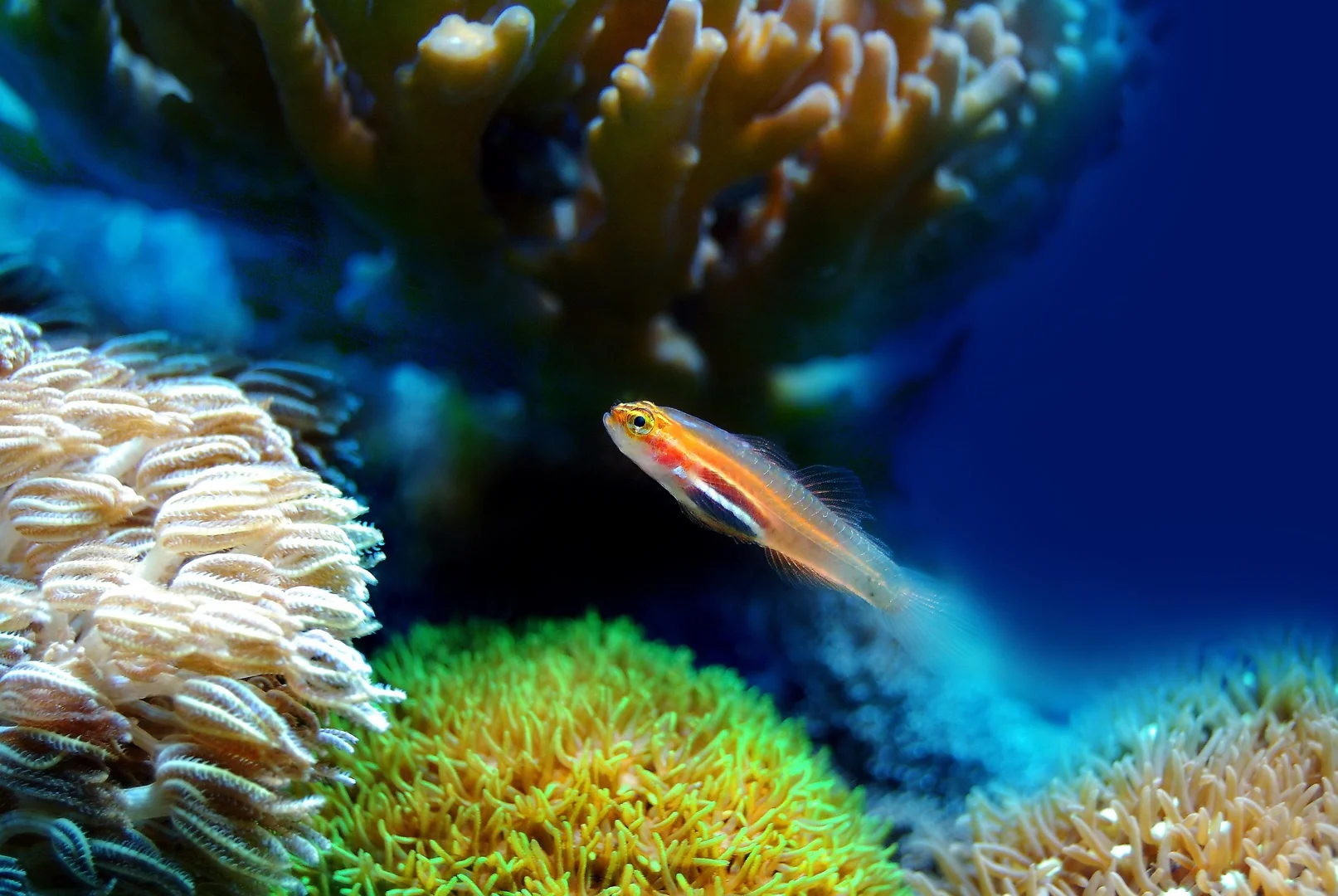
A beginner aquarium is easier to plan when you start with the essentials, then add extras as the setup develops. First choose a suitable tank, reliable filtration, conditioned water, regular water testing, appropriate food, and temperature control where your chosen fish require it.
Next, match optional equipment to the aquarium itself. Lighting, aeration, substrate, decorations, aquascaping supplies, tubing, and replacement parts can all be useful, but their value depends on tank size, livestock, room temperature, water movement, plant needs, and maintenance routine.
A practical setup process looks like this:
- Choose fish that suit the aquarium size you can maintain.
- Select a tank that gives those fish enough space as adults.
- Add filtration and bio media suited to the stocking level and filter design.
- Treat new water and test key parameters before relying on appearance alone.
- Add heating, chilling, aeration, lighting, substrate, or décor only when the setup calls for them.
- Keep the aquarium stable with routine care, gentle filter maintenance, and replacement parts when equipment wears.
Aquatees Fishland organises beginner needs across practical categories, so you can build around the fish rather than around a generic shopping list:
- Explore suitable fish tanks before choosing livestock.
- Match your setup with appropriate aquarium water filters.
- Treat new water with water conditioners.
- Monitor the aquarium with water tests and treatments.