

How to Choose and Buy Aquarium Substrate Online for Your Tank Setup
To choose and buy aquarium substrate online effectively, start by matching the substrate to your tank’s livestock, plants and water parameters. The right choice supports healthy roots, comfortable bottom-dwelling fish and stable water chemistry, while the wrong material can make maintenance more difficult.
Use this quick buying framework before you order:
- Planted tank: Choose a nutrient-rich aqua soil or another suitable planted substrate to support root growth.
- Community tank: Inert sand or gravel is often a practical option because it leaves water parameters largely unchanged.
- Bottom-dwelling fish: Choose a smooth, fine substrate that is gentle on sensitive barbels.
- Hard-water or alkaline setup: Consider calcium-based materials such as crushed coral where they suit the species and target water parameters.
- Before ordering: Check the grain size, planned substrate depth and the volume your aquarium needs.
Before adding a product to your cart, check whether the listed pack size is measured by weight, volume or both. Substrates with similar-looking grains can have different densities, so a 5 kg bag of gravel does not necessarily fill the same space as a 5 kg bag of fine sand. For a standard rectangular aquarium, work out the bed volume from the tank’s length, width and desired depth, then compare that result with the manufacturer’s coverage guidance.
It also helps to decide whether you want the substrate to change water chemistry or simply provide a stable base. Active soils can be useful where soft, mildly acidic conditions suit the livestock and plants, while inert sand and gravel give you more control because they usually do not alter pH, KH or GH. If you keep fish with specific water requirements, check the product description and your current water test results before changing the substrate.
Substrates act as the physical anchor and biological reactor of an aquarium. Our foundational Aquarium Substrate Guide introduces the core concepts, while the comparisons below help you match materials to your own setup. Selecting an unsuitable bed can lead to unwanted pH shifts, poor plant rooting or irritation for bottom-dwelling fish.
I’m Nemo Sulaiman, part of the eCommerce and warehouse team at Aquatees Fishland, and I’ve spent the past two years helping customers choose the right fish, aquarium equipment and products for their setups. When customers buy substrate, the most useful starting point is usually a simple one: choose for the animals and plants you keep first, then calculate the depth and volume you need.
| Substrate Category | Primary Tank Application | Impact on pH / KH / GH | Lifespan & Nutrient Delivery | Typical Grain Size |
|---|---|---|---|---|
| Active Aqua Soil | Planted tanks, Caridina shrimp | Lowers pH (below 7.0) and softens water | 1 to 3 years; rich internal nutrition | 1.0 mm to 5.0 mm granules |
| Inert Gravel | Community fish, hardy plants | Neutral; no impact on parameters | Indefinite; requires supplemental root feeding | 2.0 mm to 8.0 mm pebbles |
| Cosmetic Sand | Sifters, decorative foregrounds | Neutral; no impact on parameters | Indefinite; low porosity, no internal nutrition | 0.25 mm to 1.5 mm fine grains |
| Crushed Coral | African cichlids, livebearers | Raises pH (7.8 to 8.4) and increases KH/GH | 1 to 2 years as substrate; dissolves gradually | 2.0 mm to 6.0 mm fragments |
Substrate Types and Water Chemistry Factors When You Buy Aquarium Substrate Online
Selecting materials from our Sands & Gravel Collection involves both appearance and how the material may affect water conditions. Cation-exchange capacity (CEC) describes how well a substrate can hold nutrients and make them available around plant roots. For buyers, this matters mainly in planted tanks: a substrate with useful nutrient-holding capacity can support root feeding, but it does not replace matching the product to your plants and water parameters.
Active soils generally soften water and reduce pH by absorbing carbonate hardness and releasing mild organic acids. This environment suits freshwater shrimp and delicate aquatic flora, though it may prove unsuitable for species that thrive in hard, alkaline water.
Inert substrates do not modify dissolved mineral levels or pH. Options like AquaTees Premium Fine Black Aquarium Sand provide a smooth bed that protects delicate barbels of bottom-dwellers such as Corydoras and loaches.
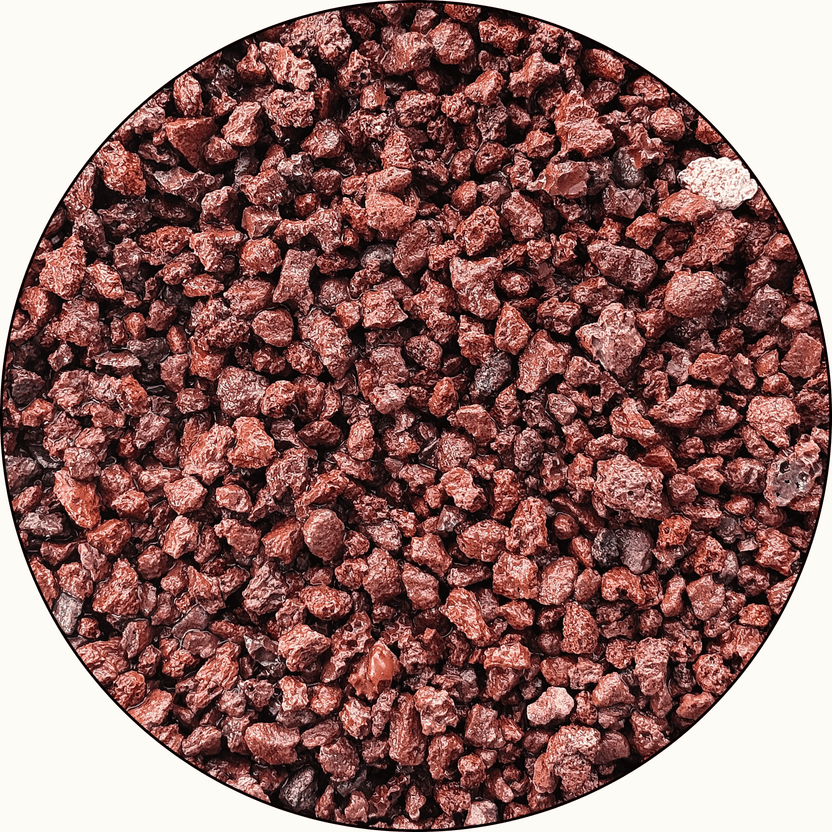
For planted setups needing root support, porous clays and volcanic materials offer durable options. Materials such as JBL Manado Gravel Natural Aquarium Substrate provide a porous structure that supports root growth and can hold nutrients around plant roots. Similarly, AquaTees Volcanic Red Aquarium Substrate provides an attractive bed with generous surface area for beneficial nitrifying colonies.
Calculating Depth, Volume, and Bed Structure When You Buy Aquarium Substrate Online
Calculating the substrate volume before ordering ensures adequate coverage and prevents unexpected parcel adjustments. Shallow beds for non-planted community setups generally measure 2 to 3 cm in depth, while planted tanks require 5 to 8 cm to accommodate substantial root structures.
To calculate required volume in litres for rectangular aquariums:
- Measure the tank length in centimetres.
- Measure the tank width from front to back in centimetres.
- Multiply length by width, then multiply by desired bed depth in centimetres.
- Divide the resulting total by 1,000 to determine the litres needed.
For example, a 60 cm by 30 cm aquarium with a target substrate depth of 6 cm requires (60 x 30 x 6) / 1,000 = 10.8 litres of substrate material.
Grain diameter influences internal water movement through the bed. Fine grains (1 to 2 mm) hold carpeting plants securely, while medium granules (3 to 5 mm) promote oxygen transfer through lower layers, helping prevent compact anaerobic dead zones in deeper layouts.
Aquarium Substrate Options at Aquatees Fishland
Choose substrate by livestock, plants and layout:
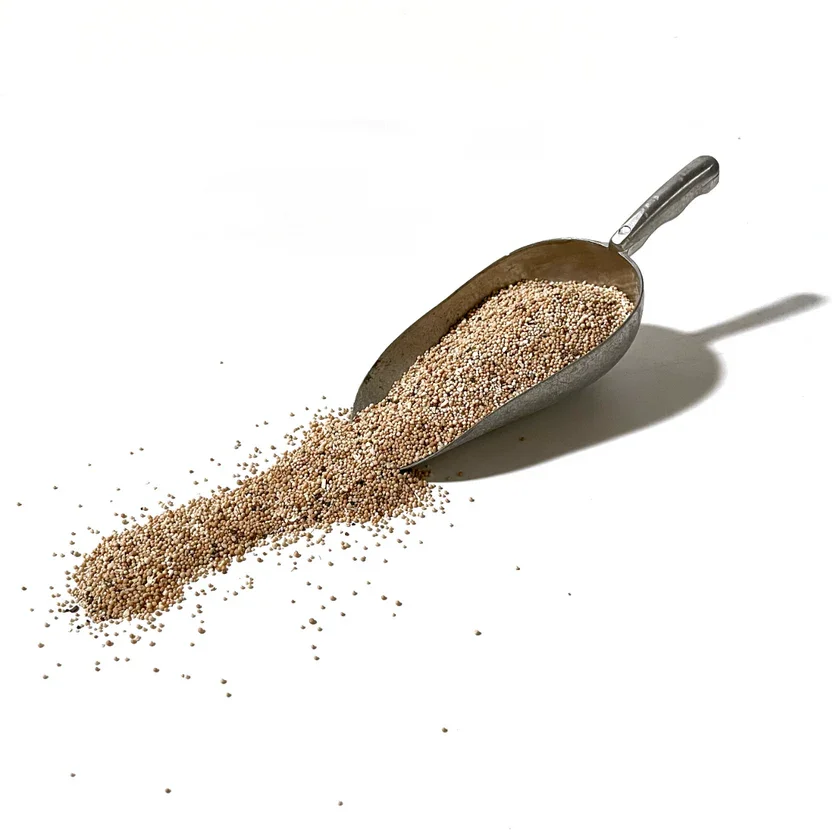
- Fine aquarium sand for bottom-dwellers and community tanks: AquaTees Premium Fine Black Aquarium Sand provides a smooth, neutral base for Corydoras, loaches and community fish.
- Planted substrate for rooted plants: JBL Manado Gravel Natural Aquarium Substrate is a porous option for planted layouts, providing space for root growth and helping hold nutrients around plant roots.
- Volcanic substrate for planted aquascapes: AquaTees Volcanic Red Aquarium Substrate offers a textured base for planted tanks and aquascapes. Check that its colour and grain size suit your fish and layout.
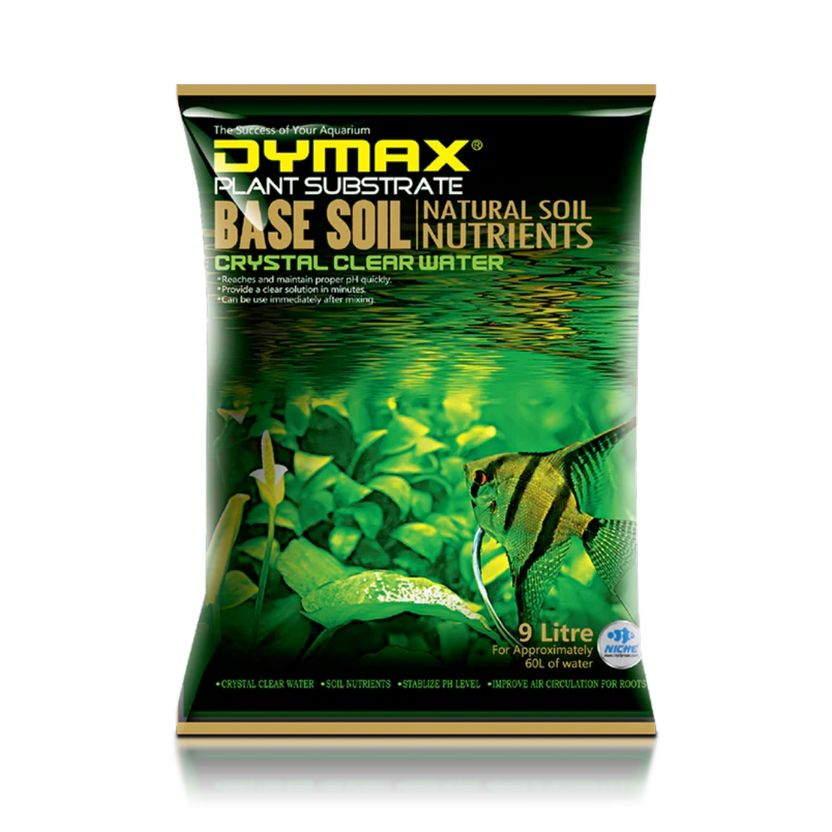
- Base soil for planted tanks: Dymax Base Soil is designed for aquarium plants, particularly root-feeding plants, and provides trace elements to support plant growth.
Browse the Sands & Gravel collection for more colours and grain sizes, then check product coverage guidance before ordering.
Frequently Asked Questions About How to Buy Aquarium Substrate Online
What Is the Best Aquarium Substrate for My Fish?
Start with the needs of your fish and plants. Fine, smooth sand can be a suitable choice for bottom-dwelling fish such as Corydoras and loaches, while planted aquariums may benefit from substrates that provide space for roots and hold nutrients. If your fish require specific water conditions, check whether the substrate is inert or designed to affect water chemistry before buying.
How Much Aquarium Substrate Do I Need?
Calculate the approximate volume from your aquarium’s length, width and desired substrate depth. Multiply the three measurements in centimetres and divide by 1,000 to get the approximate volume in litres. Always check the product’s coverage or pack-size guidance before ordering, as different substrates have different densities.
Do I Need Base Soil or Root Tabs for a Planted Aquarium?
Not necessarily. The right choice depends on your plants and the substrate you use. A product such as Dymax Base Soil 1L is designed to provide trace elements and support root development, while root tabs can provide additional nutrition around the roots of plants that benefit from root feeding. If you are using an inert substrate, supplementary plant fertilisation may be useful.
How Does Crushed Coral Compare to Inert Sand and Active Aqua Soil?
Crushed coral is different from inert sand and active aqua soil because it can gradually increase water hardness and pH. It may be useful for aquariums housing species that prefer harder, more alkaline water. Inert sand generally leaves water chemistry unchanged, while active aqua soils are designed to lower pH and hardness. Choose based on the water conditions your fish and plants need rather than appearance alone.
Should I Rinse Aquarium Substrate Before Adding It to the Tank?
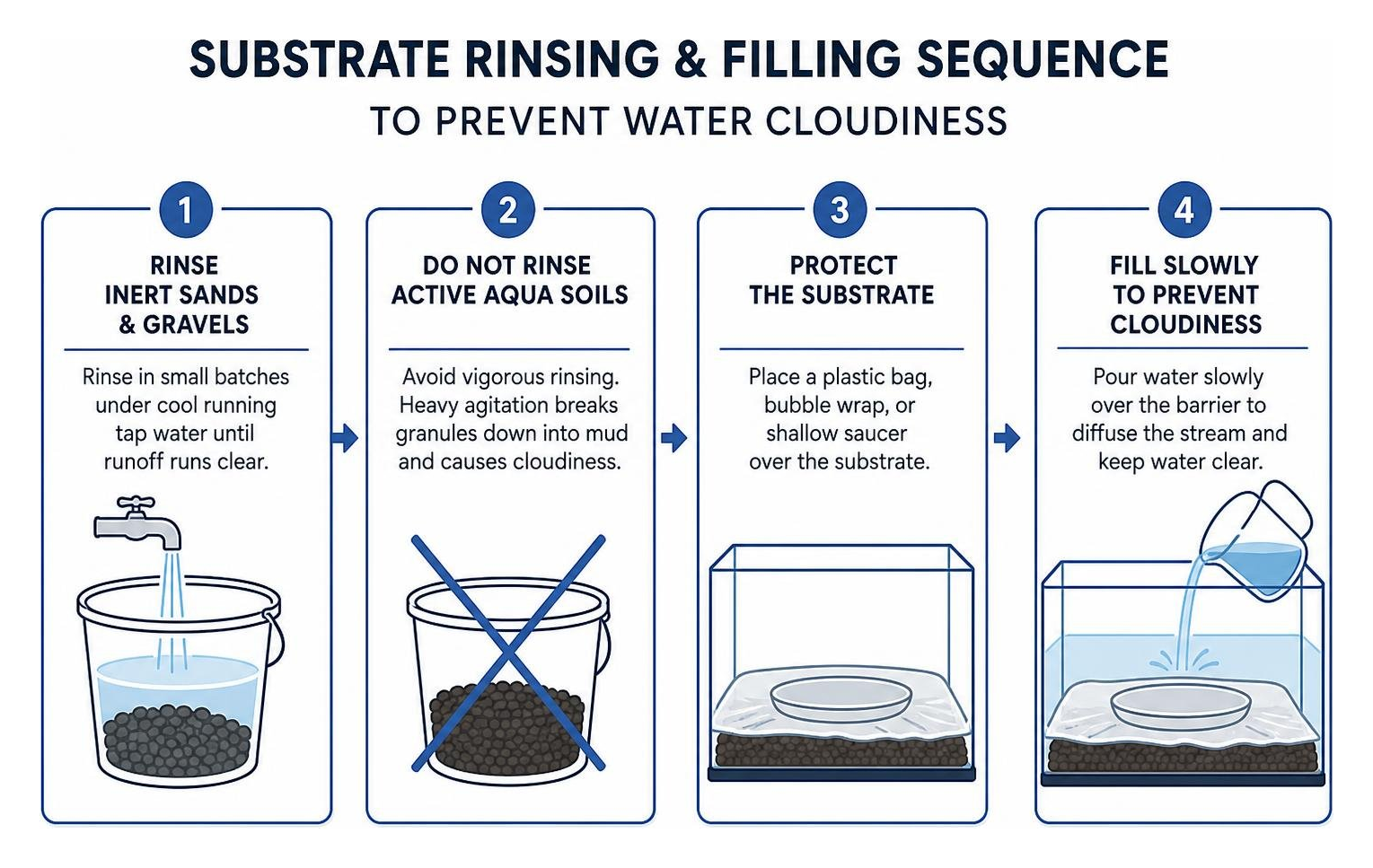
It depends on the substrate. Sand, gravel and some mineral substrates can contain fine dust and may need rinsing before use. Follow the product’s instructions, as active aqua soils generally should not be vigorously rinsed because this can break down the granules. When adding substrate to a tank, pour water slowly over a plate, bag or other barrier to reduce cloudiness.
Buy Aquarium Substrate Online With Confidence
Before you buy aquarium substrate online, ask four questions: Which fish do you keep? Are you growing live plants? Do you need an inert substrate or one that can influence water chemistry? How much material does your tank need? These answers help you choose for your setup rather than colour alone.
Check each product’s grain size, pack coverage and care guidance before ordering.
- Compare substrate types in the Sands & Gravel collection.
- Choose Premium Fine Black Aquarium Sand for community tanks and bottom-dwellers.
- Consider JBL Manado Gravel for planted freshwater aquariums.