

Why Aquarium Substrate Matters More Than Most Hobbyists Realise
Aquarium substrate matters because it acts as the biological foundation of your tank, anchoring plants, housing beneficial bacteria, and directly influencing water chemistry. Choosing the correct material ensures your aquatic ecosystem remains stable and healthy over the long term.
| Substrate Type | Best For | pH Effect |
|---|---|---|
| Gravel | General use, most fish | Neutral (inert) |
| Sand | Bottom-dwelling fish, cichlids | Neutral or buffering |
| Clay gravel (e.g. Flourite) | Planted tanks | Neutral |
| Aquasoil | Heavily planted tanks | Slightly lowers pH |
| Crushed coral / aragonite | African cichlids, marine | Raises pH |
Most people focus on filters, lighting, and fish when setting up a tank. Substrate often gets treated as an afterthought, but it is the foundation everything else sits on. It houses beneficial bacteria, anchors plant roots, and can directly influence your water parameters from day one.
Think of your substrate as the soil in a garden. It is not just for decoration, but the very medium that sustains life. The right choice prevents waste buildup and supports the natural nitrogen cycle.
I'm Nemo Sulaiman, and through my hands-on work handling aquarium products and helping customers troubleshoot their setups at Aquatees Fishland, I've seen how the right aquarium substrate can make or break a tank. In this guide, I'll break down the key substrate types, what they actually do, and how to choose the right one for your setup.
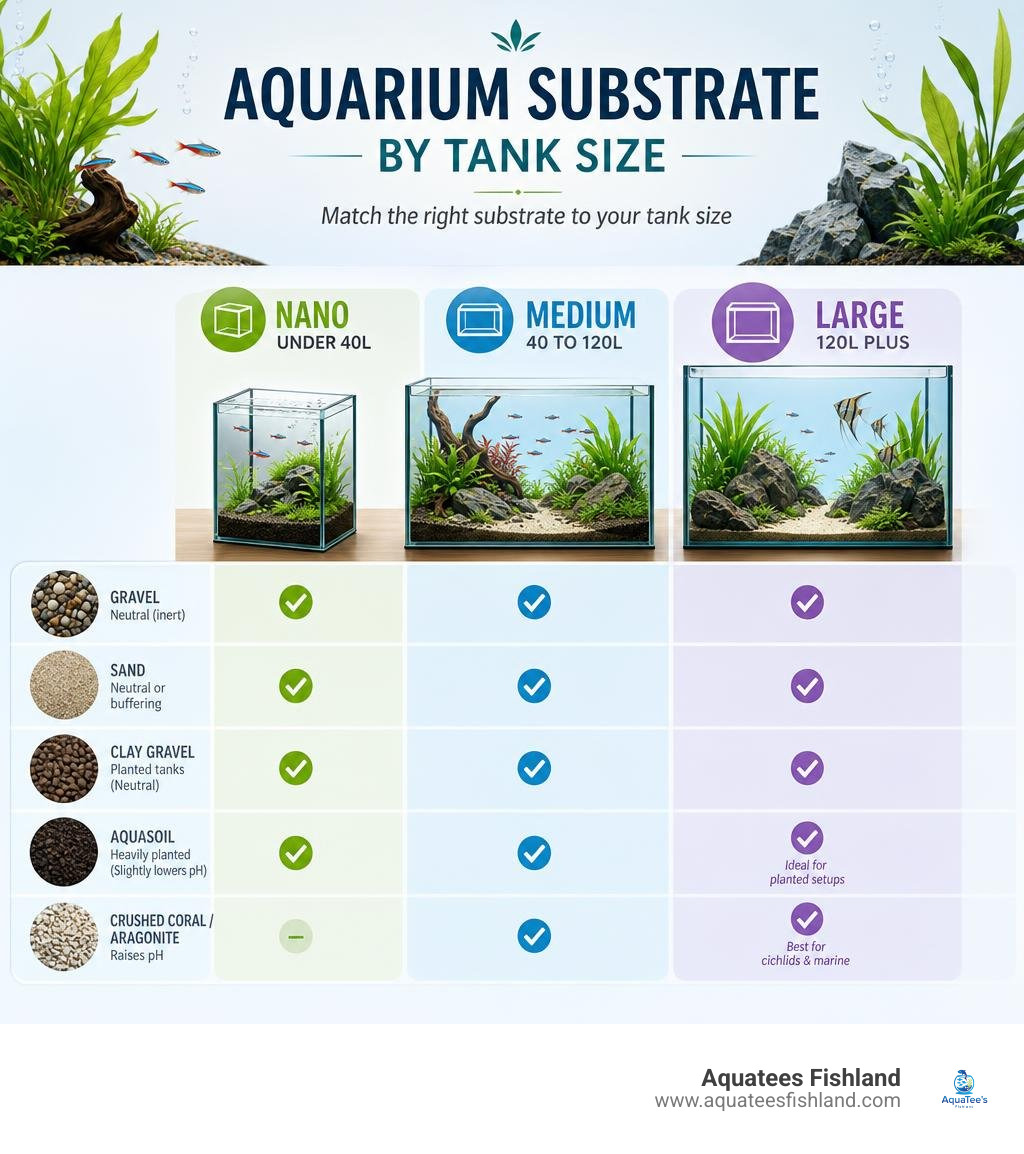
Guide to Choosing and Maintaining Your Aquarium Substrate
Choosing the right substrate for your aquarium involves matching the physical and chemical properties of the material to your fish, plants, and maintenance habits. The ideal choice will support your tank's biological balance while creating a natural, visually pleasing environment.
When planning a new setup, it is helpful to understand how substrate volume interacts with your aquarium capacity. You can refer to our Guide to Fish Tank Size to help determine the dimensions and volume of your tank, which directly dictates how much material you will need.
Substrates generally fall into two categories: active and inert. Active substrates contain nutrients or minerals that interact with the water column, whereas inert substrates do not alter water parameters or supply nutrients.
- Active Substrates: These materials, such as volcanic soils or aragonite, can buffer pH levels or slowly release essential minerals. For example, some specialised plant soils lower pH to create slightly acidic conditions, while aragonite bases raise pH and hardness to suit African Rift Lake cichlids.
- Inert Substrates: Materials like standard quartz gravel or silica sand do not change your water chemistry. They act as a physical anchor for plants and decor, making them highly predictable and easy to manage for beginners.
To help you visualise how these options compare, we have compiled a quick reference table:
| Substrate Property | Active Substrates (e.g., Aquasoil, Aragonite) | Inert Substrates (e.g., Sand, Quartz Gravel) |
|---|---|---|
| Nutrient Content | High (often rich in iron, magnesium, and potassium) | None (requires root tabs or liquid fertilisers) |
| Water Chemistry Impact | Buffers pH, alters water hardness | Neutral (no chemical impact) |
| Longevity | May break down or lose buffering capacity over years | Virtually unlimited lifetime |
| Ease of Cleaning | Requires gentle care to avoid clouding or breakdown | Highly durable, tolerates deep vacuuming |
For hobbyists looking to customise their setups, brands like Seachem offer a variety of options that bridge the gap between active mineral content and inert stability, allowing you to tailor your tank's foundation to your specific aquatic goals.
Comparing Inert and Active Aquarium Substrate Options
Inert substrates are materials that do not release nutrients or alter water chemistry, while active substrates actively change your water parameters or supply essential minerals to plant roots. Choosing between them depends on whether you plan to grow heavy root-feeding plants or keep species sensitive to pH fluctuations.
Sand Substrates
Sand is highly popular for its smooth, natural appearance. It is particularly beneficial for bottom-dwelling species like Corydoras or Kuhli Loaches, as the soft texture prevents damage to their delicate barbels. Sand also prevents organic waste from sinking deep into the bed, keeping debris on the surface where it can be easily removed.
However, fine sand can compact over time. This compaction can restrict water flow through the bed, potentially leading to anaerobic zones where toxic gases can build up.
When fine sand compacts, it acts like a tightly packed crowd blocking a doorway, preventing oxygen-rich water from circulating through the lower layers. Regular light stirring during water changes can prevent this issue.
Gravel Substrates
Gravel is a classic, highly forgiving option for beginners. A grain size between 3 and 8 millimetres allows excellent water circulation, which delivers oxygen and dissolved nutrients throughout the root zone.
This open structure also provides a massive surface area for beneficial nitrifying bacteria to colonise, supporting your tank's biological filtration.
While inert gravel does not contain nutrients, you can easily grow a wide range of aquatic plants in it by adding root tabs. It is also incredibly durable and can be thoroughly vacuumed without breaking down or causing cloudy water.
To avoid common pitfalls during your initial setup, check out our guide on Beginner Aquarium Mistakes.
Clay-Based and Volcanic Substrates
Clay-based substrates, such as Seachem Flourite, offer a unique middle ground. Flourite is a stable, porous clay gravel that is mineralogically rich but chemically stable, meaning it does not alter water pH.
It contains substantial amounts of minerals, with a composition including 18,500 mg/kg of iron and 2,281 mg/kg of magnesium.
Because it is a natural ore rather than a synthetic or organic soil, clay gravel does not soften, decompose, or turn to mud over time. It remains viable for the entire life of your aquarium.
Some substrates have a high Cation Exchange Capacity, which acts like a magnetic sponge. This sponge attracts nutrients from the water and holds them closely so plant roots can easily absorb them.
A standard 7 kg bag of Flourite occupies approximately 5,500 cubic centimetres of volume, making it easy to calculate how much you need to achieve your desired depth.
How Aquarium Substrate Influences Water Chemistry and Plant Growth
Aquarium substrates influence water chemistry by either releasing buffering minerals that raise pH and hardness, or by absorbing and releasing ions to lower pH and soften the water. This interaction directly affects plant nutrient absorption and the physiological comfort of your fish.
Water Chemistry and Buffering
The mineral composition of your bed can shift your water parameters significantly:
- Aragonite and Crushed Coral: These substrates, composed of aragonite, naturally buffer water by releasing calcium, magnesium, and carbonate ions. This process raises the pH to a stable range of 8.0 to 8.4, which is ideal for African cichlids but unsuitable for soft-water species.
- Active Aquasoils: Often made from volcanic soils, these active substrates lower pH and general hardness (GH), creating the slightly acidic, soft-water conditions preferred by sensitive tropical fish and many aquatic plants.
- Inert Options: Natural quartz gravels and silica sands do not alter pH or hardness, giving you complete control over your water chemistry through your tap water and liquid buffers.
If you notice your water turning murky after adding a new base, it is often due to fine dust particles.
Understanding Why is Aquarium Water Cloudy can help you quickly clear up the water column using simple mechanical filtration or water clarifiers.
Supporting Plant Growth
For a thriving planted tank, root-feeding plants like Amazon Swords and Cryptocorynes require access to essential nutrients within the substrate. Active substrates and mineral-rich clay gravels provide an excellent foundation for these species.
For instance, volcanic substrates like Eco-Complete contain over 25 essential elements, including iron, calcium, magnesium, potassium, and sulfur, to nourish aquatic plants from the roots up.
This rich mineral profile promotes strong root development and prevents nutrient deficiencies that lead to pale or stunted leaves.
If you are ready to choose a base for your next project, you can Explore our range of sands and gravels to find the perfect fit for your plants.
How Do You Clean and Maintain Your Tank Base?
Maintaining your aquarium substrate requires regular, gentle debris removal to prevent organic waste from turning into toxic compounds while preserving the beneficial bacteria living in the bed. The exact cleaning method depends entirely on the type of material you have installed.
Gravel Maintenance
Inert gravel can handle robust cleaning. During your regular water changes, you should press a gravel vacuum deep into the stones. This pulls out trapped fish waste, uneaten food, and decaying plant matter.
Because gravel is heavy and durable, it will tumble inside the vacuum tube, releasing dirt before falling back to the bottom of the tank.
Sand and Soil Maintenance
Active soils and fine sands require a much gentler touch:
- Hovering Technique: Do not plunge your vacuum into sand or aquasoil. Instead, hover the vacuum nozzle about one centimetre above the surface. This creates enough suction to lift away loose organic debris without sucking up the sand or crushing delicate soil granules.
- Preventing Anaerobic Pockets: Sand beds can develop compacted, oxygen-depleted zones over time. Gently stirring the top layer of sand with a planting tool or your fingers during maintenance helps prevent these pockets from forming.
- Biological Helpers: Adding biological additives or probiotic bacteria can help break down organic sludge naturally, reducing the need for aggressive physical siphoning.
Keeping your substrate clean reduces the load on your filtration system, but physical cleaning is only half the battle.
To ensure your water remains pristine, pair your maintenance routine with the Best Tank Filter for your aquarium volume.
What Is the Ideal Bed Depth for Planted Tanks?
The ideal substrate bed depth for a planted aquarium is 3 inches (approximately 7.5 cm) to allow healthy root anchoring and support robust biological filtration. This depth provides enough space for complex root systems to spread out while offering a stable environment for beneficial nitrifying bacteria.
Using approximately 2 pounds of substrate per gallon of aquarium water (roughly 0.24 kg per litre) generally delivers the best performance for planted aquariums.
This ratio ensures you have enough material to build a sloped, natural-looking aquascape that is deeper at the back of the tank.
A sloped layout creates a sense of depth and provides extra rooting space for larger background plants.
Many experienced hobbyists use a layering technique to maximise both performance and cost-effectiveness:
- The Base Layer: A 2-inch (5 cm) layer of nutrient-rich active soil or porous clay gravel (like Flourite) forms the foundation, supplying essential minerals directly to the roots.
- The Cap: A 1-inch (2.5 cm) top layer of inert sand or fine gravel is placed over the base. This capping layer locks in nutrients, prevents light soil particles from floating into the water column, and makes planting delicate stem plants much easier.
If you are setting up your very first tank and planning your layout, choosing the right equipment alongside your substrate is key.
Take a look at our guide to the Best Fish Tanks for Beginners to find a user-friendly setup that matches your design ideas.
Our Range of Sands, Substrates, & Gravel at Aquatees Fishland
Featured Aquarium Substrate Options at Aquatees Fishland
Here are a few substrate options from Aquatees Fishland to help match your tank style, livestock, and maintenance goals.
| Product | Best For | Description |
|---|---|---|
| Aquatees Volcanic Black Aquarium Substrate | Planted aquascapes, natural black layouts, mixed media | A dark volcanic substrate made from cooled lava material. It is porous, helps create a natural aquascape look, and can support plant growth. For stronger root development, it is still worth pairing it with a base fertiliser or root tabs in heavily planted tanks. |
| Aquatees Bali Sand | Marine tanks, Malawi cichlids, alkaline setups | A natural substrate blend with coral and shell content. It can help support higher pH, alkalinity, calcium, carbonate, and general hardness levels, making it better suited to marine aquariums and African cichlid tanks than soft-water community setups. Rinse well before use. |
| Dymax Purple Gravel | Colourful freshwater or marine aquascapes | A bright, epoxy-coated decorative gravel designed to be non-toxic and inert, so it should not alter water chemistry. Its surface also gives beneficial bacteria a place to colonise, helping support biological filtration. Shop Dymax Purple Gravel |
| Dymax Pure Black Stone Gravel | Bold natural layouts, larger aquascapes, contrast planting | A deep black stone gravel with large smooth pieces, around 40-50mm. It is pH neutral, suitable for freshwater aquariums, and useful for anchoring ornaments, creating shelter, and building a darker base that can make fish colours stand out. |
Frequently Asked Questions About Aquarium Substrate
How often should you replace aquarium substrate?
Inert substrates like sand and gravel never need replacing unless you want to change the look of your tank. Active soils, however, gradually lose their nutrients and buffering capacity over two to three years and will eventually need to be refreshed.
Can you mix different types of substrate?
Yes, you can mix substrates, but fine sand will eventually settle to the bottom beneath larger gravel. To keep them separate, use physical barriers like rocks or cosmetic dividers to maintain distinct zones in your aquascape.
Do you need to wash substrate before putting it in the tank?
You should thoroughly rinse inert sand and gravel to remove dust before adding them to your aquarium. However, you must never wash active aquasoils, as rinsing will break down the delicate soil granules into mud.
How do you know if your substrate is safe?
Always research and inspect natural materials, and follow manufacturer guidelines before adding them to your tank. If you are unsure about your local tap water chemistry, check with your local water authority to see how it might interact with your chosen base.
Selecting the Right Aquarium Substrate
Selecting the right aquarium substrate is a foundational step that shapes the biological stability, water chemistry, and visual appeal of your tank. By understanding the differences between inert sand and gravel, mineral-rich clay, and active buffering soils, you can make an informed decision that aligns with your specific goals.
When choosing your base, keep these key factors in mind:
- Your Livestock: Bottom-dwelling fish prefer smooth sand, while African cichlids thrive on buffering aragonite.
- Your Plant Goals: Heavy root-feeders benefit from a 3-inch bed of nutrient-rich active soil or clay gravel, while water-column feeders do perfectly well with inert gravel supplemented by root tabs.
- Your Maintenance Routine: Inert gravel is incredibly durable and easy to vacuum, whereas active soils require gentle handling to prevent breakdown.
At Aquatees Fishland, we focus on helping you find practical, reliable solutions for your home aquarium. Whether you are building a low-maintenance community tank or a lush, high-tech aquascape, selecting the right foundation will set you up for long-term success.
If you are ready to begin your next setup, Explore our range of sands and gravels to find the perfect foundation for your aquatic world.