

Fish Tank Filters for Large Tanks: Heavy Bioload Guide
Fish tank filters for large tanks need to match the aquarium volume, stocking level, livestock type, media capacity, and real-world flow rate. A filter that looks suitable on paper can still struggle once it is packed with media, connected to hosing, and asked to process the waste from goldfish, African cichlids, oscars, turtles, or a busy community tank.
Large aquariums are more forgiving than small tanks in some ways, but heavy stocking increases ammonia, solid waste, oxygen demand, and the pressure on beneficial bacteria. That is why the right setup needs more than strong water movement. It needs mechanical filtration to trap debris, biological filtration to support the nitrogen cycle, and enough media volume to process ammonia and nitrite before water quality drops.
Quick guide:
- Canister filters suit most large, heavily stocked aquariums because they offer high media capacity and flexible filtration stages.
- Hang-on-back filters can work well for medium-large tanks or as secondary filtration.
- Sponge filters are useful as biological backup, fry-safe filtration, or extra oxygenation.
- UV canister filters can help with green water and water clarity when used alongside proper mechanical and biological filtration.
- Dual filters can be useful when one filter cannot provide enough coverage, backup, or circulation.
I'm Nemo Sulaiman, part of the eCommerce and warehouse team at Aquatees Fishland. Over the past two years, I've helped customers compare filtration for real home setups, including a messy goldfish tank where the issue was not tank size alone, but weekly media clogging and waste settling away from the intake. In this guide, I'll explain how to size a large aquarium filter, what heavy stocking actually means, and which filter styles suit different aquarium problems without turning the article into a product spec list.
Choosing Fish Tank Filters for Large Tanks
Choosing the right large aquarium filter starts with the aquarium's bioload, not just the tank size printed on the box. A 300 litre planted tank with small tetras has very different filtration needs from a 300 litre goldfish, African cichlid, oscar, or turtle setup.
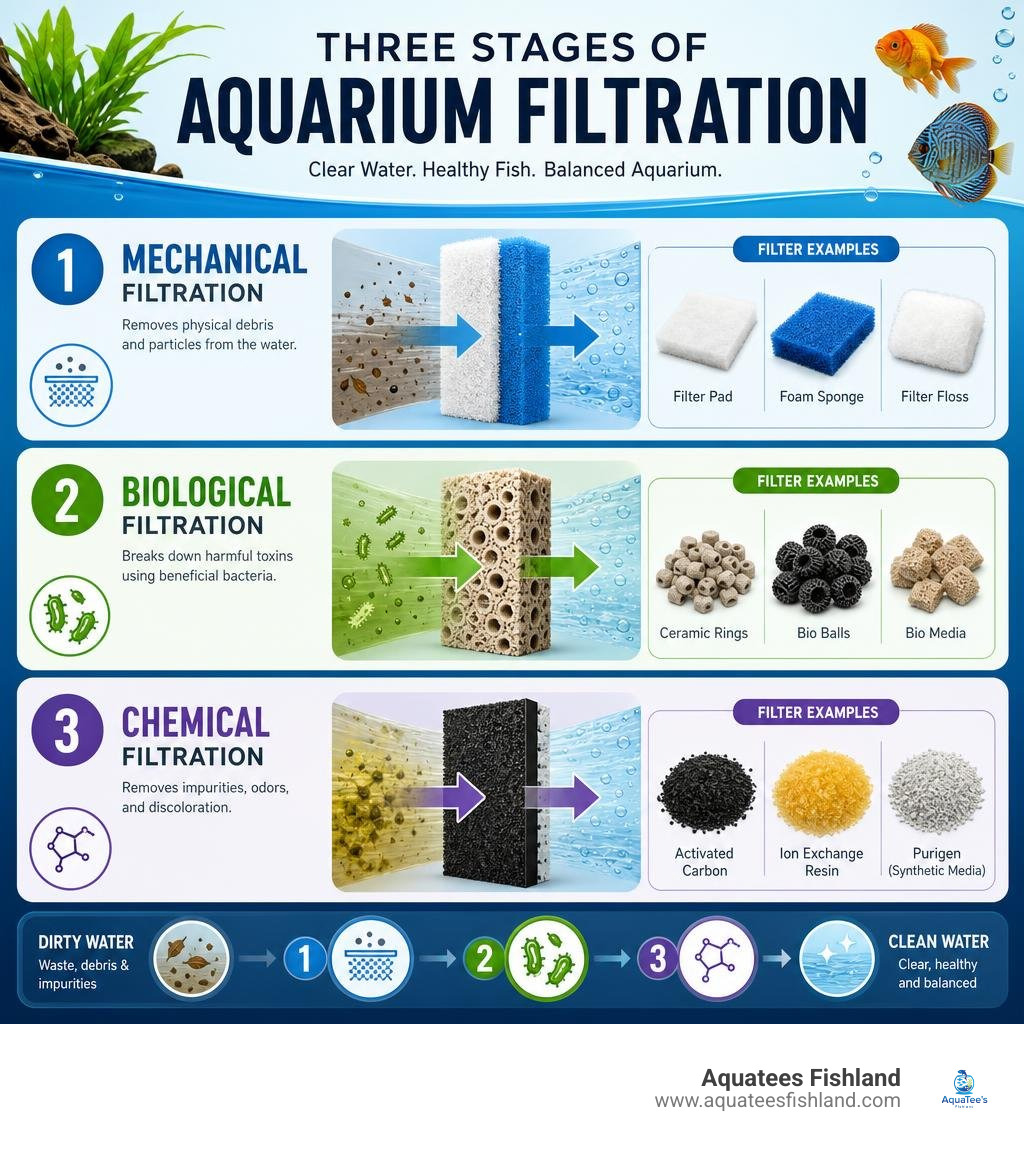
For many large aquariums, a large external fish tank filter is a practical starting point because it keeps bulky equipment outside the display and provides space for coarse sponge, fine mechanical pads, ceramic rings, Matrix bio media, activated carbon when needed, and other chemical filtration media.
What Does a Heavily Stocked Aquarium Mean?
A heavily stocked aquarium is a tank where the fish, turtles, or other livestock produce more waste and oxygen demand than a lightly stocked community setup. In customer conversations, the pattern is usually practical: the filter may be rated for the aquarium's litres, but the actual livestock and feeding load create more solid waste than the filter can collect and process comfortably.
This can mean many small fish, several active schooling fish, large messy fish, goldfish, African cichlids, oscars, predator fish, or turtles.
Heavy stocking increases:
- Ammonia production from fish waste, uneaten food, and decaying organic matter
- Nitrite risk if the biological filter cannot process ammonia quickly enough
- Nitrate accumulation when maintenance and water changes cannot keep up
- Solid waste buildup on the substrate and around decorations
- Dissolved oxygen demand because fish and beneficial bacteria both need oxygen
- Filter clogging as mechanical media traps more debris
This is why heavily stocked tanks often need stronger biological filtration, more mechanical media, better circulation, and a filter that still performs well after normal flow loss through media and hosing. The RSPCA also explains that good aquarium water quality is essential because poor water conditions can affect fish health and welfare, which makes filtration, testing, and regular maintenance part of responsible fishkeeping.
How to Calculate Filter Size for a Large Aquarium
To calculate filter size, start with tank volume, then adjust for bioload, turnover rate, media volume, and flow loss. The advertised litres per hour is usually measured under ideal conditions, so real aquarium flow can be lower once the filter is full of media.
Use this process:
- Measure the tank size in litres. Include the actual water volume, allowing for substrate, rocks, and decorations.
- Assess the bioload. Light community tanks need less turnover than goldfish, cichlid, predator, or turtle tanks.
- Choose a turnover target. Large tanks commonly need 4 to 10 times the tank volume per hour, while some messy setups may need more circulation.
- Check media volume. A filter with a large media basket can often support more beneficial bacteria than a high-flow filter with tiny cartridges.
- Allow for flow loss. Hoses, elbows, dirty pre-filter sponges, fine media, and vertical lift can reduce practical flow.
The turnover figures below are Aquatees Fishland's practical sizing guide for home aquarium planning, based on the way different livestock types tend to affect waste load, oxygen demand, and mechanical filter clogging. They are a starting point rather than a replacement for testing ammonia, nitrite, nitrate, and observing fish behaviour.
| Tank Type | Recommended Turnover |
|---|---|
| Community aquarium | 4 to 6x per hour |
| Goldfish aquarium | 8 to 10x per hour |
| African cichlid aquarium | 8 to 10x per hour |
| Predator fish aquarium | 8 to 12x per hour |
| Turtle tank | 10x+ per hour |
Results can vary depending on aquarium size, livestock, water parameters, filtration, substrate, maintenance routine, and manufacturer recommendations.
Canister vs Hang-on-Back Filters for Large Tanks
Canister filters and hang-on-back filters both have a place, but they solve different problems in large aquariums.
| Filter Type | Main Strength | Main Limitation | Better For |
|---|---|---|---|
| Canister filter | Large media capacity and flexible filtration stages | Takes longer to clean and needs cabinet space | Large tanks, heavy bioloads, planted tanks, predator fish, goldfish, marine setups |
| Hang-on-back filter | Easy access, oxygenation, simple maintenance | Less media volume than most canisters | Medium-large tanks, lighter stocking, secondary filtration, surface movement |
| Sponge filter | Gentle biological filtration and aeration | Limited mechanical polishing | Backup filtration, fry tanks, quarantine, extra oxygenation |
| Internal filter | Simple installation and direct flow | Takes up display space and has smaller media chambers | Smaller tanks, extra circulation, temporary support |
A canister filter guide can help if you want a deeper comparison of external filter setup, media order, and maintenance.
Single Filter vs Dual Filters
Two filters can be better than one large filter when a tank has dead spots, heavy stocking, or livestock that benefits from backup filtration. For example, two 1000 LPH filters may give better coverage across a long aquarium than one 2000 LPH filter blasting from one end.
| Setup | Advantages | Considerations |
|---|---|---|
| One large filter | Simpler plumbing, one unit to maintain, often strong media capacity | Less backup if it fails, may leave dead spots in long tanks |
| Two smaller filters | Better circulation coverage, backup biological filtration, easier staged cleaning | More equipment, more hoses or intakes, extra maintenance points |
| Canister plus sponge filter | Strong mechanical and biological filtration with extra aeration | Sponge filter is usually support, not the main filter for large tanks |
If you run dual filters, avoid cleaning both deeply on the same day. Stagger maintenance so beneficial bacteria remain stable.
Signs Your Filter Is Too Small
A large aquarium filter may be too small if the water looks dirty, the nitrogen cycle is unstable, or the filter clogs faster than expected. NSW Department of Education's aquarium environment guidance highlights that aquarium conditions such as water quality, temperature, lighting, aeration, filtration, and cleaning all need regular management.
Common warning signs include:
- Cloudy water that returns quickly after cleaning
- Ammonia or nitrite readings above zero in a cycled aquarium
- Debris staying on the substrate instead of reaching the intake
- Algae increasing because excess nutrients are building up
- Mechanical media becoming filthy every week
- Bad smells from trapped waste or low-flow areas
- Fish gasping near the surface, especially before lights come on
- Uneven flow, dead spots, or waste collecting behind decorations
Water testing kits are useful here because visual clarity does not always prove that ammonia, nitrite, and nitrate are under control.
Recommended Large Aquarium Filters at Aquatees Fishland
Product recommendations are most useful when they are matched to the aquarium problem. Instead of choosing by brand name alone, compare the tank size, bioload, media basket capacity, flow control, maintenance style, and whether you need UV clarification.
Seachem Tidal Power Filter 55
The Seachem Tidal Power Filter 55 is a strong choice for aquariums up to around 200 litres with light to moderate stocking. It suits tropical community tanks and planted tanks where easy access, surface movement, and simple maintenance matter.
Useful features include a maintenance alert, surface skimmer, Matrix bio media, self-priming design, adjustable flow, and a media basket that can be customised more easily than a small disposable cartridge.
Seachem Tidal Power Filter 75
The Seachem Tidal Power Filter 75 suits medium-large aquariums around 200 to 300 litres, depending on livestock and stocking level. It offers a larger media basket, stronger flow, and more biological filtration capacity than smaller HOB filters.
It can suit larger community aquariums, planted tanks with moderate fish loads, and some cichlid setups where the aquarist wants simple maintenance and good oxygenation without installing a full external canister.
Seachem Tidal Power Filter 110
The Seachem Tidal Power Filter 110 can suit aquariums up to around 400 litres, especially where strong surface movement and easy maintenance are priorities. With high flow and generous media capacity for a HOB filter, it can support heavy community stocking, goldfish, and some predator fish setups when matched carefully to the tank.
For very messy aquariums, it may also work well as a secondary filter beside a canister, adding extra mechanical filtration, oxygenation, and water movement.
Periha EA External Canister Filters
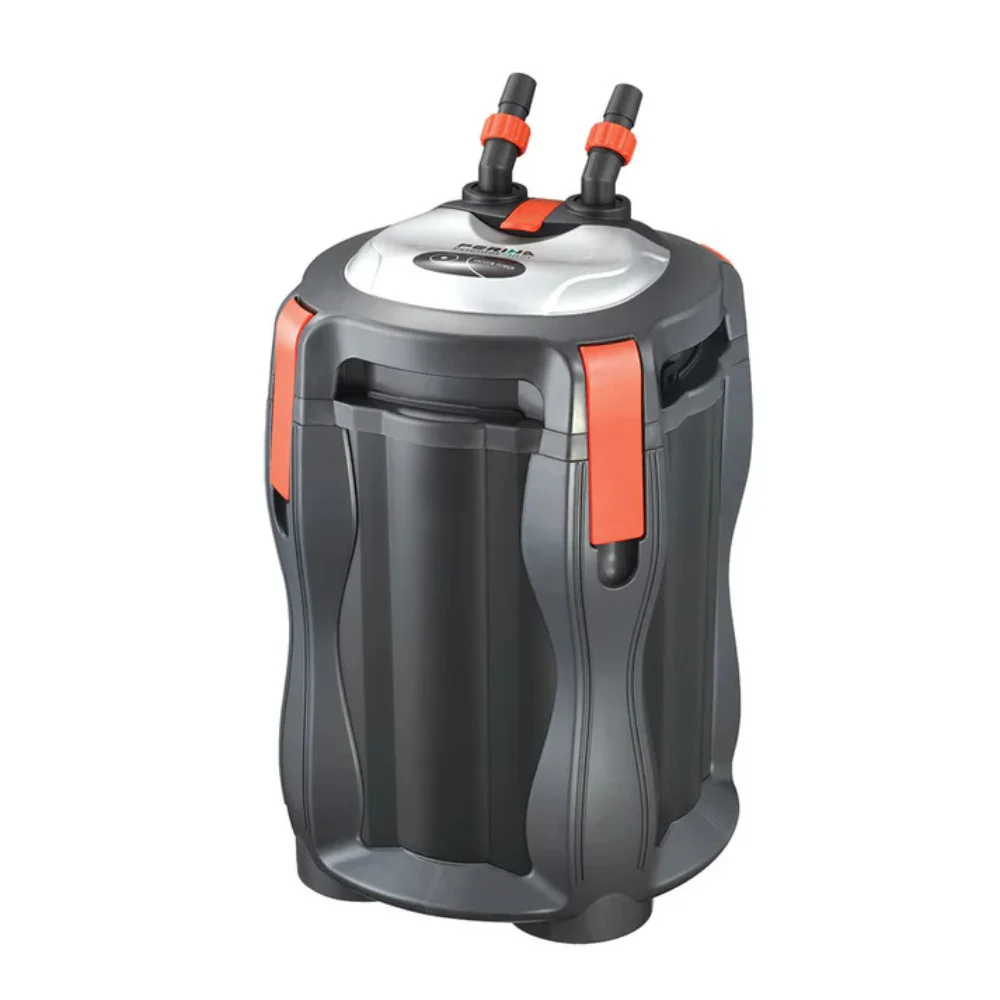
Periha EA External Canister Filters are suited to aquarists who want external filtration, larger media baskets, quieter operation, and flexible media choices for freshwater, planted, marine, and larger community aquariums.
A canister layout is useful when you want to combine coarse sponge, fine mechanical media, ceramic rings, Matrix bio media, and chemical filtration in separate layers. This makes it easier to tune the filter to the aquarium rather than relying on one fixed cartridge.
Periha EC UV Canister Filters
Periha EC External UV Canister Filters are useful when a large aquarium needs both multi-stage filtration and UV clarification. They can suit green water issues, persistent algae concerns, heavily stocked tanks, and large community aquariums where extra water clarity support is useful.
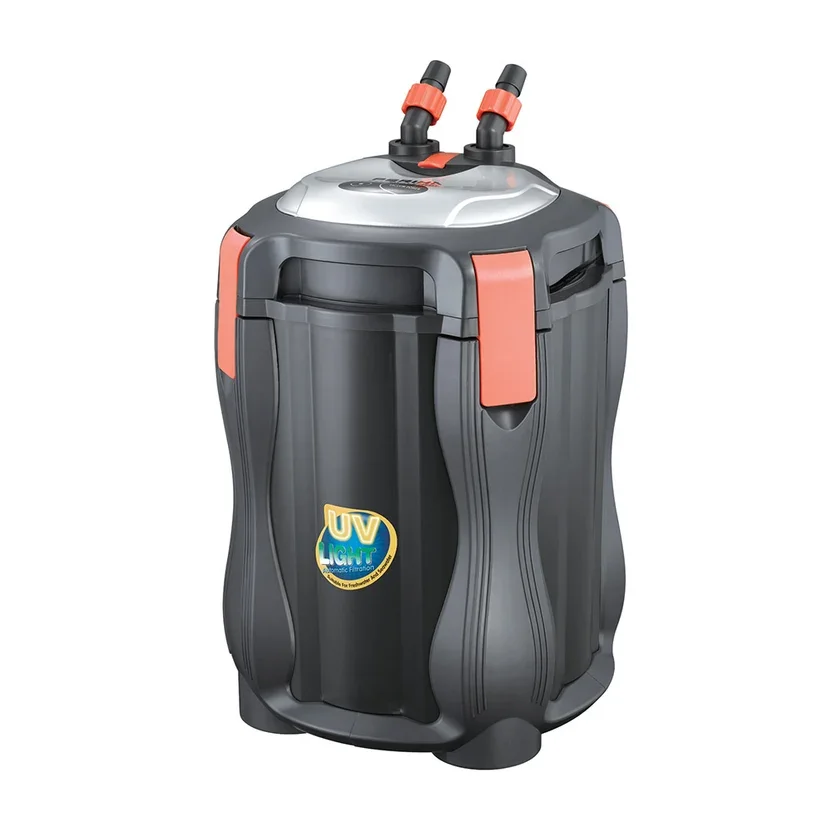
The main benefit is not that UV replaces filtration. It does not. The value is that UV sterilisation can help reduce free-floating algae and some waterborne organisms while the canister still handles mechanical, biological, and chemical filtration. These filters can be suitable for freshwater and marine setups when matched to the manufacturer's guidance.
Before Buying a Large Aquarium Filter
Before buying a large aquarium filter, check the practical details that affect performance in a real tank.
- Tank size: Know the actual litres, not just the display name of the aquarium.
- Fish species: Goldfish, oscars, African cichlids, and turtles need more filtration than many small tropical fish.
- Stocking level: Heavy stocking needs more media volume and more maintenance capacity.
- Freshwater or marine: Marine tanks may need extra chemical media, protein skimming, or sump-based support.
- Cabinet space: External canisters need enough room for the body, hoses, taps, and safe access.
- Media capacity: Look for space for sponge filters, ceramic rings, Matrix bio media, activated carbon when required, and fine polishing media.
- Maintenance access: Choose a filter you can realistically clean without avoiding the job.
- Replacement parts: Check availability for tubing, impellers, seals, sponges, baskets, and media.
- Water treatment: Keep suitable water conditioners on hand so maintenance water is safe for fish and beneficial bacteria.
- Filter media: Choose filter media based on the job, such as mechanical polishing, biological surface area, or short-term chemical removal.
Fish Tank Filters for Large Tanks: Maintenance and Media Guide
Maintaining water quality in a large aquarium depends on cleaning the filter often enough to preserve flow while protecting beneficial bacteria. A dirty filter can trap waste until it breaks down into ammonia, nitrite, nitrate, and phosphate, but over-cleaning biological media can also destabilise the nitrogen cycle.
Biosecurity also matters when aquarium water, fish, plants, or equipment are moved or disposed of, and the Australian Government explains practical ways hobbyists can help protect aquatic animal health by avoiding the release of aquarium animals, plants, or untreated water into the environment
| Filter Type | Ideal Use | Maintenance Frequency | Best Suited For |
|---|---|---|---|
| Canister filter | Main filtration for large tanks | Every 2 to 3 months, with pre-filter checks sooner | Heavily stocked, planted, goldfish, cichlid, and predator tanks |
| Hang-on-back filter | Main or secondary filtration | Every 2 to 4 weeks | Medium-large community tanks or extra oxygenation |
| Sponge filter | Biological backup and aeration | Every 2 to 4 weeks | Fry, quarantine, shrimp-safe, or auxiliary support |
| UV canister filter | Filtration plus water clarification | Filter as needed, UV bulb as recommended | Green water, algae-prone, and heavily stocked aquariums |
What Filter Media Should You Use in a Large Aquarium?
A large aquarium filter should usually include mechanical filtration, biological filtration, and optional chemical filtration. The exact media mix depends on the livestock, water parameters, and maintenance routine.
- Coarse sponge or pre-filter sponge: Catches large debris before it clogs finer media.
- Fine filter wool or polishing pad: Traps smaller particles for clearer water.
- Ceramic rings or Matrix bio media: Provides surface area for beneficial bacteria that process ammonia and nitrite.
- Activated carbon: Useful for short-term chemical removal, odour control, or removing some medication residues when treatment is complete.
- Specialty chemical media: Can help with phosphate, nitrate, or specific water quality problems when testing shows a clear need.
Avoid replacing all biological media at once. If media is physically falling apart, replace it gradually so the bacterial colony has time to recover.
How Often Should You Clean Fish Tank Filters for Large Tanks?
For a large canister filter, a thorough clean is typically needed every two to three months, while pre-filter sponges may need checking every few weeks. Heavily stocked tanks, turtle tanks, and goldfish aquariums may need more frequent mechanical cleaning.
Rinse biological media gently in a bucket of aquarium water rather than untreated tap water. This helps protect beneficial bacteria and reduces the risk of an ammonia or nitrite spike after maintenance.
How Much Flow Is Too Much?
Flow is too much when fish are constantly fighting the current, hiding, struggling to feed, or being pushed away from resting areas. Strong turnover is useful, but large aquariums still need flow that suits the fish species and aquascape.
If flow is too intense, use adjustable flow control, spray bars, wider outlets, hardscape placement, or dual-filter positioning to spread movement more evenly. The goal is steady circulation, good dissolved oxygen, and minimal dead spots without stressing the livestock.
Should You Use UV Sterilisation?
UV sterilisation can be useful for green water, some algae issues, and extra water clarity support in heavily stocked aquariums, but it should not replace proper filtration, water testing, or maintenance. A UV unit only treats water that passes through it.
For large tanks, a UV canister can be a tidy option because it combines external filtration with clarification support. It is most useful when the aquarium already has suitable mechanical filtration, biological filtration, and enough flow through the media.
Finding the Right Fish Tank Filters for Large Tanks in Australia
Large, heavily stocked aquariums need filtration that matches the real bioload, not just the tank's litre rating. The right choice depends on ammonia production, nitrite control, nitrate management, dissolved oxygen, aquarium turnover, media basket capacity, flow rate, and how easily you can maintain the system.
For most large home aquariums, a canister filter is the most flexible starting point because it offers space for mechanical filtration, biological filtration, chemical filtration, ceramic rings, sponge media, and optional polishing media. HOB filters can still be useful for medium-large tanks or as secondary filtration, while sponge filters provide valuable backup and extra aeration.
At Aquatees Fishland, the goal is to help Australian hobbyists choose filtration based on the aquarium they actually keep: planted tanks, community aquariums, goldfish, African cichlids, predator fish, marine setups, and turtle tanks all place different demands on the filter.
Ready to compare practical filtration options?
Fish Tank Filters for Large Tanks FAQ
What size filter do I need for a 200L aquarium?
For a 200L aquarium, many community tanks need about 800 to 1200 LPH of turnover, while heavily stocked tanks may need 1600 to 2000 LPH or more. Check the fish species, media capacity, and expected flow loss before choosing.
Can you oversize an aquarium filter?
Yes, you can oversize an aquarium filter, but the flow must still suit the fish. Extra media capacity is often helpful, while excessive current can stress slow-moving fish.
Is a canister filter better than a hang-on-back filter?
A canister filter is generally better for large or heavily stocked aquariums because it holds more media and supports staged filtration. A hang-on-back filter can still be useful for medium-large tanks, surface movement, or secondary filtration.
How often should filter media be replaced?
Filter media should be replaced only when it is worn out, blocked beyond cleaning, or no longer doing its job. Biological media should usually be kept for as long as it remains intact, while fine pads and wool may need replacing more often.
Should biological media be cleaned?
Yes, biological media can be cleaned gently when it is clogged, but it should not be scrubbed harshly or rinsed in untreated tap water. Swish it in aquarium water during maintenance to protect beneficial bacteria.
Is one filter enough for a heavily stocked tank?
One filter can be enough if it provides the right turnover, media volume, and circulation coverage. Two filters may be better for long tanks, messy livestock, backup biological filtration, or areas where debris collects.
Do planted tanks need powerful filtration?
Planted tanks need steady filtration and circulation, but not always aggressive current. The filter should move nutrients and oxygen through the tank while avoiding flow that uproots plants or stresses fish.
Should you use UV sterilisation?
UV sterilisation can help with green water and water clarity, especially in large or heavily stocked aquariums. It should be used as support, not as a replacement for mechanical filtration, biological filtration, water testing, or water changes.
How long do aquarium filters last?
Aquarium filters can last for years when they are cleaned properly and replacement parts remain available. Impellers, seals, tubing, sponges, and UV bulbs may need replacing over time according to wear and manufacturer guidance.