

Why a Large External Fish Tank Filter Makes or Breaks a Big Aquarium
Choosing a large external fish tank filter is the most critical decision for maintaining a healthy, balanced ecosystem in a spacious aquarium. A properly sized external unit ensures your water remains clear, your livestock thrives, and your maintenance routine remains straightforward.
Quick answer: Best large external fish tank filters at a glance
| Filter Type | Best For | Typical Tank Size |
|---|---|---|
| Large canister filter | Freshwater and marine, heavy stocking | 200L to 1500L+ |
| Canister with UV steriliser | Algae control, pathogen prevention | 200L to 1000L |
| Commercial/aquaculture system | Fish farming, large-scale production | 1000L+ |
| Thermofilter (integrated heater) | Freshwater, minimal in-tank equipment | 300L to 800L |
Filtration is the biological foundation of any successful aquarium setup. In larger systems, even minor fluctuations in water parameters can quickly stress your livestock. An external canister filter processes mechanical, biological, and chemical waste outside the display tank, leaving more swimming space for your aquatic community.
Think of an external filter as the biological kidney of your aquarium. It constantly processes dissolved waste, ensuring toxic compounds do not accumulate. This continuous cycle is vital for maintaining long-term stability in large volumes of water.
Australian conditions present unique challenges for aquarium keepers, particularly during hot summer months. High ambient temperatures accelerate water evaporation, which can cause rapid salinity swings in marine setups and concentrate organic waste. A robust external filter provides the extra water volume and flow needed to buffer these sudden environmental shifts.
I am Naim Ibn Nahshid from Aquatees Fishland. Through daily hands-on work with diverse aquarium systems and customer setups, I have developed a practical understanding of what makes a large external fish tank filter perform reliably. This guide is built on real-world experience to help you choose the right system for your home.
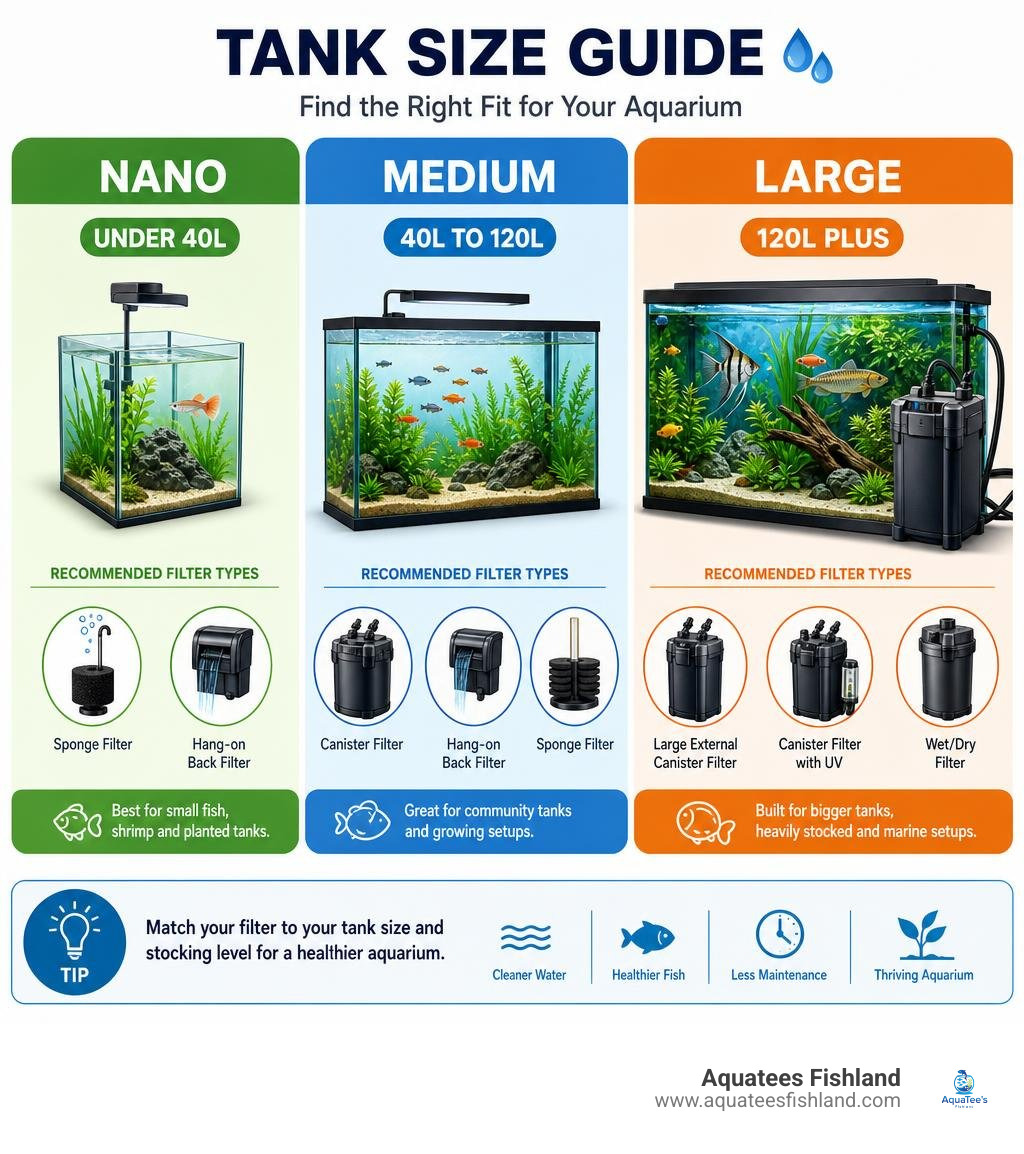
Choosing the Right Large External Fish Tank Filter for Your Setup
Selecting the right large external filter requires matching the unit's hourly turnover rate and media capacity to your specific aquarium volume and livestock needs. For most large setups, aiming for a water turnover rate of four to ten times the total tank volume per hour is recommended.
When managing a large aquarium, your choice of filtration directly dictates the health of the entire aquatic ecosystem. Marine systems are especially sensitive to environmental changes. In Australia, summer heatwaves can cause rapid evaporation, leading to sudden salinity shifts that stress delicate corals and marine fish.
Your choice of livestock also determines your filtration requirements. Messy species such as cichlids, oscars, or turtles produce significant physical waste, requiring substantial mechanical filtration capacity. Conversely, a planted aquascape or a marine reef tank demands extensive biological and chemical filtration to keep dissolved nutrients as close to zero as possible.
What is a Large External Fish Tank Filter and How Does It Work?
A large external fish tank filter is an independent filtration system positioned outside the aquarium that draws dirty water from the tank, processes it through multiple media layers, and returns clean water. This external design allows for much larger media capacities and superior water processing compared to internal alternatives.
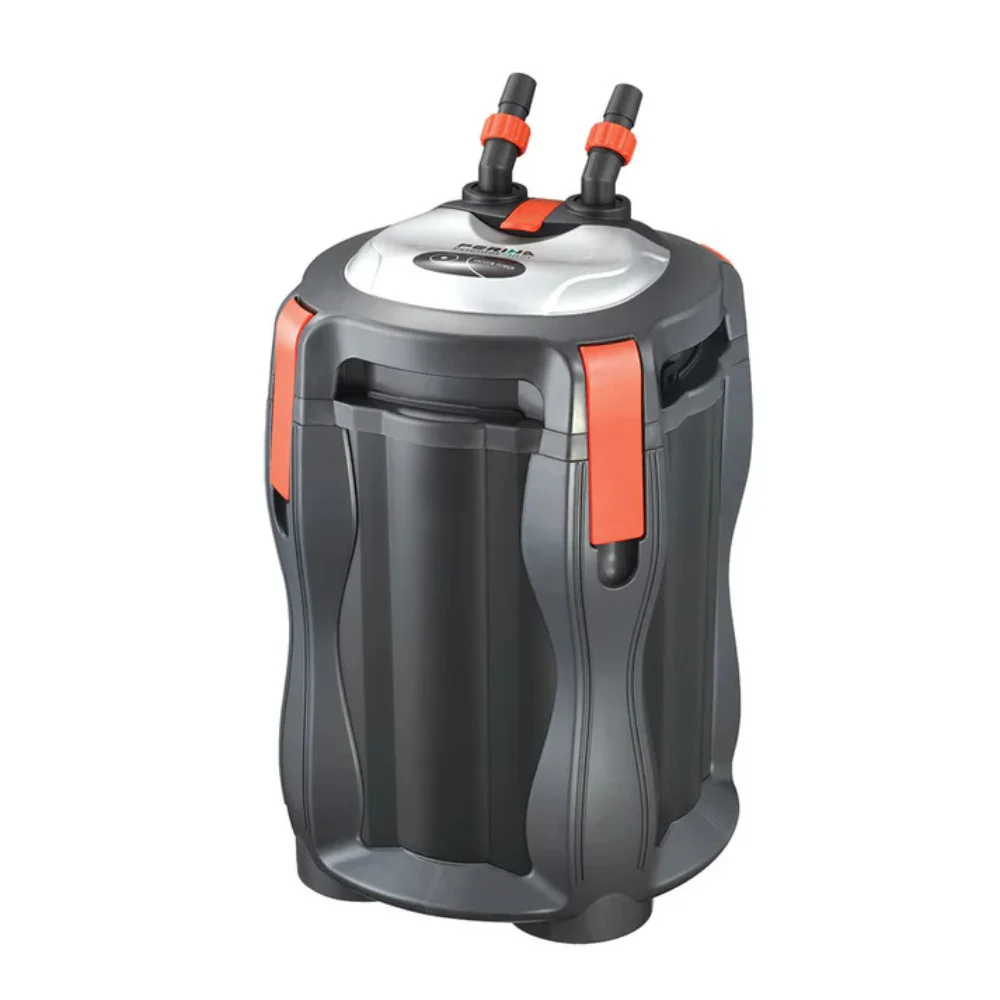
Unlike a smaller Internal Tank Filter, which sits inside the aquarium and occupies valuable swimming space, an external canister filter is housed neatly inside the cabinet below. Water is drawn from the aquarium through an intake tube by an External Filter Pump. It is then pushed under pressure through several media baskets inside a sealed canister.
Inside the canister, the water passes through three distinct stages of filtration:
- Mechanical filtration: Thick sponges and fine wool pads physically trap floating debris, fish waste, and uneaten food particles.
- Biological filtration: Highly porous media, such as ceramic rings or sintered glass, provides a massive surface area for beneficial nitrifying bacteria to colonise.
- Chemical filtration: Activated carbon, resins, or specialised chemical media absorb dissolved organic compounds, medications, and unpleasant odours.
Once the water is thoroughly processed, the pump returns it to the aquarium through an outlet pipe or spray bar. This return flow also helps agitate the water surface, promoting essential oxygen exchange. For high-capacity setups, the Aquatees Fishland Water Filters collection offers several robust options designed to manage large water volumes efficiently.
Key Benefits of Upgrading to a Large External Fish Tank Filter
Upgrading to a large external filter increases your system's total water volume, stabilises critical water parameters, and significantly boosts your aquarium's biological carrying capacity. By moving the filtration system outside the tank, you also free up valuable space for aquascaping and livestock.
When you transition to a heavy-duty external canister, you are choosing the Best Tank Filter style for long-term environmental stability. Because the canister itself holds a significant volume of water, it increases the overall water capacity of your system. This extra volume dilutes organic waste and slows down sudden shifts in water chemistry.
External canisters also allow you to customise your filtration media to suit your specific aquatic community. Instead of relying on basic cartridges, you can pack the internal baskets with high-performance media. For example, combining a high-surface-area biological media like Seachem Matrix with an organic-scavenging resin like Seachem Purigen helps maintain crystal-clear water.
This level of customisation is detailed further in our Freshwater Tank Filter Guide 2026. Tailoring your media configuration allows you to address specific water quality challenges, such as tannins from driftwood or high phosphate levels.
Essential Features to Look For in Large Filtration Systems
When selecting a large filtration system, you should look for integrated features such as built-in UV sterilisers, integrated heaters, reliable self-priming buttons, and adjustable flow valves. These features simplify routine maintenance and reduce the amount of visible equipment cluttering your display tank.
One popular option is the Periha EC Canister, which features an integrated UV steriliser. The built-in UV light targets and destroys free-floating algae spores, bacteria, and pathogens as water flows through the unit. This helps prevent green water blooms and reduces the spread of waterborne diseases.
If you prefer a clean display tank without a visible heater, look for thermofilters. The EHEIM professionel 4 600T | 2375010 features an integrated heating element that warms the water as it passes through the filter, though this heating feature is designed strictly for freshwater setups.
For marine or standard large-scale setups, the unheated EHEIM professionel 4 800 | 2277010 offers an exceptionally large canister volume of 14.5 litres and a robust 1600 L/H flow rate. You can also explore other generic heavy-duty options to find a unit that matches your budget and plumbing needs.
Setting Up and Cycling Your Large Aquarium
Setting up and cycling a large aquarium requires establishing a robust colony of beneficial nitrifying bacteria to safely convert toxic ammonia into nitrite and then into safer nitrate. This biological cycling process is critical to preventing new tank syndrome and keeping your livestock healthy.
To kickstart this process, using a reliable live bacterial starter can help. For freshwater setups, adding FritzZyme 7 introduces active nitrifying strains that colonise your filter media rapidly. If you are setting up a saltwater or reef tank, FritzZyme 9 is formulated specifically for marine salinities.
During the cycling phase, it is vital to monitor your water chemistry closely. Using a reliable test kit like the Sera Ammonia Test Kit allows you to track ammonia levels daily.
If you are performing a fishless cycle, you can add a small source of ammonia to feed the bacteria. If you are cycling with fish, using a water conditioner like Seachem Stability alongside a detoxifier can help ensure ammonia levels do not reach toxic thresholds before the biological filter is fully established.
Maintenance Routines for Large Canister Systems
Maintenance routines for large canister filters typically involve cleaning the prefilter sponge every few weeks and gently rinsing the biological media in tank water every few months. Regular maintenance preserves optimal water flow and prevents debris from decomposing inside the filter chamber.
Because large canister filters hold a massive amount of waste, neglecting them can lead to a buildup of nitrates and phosphates. To keep maintenance straightforward, follow these practical steps:
- Turn off the power: Unplug the filter and any integrated heaters or UV sterilisers before opening the canister.
- Close the valves: Modern filters feature quick-disconnect valves that seal the hoses, preventing water from spilling onto your floor.
- Clean the mechanical stages: Remove and rinse the mechanical foams. If you use fine polishing pads like Dymax White Wool Sponges, replace them entirely as they clog quickly.
- Preserve the biology: Avoid rinsing your biological media under tap water, as the chlorine in municipal water can destroy your beneficial bacteria colony. Instead, gently shake the media baskets in a bucket of siphoned aquarium water to remove loose debris.
- Inspect the seals: Before reassembling, check the main O-ring gasket for wear and apply a food-safe silicone lubricant to prevent leaks.
Using a dedicated Biological Filter Sponge as a prefilter can also trap coarse particles before they reach your biological media, extending the time required between deep cleanings.
Frequently Asked Questions
How do I calculate the correct flow rate for my large aquarium?
To find the appropriate flow rate, multiply your total aquarium volume by at least four to five. For example, a 300-litre aquarium requires a filter with a flow rate of at least 1200 to 1500 litres per hour. If you are keeping heavily stocked tanks or messy species, aiming for a turnover rate of eight to ten times the tank volume per hour is safer. For more details on choosing filters, you can watch The Best Canister Filters for Aquariums (and HOW to ... to see various models in action.
How often should I replace the UV lamp in my external filter?
You should typically replace the UV lamp in your external filter once every twelve months. Although the bulb may still glow after a year of continuous use, the intensity of the germicidal UVC light degrades significantly after 7000 to 10000 hours of operation, making it ineffective at controlling algae and pathogens.
Can I use the same large external filter for both freshwater and marine setups?
Yes, most large external canister filters are compatible with both freshwater and saltwater environments, provided they feature ceramic shafts and corrosion-resistant components. However, if you are using a thermofilter with an integrated heating element, check the manufacturer's guidelines, as some built-in heaters are rated strictly for freshwater use.
What is the ideal water turnover rate for large fish tanks?
The ideal turnover rate depends on your livestock, but a general rule of thumb is four to five times the total water volume per hour for standard community tanks. Heavily stocked cichlid systems or predator tanks benefit from a turnover rate of eight to ten times per hour to ensure waste is processed before it can degrade water quality.
Conclusion: Maximising Success with a Large External Fish Tank Filter
Investing in a high-capacity external filtration system is one of the most reliable ways to guarantee long-term stability and clarity in a large aquarium. By selecting a filter with the appropriate flow rate, massive media capacity, and integrated features like UV sterilisation, you make routine maintenance simpler while providing a highly stable environment for your aquatic livestock.
Understanding the biological needs of your aquarium is the first step toward long-term success. A robust external filter acts as the foundation of your system, buffering against environmental shifts and keeping water parameters stable. By matching your filtration capacity to your livestock and tank volume, you ensure a thriving aquatic environment.
For those looking to explore reliable filtration options, the Aquatees Fishland Water Filters collection provides a variety of systems designed to meet these demanding requirements. Selecting the right equipment ensures your aquarium remains a beautiful, low-maintenance feature in your home for years to come.