

A nitrate test measures the nitrate (NO3) dissolved in aquarium water. Nitrate is the end product of the nitrogen cycle and can build up as fish waste, uneaten food, plant debris and other organic material are processed by the filter. While a result on its own does not diagnose every water-quality issue, regular testing helps aquarium keepers spot a rising trend before it becomes harder to manage.
This guide explains how to perform an aquarium nitrate test with a liquid kit or test strips, avoid common handling errors and interpret the result in the context of your livestock, tank type, maintenance routine and filtration. It also covers practical next steps when readings remain elevated after a water change.
I’m Nemo Sulaiman, part of the eCommerce and warehouse team at Aquatees Fishland, and I’ve spent the past two years helping customers choose the right fish, aquarium equipment and products for their setups. When water quality changes, I find a carefully performed nitrate test is often the most useful first step for working out what an aquarium needs.
Aquarium Nitrate Test Key Takeaways
- Nitrate forms as waste is processed in the aquarium and tends to rise when nutrient input exceeds export.
- A weekly check can be useful in a stable tank, with more frequent testing during cycling, after stocking changes or when fish appear unwell.
- Liquid kits can provide more detailed testing, while strips are useful for quick screening.
- Exact measuring, thorough reagent shaking, correct timing and neutral lighting all improve accuracy.
- Persistent high nitrate calls for a review of source water, feeding, detritus, stocking, water-change volume and filtration.
How to Perform an Aquarium Nitrate Test
Start by following the instructions supplied with your own test kit. Sample volume, reagent order, shaking time and colour-development time vary by manufacturer, so one kit’s directions should not be applied to another.
Fritz Nitrate Test Kit Instructions
For the Fritz Nitrate Test Kit N03, fill the vial with 5 mL of aquarium water, add 10 drops of Solution #1, then shake Solution #2 for 30 seconds before adding 10 drops. Cap and shake the vial for one minute, wait five minutes, then compare the colour against the supplied chart.
These are Fritz-specific directions. If you use another liquid nitrate test, follow its supplied instructions exactly, including the stated sample line, reagent sequence and reaction time.
When to Use a Liquid Nitrate Test
Choose a liquid nitrate test when you want a closer look at one nitrate reading, are tracking a change over time or need to confirm a result that seems unusual. Rinse the vial with tank water, measure the sample accurately and hold reagent bottles vertically so the drops are consistent.
- Fill the clean vial to the required line.
- Add reagents in the stated order and cap the vial securely.
- Shake each reagent bottle and the vial for the full time specified by that kit.
- Allow the colour to develop for the stated time before reading it.
- Compare the result in neutral, bright light rather than under coloured aquarium lighting.
When Test Strips Are Useful
Test strips are practical for quick routine checks and for checking several parameters at once. With Fritz 6-in-1 Test Strips, read pH, GH, KH and chlorine at 15 seconds, then nitrite and nitrate at 60 seconds. The water quality test kit guide can also help you compare the testing methods available for a home aquarium.
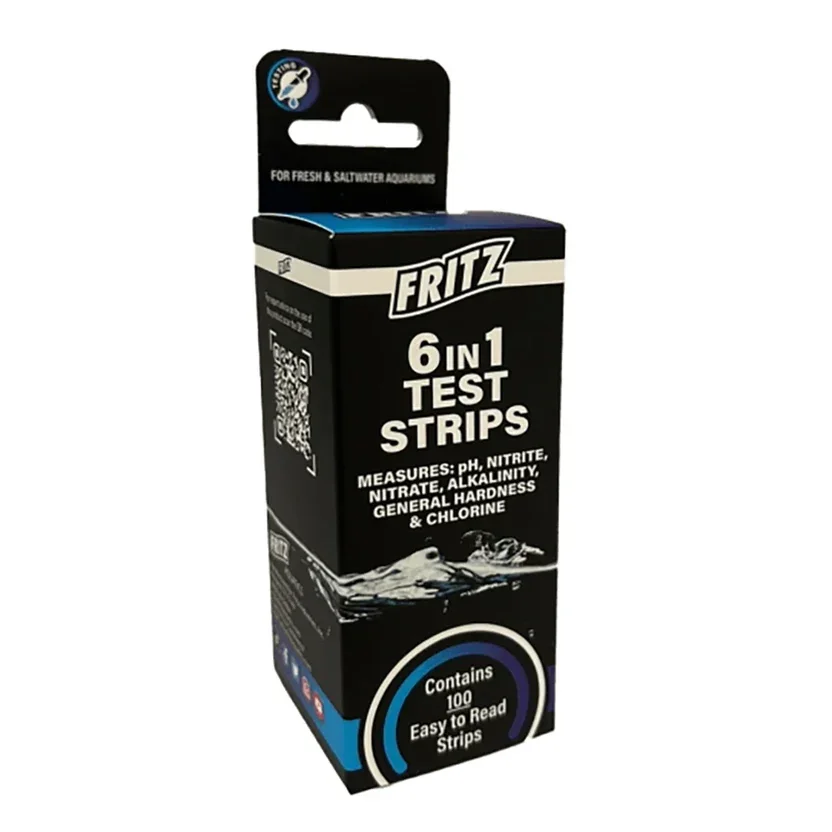
Dip the strip for the manufacturer’s stated time, hold it level and avoid touching the pads. If a strip result is unexpected, repeat the test, check the timing and storage instructions, then confirm the nitrate reading with a liquid kit before making a major maintenance change.
How to Get an Accurate Nitrate Reading
A reliable nitrate result depends on a clean sample, fresh reagents and consistent technique. Testing at roughly the same point in your maintenance routine and recording results over time makes it easier to recognise a genuine trend.
Common Nitrate Test Errors
Practical handling issues are more likely to cause an unreliable result than the aquarium itself. Check these points before acting on a surprising reading:
- Reagents not shaken properly: Some liquid reagents settle during storage. Shake them for the full time stated in the kit instructions before dispensing.
- Incorrect sample volume: Use the vial’s marked fill line or the exact volume specified by the manufacturer.
- Incorrect reaction time: Set a timer. Reading the colour early or late can make chart matching less reliable.
- Poor lighting: Compare colours in indirect daylight or neutral white light, not under blue, warm or heavily coloured aquarium lights.
- Dirty or contaminated test tubes: Rinse vials after use, avoid residue from cleaning products and keep test-strip containers dry and closed.
- Expired or poorly stored reagents: Check expiry information and keep reagents sealed, dry and away from heat or direct sunlight.
Build a Useful Testing Routine
A weekly nitrate check can be useful in an established aquarium, with more frequent testing while cycling a tank, adding livestock, changing filtration or investigating a water-quality concern. If nitrate remains elevated after a water change, test the tap or replacement water as well.
A single number is only a snapshot. Keep a simple log of nitrate, ammonia, nitrite, water changes, feeding, temperature and stocking changes. This helps show whether the reading is a one-off result, a testing error or part of a developing maintenance issue.
What Your Aquarium Nitrate Test Result Means
A nitrate result is expressed in parts per million (ppm), meaning the measured concentration of nitrate in the water. There is no single target that suits every aquarium: appropriate levels depend on the fish, invertebrates or corals you keep, the aquarium’s age and volume, live plants, filtration, source water and the manufacturer guidance for the livestock.
Interpreting Low, Rising and Elevated Results
A low result can mean your tank has modest nutrient input, regular water changes or plants that use available nitrogen. It should still be considered alongside ammonia and nitrite, particularly in a new aquarium where the nitrogen cycle may not yet be stable.
A consistently rising or elevated result can indicate that nitrogen input is exceeding the system's removal/export capacity. Check feeding amounts, uneaten food, substrate detritus, filter maintenance, water-change volume, stocking and source-water nitrate before relying on a single solution.
When nitrate is persistently higher than is appropriate for your particular livestock, make measured changes and retest rather than chasing a universal number. Large or sudden adjustments can create new instability.
Aquarium Nitrate Test FAQs
What nitrate level should I aim for in my aquarium?
Aim for a stable nitrate level that suits your specific livestock rather than one universal ppm figure. Freshwater community tanks, planted tanks, shrimp tanks, fish-only marine systems and reef tanks can have different needs, so check reliable species-care guidance and use the nitrate trend alongside the rest of your water tests.
Why is my nitrate still high after a water change?
High nitrate after a water change can indicate nitrate in the source water, trapped detritus, a water change that was too small for the starting level or ongoing waste production. Test the replacement water, siphon accessible debris, review feeding and ensure filter media is maintained according to its instructions.
How often should I test aquarium nitrate?
A weekly check can be useful in an established aquarium, while testing every few days may be appropriate when cycling, adding livestock or troubleshooting a problem. More frequent testing is useful whenever you need to understand a changing trend rather than confirm one isolated reading.
What should I do if fish have outgrown the aquarium?
Move fish to a suitably larger aquarium or another appropriate setup first, as this directly reduces pressure on water volume and filtration. If upgrading or relocating within your care is not practical, reputable local hobbyist groups or aquatic organisations may be a secondary rehoming option.
Mastering the Nitrate Test for Aquarium Health
A nitrate test is most valuable when it becomes part of a consistent maintenance routine rather than a reaction to a problem. Use the correct method for your kit, follow the timing closely and compare results over time with ammonia, nitrite, feeding, filtration and water-change records. That broader picture helps you make calmer, more appropriate decisions for the aquarium and its livestock.
Aquatees Fishland can help home and office aquarium keepers build a practical water-testing routine with suitable equipment and maintenance supplies:
- Browse water tests and treatments for suitable water-care essentials.
- Use the Fritz Nitrate Test Kit N03 for a detailed liquid nitrate reading.
- Keep Fritz 6-in-1 Test Strips on hand for quick multi-parameter checks.