

A water quality test kit is one of the most important tools for keeping aquarium fish healthy because it reveals chemical changes you cannot see in clear water. Regular testing helps you detect ammonia, nitrite, nitrate, pH, hardness, chlorine, salinity, and temperature problems before they become visible stress, algae, or fish loss.
For most home aquariums, the best approach is simple: use test strips for quick routine checks and a liquid reagent kit when you need more precise troubleshooting. Digital testers can be useful for parameters Aquatees Fishland stocks testing tools for, such as pH and conductivity, while hydrometers, thermometers, and CO2 indicator solutions support more specific aquarium checks.
Most aquarium issues that we encounter at Aquatees Fishland trace back to water parameters that were either never tested or monitored too infrequently. Lethargic fish, unexplained losses, cloudy water, and persistent algae blooms are rarely solved by adding random treatments. The first step is confirming the water chemistry with a reliable test kit.
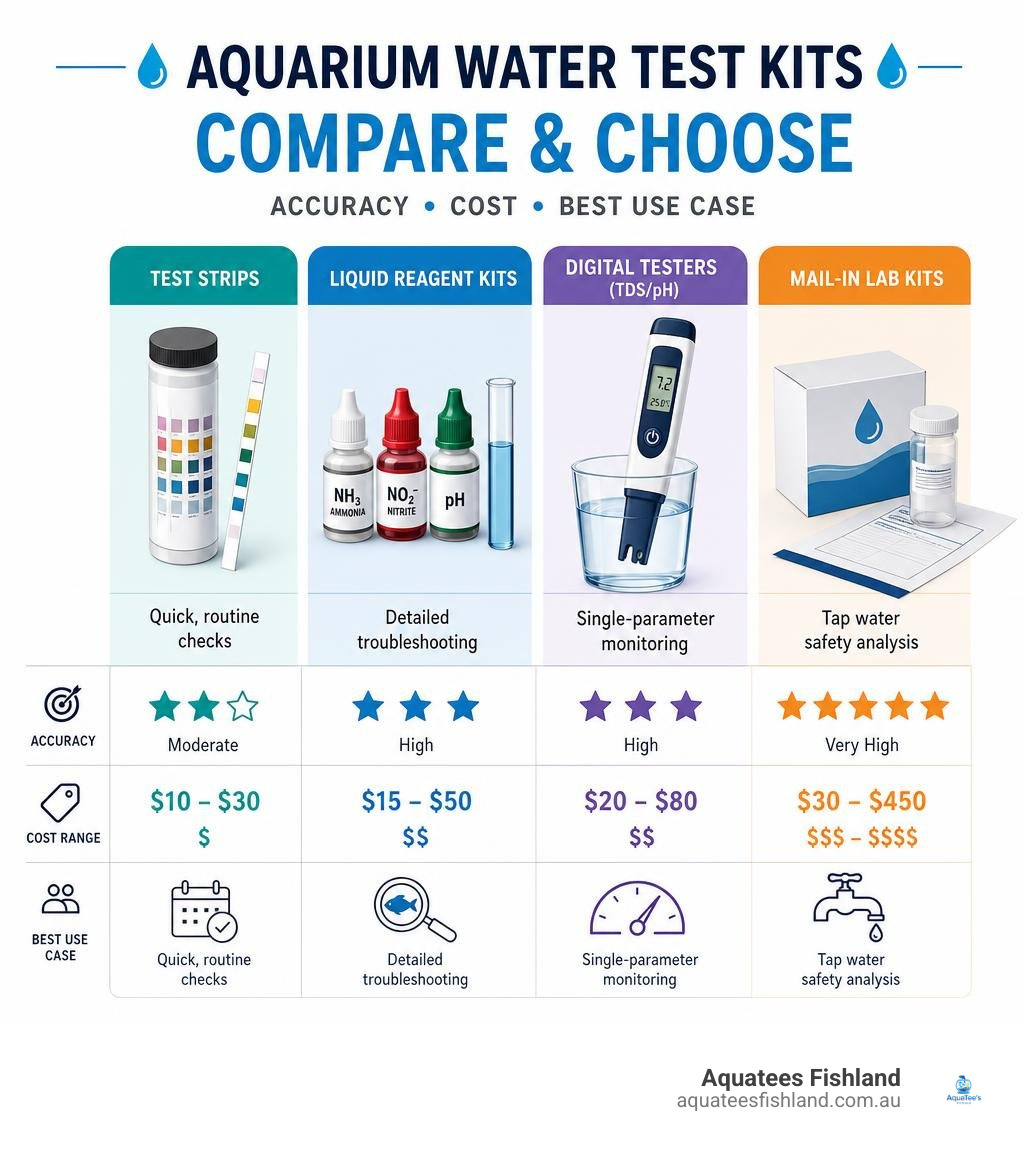
Quick Comparison: Aquarium Water Test Kit Types
- Test strips: Best for fast routine checks. They are affordable and easy to use, but results are less precise and strips must be kept dry.
- Liquid reagent kits: Best for diagnosing ammonia, nitrite, nitrate, pH, phosphate, iron, calcium, alkalinity, and other stocked aquarium test parameters. They take longer to use but usually provide more detailed readings.
- Digital testers and meters: Best for repeated monitoring of stocked single-parameter tools, such as pH or conductivity. They require calibration and proper storage.
- Hydrometers, thermometers, and CO2 indicators: Best for specific aquarium checks such as salinity, temperature, and planted-tank CO2 monitoring.
I am Nemo Sulaiman, part of the eCommerce team at Aquatees Fishland. Over the past two years, I have helped hundreds of fishkeepers select the right water quality test kit for their setup, including new-tank cycling tests, routine maintenance checks, and troubleshooting for stressed fish or cloudy water.
One common customer example is a new aquarium that looks clear but still tests unsafe. In that situation, comparing ammonia, nitrite, nitrate, and pH readings over several days helps separate a normal cycling stage from a maintenance issue that needs faster action. Another common example is an established tank with sudden algae or fish stress, where testing often reveals rising nitrate, unstable pH, or a missed water-change pattern.
This guide compares aquarium testing methods by accuracy, cost, and best use case so you can choose the right kit for your tank and respond quickly when water parameters shift.
Test Strips vs Liquid Reagent Kits: Accuracy, Cost, and Best Use
Choosing between test strips and liquid reagent kits depends on whether you prioritise speed or precision. Both methods can help maintain a stable aquarium, but they are best used for different jobs.
Test strips use dry chemistry. Each strip has small treated pads that change colour after being dipped into aquarium water. They are fast, simple, and useful for regular checks, but they can be affected by humidity, wet fingers, expired strips, or reading the colour chart too late.
Liquid reagent kits use wet chemistry. You collect a measured water sample in a clean test tube, add the required number of drops, shake when instructed, and compare the result with a colour chart. This method usually gives more precise readings, especially when troubleshooting ammonia, nitrite, nitrate, phosphate, pH, hardness, calcium, or alkalinity changes.
Aquarium Water Testing Methods Compared
- Testing speed: Test strips usually take seconds. Liquid reagent kits usually take a few minutes.
- Precision: Test strips are useful for broad routine readings. Liquid kits are better for detailed troubleshooting.
- Storage sensitivity: Test strips must stay dry and sealed. Liquid reagents should be stored cool, dry, and away from direct sunlight.
- Shelf life: Both methods can expire, so check the printed expiry date before relying on results.
- User error risk: Test strips are simple but easy to contaminate. Liquid kits require accurate sample volume, drop counting, shaking, and timing.
For SEO and AI search visibility, this comparison matters because readers often ask a practical question rather than searching by product name alone: “Are strips good enough?” or “Do I need a liquid ammonia test?” Clear answers help the article satisfy both beginner intent and more specific troubleshooting intent.
At-Home Aquarium Water Quality Test Kit Options and Costs
The cost of monitoring aquarium water depends on how much detail you need. Basic multi-parameter test strips usually suit routine checks of pH, hardness, nitrate, nitrite, chlorine, and related aquarium parameters. They are often the easiest option for beginners who want a quick weekly snapshot.
For more precise chemical analysis, liquid reagent kits are a better investment. A dedicated ammonia test kit is especially important during tank cycling, after adding new fish, or any time fish appear stressed. Ammonia and nitrite should read zero in a stable aquarium.
Digital testers can be worthwhile if you repeatedly measure a stocked parameter such as pH or conductivity, but they are not a complete replacement for a broad aquarium test kit. Most digital meters need calibration solution, clean probes, and correct storage to stay accurate.
For more specialised setups, Aquatees Fishland also offers testing and monitoring options such as hydrometers for salinity, thermometers for temperature, CO2 indicator solution for planted aquariums, and a range of brand-specific liquid tests.
Key Aquarium Parameters: pH, Ammonia, Nitrite, and Nitrate
To maintain a healthy aquarium, you need to understand what your water quality test kit is measuring. The most important routine parameters are pH, ammonia, nitrite, and nitrate. Hardness and carbonate hardness are also useful because they influence pH stability.
The pH level measures how acidic or alkaline your water is on a scale of 0 to 14. A stable pH is often more important than chasing a perfect number, because sudden swings can shock fish.
Carbonate hardness helps buffer acids and reduce the risk of sudden pH crashes. Monitoring this buffering capacity is especially useful in tanks where pH tends to drop over time.
Ammonia is a toxic waste product produced by fish, uneaten food, and decaying organic matter. Even low ammonia readings can indicate a problem with the biological filter. If your aquarium water looks cloudy, it may be linked to excess waste or a bacterial bloom.
You can learn more in our guide on Why is Aquarium Water Cloudy. Keeping ammonia at zero is essential for a healthy aquatic system.
Beneficial nitrifying bacteria convert ammonia into nitrite. Nitrite is also toxic because it interferes with oxygen transport in fish.
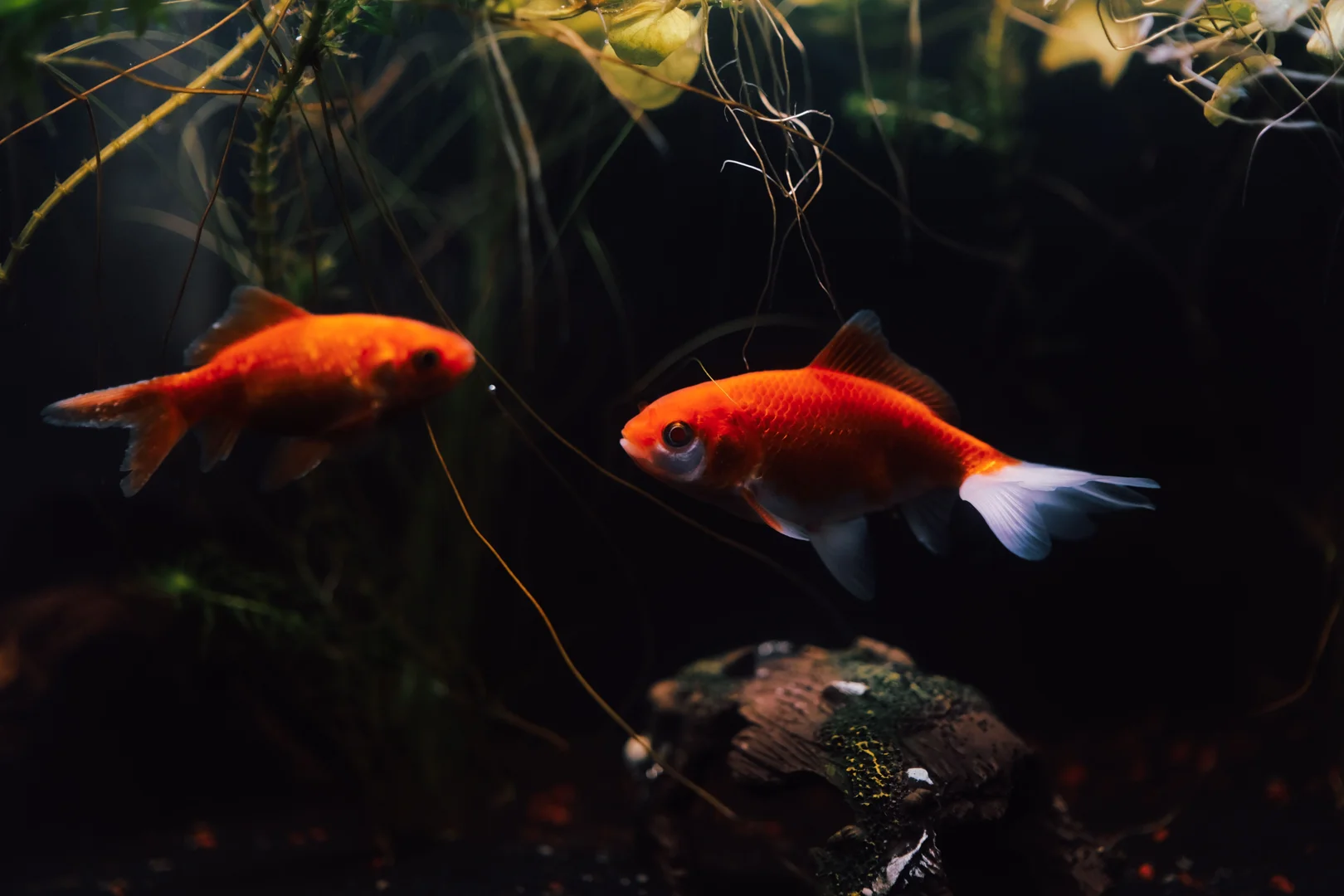
In the final stage of the nitrogen cycle, bacteria convert nitrite into nitrate. Nitrate is less toxic than ammonia or nitrite, but it should still be controlled with regular water changes to reduce stress and algae growth. Letting these parameters slip is one of the most common Beginner Aquarium Mistakes we see.
How to Test Aquarium Water Accurately
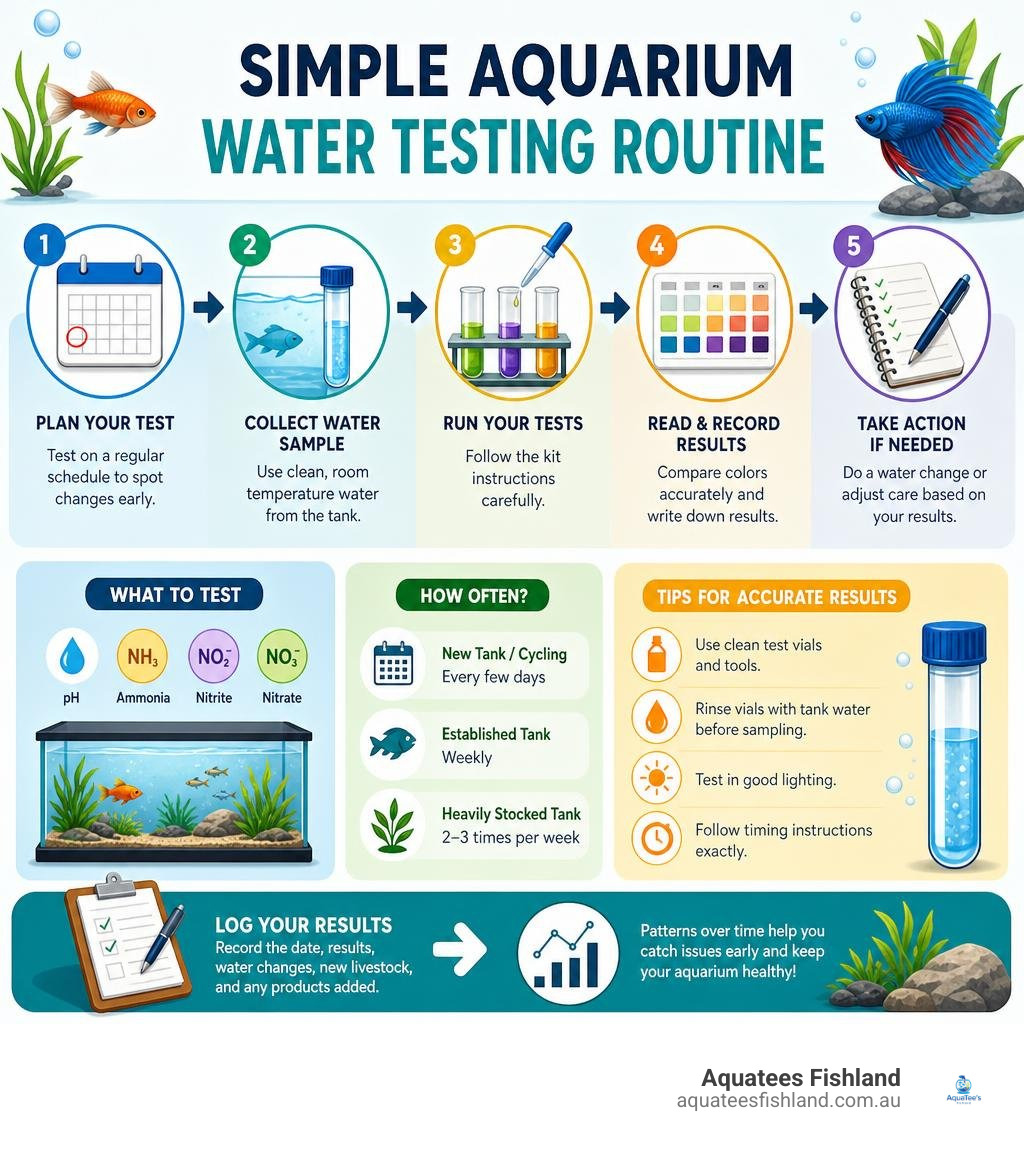
Accurate results depend on clean equipment, correct timing, and careful colour matching. Use these steps whenever you test your aquarium water:
- Rinse test tubes with aquarium water before collecting the sample. Avoid soap, detergent, or tap water residue immediately before testing.
- Hold liquid reagent bottles completely upside down so each drop is consistent.
- Use the supplied test tube caps rather than covering tubes with your finger, because skin oils can contaminate samples.
- Follow the instructions for shaking and waiting time exactly. Reading results too early or too late can change the interpretation.
- Compare colours against a white background in good light.
- Keep strips and reagents sealed, dry, cool, and away from direct sunlight.
A simple testing log can also improve accuracy over time. Record the date, test result, recent water changes, new livestock, and any products added to the aquarium. Patterns are often more useful than a single reading, especially when diagnosing slow nitrate creep, pH drift, or repeated ammonia traces after feeding.
What to Do When a Test Kit Shows an Ammonia or Nitrite Spike
When your water quality test kit shows ammonia or nitrite, act quickly. These parameters should be zero in a cycled aquarium.
First, complete a partial water change of about 20% to 30% using clean, dechlorinated water. This dilutes toxins while keeping the tank environment stable. Always use a reliable water conditioner when adding tap water to neutralise chlorine and chloramine.
Next, look for the cause. Check for overfeeding, uneaten food, decaying plants, a dead fish, clogged filter media, or a recently disturbed biological filter. If you are dealing with a severe or persistent ammonia issue, read our guide on How to Fix High Ammonia in Fish Tanks.
A biological booster can help replenish beneficial bacteria, but it should support—not replace—good maintenance, correct feeding, and regular testing.
Why Testing Matters During Aquarium Cycling
Establishing a healthy biological filter is the most important phase of setting up a new aquarium. During cycling, beneficial bacteria develop so the tank can process fish waste safely.

During the first few weeks of a new tank, ammonia usually appears first, followed by nitrite, and then nitrate. A tank is considered cycled when ammonia and nitrite consistently test at zero and nitrate can be managed through water changes.
Without a reliable water quality test kit, you are guessing during this process. Testing every few days helps you understand when the tank is becoming safer for fish and when additional water changes are needed.
To make sure you do not miss any critical steps, read our guide on How to Cycle Aquarium. You can also keep our Aquarium Maintenance Checklist handy for long-term care.
Aquarium Testing Case Study: From Guesswork to Stable Readings
A practical testing routine can prevent small changes from becoming expensive fish-health problems. For example, a beginner tank may look healthy during the first week, but a water quality test kit can show ammonia rising before fish show obvious symptoms. Testing every few days during cycling helps the fishkeeper delay extra stocking, complete water changes when needed, and confirm when ammonia and nitrite return to zero.
In an established aquarium, the pattern is different. Fish may appear stressed after a missed maintenance week, and a quick strip test may show elevated nitrate or pH movement. A liquid reagent test can then confirm the reading before the aquarist adjusts the maintenance schedule. This is why Aquatees Fishland recommends matching the test method to the problem: strips for quick visibility, liquid tests for confirmation, and specialised tools for salinity, temperature, conductivity, or planted-tank CO2 checks.
Aquarium Water Quality Test Kit FAQs
What is the best water quality test kit for an aquarium?
The best water quality test kit for most aquariums is a liquid reagent kit that measures ammonia, nitrite, nitrate, and pH. Test strips are useful for fast weekly checks, but liquid kits are better when you need more precise troubleshooting.
How often should I test my aquarium water?
Test established aquariums at least once a week. Test new or cycling tanks every few days, and test immediately if fish appear stressed, water turns cloudy, or you have recently added fish.
Are aquarium test strips as accurate as liquid test kits?
Aquarium test strips are accurate enough for routine monitoring when stored and used correctly, but they are usually less precise than liquid reagent kits. For diagnosing sick fish, ammonia spikes, or cycling problems, use a liquid kit.
What is the most important water parameter to test in a new tank?
Ammonia is the most important parameter to test in a new tank because it can build up before the biological filter is established. Nitrite is also critical during cycling, and both ammonia and nitrite should read zero before the tank is considered stable.
Do aquarium water test kits expire?
Yes. Aquarium test strips and liquid reagents expire, and old kits can produce unreliable readings. Check the expiry date and replace any kit that has been exposed to moisture, heat, or direct sunlight.
Conclusion: Choosing the Right Water Quality Test Kit
Choosing the right water quality test kit makes aquarium care safer, easier, and less reactive. Test strips are convenient for quick routine checks, liquid reagent kits are best for detailed troubleshooting, and digital tools are useful for specific stocked parameters such as pH or conductivity.
For most fishkeepers, the safest setup is a reliable multi-parameter kit plus a dedicated ammonia test. This gives you the information needed to catch problems early, protect fish health, and keep the aquarium stable through cycling, stocking, feeding changes, and routine maintenance.
Understanding your local tap water is also helpful. Before filling a new tank, check your source water for pH, hardness, chlorine, and other relevant parameters so you know your baseline.
Featured Water Quality Test Kits at Aquatees Fishland
Aquatees Fishland stocks a practical range of aquarium water testing products for routine checks, new-tank cycling, and more detailed freshwater testing. If you want fast weekly monitoring, test strips are the easiest option. If you need a more focused freshwater kit, a liquid test set can give clearer readings for key parameters.
- Dymax Quick Test 7 in 1 Test Strips: A quick strip option for checking pH, KH, GH, nitrite, nitrate, chlorine, and total phosphorus. Each pack includes 25 strips, making it useful for regular home monitoring.
- Fritz 6 in 1 Test Strips: A fast strip test for freshwater and saltwater aquariums that measures pH, nitrite, nitrate, alkalinity, general hardness, and chlorine. This is a strong choice if you want a larger 100-count pack for frequent testing.
- Sera Quick Test: A simple 50-strip option for routine checks of pH, carbonate hardness, total hardness, nitrate, nitrite, and chlorine. It suits beginners who want quick water-quality visibility before deciding whether a more precise liquid test is needed.
- Sera Aqua Test Set Freshwater: A freshwater liquid test set for pH, KH, GH, and NO2. It is useful when you want a more reliable reading for important freshwater parameters, especially during setup or troubleshooting.
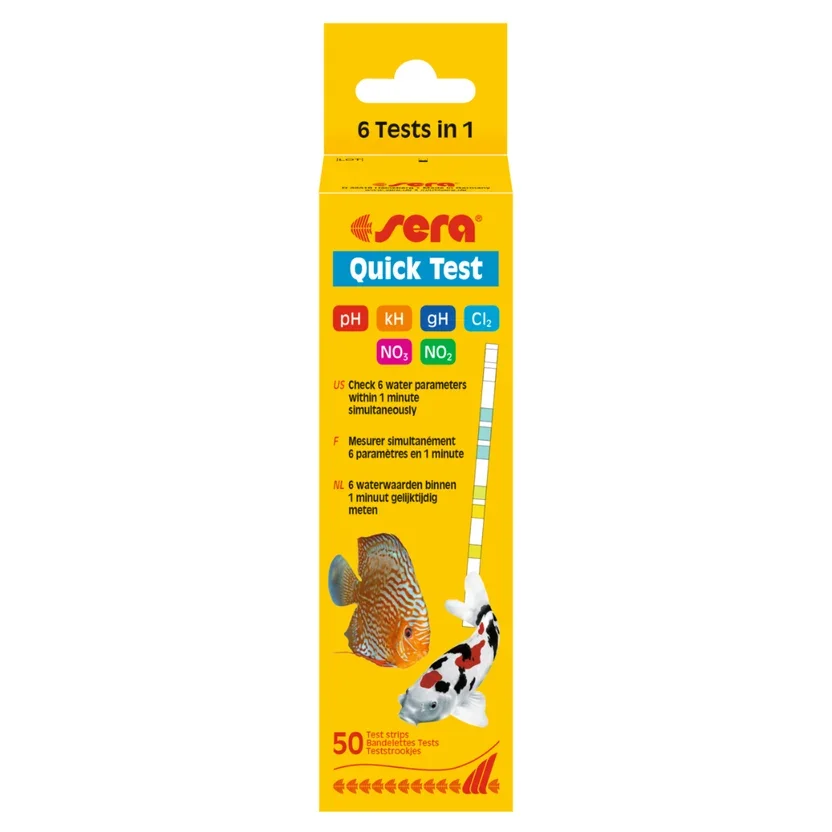
For most aquarium owners, a strip kit is ideal for regular checks, while the Sera freshwater test set is better when you need more precise confirmation. Choose based on your tank type, how often you test, and whether you need a quick snapshot or a more detailed reading.
Explore our range of trusted water testing and treatment products to keep your tank balanced: