

Why Cycling Your Aquarium Is the Most Important Step You'll Take as a Fish Keeper
If you have been trying to figure out how to cycle a new aquarium, here is the short version before we dive in:
How to Cycle an Aquarium (Quick Steps)
- Set up your tank with a filter, heater, and dechlorinated water
- Add an ammonia source like pure ammonia, fish food, or a raw shrimp
- Dose ammonia to around 1 to 2 ppm and keep the filter running continuously
- Test ammonia, nitrite, and nitrate every day or two
- Redose ammonia each time it drops to keep feeding the developing bacteria
- Wait for ammonia and nitrite to both read 0 ppm, with nitrate present
- Do a large water change to bring nitrate down before adding fish
- Add fish gradually and keep testing for the first week
The whole process typically takes 2 to 6 weeks, though it can be shorter with the right setup.
A brand-new aquarium might look crystal clear and ready to go, but that clean water can be deceiving.
Without a healthy colony of beneficial bacteria established in your filter, toxic ammonia from fish waste has nowhere to go.
It builds up fast, and fish feel it immediately through stressed gills, clamped fins, and in the worst cases, unexpected deaths.
This is what the fishkeeping world calls New Tank Syndrome, and it is one of the most common reasons beginners lose fish.
The good news is that it is completely preventable.
Cycling your aquarium first, before a single fish goes in, gives those bacteria time to grow and take over the job of processing waste.
Once that system is running, your tank becomes a stable, self-managing ecosystem rather than a constant crisis to manage.
I am Nemo Sulaiman from Aquatees Fishland. Working hands-on with aquarium products and real customer setups every day has given me a ground-level understanding of this process. This guide covers everything you need to get your tank cycled properly and safely the first time.
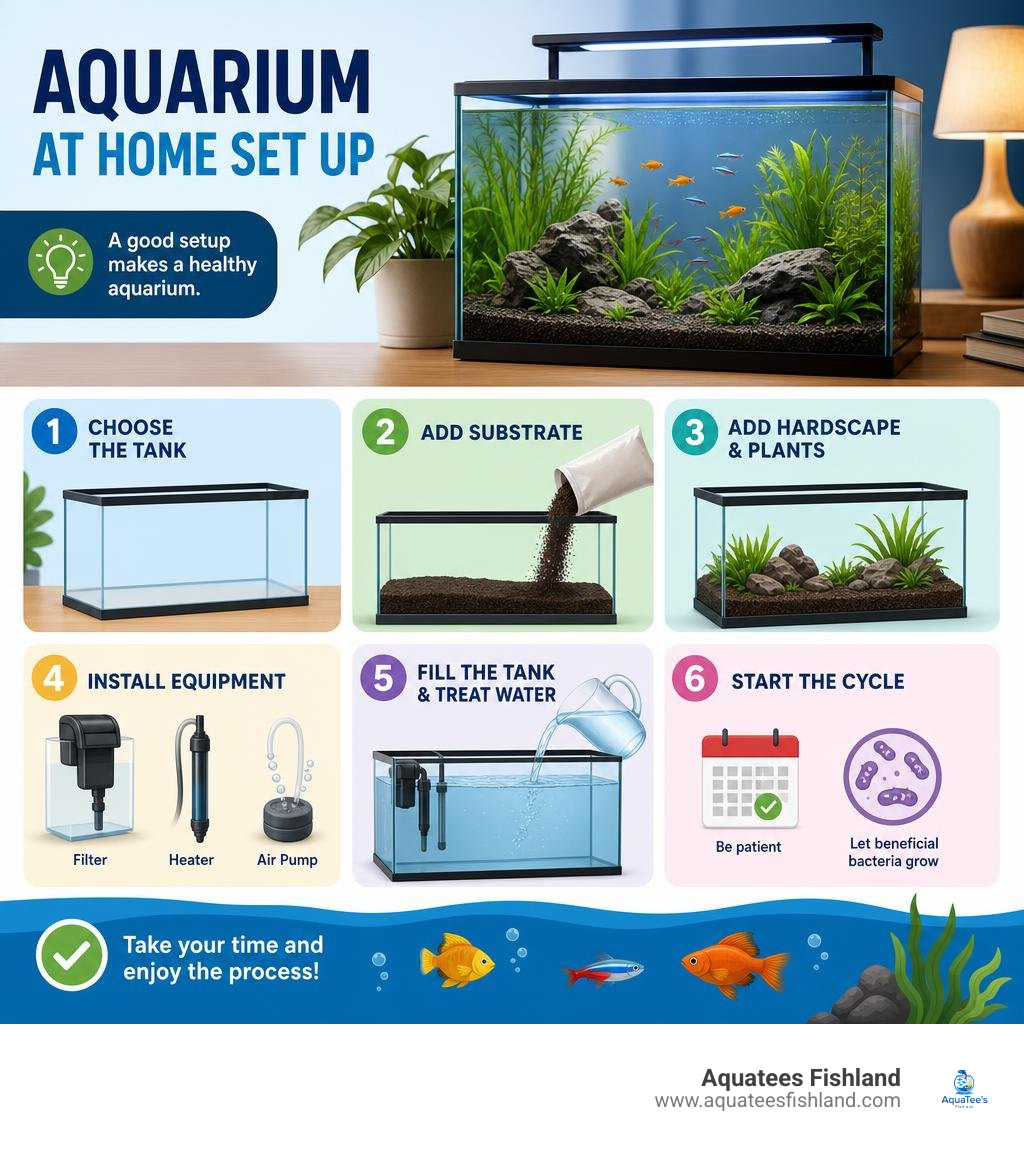
How to Cycle Aquarium: Step-by-Step Guide
To cycle an aquarium is to cultivate colonies of beneficial nitrifying bacteria that convert toxic fish waste into safe compounds. This biological process is the single most important step in setting up a healthy, thriving fish tank.
When we set up a new fish tank, we are actually keeping water rather than just fish.
The process of aquarium cycling focuses entirely on growing invisible, helpful microorganisms inside your filter media.
These bacteria act as a natural biological filter, working around the clock to process organic waste.
Without this system, your water chemistry will quickly deteriorate, leading to dangerous conditions for any incoming livestock.
Understanding the Aquarium Nitrogen Cycle
The aquarium nitrogen cycle is the biological process where organic waste breaks down into toxic ammonia, which is then converted into nitrite, and finally into less harmful nitrate.
Think of your biological filter as a tiny wastewater treatment plant operating inside your tank.
The beneficial bacteria act like microscopic workers, converting toxic waste into safer compounds.
The cycle relies on two distinct groups of beneficial bacteria.
First, nitrosomonas bacteria consume the toxic ammonia produced by fish waste, decaying food, and plant matter, converting it into nitrite.
Nitrite is also highly toxic to aquatic life.
Next, nitrobacter bacteria convert that nitrite into nitrate.
Nitrate is much less harmful and is safely managed through regular water changes or absorbed by live plants.
When these toxins spike, fish health declines rapidly.
We must always watch out for key warning signs of ammonia or nitrite poisoning, which include:
- Fish gasping for air at the water surface
- Clamped fins held tight against the body
- Extreme lethargy or resting on the substrate
- Red, inflamed, or bleeding gills
- Unexplained cloudy water or strong odours
- Sudden, unexpected deaths of otherwise healthy fish
If you notice these symptoms or experience cloudy water, you can learn more in our guide on Why is Aquarium Water Cloudy to identify the cause.
To keep your system stable, we recommend following our Priority Action Plan below if an ammonia spike occurs.
Ammonia Management: Priority Action Plan
- Step 1: Emergency Response - Perform an immediate 30% to 50% water change using dechlorinated water to dilute the toxins. Stop feeding your fish immediately to halt waste production, and increase oxygen levels by running an air pump or adjusting your filter outlet to create surface agitation.
- Step 2: Stabilise - Dose a high-quality water conditioner like Seachem Prime to temporarily detoxify the remaining ammonia and nitrite. Double-check that your filter is running continuously and has not been accidentally turned off.
- Step 3: Reduce Production - Use a siphon to remove any rotting organic waste or uneaten food from the gravel. When you resume feeding after parameters stabilise, offer only very light meals once every two days.
By managing these parameters, you avoid the most common Beginner Aquarium Mistakes that lead to early tank failures.
How to Cycle Aquarium Safely with the Fishless Method
The safest way to cycle a new tank is fishless cycling, which involves adding a pure ammonia source to feed beneficial bacteria without exposing live fish to toxic water parameters.
We always recommend fishless cycling because it is humane, highly controllable, and prevents unnecessary fish loss.
To complete a successful fishless cycle, follow these step-by-step instructions:
- Prepare the Tank - Set up your aquarium with substrate, decor, filtration, and a heater. Fill it with water treated with a quality conditioner.
- Add Your Ammonia Source - Dose pure household ammonia (without additives or perfumes) to reach a target of 1 to 2 ppm on your test kit. Alternatively, you can use the ghost feeding method by dropping a pinch of fish flakes into the tank daily to decay and produce ammonia.
- Introduce Beneficial Bacteria - Speed up the colonisation process by adding concentrated live bacteria. We highly recommend using Seachem Stability or FritzZyme 7 to introduce robust strains of nitrifying bacteria right from the start.
- Test the Water Daily - Monitor your parameters carefully. We suggest using a high-precision liquid test kit, such as the Sera Ammonia Test Kit, to track ammonia, nitrite, and nitrate levels.
- Redose Ammonia - As the bacteria multiply, you will notice ammonia levels dropping. Each time ammonia falls below 0.5 ppm, add a small dose of ammonia or fish food to bring it back up to 1 ppm to keep the bacteria colony fed.
- Watch for Nitrite and Nitrate - You will soon see a nitrite spike, followed by the appearance of nitrates. This is proof that the biological filter is working.
- Perform the 24-Hour Challenge - Your cycle is complete when the tank can fully process 1 to 2 ppm of added ammonia down to zero ammonia and zero nitrite within 24 hours. Once this occurs, perform a large 50% to 80% water change to reduce nitrates before gradually adding your fish.
How to Cycle Aquarium with Plants and Seeded Media
You can significantly accelerate your aquarium cycling by adding live plants and seeded filter media from an established tank.
These elements introduce active bacteria colonies and directly absorb nitrogenous waste to stabilise your water parameters faster.
Live plants are excellent natural filters because they actively absorb ammonia and nitrate as source food.
Fast-growing stem plants can absorb waste so quickly that they prevent dangerous spikes entirely.
However, because plants consume these compounds, they can sometimes make water test results trickier to interpret.
It is still essential to run the 24-hour ammonia challenge to ensure your bacterial biological filter is fully established.
Using seeded media is the single fastest way to cycle an aquarium.
By taking a portion of mature ceramic rings, sponge, or gravel from a healthy, established tank, you transfer millions of active bacteria directly into your new setup.
To support this biological filtration, we recommend using high-surface-area media like Seachem Matrix.
Pairing high-quality media with an efficient filter system is key.
You can choose a reliable sponge filter like the Aquatees Jumbo Sponge for gentle flow, or a heavy-duty external system like the Periha EC Canister for larger setups.
To find the perfect match for your tank, read our complete guide on the Best Tank Filter.
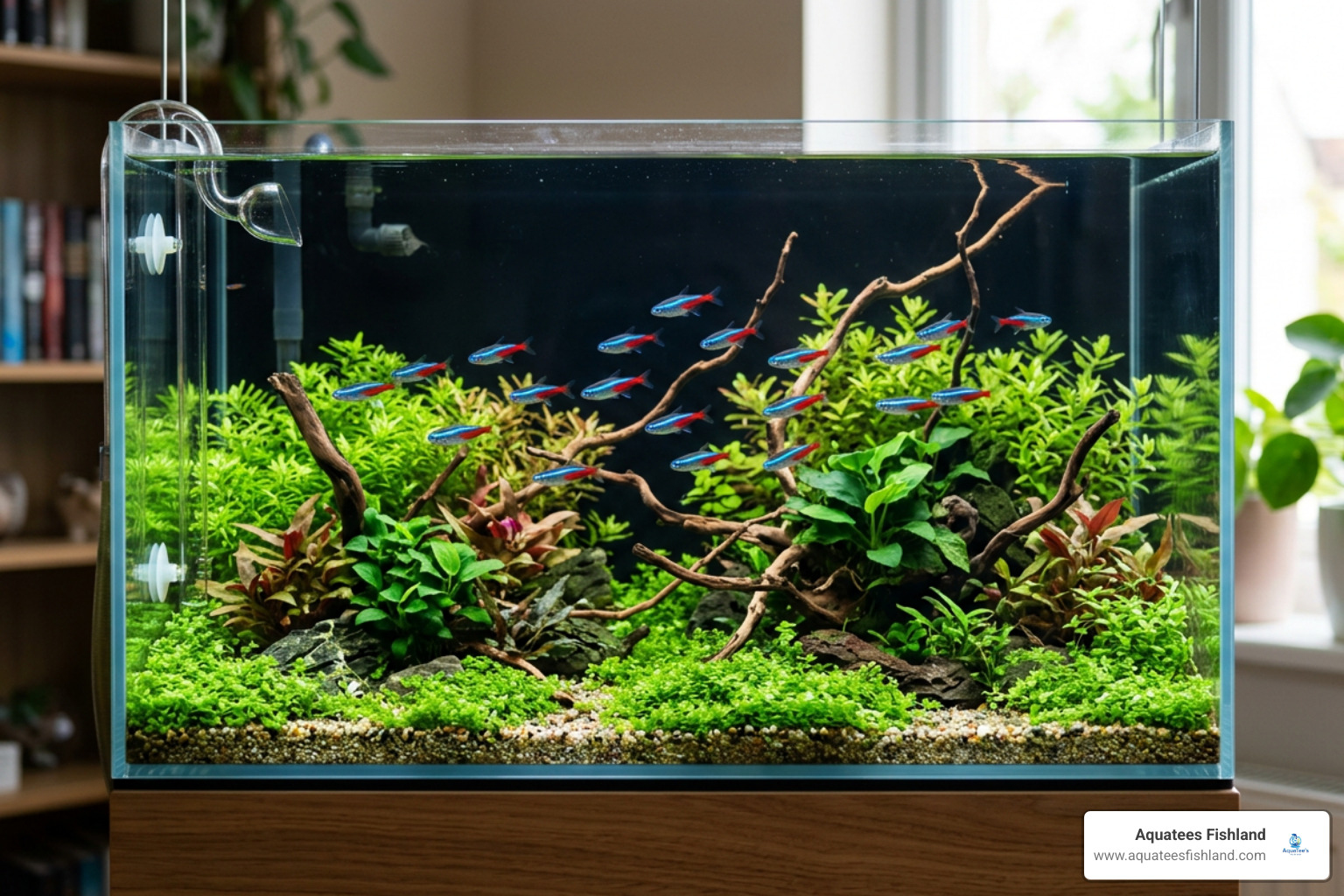
Essential Equipment and Common Mistakes
The essential equipment for cycling includes a quality filter, porous biological media, a water conditioner, a heater, and a reliable water testing kit.
Avoiding common mistakes like overcleaning filter media or adding fish too early is crucial to keeping this biological system from crashing.
To help you navigate the process, we have compiled a comparison table of common cycling mistakes and their solutions:
| Common Cycling Mistake | Consequence | Corrective Action / Solution |
|---|---|---|
| Adding too many fish too early | Ammonia spike, fish stress, and unexpected deaths | Use the fishless cycling method first; add fish slowly over several weeks. |
| Rinsing filter media in tap water | Chlorine kills the beneficial bacteria colony instantly | Always rinse media in a bucket of siphoned aquarium water. |
| Overfeeding the aquarium | Excess decaying food creates massive ammonia spikes | Feed only what fish can eat in 60 seconds; remove leftovers. |
| Replacing filter cartridges monthly | Throws away the established biological filter | Never replace biological media; only replace mechanical wool when worn. |
| Forgetting to use water conditioner | Tap water chlorine destroys developing bacteria | Always treat tap water with a quality conditioner before adding it to the tank. |
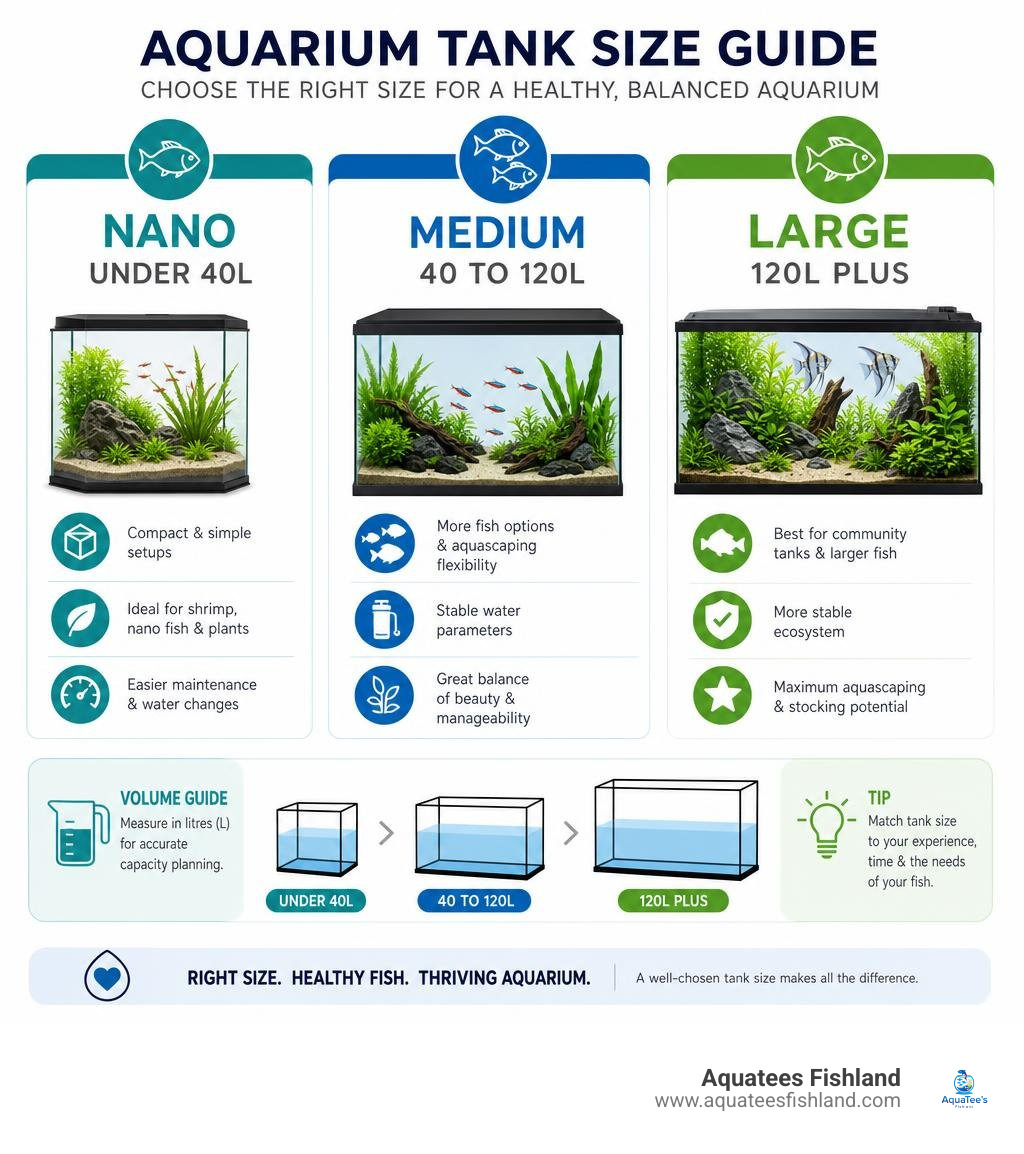
When planning your setup, matching your livestock to your tank size is highly important.
For example, popular species like Bettas are highly territorial and require proper space.
We recommend starting with a single Betta in a tank that is at least 10 gallons (approximately 38 litres) or larger.
Ideal tankmates for Bettas in these setups are peaceful invertebrates like shrimp and snails, which add minimal bioload.
To choose the right home for your aquatic pets, refer to our Guide to Fish Tank Size and explore our recommendations for the Best Fish Tanks for Beginners.
Deep-Dive: Seachem Prime and Water Conditioning
Seachem Prime is a concentrated water conditioner that removes chlorine and chloramines while temporarily detoxifying ammonia and nitrite for up to 48 hours.
Using Prime during cycling ensures your water remains safe for beneficial bacteria without slowing down their development.
A common misconception among beginners is that using Seachem Prime will slow down or stall the aquarium cycling process.
This is not true.
Prime works by binding toxic free ammonia into a non-toxic form called ammonium.
While ammonium is completely safe for fish, the beneficial nitrifying bacteria in your filter can still easily consume it as a food source.
This means your cycle continues to progress perfectly while your livestock remains protected from toxic spikes.
However, beginners often make the mistake of thinking Prime removes ammonia permanently.
In reality, Prime only binds ammonia temporarily for 24 to 48 hours, meaning you must still establish a biological filter to eliminate it.
Best practices for using Prime include dosing for the entire volume of the tank when adding water directly, or dosing only for the new water if mixing beforehand.
Common usage scenarios include emergency ammonia spikes, routine water changes, and transporting stressed fish.
For hobbyists in Victoria, water conditioning is especially important.
Melbourne tap water contains chloramines, which are a combination of chlorine and ammonia used by local water authorities for sanitation.
Standard water conditioners only break the chlorine bond, leaving toxic ammonia behind in your tank.
Using Seachem Prime ensures both the chlorine and ammonia components of chloramines are completely neutralised.
When preparing tap water in Melbourne, always treat it to neutralise chlorine and chloramines.
It is also vital to match the temperature of the new water to your tank to avoid shocking your beneficial bacteria.
Frequently Asked Questions About Aquarium Cycling
At Aquatees Fishland, we operate as a specialist online warehouse providing high-quality aquarium supplies across Melbourne and Australia.
All of our products are strictly quality checked before leaving our facility, and we use secure packaging to ensure your items arrive in perfect condition.
You can read more about our delivery standards in our official Shipping Policy.
How do I know when my aquarium is cycled?
Your aquarium is fully cycled when you can dose ammonia up to 1 to 2 ppm and your water tests show zero ammonia and zero nitrite exactly 24 hours later, with nitrates present.
This is known as passing the 24-hour challenge.
The presence of nitrate is the ultimate proof that your nitrifying bacteria are active and successfully converting toxic waste into safer compounds.
Aquatees Fishland recommends testing your water daily to confirm this biological stability.
Can I use Seachem Prime during the cycle?
Yes, you can absolutely use Seachem Prime during the cycling process to protect your system.
Prime is highly recommended because it neutralises harmful chlorine and chloramines in tap water that would otherwise kill your developing beneficial bacteria.
It also temporarily binds toxic ammonia and nitrite into safe forms for 24 to 48 hours, keeping the environment safe for your biological filter to grow without stalling the cycle.
Aquatees Fishland recommends Prime because it detoxifies ammonia without starving your developing beneficial bacteria.
Cycle Your Aquarium for Long-Term Success
Successfully cycling your aquarium is the ultimate foundation of a healthy, thriving fish tank.
By taking the time to complete a fishless cycle, you build a robust biological filter that keeps your water clear, stable, and completely safe for your aquatic pets.
As a trusted Australian aquarium warehouse based in Melbourne, we are dedicated to helping both beginners and experienced hobbyists succeed.
We offer an exclusive range of premium products from top brands like Seachem, Fritz, and Hikari to ensure your tank setup is a complete success.
To help you take the next steps in your fishkeeping journey, explore our curated collections below:
- Get Quality Water Treatments: Browse our premium Water Conditioners to make your tap water safe.
- Find the Perfect Tank: Explore our selection of high-quality Fish Tanks for your home.
- Keep Your Water Pristine: Shop our professional Aquarium Care products to maintain water quality.
- Stay Educated: Read our latest expert guides on our Latest Blogs Page.