

My name is Nemo Sulaiman, and I’m part of the eCommerce and warehouse team at Aquatees Fishland. I have two years of experience helping customers choose fish, equipment, and aquarium products, and I often help hobbyists narrow down whether a bad smell is coming from feeding habits, filtration, or waste trapped in the tank.
Why Does My Aquarium Smell Bad and How Do You Fix It?
An aquarium typically smells bad when decomposing organic matter accumulates faster than the beneficial nitrifying bacteria in your system can break it down. When organic debris rots underwater, it can release compounds that dissolve into the water column and evaporate into the surrounding room air.
Understanding the specific scent profile can help pinpoint the likely underlying issue quickly:
- Rotten egg or sulfur smell: Often indicates hydrogen sulfide gas created by anaerobic bacteria in oxygen-starved substrate layers or stagnant filter areas.
- Fishy or ammoniacal smell: May signal elevated ammonia levels caused by decaying protein, excessive fish waste, or a biological filter struggling to keep up.
- Swampy, musty, or damp earthy smell: Often stems from accumulated organic sludge, decaying live plants, heavy algae buildup, or filter pads that need rinsing.
Identifying what is breaking down inside the water column is usually the first step toward restoring clear, fresh water.
Decomposing Organic Matter and Overfeeding
Overfeeding is a common cause of a smelly aquarium because unconsumed food settles into the substrate and rapidly decomposes. When fish receive more food than they can eat within about two minutes, leftover flakes or pellets often sink into hidden gravel crevices.
Larger fish can also blow oversized pellets out through their gills while feeding. This may scatter fine particulate food behind driftwood and resin decorations where it rots unnoticed.
Decaying livestock is another frequent source of severe odours. A missing fish, shrimp, or snail hidden behind rockwork releases proteins and fatty oils as it decomposes. A single decaying snail can make a smaller aquarium smell bad within hours.
Decaying leaves from live plants also release dissolved organic compounds that cloud the water and create a stale, swampy smell. Think of a biological filter like a household compost bin; when flooded with too much food at once, it may break down waste inefficiently and produce unpleasant gases.
To correct feeding mistakes, review our guide on common beginner aquarium mistakes. Transitioning to digestible options, such as Hikari algae wafers or floating pellets from our fish food supplies, can help reduce overall waste production.
Anaerobic Bacteria and Hydrogen Sulfide Gas
A rotten egg smell in an aquarium is typically caused by anaerobic bacteria thriving in deep, oxygen-deprived substrate zones. When fine sand or deep gravel beds compact over time, oxygenated water may not circulate through the bottom layers.
In these low-oxygen pockets, anaerobic bacteria break down trapped organic waste through the sulfur cycle. This process produces hydrogen sulfide gas ($H_2S$), which smells like sulfur when the substrate is disturbed.
Anaerobic pockets can also form inside hollow resin decorations that lack water flow holes, or beneath decaying buried driftwood. To address trapped gases safely without releasing a large amount of gas into the water column:
- Stir fine sand beds gently during routine water changes to reduce deep compaction.
- Hover your siphon tube slightly above the substrate surface to draw out loose detritus without disturbing deep layers all at once.
- Check that hollow ornaments have open drainage holes to support water circulation.
If you collect natural rocks or wood for your setup, inspect them carefully and follow manufacturer or community safety guidance rather than attempting risky cleaning methods like boiling rocks.
Inadequate Filtration and Nitrogen Cycle Breakdown
A breakdown in the nitrogen cycle can lead to a rapid accumulation of bio-waste, which causes sharp fishy or ammoniacal odours. When beneficial nitrifying bacteria are overwhelmed, raw fish waste may not convert efficiently into nitrates, causing ammonia concentrations to rise.
If your water test reveals elevated ammonia, follow our practical steps to fix high ammonia to protect your aquatic inhabitants.
An overcrowded fish tank produces organic waste faster than standard biological filters can process. If a tank becomes permanently overstocked, consider relocating excess fish to a second, larger aquarium setup before looking into external rehoming options.
Mechanical filter media like filter floss or sponges can also become clogged. Filter floss older than seven days may begin decomposing underwater, releasing unpleasant organic compounds back into the room.
You can often fix bad aquarium odours by physically removing accumulated waste through partial water changes and substrate siphoning, then using chemical media to absorb remaining dissolved odour molecules.
Step-by-Step Guide to Removing Odours Quickly
Rapidly resolving a smelly aquarium requires a systematic approach that targets the likely source of decomposition while refreshing water quality.
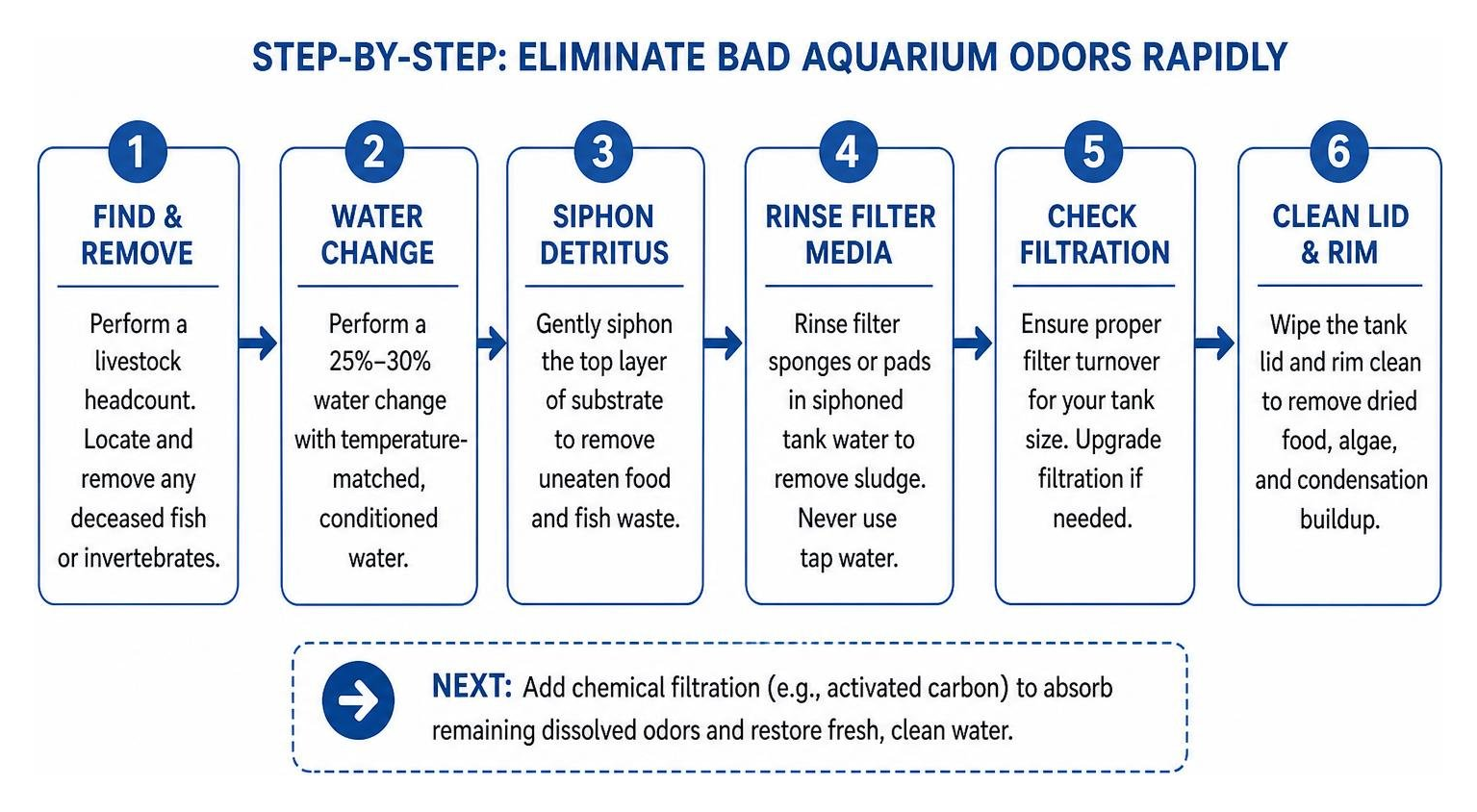
- Perform a livestock headcount: Search thoroughly behind rockwork, inside caves, and around filter intakes to locate and remove any deceased fish or invertebrates.
- Complete a partial water change: Perform a 25% to 30% water change using temperature-matched water treated with a suitable aquarium water conditioner. Check your local water authority if you need to confirm what is in your tap water.
- Siphon loose detritus: Gently pass a gravel vacuum across the top layer of substrate to draw out uneaten food and waste without disrupting deep biological layers.
- Rinse mechanical filter media: Swish dirty filter sponges or pads in a bucket of siphoned tank water to clear organic sludge without removing too much beneficial bacteria. Avoid rinsing mature biological media under untreated tap water.
- Inspect filtration equipment: Check that your filter turnover rate suits your tank volume. If your system is struggling, compare options in the Aquatees water filters collection.
- Clean the tank lid and rim: Wipe away dried fish food, algae buildup, and condensation splatters from the underside of the hood, which can create sour smells.
Adding chemical media to your filter basket may help trap remaining dissolved organic compounds quickly:
- Activated carbon: Adsorbs dissolved organic molecules into porous carbon structure. It often lasts 3 to 4 weeks and suits rapid general odour removal and water clarity.
- Synthetic polymer media: Captures nitrogenous organic waste before it decomposes. Depending on the product and tank conditions, it can absorb organic waste for several months before needing regeneration.
Long-Term Prevention and Chemical Filtration
Preventing bad aquarium odours over the long term generally requires strong biological filtration and a regular cleaning schedule. Dosing beneficial bacteria starters may support the biological cycle and speed up organic waste breakdown, depending on the maturity of the setup.
Warm room temperatures and higher evaporation rates can accelerate organic breakdown in both freshwater and saltwater setups. In marine systems, maintaining stable salinity and running adequate protein skimming can help prevent bio-waste from breaking down rapidly.
Following a structured aquarium maintenance checklist with weekly 10% to 20% water changes helps keep nutrient levels low and reduce bio-waste accumulation.
Establishing consistent habits helps your aquarium stay fresher year-round:
- Feed only what your fish can generally consume within two minutes once or twice daily.
- Snip off yellowing or decaying plant leaves during weekly water checks.
- Replace disposable filter floss every 5 to 7 days to reduce trapped waste decomposing inside the filter.
- Replace activated carbon every 3 to 4 weeks, or regenerate synthetic polymer media when it turns dark brown.
Smelly Fish Tank FAQs

Why Does My Fish Tank Smell Like Rotten Eggs?
A rotten egg smell is usually caused by hydrogen sulfide gas produced by anaerobic bacteria in oxygen-starved substrate layers or stagnant filter compartments. You can often reduce this by gently vacuuming the upper substrate surface, improving water circulation, and removing accumulated organic sludge.
Can Activated Carbon or Seachem Purigen Completely Remove Bad Smells?
Activated carbon and synthetic polymer media can remove many dissolved organic odours by trapping target molecules as water flows through the filter media. Carbon typically lasts three to four weeks before requiring replacement, while synthetic polymers may absorb organic waste for several months before needing regeneration, depending on tank conditions.
How Fast Can My Aquarium Stop Smelling After Cleaning?
An aquarium may start smelling fresher within 12 to 24 hours following a partial water change, filter media rinse, and the addition of fresh activated carbon or polymer media. Heavy odours may need a second partial water change after two days to reduce residual organic compounds.
Is a Smelly Fish Tank Dangerous to My Fish?
A smelly fish tank can be dangerous to fish because foul odours may indicate elevated ammonia, nitrite, or hydrogen sulfide in the water column. Prompt water testing, partial water changes, and identifying the source of decomposition can help reduce stress, gill irritation, or fish loss.
How Can I Test If My Water Quality Is Causing the Smell?
You can test if water quality is causing the smell by using a liquid water quality test kit to measure ammonia, nitrite, and nitrate levels. Ammonia readings above 0 ppm or nitrate levels over 40 ppm can suggest that organic waste breakdown is overwhelming your biological filtration system.
Preventing Bad Aquarium Smells at Home
Bad aquarium smells usually come from decomposing food, decaying plant material, missing livestock, or anaerobic bacteria build-up in stagnant zones. Identifying the specific scent can help you target the root cause directly and restore cleaner water conditions.
Combining physical maintenance like gravel siphoning and media rinsing with chemical media filtration can neutralise dissolved organic compounds efficiently. Consistent feeding routines, regular water changes, and adequate filtration help keep a home aquarium smelling fresher.
For more practical help from Aquatees Fishland, explore these related resources:
- Browse aquarium water filters to improve mechanical and biological filtration.
- Compare suitable water conditioners for safer water changes.
- Follow our aquarium maintenance checklist to build a consistent cleaning routine.