

Why the Best Heater for Your Fish Tank Is One of the Most Important Decisions You'll Make
Finding the best heater for fish tank setups is not just about comfort for your fish. It is about keeping them alive.
Here is a quick answer if you are in a hurry:
| Tank Size | Recommended Wattage | Best Heater Type |
|---|---|---|
| Nano / 1–20L | 15W–50W | Mini preset submersible |
| Small / 20–60L | 50W–150W | Adjustable submersible |
| Medium / 60–150L | 150W–300W | Digital submersible or titanium |
| Large / 150–300L | 300W–500W | Titanium with external controller |
| Extra Large / 300L+ | 500W–1500W | Inline or dual titanium heaters |
Top picks at a glance:
- Best overall -- Hygger Titanium Heater with digital controller (precision + durability)
- Best for larger tanks -- AQQA Double Tubes Quartz Heater 500W (power + safety)
- Best for nano tanks and beginners -- AQQA Mini Aquarium Heater 15W–35W (compact + simple)
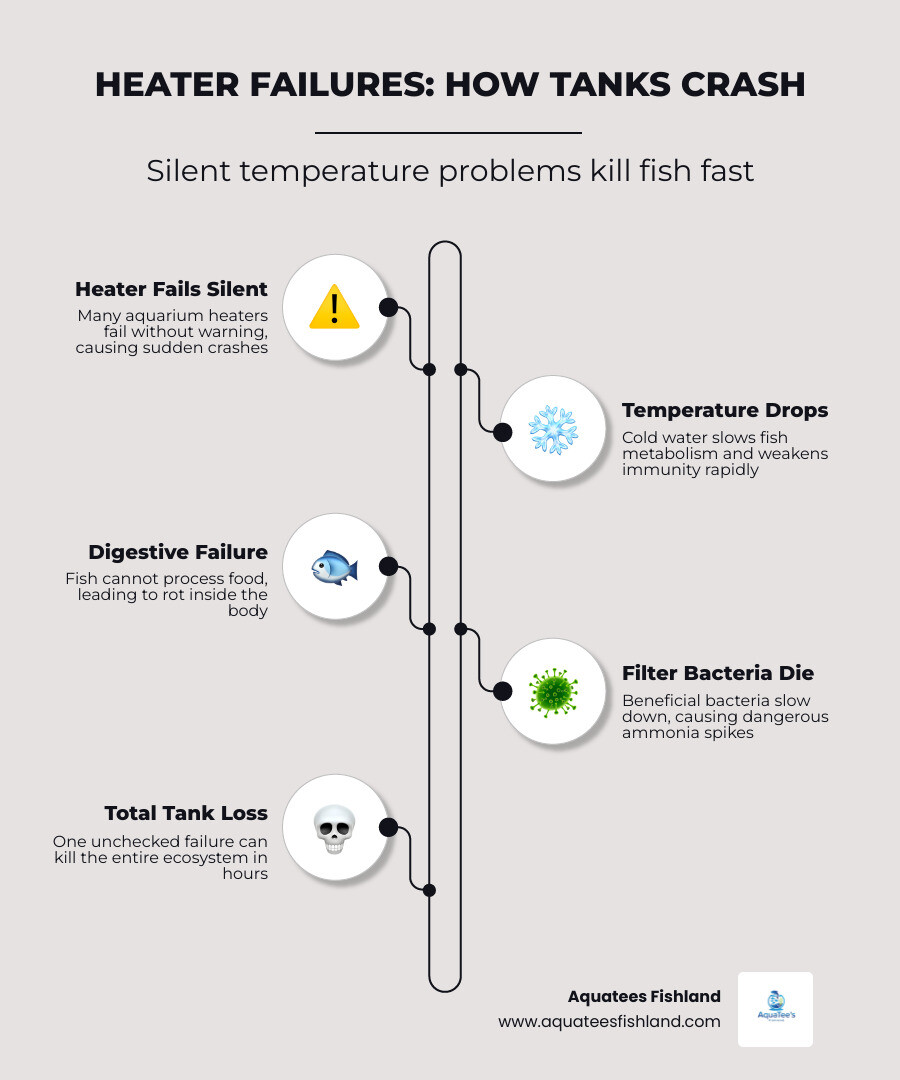
Heaters are, without question, the number one cause of tanks crashing. They fail silently, they overheat without warning, and most hobbyists do not think about replacing them until something has already gone wrong. One forum user described losing an entire tank of fish and crawfish to a single heater malfunction. It happens more often than people realise.
The stakes are real. Tropical fish cannot regulate their own body temperature. When the water drops, everything slows down. Immunity weakens. Digestion stalls. And if a heater fails in the wrong direction and locks on, it can cook an entire tank within hours.
Getting your heating right from day one is not overcautious. It is just good fishkeeping.
I am Nemo Sulaiman, part of the eCommerce and warehouse team at Aquatees Fishland, and I have spent the past two years handling a huge range of aquarium products and helping customers troubleshoot real tank problems, including heater failures and temperature crashes. Helping you choose the best heater for your fish tank is exactly the kind of practical, no-fluff guidance I focus on every day.
Do You Really Need a Heater for Tropical Fish?
Yes, most tropical fish absolutely need a heater. In the wild, these species live in stable, warm climates where the water temperature rarely fluctuates. When we bring them into our homes, we are placing them in an environment where the air temperature is often much lower than what they require to survive.
Aquarium heaters keep water at a steady temperature, which matters because tropical fish rely on their environment for body heat and can become stressed when conditions swing too much.
Without the best heater for fish tank stability, your livestock will experience thermal stress. This leads to metabolic failure and, eventually, sudden death. Even if your house feels warm to you, water loses heat much faster than air, especially during the night. If you are just starting out, check out our Best Fish Tanks for Beginners to ensure you have the right foundation for a heated setup.
Why Tropical Fish Depend on Stable Water Temperature
Fish have an ectothermic biology. This means their internal body temperature is dictated by the water around them. They have no internal regulation systems like humans do. When the water temperature drops, their metabolism slows down significantly.
A slow metabolism isn't just about being "sleepy." It means their immune system weakens rapidly. In cold water, fish cannot fight off common parasites like Ich (white spot). Most tropical fish thrive in a range of 24°C to 28°C. While they might survive a few degrees outside this range, small, frequent fluctuations cause massive stress. According to the 7 Best Aquarium Heaters of 2026, temperature stability is the most critical factor in long-term fish health.
What Happens If You Don’t Use a Heater?
If you skip out on a heater, the results are usually visible within days. You will notice lethargy and a total loss of appetite. When fish stop eating, their digestive systems fail. In cold water, any food they have already eaten can actually rot inside them because they cannot process it fast enough.
Beyond the fish, your biological filter also suffers. The beneficial bacteria we cultivate using products like FritzZyme 7 perform best at temperatures between 25°C and 30°C. If the tank gets too cold, these bacteria slow down, leading to dangerous ammonia spikes.
During winter nights or in rooms with heavy air conditioning, a tank without a heater is a ticking timebomb. As an aquarium shop in Melbourne, we often see "winter crashes" where hobbyists lose entire communities simply because the ambient room temperature dropped below 15°C overnight.
Are There Any Tropical Fish That Don’t Need a Heater?
There are very few scenarios where a tropical tank can run safely without a heater. You might get away with it if you live in a consistently warm, tropical climate where the indoor temperature never dips below 24°C. However, even then, the risk of a freak cold snap makes a heater a cheap insurance policy.
A common misconception is that goldfish don't need heaters. While goldfish are cold-water fish and do not require tropical temperatures, they are not tropical fish. If you are mixing species, you must cater to the one with the highest temperature requirement.
For more on matching species to environments, see our Guide to Fish Tank Size.
How to Choose the Best Heater for Fish Tank Stability
Selecting the best heater for fish tank use requires a bit of math. The general industry rule of thumb is 5 watts per gallon, but many experts now suggest that 2 watts per gallon is often sufficient for most indoor tanks. Over-sizing a heater is actually a major risk; if a 300W heater sticks "on" in a 50-litre tank, it will cook the fish much faster than a 50W heater would.
| Tank Volume (Approx) | Recommended Wattage |
|---|---|
| 20 Litres | 25W – 50W |
| 60 Litres | 50W – 100W |
| 100 Litres | 150W – 200W |
| 200 Litres | 300W |
| 400 Litres | 2 x 250W |
A smart strategy is redundancy. Instead of using one large heater, use two smaller ones. If one fails "off," the other keeps the water from freezing. If one fails "on," it is too weak to overheat the tank before you notice the problem.
Heater Safety Features and Materials You Should Never Ignore
When searching for the best heater for fish tank safety, look for these features:
- Automatic Shut-off: Turns the unit off if it senses overheating or is removed from the water.
- External Controllers: These allow you to adjust the temp without sticking your hands in the tank. They also act as a second "kill switch" if the heater's internal thermostat fails.
- Shatterproof Materials: Titanium and quartz glass are much safer than standard glass. Titanium is virtually indestructible and corrosion-resistant, making it the gold standard for marine tanks.
- Dry-run Protection: Prevents the heater from exploding or melting if the water level drops during a water change.
Our Aquarium Heater Range at Aquatees Fishland
At Aquatees Fishland, we pride ourselves on being a premier aquarium warehouse in Australia. We stock brands that focus on safety and precision.
AQQA Double Tubes Quartz Aquarium Heater (500W)
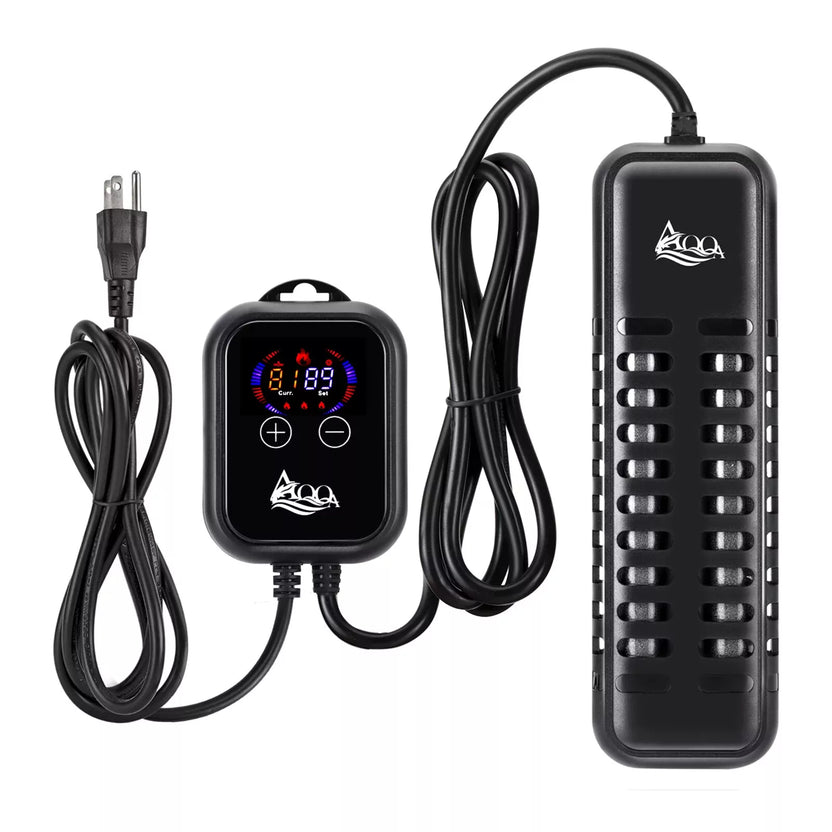
This is a powerhouse for larger tanks. The double-tube design provides stable heat distribution, while the quartz construction wrapped in a PC plastic guard ensures it is shatterproof. It features an external LED controller, so you can monitor and adjust temperatures with ease. It is perfect for freshwater and marine setups where precision is non-negotiable.
AQQA Mini Aquarium Heater (15W–35W)
 If you have a nano tank or a Betta Glory setup, this is your best bet. It is pre-set to a stable 26°C, making it incredibly beginner-friendly. It’s compact, hides easily behind decor, and includes built-in safety shut-offs.
Hygger Titanium Aquarium Heater (Digital Controller)
 The premium choice for serious hobbyists. Titanium is completely shatterproof and resistant to the corrosive nature of saltwater. The external digital controller is highly accurate, often within 0.1 degrees. If you are running a high-end reef tank, this is the best heater for fish tank longevity.
Pro Tips for Setting Up Your Best Heater for Fish Tank Performance
- Placement Matters: Always place your heater near high water flow, such as next to a filter intake or outlet. This ensures the warm water is distributed evenly rather than creating "hot spots."
- Horizontal is Better: Positioning a heater horizontally near the bottom of the tank (but not touching the gravel) allows for better heat rise and distribution.
- The 15-Minute Rule: When installing a new heater, let it sit in the water for 15 minutes before plugging it in. This allows the thermostat to adjust to the water temperature and prevents thermal shock to the glass.
- Unplug During Water Changes: Never leave a heater running while it is exposed to air. It will overheat and potentially crack the moment you pour cool water back in.
- Use a Separate Thermometer: Never trust the dial on the heater alone. Use a separate digital or glass thermometer at the opposite end of the tank to verify the actual temperature. The 7 Best Aquarium Heaters for Large Tanks 2026 highlights that even the best heaters can have a 1–2 degree variance.
Frequently Asked Questions (AEO Optimised)
Do tropical fish always need a heater?
Yes. Most tropical fish require stable warm water between 24°C and 28°C. Without a heater, ambient room temperature drops can cause stress, disease, and death.
Can I keep tropical fish without a heater in summer?
Only if your room stays consistently above 24°C both day and night. Even in summer, a heater is recommended to act as a thermostat and prevent nighttime temperature crashes.
What is the best heater for fish tank safety?
Titanium heaters with external controllers are the safest. They are shatterproof and provide two layers of temperature regulation to prevent "cooking" the fish.
Should I use one heater or two for redundancy?
Using two smaller heaters is much safer than one large unit. If one fails, the other prevents a total temperature crash, giving you time to replace the broken unit.
How do I find the best heater for fish tank size requirements?
Aim for roughly 2 to 3 watts per gallon of water. For example, a 100-litre tank does well with a 150W to 200W heater, depending on how cold your room gets in winter.
Finding the Best Heater for Fish Tank Success
Maintaining a stable temperature is the foundation of a healthy aquarium. It supports the fish’s immune system, aids digestion, and keeps your beneficial bacteria thriving. Choosing the best heater for fish tank stability is an investment in the life of your pets.
At Aquatees Fishland, we don't just sell equipment; we provide the solutions that keep your hobby enjoyable and stress-free. More about keeping your tank in top condition below: