

Why Betta Fish Tank Maintenance Determines How Long Your Fish Lives
Betta fish tank maintenance is the single most important factor in keeping your Siamese Fighting Fish healthy, vibrant, and alive for years beyond the average.
Here is a quick summary of what good betta tank maintenance looks like:
| Task | Frequency | Details |
|---|---|---|
| Partial water change (filtered tank) | Weekly | Change 20-25% of water |
| Partial water change (unfiltered tank) | Every 2-3 days | Change 30-50% of water |
| Gravel vacuuming | Every 2-4 weeks | Siphon substrate gently |
| Filter media rinse | Monthly | Use old tank water only |
| Water parameter testing | Weekly | Check ammonia, nitrite, nitrate, pH |
| Algae scrubbing | Monthly | Glass and decor only |
| Temperature check | Daily | Keep between 76-81°F |
Bettas are resilient fish. They can breathe air directly from the surface using a specialised organ called the labyrinth organ, which means they can survive in conditions that would kill most other fish. But surviving is not the same as thriving.
Without a consistent maintenance routine, ammonia and nitrite build up fast, especially in smaller tanks. Water that looks perfectly clear can still be toxic. And the effects, clamped fins, faded colour, lethargy, and shortened lifespan, can creep up before most owners realise something is wrong.
With proper care, bettas can live 3 to 5 years, and some reach up to 10. Without it, that number drops significantly.
The good news is that once you understand the basics and build a simple routine, betta tank maintenance is genuinely manageable, even for beginners.
I'm Nemo Sulaiman, part of the eCommerce and warehouse team at Aquatees Fishland, and I've spent the past two years working hands-on with aquarium products and helping customers troubleshoot real betta fish tank maintenance problems every day. Everything in this guide is based on what actually works in real tanks, not just theory.
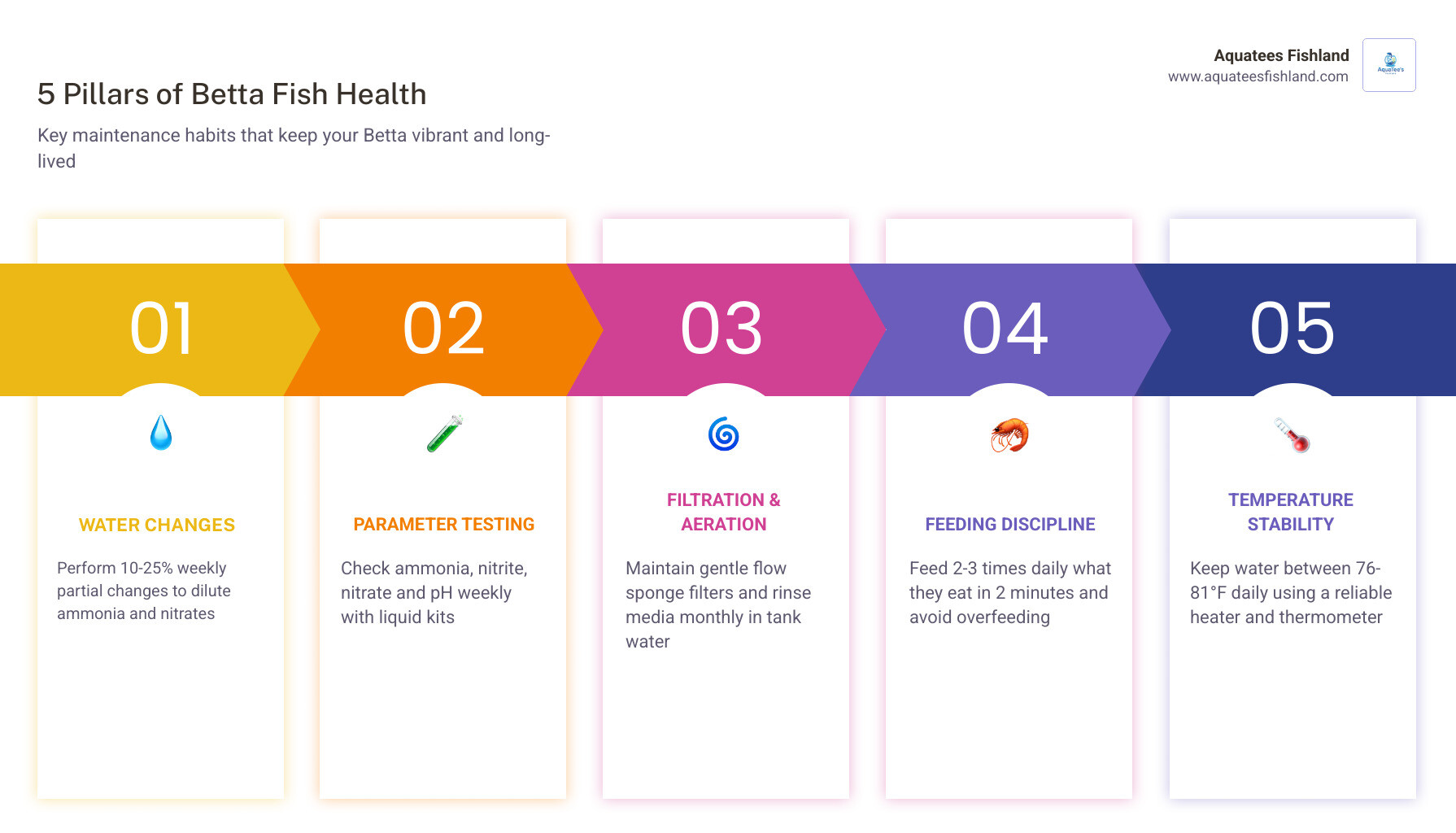
Biology and Metabolism of the Siamese Fighting Fish
Understanding the biology of your fish is the first step toward better betta fish tank maintenance. Bettas (Betta splendens) belong to the family Osphronemidae and originate from the tropical, slow-moving waters of Thailand. We continue to see these fish misunderstood as "easy" pets that can live in tiny bowls, but their unique metabolism requires specific care to prevent disease.
The Labyrinth organ is specialised respiratory organ located near the gills that allows Bettas to gulp atmospheric air from the water surface. This adaptation helps them survive in low-oxygen environments in the wild, but it does not replace the need for clean, filtered water in an aquarium.
Bettas are primarily carnivorous, meaning their metabolism is geared toward processing high-protein insects and larvae. This high-protein diet results in waste that quickly turns into toxic ammonia. Because they are highly territorial, males must be kept alone; however, they are quite active and curious. They are known for building bubble nests at the surface when they are healthy and ready to spawn. A well-maintained environment can extend their average 3-4 year lifespan significantly.
Establishing a Healthy Habitat and Equipment
Setting up the right foundation makes betta fish tank maintenance much easier. A larger volume of water is more stable and less prone to sudden "crashes" in water quality.

Tank Size and Stability
While some sources suggest a 2.5-gallon minimum, we strongly recommend a 5-gallon tank as the absolute baseline, with a 10-gallon tank being the ideal choice. Larger tanks dilute waste more effectively, meaning you don't have to fight ammonia spikes as often.
For more detail on choosing the right home, check our Guide to Fish Tank Size.
The Nitrogen Cycle and Filtration
You must "cycle" your tank before adding your fish. This 4-6 week process establishes beneficial bacteria that convert toxic ammonia into nitrite, and then into less harmful nitrate. We recommend a fishless cycle using Seachem Stability to jumpstart the biological filter.
For filtration, sponge filters or internal filters with an adjustable flow are best; bettas have long, delicate fins that can be damaged by strong currents.
Heating and Decor
Bettas are tropical fish. You must maintain a temperature between 76-81°F (24-27°C) using a reliable heater and thermometer. Cold water suppresses their immune system, leading to diseases like Dropsy. Use silk plants or live plants to avoid fin snags, and provide plenty of hiding spots.
If you're just starting, our Fish Tanks for Beginners guide highlights the best kits available in our warehouse.
Tank Mates
Bettas are territorial, so start with one. In a 10-gallon or larger planted tank, you can consider peaceful invertebrates like shrimp or snails as tank mates. They act as a "clean-up crew," eating leftover food and helping with betta fish tank maintenance.
Mastering Betta Fish Tank Maintenance
Routine cleaning is about maintaining a biological balance, not achieving clinical sterility. Over-cleaning can be just as dangerous as under-cleaning because it kills the beneficial bacteria your fish relies on.

The Step-by-Step Routine
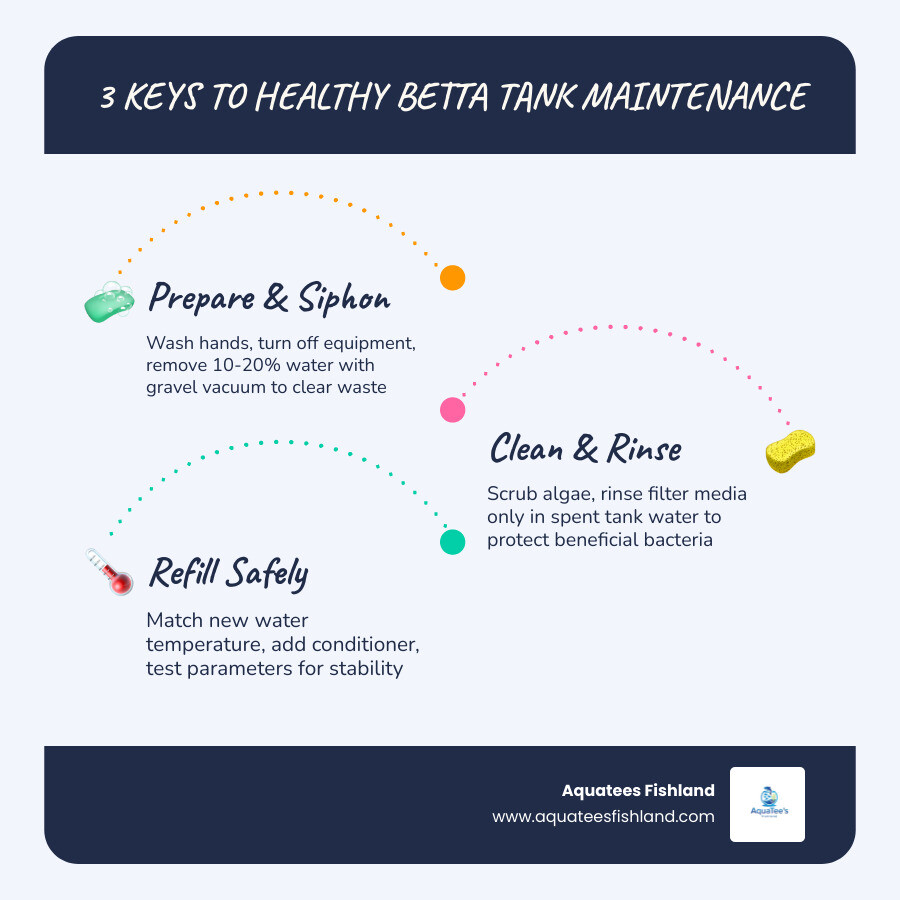
- Preparation: Wash your hands thoroughly but do not use soap. Turn off the heater and filter.
- Siphoning: Use a gravel vacuum to remove 10-20% of the water. Push the vacuum into the substrate to suck up trapped waste and uneaten food.
- Algae Scrubbing: Use an aquarium-safe sponge to wipe down the glass.
- Filter Care: Once a month, rinse your filter media. Never use tap water. The chlorine will kill your bacteria. Instead, gently swish the media in the "spent" tank water you just removed.
- Refilling: Prepare new water in a dedicated bucket. It must be temperature-matched to the tank water to avoid thermal shock.
As a complete fish supplies store, we always emphasise using a quality water conditioner. Tap water contains chlorine and heavy metals that are lethal to fish. Consistency is key to preventing the buildup of nitrates.
Water Quality and Betta Fish Tank Maintenance
To keep your water perfect, you should aim for these parameters:
- Ammonia: 0 ppm (Toxic even at low levels)
- Nitrite: 0 ppm (Causes suffocation)
- Nitrate: <20 ppm (Managed through water changes)
- pH: 6.8 - 7.5
We recommend using liquid test kits over strips for better accuracy. If you detect ammonia, use Seachem Prime immediately to detoxify it while you perform an emergency water change. To bolster your biological filter, FritzZyme 7 provides live nitrifying bacteria that are far more effective than many generic brands.
Common Mistakes in Betta Fish Tank Maintenance
- Using Soap: Even a trace of soap residue can destroy a fish's gill function.
- 100% Water Changes: This causes massive stress and usually "crashes" the nitrogen cycle. Stick to partial changes.
- Sharp Decor: If a decoration can snag a pair of pantyhose, it will tear your betta's fins.
- Overfeeding: This is the leading cause of poor water quality. Uneaten food rots and spikes ammonia levels.
Premium Supplies and Species-Specific Nutrition
A healthy betta starts with what you put in the tank. At Aquatees Fishland, we stock exclusive brands that we use in our own setups.
Superior Nutrition

Bettas need more than just generic flakes. Seachem NutriDiet Betta is a fantastic choice because it uses high-quality krill and chlorella algae instead of low-value fillers like corn meal. It also contains probiotics to support the immune system and reduce waste.
For those looking to enhance their fish's natural beauty, Dymax Betta Glory contains astaxanthin to improve body colours and provides a premium protein source that supports body structure.

Water Conditioners and Additives
If you want to skip the stress of mixing tap water, Fritz Betta Water is pre-conditioned and includes natural tannins from Indian Almond Leaves. These tannins create a "blackwater" environment that mimics the betta's natural habitat and provides antibacterial benefits.

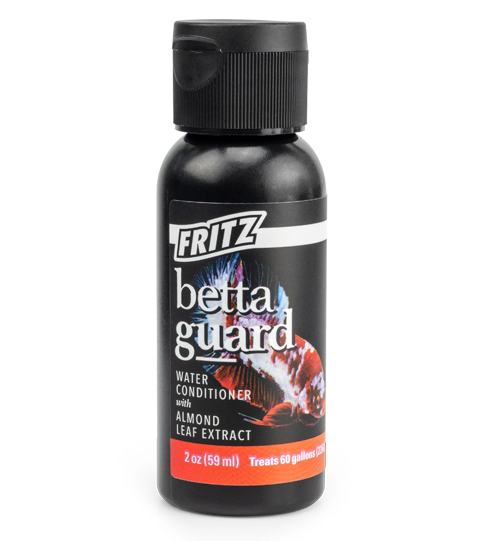
For routine maintenance, Fritz BettaGuard is a specialized conditioner that detoxifies heavy metals and includes aloe vera and Vitamin E to promote slime coat regeneration. Similarly, Sera Betta Aquatan ensures mineral bioavailability, providing calcium and magnesium for strong scales and skeletal health.
Feeding Schedule Table
| Age Group | Frequency | Amount |
|---|---|---|
| Juvenile (Growing) | 2 times daily | 2-3 small pellets per feeding |
| Adult (Maintenance) | 1-2 times daily | 3-4 pellets (all eaten in 2 mins) |
| Senior (Slow Metabolism) | Once daily | 2-3 pellets |
Frequently Asked Questions about Betta Fish Tank Maintenance
How often should I perform water changes in a 5-gallon tank?
In a filtered 5-gallon tank, you should perform a 20-25% water change once a week. If the tank is unfiltered, you will need to perform 30-50% water changes every 2-3 days to prevent toxic ammonia buildup.
Do I need to remove my Betta fish when cleaning the tank?
No, it is generally better to leave your Betta in the tank during a partial water change. Catching and moving the fish causes significant stress and can damage their protective slime coat. Only remove them if you are performing an emergency 100% water change.
Why is my Betta fish tank water cloudy after a maintenance session?
Cloudy water after maintenance is usually a "bacterial bloom." This happens when the beneficial bacteria are disturbed or when there is an excess of nutrients in the water. It typically clears up on its own within 2-4 days as the tank stabilizes.
Upgrade Your Betta Care with Aquatees Fishland
Mastering betta fish tank maintenance is the difference between a fish that merely survives and one that flourishes with vibrant colours and a long life. By choosing the right equipment, sticking to a consistent weekly routine, and using premium nutrition, you create a stable ecosystem that supports your fish's unique biology.
At Aquatees Fishland, we are more than just a shop; we are a warehouse-scale authority for Australian hobbyists. Whether you are in Melbourne or shopping with us online, we provide the expert advice and high-quality products you need to succeed.