

Carbon filter for saltwater tank setups can be useful, but it is not essential for every saltwater aquarium. Activated carbon is suitable for marine tanks when you want extra chemical filtration, clearer water, or help removing certain dissolved compounds.
It performs a different job from mechanical and biological filtration. Mechanical filtration catches particles, biological filtration supports beneficial bacteria, and carbon helps polish the water by adsorbing some dissolved substances.
Whether you should use carbon depends on your aquarium's condition, livestock, maintenance routine, and existing filtration. If your tank is stable and the water is already clear, you may not need it. If the water looks yellow, smells unpleasant, or needs extra chemical filtration after a specific issue, carbon can be a practical tool.
My name is Nemo Sulaiman, and I am part of the eCommerce and warehouse team at Aquatees Fishland. Over the past two years, I have helped customers choose fish, equipment, and products, including filtration media for home and office saltwater aquariums.

What Does Carbon Actually Do in a Saltwater Tank?
Activated carbon adsorbs certain dissolved compounds from aquarium water. In simple terms, unwanted substances attach to the surface of the carbon, which can help improve clarity and reduce yellowing in the water.
Carbon can also help with some odours, dissolved organic compounds, and certain chemical contaminants. In reef systems, it may help reduce some compounds released by corals, especially in mixed reefs where different coral types are kept close together.
The key point is that carbon helps polish the water. It does not replace the filtration responsible for processing fish waste and maintaining biological stability. A balanced saltwater aquarium filtration setup still needs mechanical and biological filtration alongside any chemical media.
Do You Actually Need Carbon?
Not necessarily. Carbon is useful, but it is optional. Some saltwater aquariums benefit from running it regularly, while others only need it occasionally or not at all.
When Carbon Is Worth Using
Carbon can make sense when your water has a yellow or less-clear appearance, or when you want extra chemical filtration alongside your main filter. It may also help when there are persistent dissolved organic compounds or mild odours that regular maintenance has not resolved.
In mixed reef aquariums, carbon can be useful because some corals release chemical compounds into the water. It may also be helpful after a medication course, but only when the treatment instructions say carbon can be used to remove residual medication.
Key takeaway: Think of carbon as a useful tool, not a mandatory piece of equipment.
When You May Not Need It
You may not need carbon if the aquarium is stable, the water is already clear, and your existing mechanical and biological filtration is working well. Adding carbon without a clear reason does not automatically make a healthy tank better.
You should also avoid running carbon during some fish treatments or when dosing products that the manufacturer says may be removed by carbon. In those cases, follow the product instructions rather than assuming carbon should run continuously.
Carbon vs Your Main Aquarium Filter
Carbon is not the same as your main aquarium filter. Mechanical filtration catches physical debris such as uneaten food and particles. Biological filtration supports beneficial bacteria that help process aquarium waste. Carbon provides chemical filtration by adsorbing some dissolved substances from the water.
Adding carbon does not mean you can use a smaller or less suitable main filter. It works alongside your main filtration, rather than replacing it. If your tank needs stronger circulation, more biological capacity, or better mechanical waste removal, carbon may not resolve that on its own.
How Do You Use Carbon in a Saltwater Tank?
Carbon typically works most effectively when aquarium water can flow through the media. The aim is not just to place it somewhere in the system, but to make sure water is moving through it enough for useful contact.
Filter Bag or Media Reactor?
A filter or media bag is simple, affordable, and suitable for many home saltwater aquariums. It should be placed in an area with steady flow, such as a sump chamber or filter compartment, rather than in a dead spot where little water passes through it.
A media reactor gives more controlled water flow through the carbon. This can be useful for larger or more advanced systems where consistent contact with the media matters, but it is not essential for every hobbyist setup.
Where Does Carbon Go?
Place carbon where water can move through the media before returning to the aquarium. In a sump, that might be a filter chamber, baffle area, or media section. In a canister filter, carbon can usually sit after mechanical sponges so debris does not clog it too quickly.
If your setup uses an external filter, understanding canister filter stages can help you see where carbon fits alongside sponges, ceramic media, and other filter media in a home aquarium system.
Which Type of Activated Carbon Is Right for Your Saltwater Tank?
Activated carbon is the filtration function, but the format you choose depends on how your aquarium filter is designed to hold media and pass water through it. A sump, canister filter, media compartment, reactor, or sponge-style filter may each suit a different carbon format.
| Option | Best suited to | Why |
|---|---|---|
| Bagged activated carbon | Sumps, media compartments and suitable filters | Simple to add and remove |
| Pre-portioned activated carbon | Hobbyists wanting straightforward media changes | Convenient and easy to manage |
| Activated carbon sponge | Filters designed to accommodate sponge media | Combines carbon media with a sponge format |
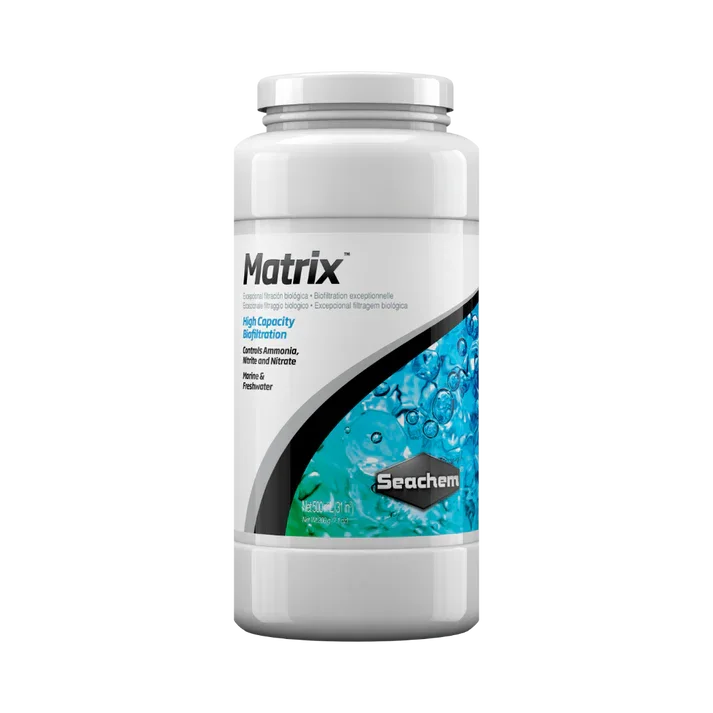
For example, Seachem Matrix Carbon is supplied as bagged activated carbon, making it a straightforward option when your filter has a dedicated media compartment. Dymax EZ Active Carbon comes in pre-portioned packs and is described as suitable for marine aquariums and most filtration systems. For setups designed around sponge media, the Aquatees Blue Activated Carbon Filter Sponge provides a cut-to-size carbon filter sponge format that can be fitted to different filter configurations.
The important point is that you do not need to choose carbon simply because you have a saltwater tank. First decide whether your aquarium would benefit from additional chemical filtration, then choose a carbon format that suits the filter you already use.
When Should You Remove Carbon?
You may need to remove carbon during some fish treatments because activated carbon can adsorb certain medications from aquarium water. If the medication instructions say to remove chemical filtration, take the carbon out before dosing.
After treatment, carbon may be useful for removing residual medication, but only if the treatment directions recommend it. The same applies to additives or water treatments that mention carbon on the label. This is another reason to view carbon as an optional tool rather than something that must run continuously in every saltwater aquarium.
How Often Should You Replace Activated Carbon?
Activated carbon's useful lifespan varies depending on the aquarium, livestock, feeding, maintenance routine, and amount of organic material in the water. Follow the manufacturer's recommended amount and replacement timing for the specific carbon product you use.

Rather than assuming every tank needs the same replacement schedule, replace carbon when its effectiveness has diminished or when the product instructions recommend changing it. If the water starts yellowing again or odours return, that may be a sign the carbon is no longer doing much. For water-clarity issues linked more to algae or suspended microorganisms than dissolved compounds, a saltwater UV steriliser may be a more relevant filtration option to compare. For a broader hobbyist discussion of what activated carbon can and cannot remove, this activated carbon overview is also a useful external reference.
Carbon Filter for Saltwater Tank FAQs
Is activated carbon necessary in a saltwater tank?
No. Activated carbon is an optional form of chemical filtration that can be useful in some saltwater aquariums, especially when water clarity or dissolved compounds are a concern.
Is carbon good for reef tanks?
Yes, it can be. Carbon may help remove some dissolved compounds released by corals and can improve water clarity, but it is not mandatory for every reef tank.
Does activated carbon remove nitrates?
No. Activated carbon is not a direct nitrate-control solution. Nitrate management usually depends more on water changes, feeding control, biological filtration, maintenance, and suitable filtration design.
Can I use carbon while treating fish?
Usually, carbon may need to be removed during some treatments because it can adsorb medication. Follow the treatment instructions for the specific product you are using.
Does activated carbon make saltwater clearer?
It can. By adsorbing some dissolved organic compounds and yellowing substances, activated carbon may help saltwater look clearer.
How much carbon should I use?
Follow the manufacturer's recommended amount for the particular carbon product and your aquarium volume. Avoid using one universal dosage for every saltwater tank, because systems vary.
So, Should You Use a Carbon Filter in Your Saltwater Tank?
A carbon filter for a saltwater tank is useful, but it is not essential for every aquarium. It makes the most sense when you have a reason for additional chemical filtration, such as yellowing water, odours, certain dissolved compounds, or post-treatment cleanup.
Carbon works alongside your main filtration, not instead of it. If your tank is already stable and clear, you may not need to add it simply because it is commonly used.
At Aquatees Fishland, we support Australian hobbyists with aquarium filtration media, water treatments, and equipment for home and office tanks. If carbon suits your setup, you can compare compatible options in our aquarium water filter range.