

Why Getting Your Reef Tank Filter Right Changes Everything
A reef tank filter is the single most important piece of equipment in any marine aquarium. Get it right and your tank stays stable, your corals thrive, and your fish behave like they should. Get it wrong and even the most expensive setup can crash within weeks.
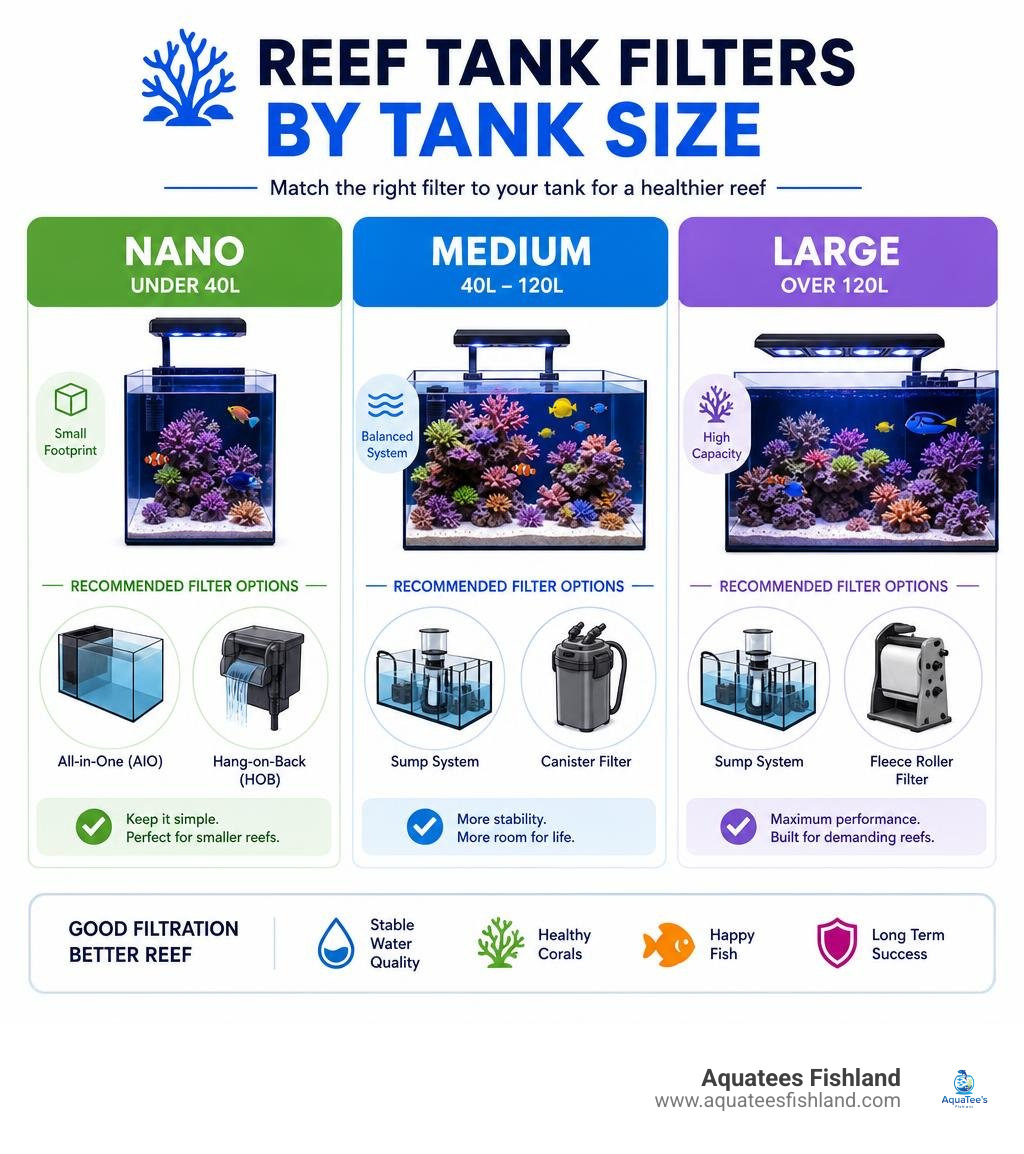
Here is a quick overview of the main reef tank filter types to help you decide what suits your setup:
| Filter Type | Best For | Key Benefit |
|---|---|---|
| Sump system | Medium to large reef tanks | Extra water volume, houses skimmer and reactors |
| All-in-one (AIO) | Beginners and nano reefs | Built-in filtration, clean look, easy setup |
| Hang-on-back (HOB) | Small tanks up to ~60 gallons | Budget-friendly, no sump required |
| Canister filter | Fish-only or light reef setups | Strong mechanical and chemical filtration |
| Fleece roller filter | High-flow sump systems | Automated, consistent mechanical filtration |
Marine tanks are unforgiving. Unlike freshwater systems, saltwater holds less dissolved oxygen, waste breaks down into toxic ammonia faster, and Australian conditions like summer heat and high evaporation rates put extra strain on water quality. Your filtration system has to keep up with all of that, consistently.
Biological stability is the foundation. Beneficial bacteria that colonise your live rock, filter media, and sump surfaces are what convert toxic ammonia into less harmful compounds. Without that established bacterial colony, even a lightly stocked tank can swing into dangerous territory fast.
I'm Naim Ibn Nahshid, part of the eCommerce and warehouse team at Aquatees Fishland, and I've spent the past two years working hands-on with a wide range of reef tank filter systems and helping customers troubleshoot real marine setup problems. Everything in this guide comes from what we actually see working in tanks, not just what looks good on paper.
Choosing the Right Reef Tank Filter for Aussie Marine Aquariums
Choosing the right marine filter depends on your tank volume, bioload, and budget. For Aussie tanks, managing summer heat and evaporation means you need a robust setup that handles salinity shifts and maintains oxygen levels.
When you are setting up a marine aquarium in Australia, you need to plan for those hot summer days. High temperatures reduce the oxygen-carrying capacity of saltwater, which puts extra stress on your biological filter.
A larger filter system helps buffer these environmental swings. Going for the largest filtration system your budget and space allow is generally recommended, as more water volume means more room for error when things get warm.
If you are looking for filtration accessories and replacement parts, you can explore our full range of More info about water filters to find the right match for your setup.
Understanding Saltwater Filter Tanks and Sump Systems
Saltwater filter tanks are complete aquarium systems designed with built-in or compatible filtration compartments, often utilising a sump system. These setups are generally preferred over DIY options because they increase total water volume, making water parameters much more stable and forgiving.
A sump is simply a secondary tank, usually hidden in the cabinet underneath your main display, where all your filtration equipment lives. This keeps your display tank looking clean and free of heaters, skimmers, and messy pipes.
For smaller setups, all-in-one (AIO) marine tanks feature built-in rear chambers that act as a mini-sump. While highly convenient, they have limited space compared to a true under-tank sump system.
For larger tanks, external canister filters can also be used, though they require regular cleaning to prevent detritus from building up and raising nitrate levels. You can learn more about how these work by reading our guide on external filter pumps.
If you want a reliable external setup, you can check out the options we stock, including the Periha EC canister filter, which features integrated UV sterilisation to help keep your water clear.
Mechanical, Biological, and Chemical Stages of a Reef Tank Filter
The three stages of a marine filter work together to keep water clear, clean, and free of toxic compounds. Mechanical filtration traps floating debris, biological filtration houses bacteria to process nitrogenous waste, and chemical filtration removes dissolved organics and yellowing compounds.
Mechanical filtration is your first line of defence. Using filter socks, fleece rollers, or filter floss traps organic waste before it has a chance to break down into ammonia and phosphate.
Biological filtration is the absolute heart of your system. Beneficial bacteria colonise porous surfaces, converting toxic ammonia into nitrite, and then into nitrate, which is far less harmful to your fish and corals.
Chemical filtration uses specialised media like activated carbon or GFO (Granular Ferric Oxide) to target specific contaminants. Carbon removes yellowing pigments, toxins, and odors, while GFO helps control phosphate levels to prevent algae outbreaks.
To build a strong biological foundation, you need high-surface-area media in your filter chambers. You can read about biological filter sponges to understand how they support bacterial growth.
For maximum biological capacity in a small space, using porous ceramic or stone media is highly effective. You can find more info about Seachem Matrix biological media, which is a widely used option for marine sumps and canister filters.
How to Maintain Your Reef Tank Filter and Avoid Common Mistakes
Regular filter maintenance prevents nutrient buildup, cloudy water, and sudden ammonia spikes. A common beginner mistake is cleaning biological filter media in chlorinated tap water, which instantly kills off the beneficial bacteria needed to keep your tank stable.
When organic waste sits in your mechanical filter for too long, it decays and fuels algae growth. If you are using traditional filter socks, you need to wash or replace them every few days to keep nutrients low.
Automated fleece roller filters, like the Red Sea ReefMat series, solve this issue by automatically pulling fresh fleece across the water path as the old section clogs, keeping maintenance down to once every few weeks.
If your water parameters do swing, acting quickly with the right water treatments can save your livestock. For step-by-step troubleshooting, you can read our guide with More info about fixing cloudy aquarium water.
If you are dealing with dangerous waste spikes, check out our practical advice with More info about managing high ammonia in tanks.
To rapidly establish or boost your biological filter after a heavy cleaning session, adding live bacteria is highly recommended. You can get More info about FritzZyme 9 saltwater nitrifying bacteria, which is formulated to cycle saltwater systems safely.
Best Filtration Setups for Beginner Saltwater Aquariums
The best filtration setup for a beginner is an all-in-one saltwater filter tank or a simple sump-based system. These options are much easier to maintain than complex custom plumbing setups and provide a clean, modern look.
If you are transitioning from freshwater, you might be tempted to use standard freshwater equipment, but marine systems require a different approach to flow and waste management. You can read our More info about freshwater tank filter guides to see how the two styles compare.
For a successful beginner setup, comparing your options based on space, budget, and ease of use is highly recommended:
| Setup Option | Ideal Tank Size | Maintenance Level | Best For |
|---|---|---|---|
| All-in-One (AIO) Tank | Under 120 Litres | Low to Medium | Beginners, tight spaces, simple setups |
| Sump-Based System | Over 120 Litres | Medium | Long-term reef keepers, mixed corals |
| External Canister | 40 to 120 Litres | High (requires frequent cleaning) | Fish-only systems, budget builds |
If you are ready to choose your equipment, browse our collection of More info about water filters to find a system that fits your home and budget.
Your Saltwater Filter Tank Setup Checklist
A successful saltwater filter tank setup requires a combination of mechanical, biological, and chemical components. Having the right gear from day one ensures you do not run into water quality issues during the critical cycling phase.
Use this checklist to make sure your system has everything it needs to keep your water clean and your livestock healthy:
- Saltwater filter tank (either an AIO system or a tank with a sump)
- Return pump to circulate water between the filter and the display tank
- Powerheads to provide essential flow and prevent dead spots in the tank
- Filter media including mechanical floss, Seachem Matrix, and activated carbon
- Protein skimmer to remove dissolved organic waste before it breaks down
- Marine salt mix and a hydrometer or refractometer to monitor salinity
- Water conditioner like Seachem Prime to neutralise chlorine in tap water
- Test kits to monitor ammonia, nitrite, nitrate, and pH levels
- Heater and a thermometer to keep temperatures stable
Building a Reliable Saltwater Filtration System
Building a reliable saltwater filtration system is the absolute foundation of a thriving marine aquarium. By matching your equipment to your tank size, bioload, and budget, you set your reef up for long-term success.
At Aquatees Fishland, we are committed to helping Australian hobbyists build beautiful, stable marine aquariums. Whether you need a complete saltwater filter tank, high-capacity filter media, or live nitrifying bacteria to cycle your system, we have the quality gear you need at warehouse prices.
Get your filtration right first, and everything else becomes easier. Build it once, build it properly, and enjoy the reward of a clear, healthy reef tank. If you are ready to upgrade your filtration or start a brand-new build, explore our full range of water filters today.