

Cycling new fish tank environments properly means building enough beneficial bacteria to process fish waste before the aquarium is fully stocked. Fishless cycling is usually the safest beginner method because it builds the biological filter with an ammonia source before fish are added. Most new aquariums take about 2 to 8 weeks to cycle, depending on aquarium size, temperature, filtration, substrate, water chemistry, maintenance routines, and manufacturer guidelines.
The process is easier to follow when you think of it as five main stages: set up the tank and filtration, add an ammonia source, test the nitrogen cycle, confirm the tank is cycled, then add fish gradually while monitoring the water. A tank is considered cycled when ammonia and nitrite both test 0.0 ppm within 24 hours after an ammonia dose, while nitrate is present and controlled with water changes.
I'm Nemo Sulaiman, part of the eCommerce and warehouse team at Aquatees Fishland, with two years of experience helping customers choose fish, equipment, and products. In my daily work, I help hobbyists choose cycling supplies, interpret test results, and troubleshoot water chemistry during new aquarium setups.
Cycling a new fish tank means running the aquarium long enough for beneficial bacteria to process ammonia into nitrite and then nitrate. The practical goal is clear: after an ammonia dose, ammonia and nitrite should both return to 0.0 ppm within 24 hours, with nitrate present and manageable through water changes.
Fishless cycling is generally recommended for beginners because it lets the biological filter develop before livestock is exposed to ammonia or nitrite. During the process, test ammonia, nitrite, nitrate, pH, and carbonate hardness (KH). Those readings tell you whether the cycle is moving forward, stalled, or ready for cautious stocking.
If you are still at the setup stage, start with the broader freshwater aquarium guide, then use this cycling guide to build the biological filter before adding fish.
Step 1: Set Up the Tank and Filtration
Start by filling the aquarium with water, treating tap water with a suitable conditioner, installing the filter, and setting the heater around 25°C to 28°C. Keep the filter running continuously and make sure there is steady surface movement, because nitrifying bacteria need oxygenated water moving through the filter media.
The filter is especially important during cycling because it is the main place where beneficial bacteria settle. If the filter is switched off for long periods, bacteria receive less oxygenated water and the cycle can slow down. When helping customers choose cycling equipment, I usually look first at whether the filter has enough media space, steady flow, and safe water preparation, because those details affect the result more than rushing the timeline.
Choosing the Right Cycling Equipment
Good cycling equipment does not need to be complicated. The essentials are a reliable filter, suitable biological media, dechlorinated water, stable heat, and a way to test water parameters. Porous media, such as a coarse Biological Filter Sponge, gives bacterial colonies useful surface area while keeping them in contact with oxygenated water flow.
Water preparation also matters because chlorine and chloramine can interfere with the bacteria you are trying to establish. A suitable water conditioner is part of the cycling setup rather than an optional extra. Contact your local water authority if you need to understand the baseline mineral content of your municipal tap supply before starting.
Step 2: Add an Ammonia Source
Ammonia is needed to start the nitrogen cycle because it feeds the first bacterial colonies that develop in the filter. For a controlled fishless cycle, dose pure ammonium chloride until your test kit reads about 2.0 to 3.0 ppm ammonia, then keep the filter, heater, and aeration running.
Avoid assuming that more ammonia will make the tank cycle faster. Very high ammonia can slow bacterial growth instead of speeding the process up. Dose carefully, follow the ammonia product directions, and perform a partial water change if readings climb too high.
Fishless, Fish-In or Planted Cycling?
Fishless cycling is usually the safest method for a new fish tank because it avoids exposing fish to ammonia and nitrite while the biological filter matures. Fish-in cycling can work, but it requires very light stocking, daily testing, and frequent water changes to reduce risk. Planted cycling can also help because live plants absorb some nitrogen compounds, but it still needs testing because substrates and decaying plant matter can affect ammonia levels.
| Method | Primary Ammonia Source | Typical Timeline | Safety for Fish | Key Requirement |
|---|---|---|---|---|
| Fishless Cycling | Pure ammonium chloride or fish food | 2 to 6 weeks | Maximum safety, with no fish involved | Precise testing and patience |
| Fish-In Cycling | Very light fish waste | 4 to 8 weeks | Higher risk, with daily monitoring needed | Frequent water changes |
| Planted Tank Cycling | Substrate leaching and organic waste | 2 to 20 weeks | Moderate to high safety, depending on stocking | Adequate lighting and plant growth |
This comparison explains why the five-step process focuses on fishless cycling. It gives beginners a clearer pass/fail result before fish are added, while still showing when fish-in or planted approaches may be used with extra monitoring.
Step 3: Test and Track the Nitrogen Cycle
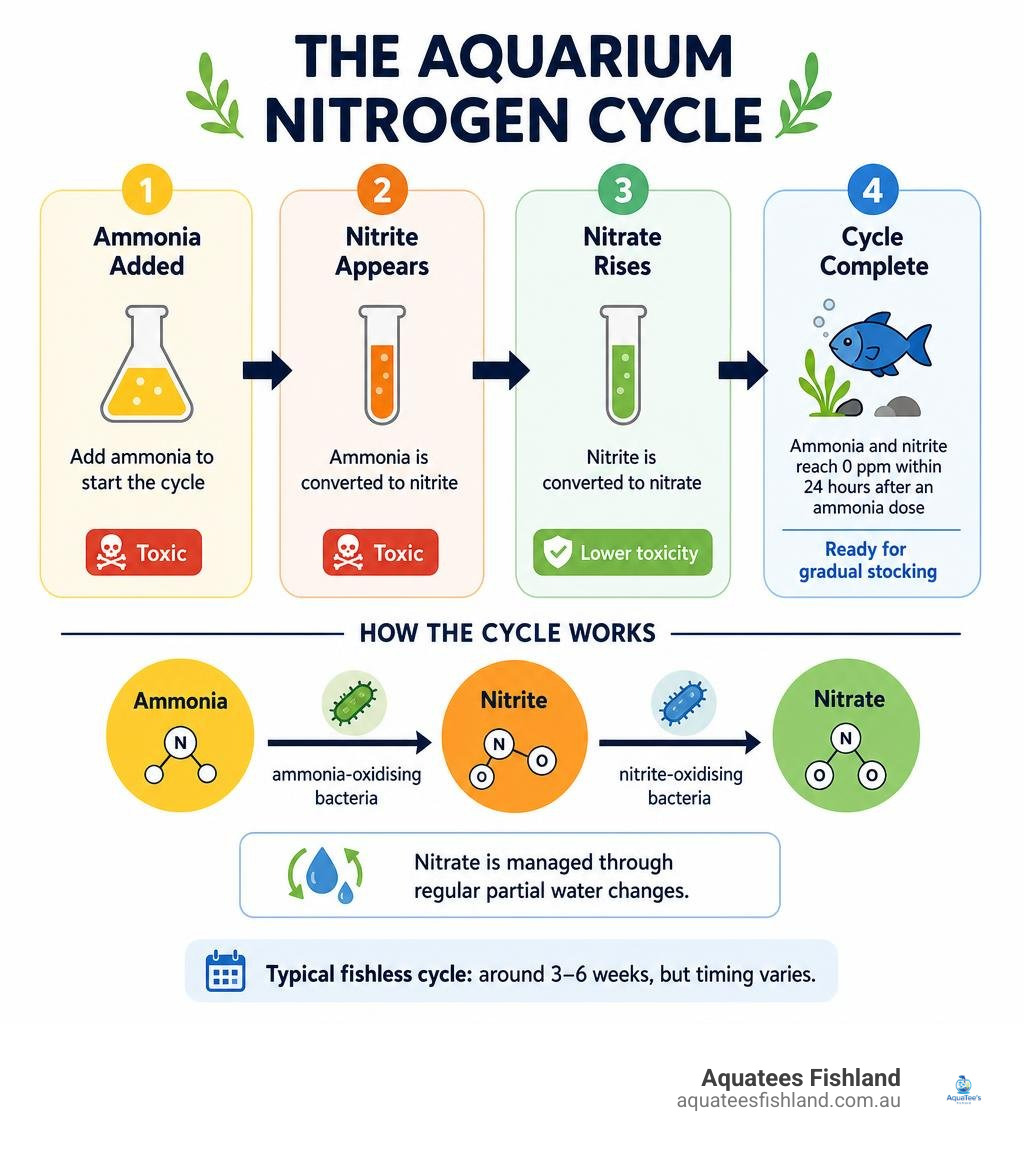
Testing is what shows whether the cycle is developing. In a typical cycle, ammonia appears first, nitrite appears as ammonia begins to drop, and nitrate rises as nitrite is processed. Test every two days during a fishless cycle so you can see the direction of the readings rather than guessing from the water’s appearance.

Track ammonia, nitrite, nitrate, pH, and KH with a reliable liquid or strip Water Quality Test Kit. Ammonia and nitrite show whether the filter can process toxic waste stages. Nitrate shows that conversion is happening. pH and KH show whether the water has enough buffering capacity to keep bacteria active.
Re-dose ammonia back to 1.0 to 2.0 ppm whenever readings fall near zero to keep beneficial colonies fed. If pH is dropping during cycling, test KH and consider a partial water change before changing products or adding livestock.
Understanding Ammonia, Nitrite and Nitrate
Cycling helps prevent new tank syndrome by establishing biological filtration before adding livestock. When fish digest food, they release liquid waste through their gills and urine as dissolved ammonia. In an uncycled environment, ammonia can build quickly and irritate delicate gill tissues.
Nature solves this problem using two primary groups of nitrifying microorganisms. First, ammonia-oxidising organisms like Nitrosomonas convert ammonia into nitrite. Nitrite remains toxic because it can disrupt normal oxygen transport throughout the bloodstream.
Next, nitrite-oxidising organisms such as Nitrobacter convert nitrite into nitrate. Nitrate is less harmful and is typically controlled through regular partial water changes. For a detailed biochemical breakdown, consult the Practical Fishkeeping cycling guide alongside our internal overview on How To Cycle Aquarium.
What Water Parameters Should You Monitor?
Monitor ammonia, nitrite, nitrate, pH, and KH throughout the cycle. Ammonia normally appears first, followed by nitrite as beneficial colonies populate the filter media. A fully cycled state is confirmed only when both ammonia and nitrite read 0.0 ppm within 24 hours of an ammonia dose, while nitrate is present.
KH matters because nitrifying bacteria consume carbonates while processing ammonia and nitrite. Low KH can allow pH to drop, and a sharp pH drop may slow the cycle. If ammonia remains elevated after setup changes, check whether the tank has been overfed, overstocked, under-filtered, or recently cleaned too heavily before adding fish.
Step 4: Confirm the Tank Is Cycled
Confirm the cycle with a 24-hour challenge. Dose ammonia to about 2.0 ppm, test again after 24 hours, and look for 0.0 ppm ammonia, 0.0 ppm nitrite, and nitrate present. If either ammonia or nitrite remains detectable, continue cycling and testing before adding fish.
This check matters because a tank can appear clear before the biological filter is ready. The goal is not simply to wait a set number of weeks. The goal is to prove that the filter can process a controlled ammonia dose quickly enough for cautious stocking.
Prepare the Tank Before Adding Fish
Once ammonia and nitrite clear within 24 hours, perform a 50% to 80% partial water change to reduce accumulated nitrate before introducing livestock. Check the other parameters again, keep the filter running, and avoid cleaning filter media too aggressively.
Nitrate should usually be brought below 20 ppm before fish are added, although results can vary depending on aquarium size, livestock plans, plant growth, filtration capacity, substrate type, and manufacturer recommendations.
Step 5: Add Fish Gradually and Maintain the Cycle
After cycling, add fish in small groups rather than fully stocking the tank immediately. Feed lightly at first, continue testing after each stocking change, and allow the biological filter to adjust to the increased waste load.
If ammonia appears after fish have been added, treat it as a warning sign rather than a normal adjustment period. Stop adding livestock, reduce feeding, test daily, and use partial water changes to keep ammonia and nitrite as low as possible while the filter catches up.
Avoid These Common Cycling Mistakes
Common cycling problems usually come from moving too quickly, under-testing, or interrupting the filter before the bacteria have stabilised. If something looks wrong, use the test results first rather than guessing from the water’s appearance alone.
- Adding fish too early: Ammonia and nitrite can rise before the filter is ready, which may stress or harm fish. Wait until both read 0.0 ppm within 24 hours after an ammonia dose, then stock gradually.
- Overdosing ammonia: Very high ammonia can slow bacterial growth instead of speeding the cycle up. Dose carefully, follow the ammonia product directions, and perform a partial water change if readings climb too high.
- Not testing regularly: Without routine testing, it is easy to miss the ammonia drop, nitrite spike, or a pH change. Test ammonia, nitrite, nitrate, pH, and KH often enough to see the cycle’s direction.
- Stopping the filter: Beneficial bacteria need oxygenated water moving through the filter media. Keep the filter running continuously, and avoid leaving media sitting dry or stagnant.
- Ignoring pH or KH: A falling pH can slow the cycle, especially if KH is low. If the cycle stalls, check both readings before changing products or adding livestock.
- Mistaking cloudy water for a failed cycle: Cloudy water can happen during early bacterial blooms and does not automatically mean the cycle has failed. Check ammonia and nitrite first, then respond based on the readings.
- Adding too many fish after cycling: A newly cycled filter is still adjusting to real waste levels. Add fish in small groups, feed lightly at first, and keep testing after each stocking change.
What If Your Aquarium Cycle Gets Stuck?
If the cycle stalls, check pH/KH, ammonia concentration, temperature, oxygenation, and whether the filter is running continuously. A stall often means conditions are slowing nitrifying bacteria rather than the cycle failing completely.
A pH crash below 6.5 can cause nitrifying bacteria to become far less active. As bacteria process waste, they consume carbonate buffers; if KH drops too low, pH can fall quickly. Performing a 25% partial water change may help restore natural buffers and restart bacterial activity.
If ammonia or nitrite exceeds 5.0 ppm, perform a partial water change because excessive waste levels can inhibit nitrifying bacterial growth. White cloudy water during early cycling is usually a harmless heterotrophic bacterial bloom that clears naturally within a few days, but test results should guide your response. Once ammonia and nitrite consistently clear, add fish gradually so the new biological filter can adjust to the increased waste load.
Cycling New Fish Tank FAQs: Everything You Need to Know
How Long Does Cycling a New Fish Tank Take?
Cycling a new fish tank typically takes between 2 and 8 weeks. The exact timeline depends on aquarium size, water temperature, pH/KH stability, filtration, oxygenation, ammonia source, substrate type, and whether mature media or bottled bacteria are used.
How Do You Know a New Fish Tank Is Cycled?
A new fish tank is cycled when ammonia and nitrite both test 0.0 ppm within 24 hours after an ammonia dose, while nitrate is present and manageable. This result shows that the biological filter can process the first two toxic waste stages quickly enough for cautious stocking.
Can You Cycle a Fish Tank Without Fish?
Yes, fishless cycling is usually the preferred beginner method because it uses a controlled ammonia source instead of live fish waste. This lets the filter mature before livestock is exposed to ammonia or nitrite.
Can You Add Fish Immediately After Cycling?
You can add fish after cycling only once ammonia and nitrite clear within 24 hours and nitrate has been lowered with a partial water change. Add fish gradually, feed lightly, and keep testing so the new biological filter can adjust.
What Should You Do If Ammonia or Nitrite Is Still Present?
If ammonia or nitrite is still present, continue cycling before adding fish. Check the ammonia dose, pH/KH, temperature, oxygenation, and filter operation, then retest until both ammonia and nitrite return to 0.0 ppm within 24 hours.
Key Takeaways for Cycling New Fish Tank Setups
Cycling establishes the biological filtration that helps a new aquarium process fish waste safely. Fishless cycling gives beginners more control because it builds the filter before livestock is added, while testing tells you when the tank is actually ready.
The main points are simple: set up the filter properly, add a controlled ammonia source, track ammonia, nitrite, nitrate, pH, and KH, confirm the cycle with a 24-hour test, and stock the tank slowly. Do not rush the final stage, because the filter still needs time to adjust to real fish waste after cycling.
To support your setup with the necessary functional tools, chemical monitoring equipment, and filtration components, consider these essential aquarium care categories:
- Reliable parameter monitoring tools from our Water Tests & Treatments Collection allow you to track ammonia, nitrite, nitrate, and pH accurately throughout the cycling process.
- Biological and mechanical filtration systems from our Water Filters Collection provide the porous surface area required to house thriving bacterial colonies.
- Water preparation solutions from our Water Conditioners Collection neutralise toxic chlorine and chloramines, protecting beneficial microorganisms from chemical harm.