

Why Getting Fish Tank Filters Right Matters Before You Buy
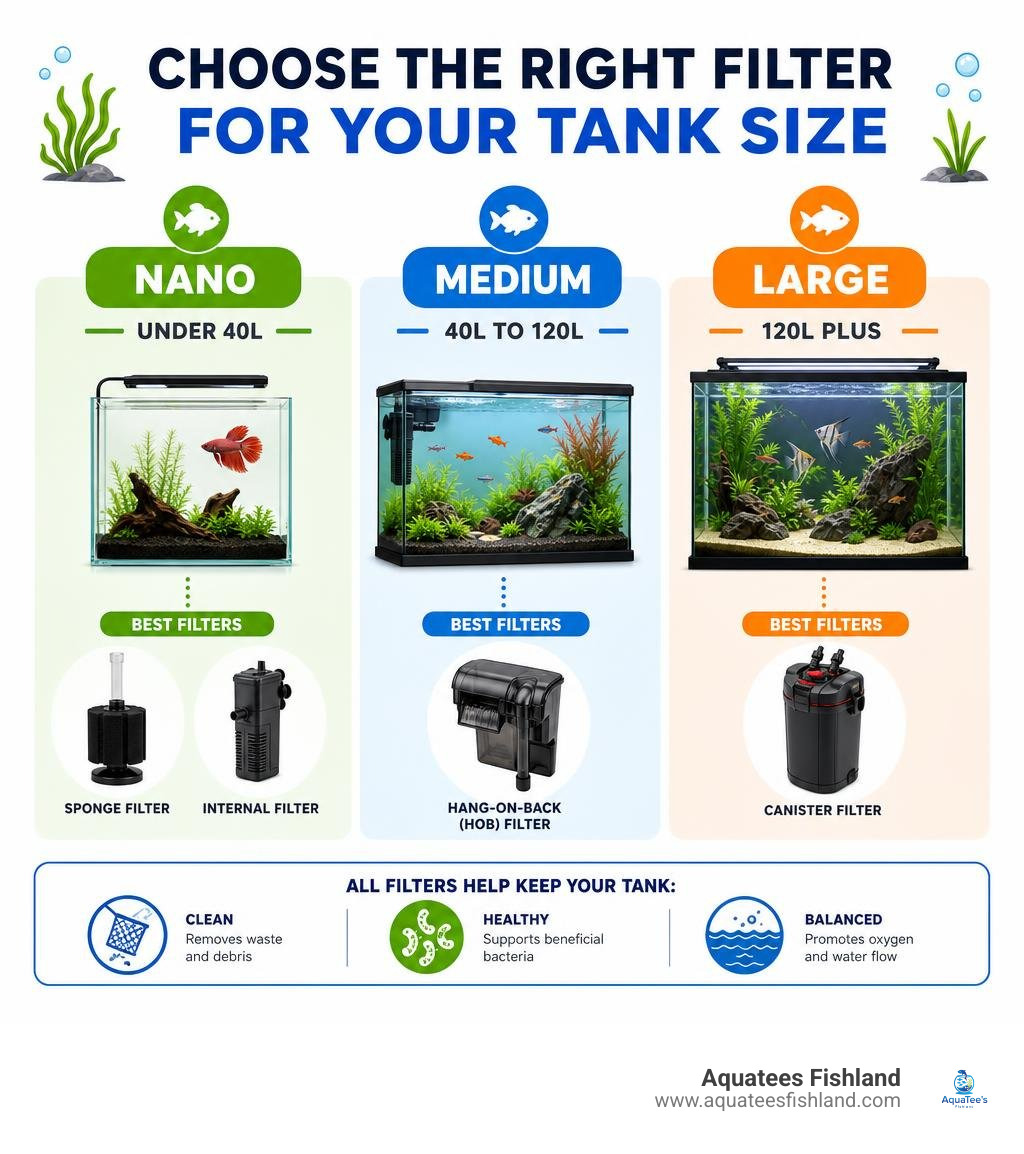
If you are browsing fish tank filters for sale, the short answer is: the right filter depends on your tank size, the animals you are keeping, and how much maintenance you are comfortable with. Here is a quick breakdown to help you find what you need fast:
| Filter Type | Best For | Typical Price Range |
|---|---|---|
| Sponge Filter | Nano tanks, bettas, shrimp | $5 - $30 |
| Hang-on-Back (HOB) | Beginner and community tanks | $25 - $130 |
| Canister Filter | Medium to large planted tanks | $130 - $430+ |
| Internal Filter | Small tanks, turtles | $15 - $70 |
A good filter does three things: it physically traps waste particles, it houses the beneficial bacteria that break down harmful ammonia, and it keeps water moving so oxygen and nutrients are distributed evenly throughout the tank. Skip or undersize your filtration, and water quality problems tend to follow quickly.
Most issues hobbyists run into, whether that is cloudy water, stressed fish, or unexplained spikes in ammonia, trace back to filtration that is not quite right for the setup. Getting it right from the start saves a lot of headaches.
I am Nemo Sulaiman, part of the customer support team at Aquatees Fishland, and I have worked hands-on with a wide range of fish tank filters for sale across different tank sizes and setups. Most of what I will share here comes from real customer situations, not just theory.
Finding the Right Fish Tank Filters for Sale
Finding the right fish tank filter involves matching your aquarium's biological load with a system that provides adequate mechanical, biological, and chemical filtration. This helps ensure the nitrogen cycle remains stable and keeps your water parameters safe for livestock.
When you browse through various options, it is helpful to look past the marketing buzzwords and focus on the fundamental biological processes occurring inside the tank. An aquarium is a closed ecosystem, meaning fish waste, uneaten food, and decaying plant matter quickly turn into toxic ammonia.
To keep your aquatic residents healthy, your filtration system typically performs three distinct functions:
- Mechanical Filtration: This is the physical removal of free-floating debris. Sponges, filter socks, and wool trap particles before they can decompose and cloud your water. Think of this stage as a simple sieve that catches leaves and dirt.
- Biological Filtration: This is often considered a critical phase. It relies on colonies of beneficial nitrifying bacteria that live on the surface of your filter media. These bacteria convert toxic ammonia into nitrite, and then into relatively harmless nitrate. Think of these bacteria as a tiny waste treatment team.
- Chemical Filtration: This stage uses activated carbon, resins, or chemical media to absorb dissolved organic compounds, odours, medication residues, and heavy metals from the water. It acts like a chemical sponge to pull invisible impurities out of suspension.
In Australia, tap water chemistry can vary significantly depending on your local water authority. Using a robust filtration system alongside proper water conditioning helps ensure that your aquatic environment remains stable, regardless of municipal water fluctuations.
Comparing Canister, HOB, and Sponge Filters
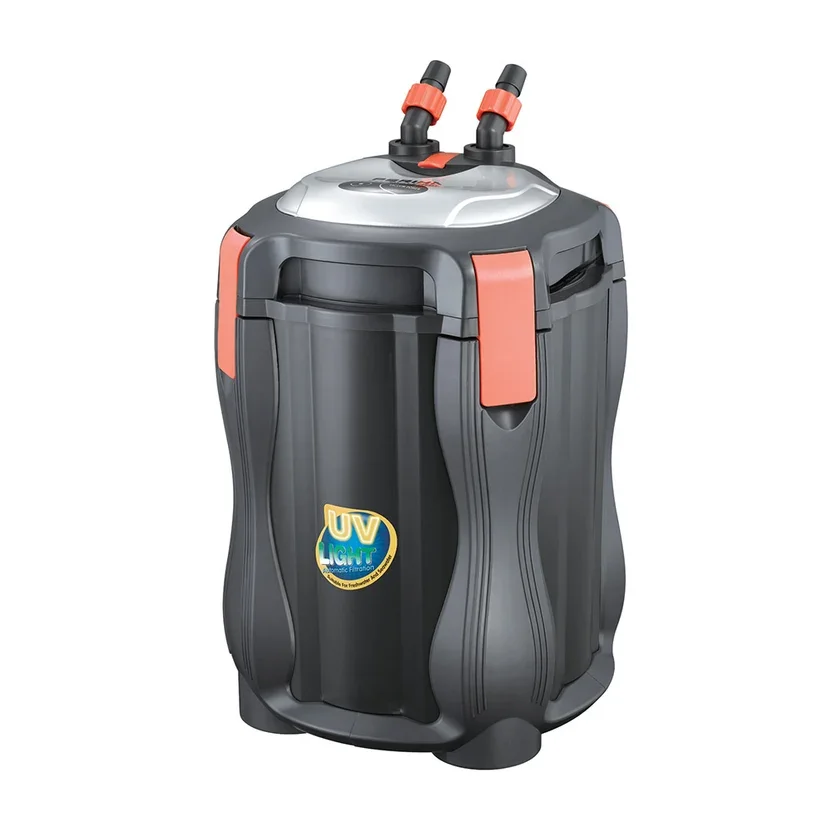
Canister, hang-on-back (HOB), and sponge filters differ primarily in their biological capacity, water flow rates, and physical footprint. Canisters offer high filtration capacity for large tanks, HOBs provide convenient moderate filtration, and sponge filters offer gentle flow ideal for small or delicate setups.
To help you decide which style suits your lifestyle, let us look at how these three main types stack up:
Canister Filters
These external units sit underneath your tank in the cabinet and hold a massive volume of filter media. Water is pumped out of the tank, forced through multiple customisable media baskets, and returned via spray bars or lily pipes.
They are generally quiet, keep equipment out of your display tank, and provide high biological capacity. However, they can be more expensive and take a bit more effort to disconnect and clean.
Hang-on-Back (HOB) Filters
HOBs are a common choice for beginners. They hang on the back glass, draw water up an intake tube, pass it through drop-in cartridges, and spill it back into the tank like a waterfall.
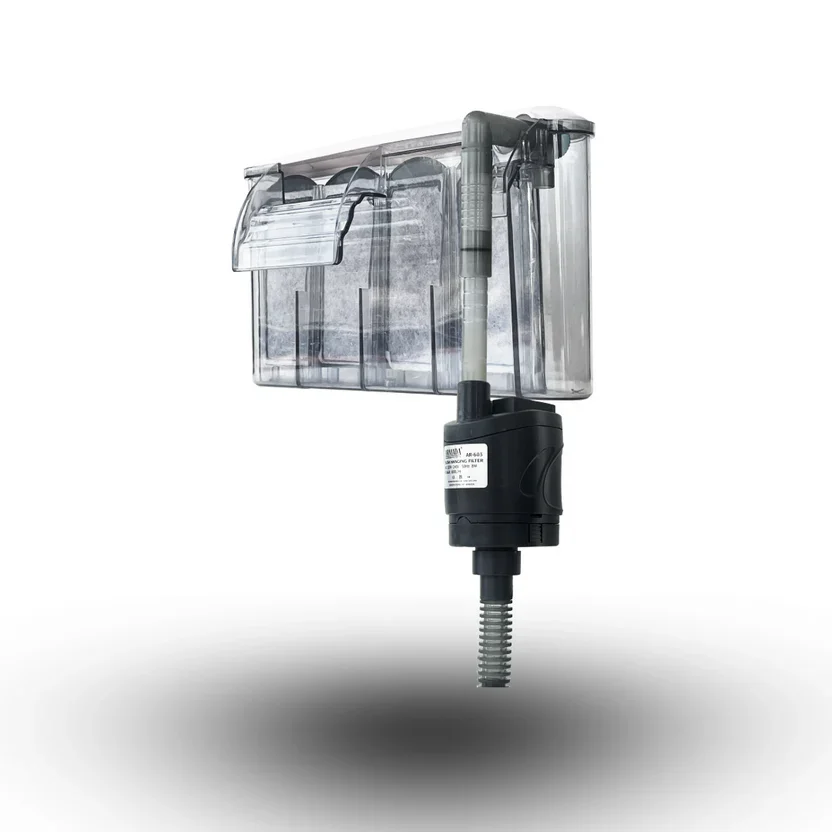
They are highly accessible, relatively easy to clean, and affordable. On the downside, they offer less media customisation and can be slightly noisy if the water level drops, creating a splashing sound.
Sponge Filters
Sponge filters are often used in roughly 25% of nano setups, shrimp breeding tanks, and betta bowls. They consist of a simple weighted sponge attached to an air pump. As air bubbles rise through the central tube, water is drawn through the sponge, providing gentle mechanical and biological filtration.
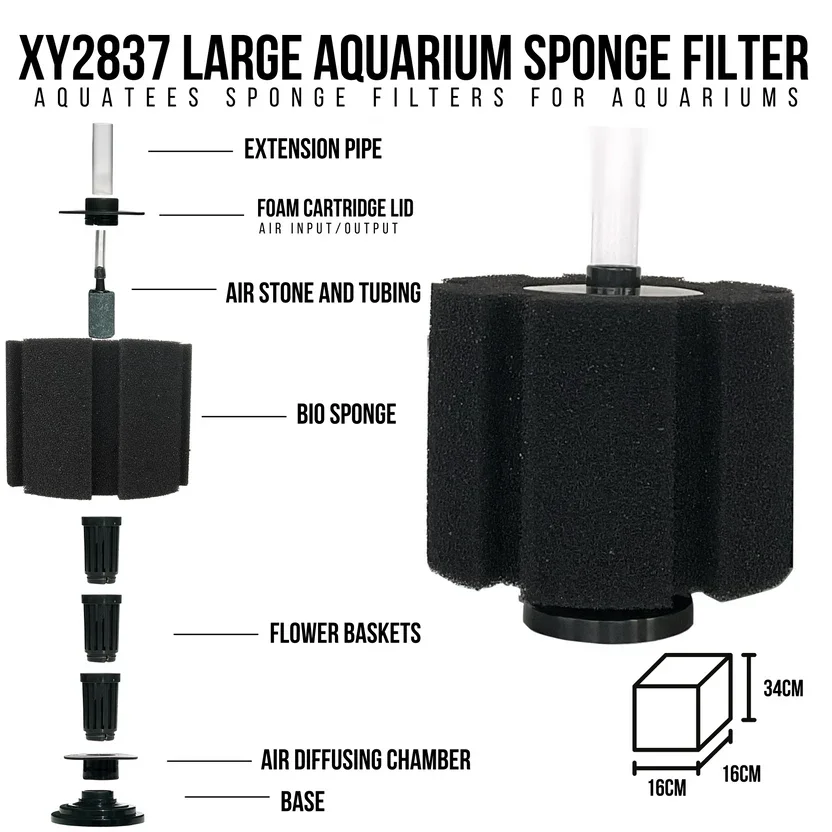
They are generally inexpensive, durable, and safe for tiny baby shrimp or long-finned fish. However, they do not offer chemical filtration out of the box, and they take up physical space inside your tank.
For a deeper dive into these options, check out our guides on the Types of Sponge Filters and explore what makes the Best Tank Filter for different scenarios. If you are ready to browse, you can view our full range of Shop Water Filters online.
Sizing Your Filter Based on Tank Volume and Bio-Load
To choose the right filter size, aim for a flow rate that turns over your total aquarium volume at least four to six times per hour. Adjust this sizing upward if you have a heavy bio-load, large fish, or a heavily stocked planted tank.
When looking at fish tank filters for sale, you will notice manufacturers list a recommended tank size on the box. It is best to treat these recommendations as a starting guide rather than an absolute rule. The ideal filter size depends heavily on your specific livestock and plant choices:
- Low Bio-Load (e.g., Nano tanks, shrimp, neon tetras): A standard turnover rate of 4x your tank volume per hour is generally sufficient. A 50-litre tank would require a filter pumping at least 200 litres per hour (L/H).
- High Bio-Load (e.g., Goldfish, cichlids, turtles): These animals produce significant waste. For these setups, look for a filter that can turn over the tank volume 6x to 10x per hour, or consider running dual filters to prevent waste buildup.
- Planted Tanks: Live plants benefit from moderate, consistent water movement to distribute carbon dioxide (CO2) and nutrients to their leaves. However, excessive surface agitation can drive off beneficial CO2, so adjustable flow rates are highly beneficial.
Under-filtering is one of the most common Beginner Aquarium Mistakes we see in the hobby. If you are in doubt, it is often safer to choose the next size up, as you can usually baffle or turn down the flow rate, but you generally cannot increase the maximum output of an undersized pump.
Key Features of Quality Fish Tank Filters for Sale
An effective aquarium filter typically features adjustable water flow, a large mechanical surface area, sufficient biological volume, and options for specialised accessories like surface skimmers or UV clarifiers. These features work together to maintain water clarity and distribute nutrients effectively.
When comparing different models, consider these advanced features that can make tank management much easier:
- Surface Skimming: A built-in surface skimmer removes the oily organic film that often forms on the water surface. This improves gas exchange and keeps the surface looking clear.
- Integrated Heaters: Some canister filters allow you to house your heater directly inside the canister body. This removes another piece of equipment from your display tank.
- UV Clarifiers: Filters equipped with ultraviolet lights expose passing water to UVC radiation, which helps neutralise free-floating green algae spores and pathogens.
- Easy-Clean Pre-Filters: Some canisters feature separate pre-filter compartments. This allows you to pull out and rinse the mechanical sponges without having to open the main canister body and disturb your biological media.
For large tanks where clarity and ease of maintenance are priorities, a unit like the Periha EC Canister provides a balance of high flow rates, integrated UV sterilisation, and simple maintenance controls.
Maintenance and Filter Media Care Best Practices
Proper filter maintenance involves rinsing mechanical sponges in discarded aquarium water every two to four weeks to preserve beneficial bacteria. Avoid using tap water directly on your biological media, as chlorine can destroy the active bacterial colonies.
Maintaining your filter does not mean keeping it surgically sterile. The brown gunk inside your filter is actually home to millions of beneficial bacteria. To keep your system running smoothly without crashing your nitrogen cycle, follow these best practices:
- Rinse with Tank Water Only: During your regular water changes, siphon some tank water into a bucket. Use this water to gently squeeze out your mechanical sponges and rinse your biological media. Avoid using untreated tap water, as chlorine and chloramines can sterilise your beneficial bacteria.
- Avoid Replacing Everything at Once: Filter manufacturers often recommend replacing cartridges monthly. Doing this can disrupt your beneficial bacteria. Instead, only replace mechanical wool when it begins to degrade, and leave your biological ceramic rings or stones alone.
- Manage Your Water Chemistry: When performing water changes or setting up a new filter, treat your tap water with a water conditioner like Seachem Prime to neutralise chlorine.
- Boost Your Biofilter: If you are starting a new tank or cleaning your equipment, adding a bacteria starter such as Seachem Stability helps establish biological colonies on your media.
- Choose High-Surface-Area Media: The quality of your biological media determines how much waste your filter can process. Upgrading your internal media to a porous option like Seachem Matrix provides more surface area for nitrifying bacteria to colonise compared to standard ceramic rings.
Popular Models of Fish Tank Filters for Sale
Models like the Periha EC Canister, Aquatees Jumbo Sponge, and Dymax White Wool Sponges offer reliable performance across different tank sizes. These models are widely popular in the Australian hobbyist community for their durability and filtration efficiency.
Depending on your tank style, budget, and space, here are some of the most reliable products currently available:
- For Medium to Large Tanks: The Periha EC series is a popular choice for hobbyists looking for an External Filter Pump. Its integrated UV clarifier helps control green water, while the multi-stage baskets allow you to customise your mechanical, biological, and chemical media.
- For Breeding Tanks and Quarantines: The Aquatees Jumbo Sponge is a reliable, low-cost option. It provides gentle water movement and an enormous surface area for biological filtration, making it excellent for sensitive fry, shrimp, or hospital setups.
- For Custom Mechanical Filtration: If you run a canister or HOB filter and want to polish your water, cutting custom pads from Dymax White Wool Sponges is a cost-effective way to trap fine particles before they bypass your filter.
Selecting Your Next Aquarium Filtration System
Selecting the right aquarium filter comes down to understanding the specific biological needs of your aquatic livestock and matching them to your personal maintenance routine. Whether you select a canister filter for a large display or a simple sponge filter for a breeding project, the goal remains the same: stable, clean water.
By focusing on the core principles of mechanical, biological, and chemical filtration, you can maintain a healthy nitrogen cycle. Regular maintenance, such as rinsing media in tank water and avoiding harsh tap water, ensures your beneficial bacteria thrive over the long term.
Understanding these fundamentals allows you to make an informed decision that fits your budget and your lifestyle.
For those ready to browse available options, you can view the range of Shop Water Filters to find a suitable match for your setup.
Frequently Asked Questions
What are the main types of aquarium filters available?
The main types of aquarium filters are canister filters, hang-on-back (HOB) filters, sponge filters, and internal filters. Canister filters sit outside the tank and offer high media capacity, HOB filters hang on the tank rim for easy access, sponge filters use air bubbles for gentle biological filtration, and internal filters are fully submerged units ideal for smaller setups.
How do I choose the correct filter size for my fish tank?
To choose the correct filter size, calculate your tank's volume and select a filter with a flow rate that turns over that volume at least four to six times per hour. If you keep high-waste species like goldfish or have a heavily stocked tank, it is often beneficial to increase this turnover rate to eight to ten times per hour.
How often should I clean my aquarium filter?
Aquarium filters should generally be cleaned every two to four weeks, depending on your tank's stocking level. Mechanical media like sponges and wool should be rinsed when water flow begins to decrease, while biological media is typically gently rinsed in old tank water to avoid killing beneficial bacteria.
Can I wash my filter media in tap water?
No, you should avoid washing biological filter media in untreated tap water. Tap water contains chlorine and chloramines designed to kill bacteria, which can destroy the beneficial nitrifying colonies in your filter and potentially cause an ammonia spike in your tank.
What is the difference between mechanical and biological filtration?
Mechanical filtration physically traps and removes solid debris, uneaten food, and plant matter from the water column. Biological filtration relies on living colonies of beneficial bacteria to break down invisible, toxic dissolved wastes like ammonia and nitrite into safer compounds.