

Core Routines and Equipment for Consistent Fish Tank Upkeep
Successful fish tank upkeep centres on three core habits: quick daily equipment and livestock checks, weekly 10% to 25% partial water changes with gravel vacuuming, and regular water parameter testing. By following this rhythm, you keep water parameters stable and support beneficial nitrifying bacteria.
I am Nemo Sulaiman, part of the eCommerce and warehouse team at Aquatees Fishland with two years of experience helping customers choose fish, equipment, and products. When starting a freshwater aquarium, establishing these routines early protects your aquatic environment from sudden water quality fluctuations.
An aquarium is a closed biological ecosystem. Without mechanical export and deliberate biological support, organic debris, fish waste, and uneaten food break down into toxic compounds. A consistent maintenance routine allows beneficial bacteria to process waste smoothly, keeps viewing glass clean, and maintains steady water parameters so your fish can thrive.
Daily and Weekly Fish Tank Upkeep Tasks
Dividing your maintenance into short daily checks and focused weekly sessions prevents chores from piling up. Following a structured aquarium maintenance checklist helps you catch potential issues before they affect livestock health.
-
Daily Tasks (2 to 5 minutes):
- Livestock visual check: Observe all fish during feeding to verify normal swimming behavior, intact fins, and good appetite.
- Equipment check: Confirm that filters are flowing normally, heaters are maintaining the correct temperature, and aerators are running.
- Evaporation top-off: Top off evaporated water using dechlorinated fresh water. In marine setups, unaddressed evaporation can cause salinity to rise quickly.
- Temperature check: Check that the water temperature remains within the standard 24°C to 27°C range for tropical species.
-
Weekly to Fortnightly Tasks (20 to 30 minutes):
- Glass cleaning: Wipe down interior viewing panels with a magnetic scraper or tank-safe pad to remove developing algae films.
- Water testing: Test parameters before performing water changes to monitor nutrient trends.
- Substrate vacuuming: Use a gravel siphon to pull settled detritus out of open substrate areas.
- Partial water change: Remove and replace 10% to 25% of the total water volume with conditioned, temperature-matched water, as outlined in this guide to low maintenance aquariums.
Essential Filtration and Cleaning Equipment
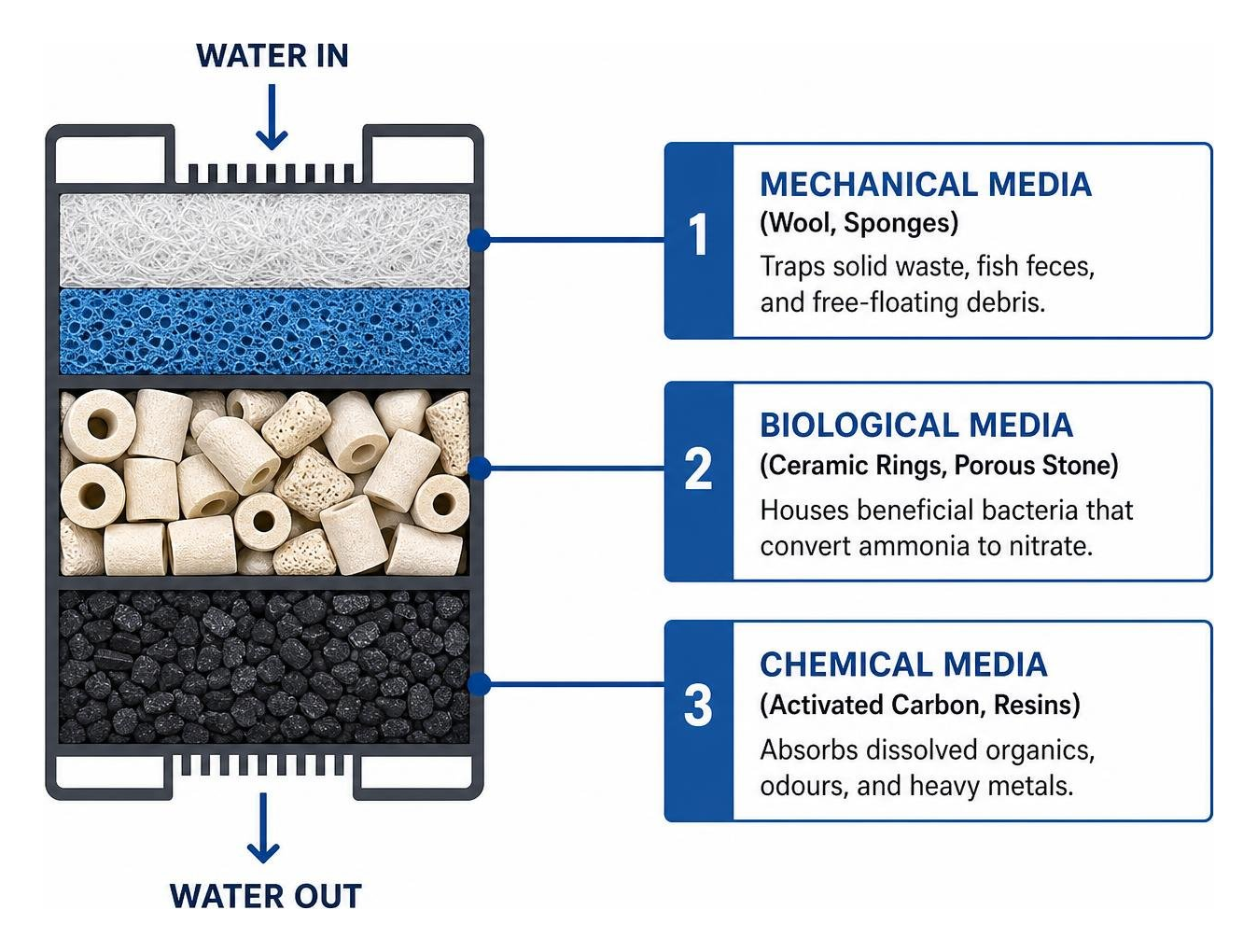
Having the right tools simplifies routine care. The foundation of any low-maintenance aquarium is an effective filtration system paired with appropriate media types.
| Media / Tool Category | Primary Function | Maintenance Frequency | Best Practice Care |
|---|---|---|---|
| Mechanical Media (Wool, Sponges) | Traps solid waste, fish feces, and free-floating debris | Rinse fortnightly; replace fine floss every 2 to 4 weeks | Rinse gently in siphoned tank water; replace when clogged |
| Biological Media (Ceramic Rings, Porous Stone) | Houses beneficial bacteria that convert ammonia to nitrate | Inspect monthly; light rinse every 3 to 6 months | Avoid washing under chlorinated tap water; preserve biofilm |
| Chemical Media (Activated Carbon, Resins) | Absorbs dissolved organics, odours, and heavy metals | Replace every 4 to 8 weeks | Discard and replenish; saturated media ceases absorption |
| Gravel Siphon | Extracts waste trapped in substrate while draining water | Use during every partial water change | Focus on open areas; avoid disturbing deep planted roots |
| Algae Scraper | Cleans diatom and green algae films from viewing glass | Weekly or as needed | Keep blades away from gravel to prevent scratching panels |
Safe Water Changes and Biological Balance
Water changes serve as the primary tool for reducing accumulated nitrates and replenishing trace minerals. However, replacing too much water at once can destabilise your ecosystem. Water changes above 25% to 30% are generally reserved for biological emergencies, as large volume swings may cause osmotic shock to delicate fish.
To carry out a safe partial water change:
- Turn off electrical appliances: Switch off filters and heaters at the power point before lowering the water level to protect pump impellers and prevent glass heater casings from cracking.
- Siphon carefully: Vacuum detritus from the upper layers of gravel. Siphon out roughly 10% to 20% of the tank volume into a clean bucket.
- Condition new tap water: Municipal tap water in Australia contains chlorine and chloramines that can quickly eradicate nitrifying bacteria. Treat new tap water with a quality dechlorinator before adding it to the aquarium.
- Match water temperature: Ensure the replacement water matches the temperature of the aquarium water within 1°C to avoid thermal shock.
- Stagger your maintenance: Avoid replacing filter media on the exact same day you perform a water change. Staggering these tasks protects beneficial bacterial colonies throughout the system.
Essential Care Schedules and Troubleshooting for Long-Term Success
During the first 90 days of setting up a new tank, biological stability is establishing itself. Routine testing during this initial window helps you understand how bioload, feeding rates, and filtration interact.
Managing Water Parameters and High Ammonia Spikes
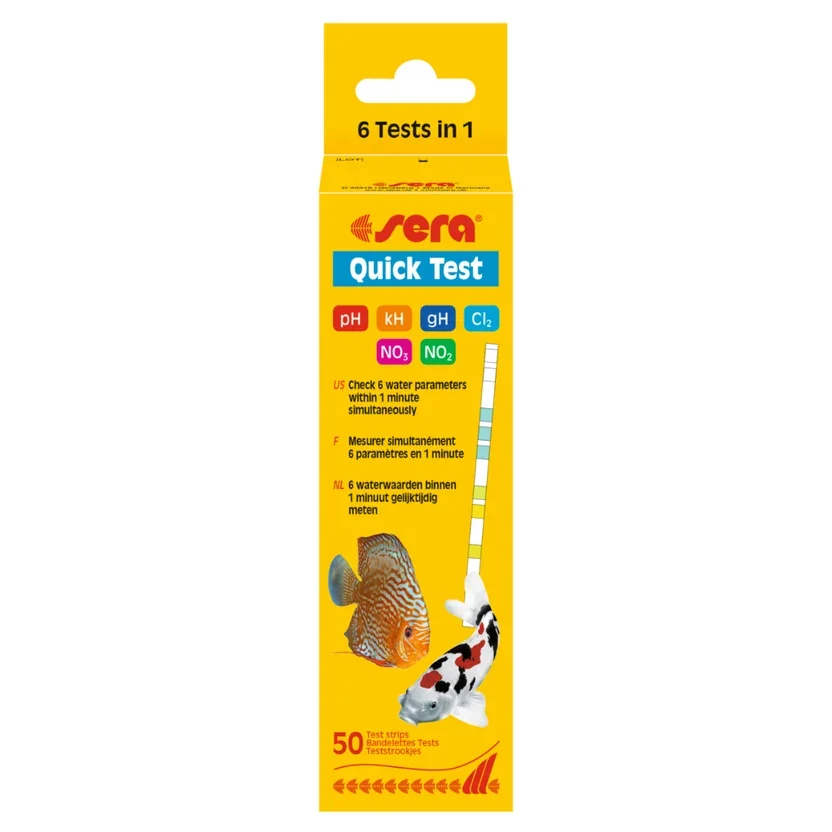
Regular testing provides clear insight into aquarium chemistry. In an established aquatic setup, water parameters typically fall within these recommended ranges:
- Ammonia ($NH3/NH4^+$): Ideally 0 ppm. Ammonia is harmful even in minuscule amounts.
- Nitrite ($NO_2^-$): Ideally 0 ppm. Readings above 0.25 ppm generally require prompt attention.
- Nitrate ($NO_3^-$): Below 20 to 40 ppm for freshwater community tanks; lower for sensitive species.
- pH: Typically 6.8 to 7.8 for standard freshwater tropical community species.
- Phosphate ($PO_4$): Below 0.2 ppm to help control unwanted algae growth.
Consulting a complete guide to aquarium chemistry helps clarify how carbonate hardness (KH) works to buffer against severe pH swings. Using an accurate water quality test kit on a regular basis lets you monitor shifts in real time.
If ammonia or nitrite levels rise unexpectedly, dosing nitrifying bacteria such as FritzZyme 7 (available in 236 ml, 473 ml, 946 ml, and 3.7 L sizes) can assist in reinforcing the biological filter.
Solving Common Fish Tank Upkeep Problems
Occasional water quality or visual balance issues are common in home aquariums. Knowing how to troubleshoot these problems keeps your system stable and healthy.
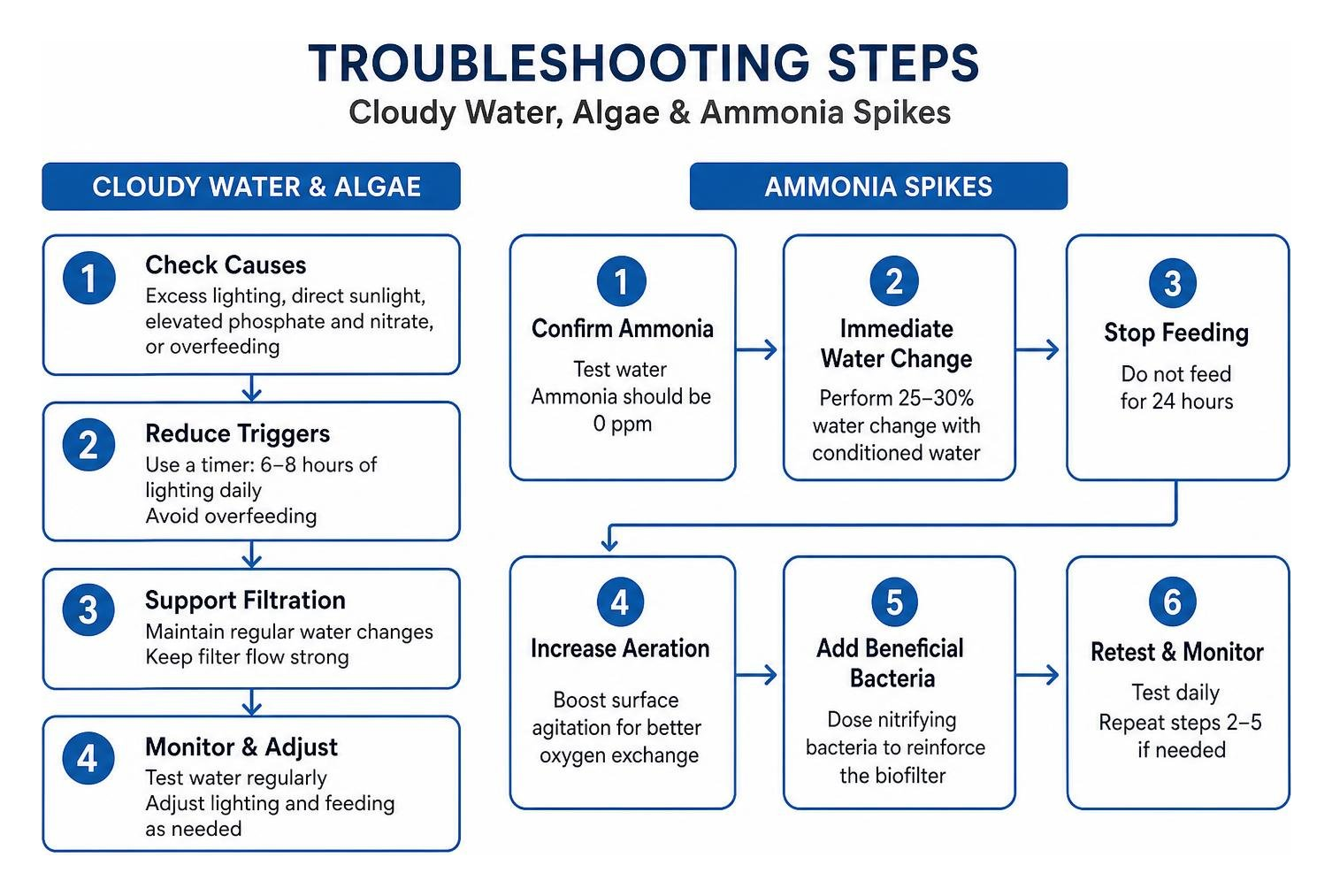
- Handling Ammonia Spikes: If test results show detectable ammonia, explore our guide on how to fix high ammonia in fish tanks. Promptly perform a 25% to 30% water change with conditioned water, pause feeding for 24 hours, increase surface aeration, and supplement with beneficial nitrifying bacteria.
- Controlling Algae Outbreaks: Algae blooms are usually triggered by excess lighting, direct sunlight, or elevated phosphate and nitrate levels. Keep lighting photoperiods on an automated timer set for 6 to 8 hours daily, and avoid overfeeding.
- Clearing Bacterial Blooms (Milky Water): A hazy white cloud in newer tanks often indicates a free-floating bacterial bloom adjusting to available nutrients. Rather than adding harsh chemicals, allow the biological filtration to catch up, reduce feeding slightly, and maintain strong water flow.
- Preventing Health Issues: Poor water quality and infrequent upkeep are primary triggers for conditions like dropsy, where fluid accumulates in the body cavity due to internal organ strain. Prevention through clean water, regular partial changes, and avoiding beginner aquarium mistakes provides a reliable approach.
Stocking and Feeding Guidelines for Low Maintenance
Your stocking choices and feeding habits directly influence how much upkeep your aquarium will require.
- Optimal Tank Sizing: While small desktop tanks under 20 litres might look simple, their limited water volume can experience rapid temperature and chemical fluctuations. A rectangular tank between 60 and 100 litres provides far greater buffering capacity, making water conditions easier to manage.
- Wave Stocking Protocol: Introduce new fish gradually over several weeks rather than adding an entire community at once. Adding 25% to 35% of your target livestock capacity gives biological filter colonies time to adjust to the increased bioload.
- Gentle Acclimation: Float fish bags for 15 to 20 minutes to equalize water temperature. For delicate fish or shrimp, use a drip acclimation line over 45 minutes to balance pH and water hardness smoothly.
- Controlled Feeding Habits: Feed only what your fish can fully consume in under 2 minutes, once or twice daily. Uneaten food sinks into the gravel bed, decaying into ammonia and fueling algae growth.
- Incorporate Live Plants: Hardy, slow-growing live plants such as Anubias barteri, Java fern, and mosses absorb excess nitrates and phosphates from the water column. They provide natural cover for fish and enhance water quality without demanding high-intensity lighting or CO2 injection.
Conclusion on Consistent Fish Tank Upkeep
Sustaining a healthy aquarium relies on predictable habits rather than complicated interventions. Conducting regular partial water changes, testing water parameters consistently, and practicing moderate feeding routines allow biological filtration to remain stable over time.
Addressing maintenance through small daily checks and fortnightly filter upkeep helps prevent waste accumulation and water chemistry fluctuations. Aquatees Fishland supplies Australian aquarists with essential equipment and water treatments to support routine care. To find suitable maintenance supplies and biological filtration aids, explore our complete aquarium care collection.