

How to dechlorinate tap water safely is one of the first things aquarium keepers should understand before adding tap water to a fish tank. Municipal tap water is treated for human use, but chlorine and chloramine can irritate fish, stress invertebrates, and affect the beneficial bacteria that support biological filtration. In most established aquariums, tap water should generally be treated before it enters the tank.
For routine aquarium water changes, an aquarium water conditioner is usually the most practical first choice. Suitable carbon filtration can help in specific water-preparation setups, while allowing water to stand is only a limited option for free chlorine. The important catch is that chlorine and chloramine behave differently, so simply leaving water to stand is not suitable for every water supply.
I'm Nemo Sulaiman, part of the eCommerce and warehouse team at Aquatees Fishland, an Australian supplier of aquarium equipment and supplies. Over the past two years, I've helped customers choose fish, aquarium equipment, and products, and tap water preparation is one of the most common areas where small mistakes can affect water quality.
The three practical ways to dechlorinate tap water for an aquarium are using a water conditioner, filtering water with suitable carbon media, or allowing free chlorine to dissipate naturally. For most beginners and routine water changes, a suitable aquarium water conditioner should be treated as the default option because it is quick, easy to dose, and designed for aquarium use. Carbon filtration is useful in more specific setups, and natural dissipation should only be considered when you know your supply uses free chlorine rather than chloramine.
Chlorine is less stable and can leave water through off-gassing under the right conditions. Chloramine is more stable because it combines chlorine with ammonia, so it usually needs a suitable conditioner or appropriate filtration media selected for that water treatment system.
1. Use an Aquarium Water Conditioner
The easiest way to dechlorinate tap water for fish is usually to use a suitable aquarium water conditioner, especially for regular aquarium water changes. For most home aquarium keepers, this is the clearest routine solution because it treats the incoming tap water before it reaches fish, shrimp, or filter bacteria.
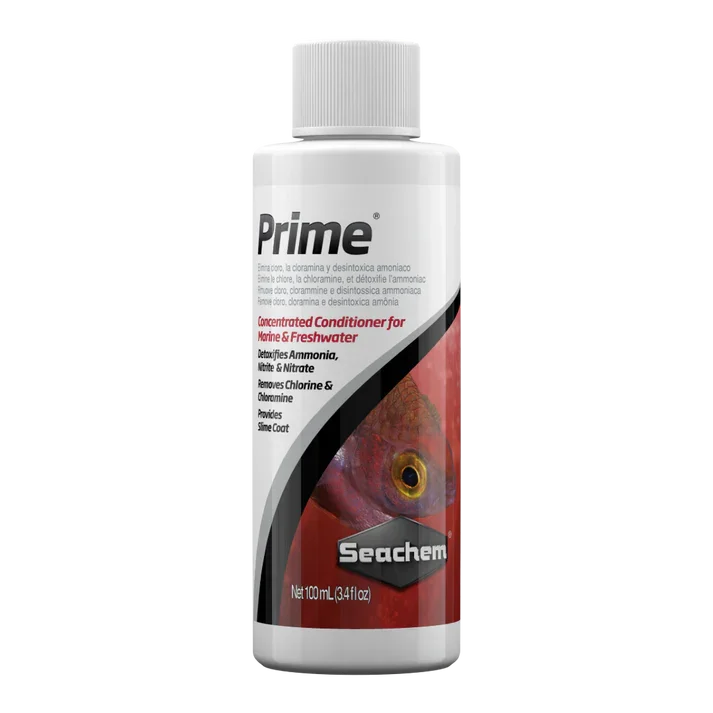
These products can neutralise chlorine quickly, and many are also formulated to address chloramine when used according to the manufacturer's directions. A conditioner helps make tap water safer before it reaches the aquarium. This matters because untreated disinfectants can irritate fish gills and may affect the bacteria in filter media that convert fish waste into less harmful compounds.
For routine water changes:
- Add tap water to a clean aquarium-safe bucket or container.
- Check the conditioner label for the correct dosage.
- Dose according to the product instructions and the water volume being treated.
- Mix the water thoroughly before adding it to the aquarium.
Dosage can vary between products, especially where chloramine is involved, so it is better to follow the label than rely on a generic amount. Aquatees Fishland's aquarium water conditioners collection is relevant for comparing treatment options.
2. Filter Tap Water With Suitable Carbon Media
Filtration can help remove or neutralise disinfectants, but it is usually better treated as a specific water-preparation setup rather than the simplest beginner method. Standard activated carbon can reduce free chlorine as water passes through it, while chloramine generally needs more specialised media such as catalytic carbon.
Contact time is important. Slower flow through the correct media can improve performance, especially when preparing larger amounts of water before a change.
Carbon media has a finite useful life. Once exhausted, it may no longer remove chlorine or related compounds effectively, so cartridges and media should be replaced according to manufacturer guidance.
A normal aquarium filter containing carbon should not automatically be assumed to make untreated tap water safe for fish. It is usually better to treat incoming water before it reaches the tank. For larger water volumes, the water filter range may help with a more consistent setup.
3. Let Free Chlorine Dissipate Naturally
Leaving tap water out overnight can reduce free chlorine, but it should not be seen as an equal alternative to conditioner for routine aquarium maintenance. This method only suits water supplies that use free chlorine and where you have time to prepare water before a change.
Free chlorine can dissipate when tap water is left uncovered in a clean container. A wide bucket or tub with good surface area can improve gas exchange, and aeration from an air stone can help increase contact with air. Timing varies with temperature, airflow, surface movement, and the original chlorine level.
This approach is less convenient for routine aquarium maintenance because it requires planning and does not cover every water supply. If your local provider uses chloramine, standing water may still contain active disinfectant after sitting out.
If you are unsure which disinfectant is used in your area, check with your local water supplier or test your source water before relying on natural dissipation.
Which Dechlorination Method Should You Use?
The most suitable dechlorination method depends on your water supply, maintenance routine, and how much water you need to prepare. For most routine aquarium water changes, a suitable aquarium water conditioner is generally the simplest option and the safest default for beginners.
| Method | Best suited to | Chlorine | Chloramine | Convenience |
|---|---|---|---|---|
| Water conditioner | Routine aquarium water changes | Yes, depending on product | Yes, if formulated for it | High |
| Suitable carbon filtration | Regularly treated or filtered water | Yes | Depends on media | Moderate |
| Natural dissipation | Free chlorine only | Can reduce it | No | Low |
Use a conditioner for regular water changes when you want the most straightforward routine option. Use suitable carbon filtration if you prepare larger amounts of water and understand which media your setup requires. Natural dissipation may be an option only when you know your supply uses free chlorine and you have time to prepare water in advance.
If you are unsure whether your tap water contains chlorine or chloramine, check first rather than assuming.
Common Mistakes When Dechlorinating Tap Water for an Aquarium
Avoiding a few common mistakes can make tap water preparation safer and more consistent for routine aquarium water changes.
Assuming all tap water contains the same disinfectant
Chlorine and chloramine require different approaches, so it is worth checking your local water supply instead of assuming every tap water source can be treated the same way.
Leaving water to stand without checking for chloramine
Standing water can reduce free chlorine, but it is not a reliable solution for chloramine. If chloramine may be present, use a treatment method suited to the actual water supply and follow product or media instructions.
Underdosing water conditioner
Water conditioner should be dosed according to the specific product's instructions and the volume of water being treated. Guessing the amount can leave replacement water less reliably prepared.
Adding untreated tap water directly to the tank
Treat incoming tap water before it reaches fish, invertebrates, and beneficial filter bacteria. Preparing water in a clean container gives you more control over dosage, mixing, and temperature.
Ignoring water temperature during a water change
Match the new water reasonably closely to the aquarium temperature before adding it. Sudden temperature changes can stress fish, especially during larger water changes.
Assuming the aquarium filter will dechlorinate the water
Normal mechanical and biological filtration should not be treated as a substitute for properly preparing replacement water. Some media can help with specific disinfectants, but untreated tap water should usually be prepared before it enters the aquarium.
Questions About How to Dechlorinate Tap Water
Testing source water with a reliable water quality test kit can confirm whether your chosen treatment method has reduced disinfectants before a water change. Understanding tap water is also useful when learning how to cycle aquarium environments because stable biological filtration depends on healthy nitrifying bacteria.
Is tap water safe for fish?
Tap water can be suitable for an aquarium after it has been appropriately treated for the disinfectants and water parameters present in the local supply. Drinking-safe tap water can still need aquarium preparation because chlorine, chloramine, pH, hardness, temperature, and other parameters may affect fish, shrimp, and filter bacteria.
For routine water changes, check which disinfectant your local supplier uses, treat the water with a suitable conditioner or water-preparation method, and test relevant parameters where appropriate before adding it to the aquarium.
Can you put tap water straight into a fish tank?
Generally, tap water should be treated before being added to an aquarium because chlorine or chloramine can affect fish and beneficial bacteria. For routine water changes, prepare the water first using a method suited to your local supply.
Drinking-safe tap water can still need aquarium preparation because disinfectants used in municipal water may affect fish, shrimp, and filter bacteria when added directly to a tank.
How long does it take for chlorine to leave tap water naturally?
Free chlorine can dissipate from uncovered tap water over time, but the exact time varies with water chemistry and environmental conditions. Surface area, temperature, airflow, aeration, and the initial chlorine level can all affect how quickly it reduces.
This timing should not be applied to chloramine. Chloramine is more stable and generally needs a suitable conditioner or appropriate filtration media rather than passive standing.
Does letting tap water sit remove chloramine?
No, simply leaving tap water standing is not a reliable way to remove chloramine. Chloramine is designed to remain stable in water distribution systems, so it can persist far longer than free chlorine.
If your water supplier uses chloramine, choose treatment based on the conditioner label, filtration media instructions, and the requirements of your actual water-preparation setup.
What is the easiest way to dechlorinate water for fish?
For routine aquarium water changes, a suitable aquarium water conditioner is generally the simplest approach. It is quick, practical, and designed for aquarium use when dosed according to the manufacturer's instructions.
Check the label to confirm whether the product treats chlorine only or also addresses chloramine. Dose for the correct water volume, mix thoroughly, and match the temperature before adding the treated water.
Does a fish tank filter remove chlorine?
Some filter media can remove chlorine, but an aquarium filter should not automatically be assumed to remove all disinfectants from untreated tap water. Ordinary mechanical or biological filtration is not the same as treating incoming water before a water change.
Activated carbon may reduce free chlorine, while chloramine usually requires more specialised media and enough contact time. Treating water before it enters the aquarium is generally safer than relying on the tank filter to fix untreated water.
How do I know whether my tap water contains chlorine or chloramine?
Check information from your local water supplier or use appropriate water testing rather than assuming which disinfectant is present. This matters because chlorine and chloramine require different treatment approaches.
If the information is unclear, choose a method that addresses chloramine as well as chlorine for a broader margin of safety.
Can chlorine kill beneficial bacteria in an aquarium?
Untreated chlorine can affect beneficial nitrifying bacteria, which are important to biological filtration. These bacteria help process ammonia and nitrite, so protecting them supports stable water quality.
During water changes, treating tap water before it enters the aquarium helps reduce stress on fish and supports the filter bacteria involved in the nitrogen cycle.
How to Safely Prepare Tap Water for a Water Change
To prepare tap water for a water change, treat it in a clean container, match the temperature, and use the appropriate conditioner or filtration method before adding it to the aquarium.
- Prepare a clean bucket or container suitable for aquarium use.
- Add the required amount of tap water.
- Check that the temperature is close to the aquarium water.
- Add the appropriate water conditioner according to its instructions.
- Mix thoroughly.
- Check relevant water parameters where appropriate.
- Add the treated water carefully.
Avoid assuming that letting tap water sit is enough, especially when chloramine may be present. Testing your water and following product instructions gives fish and filter bacteria a more stable environment.
How to Dechlorinate Tap Water Safely for Your Aquarium
How to dechlorinate tap water safely depends partly on whether your supply contains chlorine or chloramine. For most routine maintenance, a suitable aquarium water conditioner is the most straightforward option because it is quick, easy to dose, and designed for fishkeeping use.
Appropriate carbon filtration can also help when the correct media and contact time are used. Natural dissipation can reduce free chlorine, but it should not be treated as a universal solution because it does not reliably remove chloramine.
Treating tap water before it enters the aquarium helps protect fish, invertebrates, and the beneficial bacteria responsible for biological filtration. When in doubt, check your local supply, test where appropriate, and follow the instructions on your chosen treatment product.
Explore these useful resources for safer aquarium maintenance: