

Water Filter for a Small Aquarium: How to Choose the Right One
A water filter for a small aquarium helps keep water moving, traps visible waste, and gives beneficial bacteria a place to support stable water quality. Small tanks can change quickly, so the right filter is not just about clear water. It is about matching flow, media capacity, livestock needs, and maintenance habits.
I am Nemo Sulaiman. As part of the eCommerce and warehouse team at Aquatees Fishland with two years of experience helping customers choose fish, equipment, and products, I often see beginners focus on litres alone. In practice, I look at the fish, shrimp, aquascape, and how easy the filter will be to clean before suggesting a setup. Aquatees Fishland is a dedicated Australian supplier of aquarium equipment and supplies, supporting home and office hobbyists with practical filtration options across Australia.
| Filter Model | Type | Ideal Tank Capacity | Approx. Max Flow Rate | Typical Power Usage | Key Feature |
|---|---|---|---|---|---|
| Seachem Tidal 35 | Hang-On-Back (HOB) | Up to 130 L (35 Gal) | 500 L/h (130 GPH) | ~5 W | Self-priming pump, surface skimmer, large media basket |
| Seachem Tidal 55 | Hang-On-Back (HOB) | Up to 200 L (55 Gal) | 1,000 L/h (250 GPH) | ~5–6 W | High media capacity, dual intake regulation, maintenance alert |
| Dymax Slim Flo | Slimline HOB | 10 to 40 L (2.5 to 10 Gal) | 120–250 L/h (30–65 GPH) | 3–4 W | Ultra-thin profile, quiet motor, integrated filter pads |
| AquaTees Mini Sponge | Air-Driven Bio Filter | Up to 20 L (5 Gal) | Dependent on air pump | < 2 W (Air pump) | Gentle biological filtration for fry and shrimp |
| XY-2873 Sponge Filter | Double Sponge Bio Filter | Up to 40 L (10 Gal) | Dependent on air pump | < 2.5 W (Air pump) | Dual foam cylinders, integrated bio-media chambers |
You can explore our complete Water Filters Collection to compare filtration units engineered for quiet operation and consistent performance. For a neutral overview of mechanical, chemical, and biological filtration, Aqueon’s aquarium filtration basics guide is also a useful reference.
Primary Recommendation: Seachem Tidal 35 Power Filter
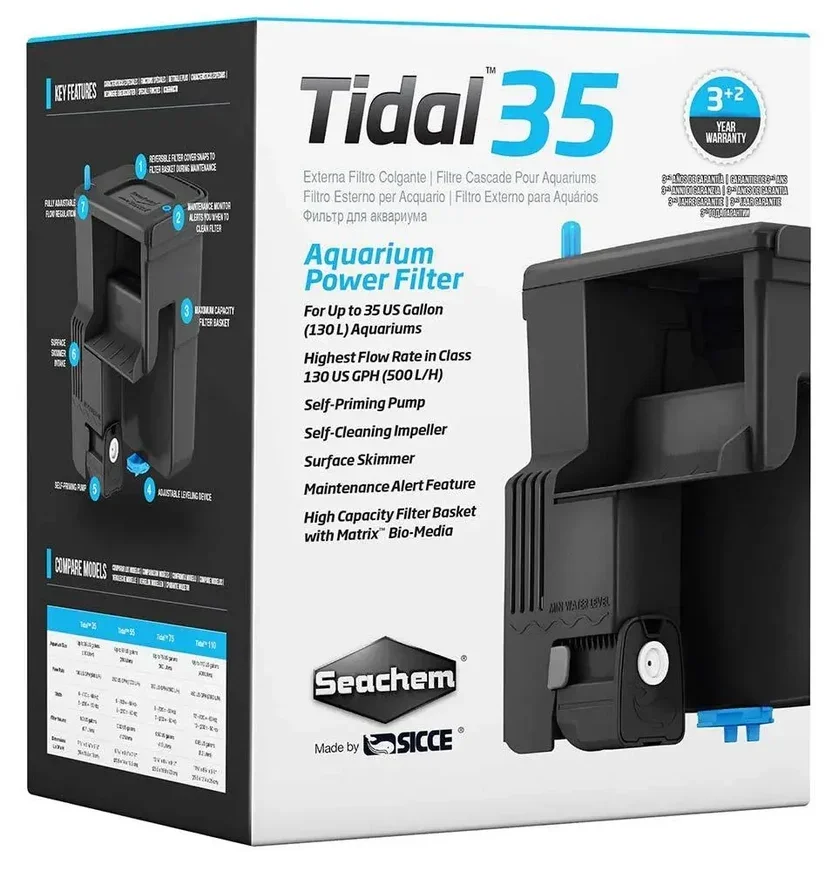
The Seachem Tidal 35 Power Filter is a practical hang-on-back water filter for a small aquarium when the tank needs adjustable flow, accessible media, and easy maintenance. It suits many desktop and nano aquariums up to 130 litres, but livestock and aquascape layout still matter.
- Submerged Self-Priming Pump: The motor sits inside the aquarium water, so it can restart more reliably after many routine water changes or power interruptions.
- Surface Skimmer Intake: Surface draw can reduce organic film and improve gas exchange when the water level and setup are suitable.
- Fully Adjustable Flow Rate: A top dial lets beginners reduce current for bettas, small schooling fish, or shrimp.
- Versatile Media Basket: The open basket holds porous biological media such as Seachem Matrix alongside reusable foam pads, reducing reliance on disposable cartridges.
- Maintenance Alert: A blue float indicator signals when the media basket is becoming clogged.
When I help customers compare filters, adjustable flow is one of the first features I point out. A powerful filter can still be a poor match if the current pushes small fish around the tank.
Secondary Pick and Larger Tidal Models
For aquariums between 80 and 200 litres, or setups with moderately heavier stocking, the Seachem Tidal 55 can serve as a useful secondary choice. It provides up to 1,000 L/h flow capacity and an expanded media chamber while retaining the self-priming design and surface skimmer.
For larger display setups or high-bioload tanks, Seachem also manufactures the Tidal 75 and Tidal 110. These larger models are generally more filtration than a standard nano desktop display needs. At Aquatees Fishland, we generally treat them as options for bigger aquariums rather than the natural starting point for someone searching for a water filter for a small aquarium.
Understanding the Differences: Filters vs. Media Reactors vs. Dedicated Pumps
Beginners often confuse standard filters with other aquarium circulation devices. The difference matters because each device solves a different problem.
- Aquarium Power Filters: Complete filtration systems that mechanically remove suspended waste, biologically support ammonia and nitrite processing, and may use chemical media.
- Media Reactors: Specialised chambers that direct water through specific media, such as activated carbon or phosphate-removing media. They are not usually the basic first filter for a small tank.
- Dedicated Water Pumps and Wavemakers: Submersible pumps that move water or support circulation. They do not provide full mechanical and biological filtration unless paired with suitable media or filter systems.
Compact Power and Micro Systems: Dymax Slim Flo and Internal Options
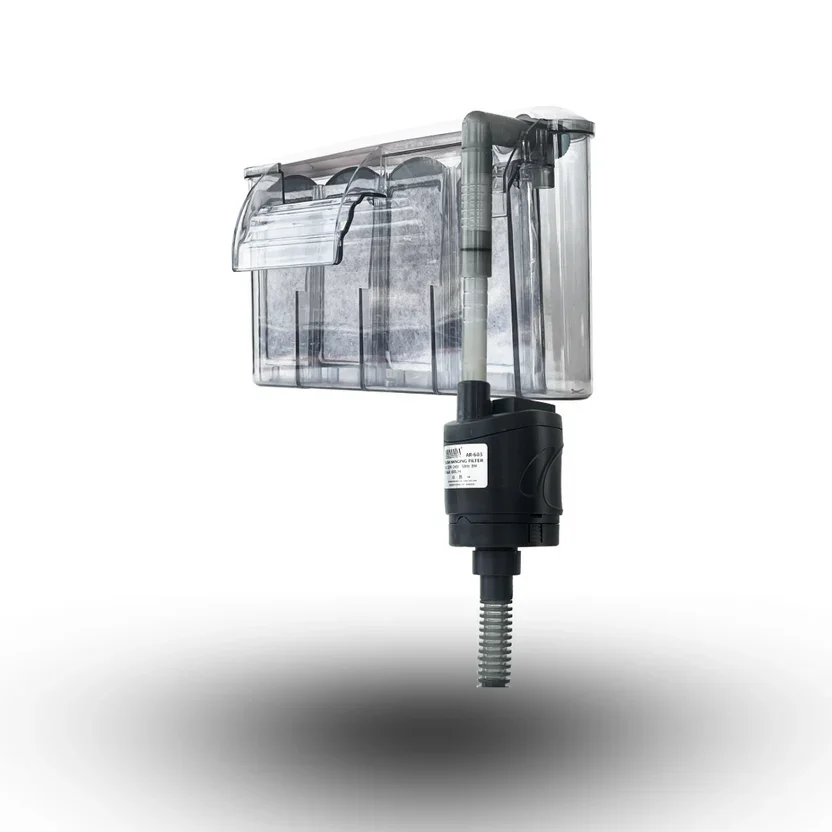
For rimless desktop tanks where rear clearance is limited, the Dymax Slim Flo series offers a slim profile that tucks neatly against the back glass. These units use quick-swap mechanical and carbon cartridges to trap fine particles and maintain clarity.
I have found that slim filters can be helpful when the aquarium sits on a desk, shelf, or office counter where bulky equipment looks out of place. However, the cartridge size and flow pattern still need to suit the livestock. If you prefer fully submerged gear, internal power filters can provide reliable mechanical circulation.
To explore submerged options, review our Internal Bio Filter Guide or our Internal Tank Filter Guide for placement advice.
Air-Driven Biological Alternatives: Sponge Filters for Nano Tanks
Air-driven sponge filters are a dependable solution for shrimp setups, fry breeding, and quarantine tanks. Driven by an external air pump, rising bubbles draw water through open-cell foam to trap debris and cultivate beneficial bacteria.
- AquaTees Mini Sponge Filter: Suits desktop bowls and nano setups where gentle flow is important.
- XY-2873 Sponge Filter: Uses dual sponge cylinders and small media containers for extra biological capacity.
In my experience helping beginners, sponge filters are often underrated because they look simple. Their strength is gentle biological filtration, especially where baby fish, shrimp, or delicate species could struggle with strong intake suction.
Learn more about pore densities and setup methods in our Sponge Filters Guide.
Step-by-Step Setup, Routine Maintenance, and Common Mistakes
Setting up and maintaining a water filter for a small aquarium involves a few straightforward practices. These steps help the filter work effectively without disturbing the tank’s biological balance.
- Installation: Position the filter securely on the rim or against the glass with suction cups. Keep the intake roughly 2 to 3 cm above the substrate to reduce sand ingestion.
- Rinsing Media: Gently rinse sponges and biological media in dechlorinated water before use to remove manufacturing dust.
- Cleaning Schedule: Rinse mechanical sponges fortnightly in a bucket of extracted tank water during water changes. Avoid tap water where possible, as chlorine can damage beneficial bacteria.
-
Common Mistakes to Avoid:
- Replacing all filter media at once, which can disrupt the nitrogen cycle.
- Over-cleaning biological media and stripping useful bacterial colonies.
- Selecting a non-adjustable filter with turbulent flow that stresses small livestock.
- Forgetting to inspect and wipe the motor impeller assembly monthly.
One mistake I often see beginners make is judging the filter only by whether the water looks clear. Clear water is useful, but testing ammonia, nitrite, and nitrate gives a better picture of whether the aquarium is actually stable.
Water Filter for Small Aquarium FAQs
How Do You Choose and Maintain a Water Filter for Small Aquarium Tanks?
Choose a water filter for a small aquarium by matching the filter’s tank rating, flow rate, media capacity, and maintenance access to the aquarium’s livestock. A turnover rate between 4 and 6 times the aquarium volume per hour can suit many community species, while 2 to 4 times may be gentler for bettas, shrimp, and other low-flow inhabitants.
Routine maintenance usually involves fortnightly 10 to 20 percent water changes and gently squeezing mechanical filter sponges in extracted tank water rather than tap water. Chemical media such as activated carbon may need replacement every 4 to 6 weeks, while impellers benefit from monthly inspection to remove accumulated organic film.
How Does the Nitrogen Cycle Affect Nano Filter Selection?
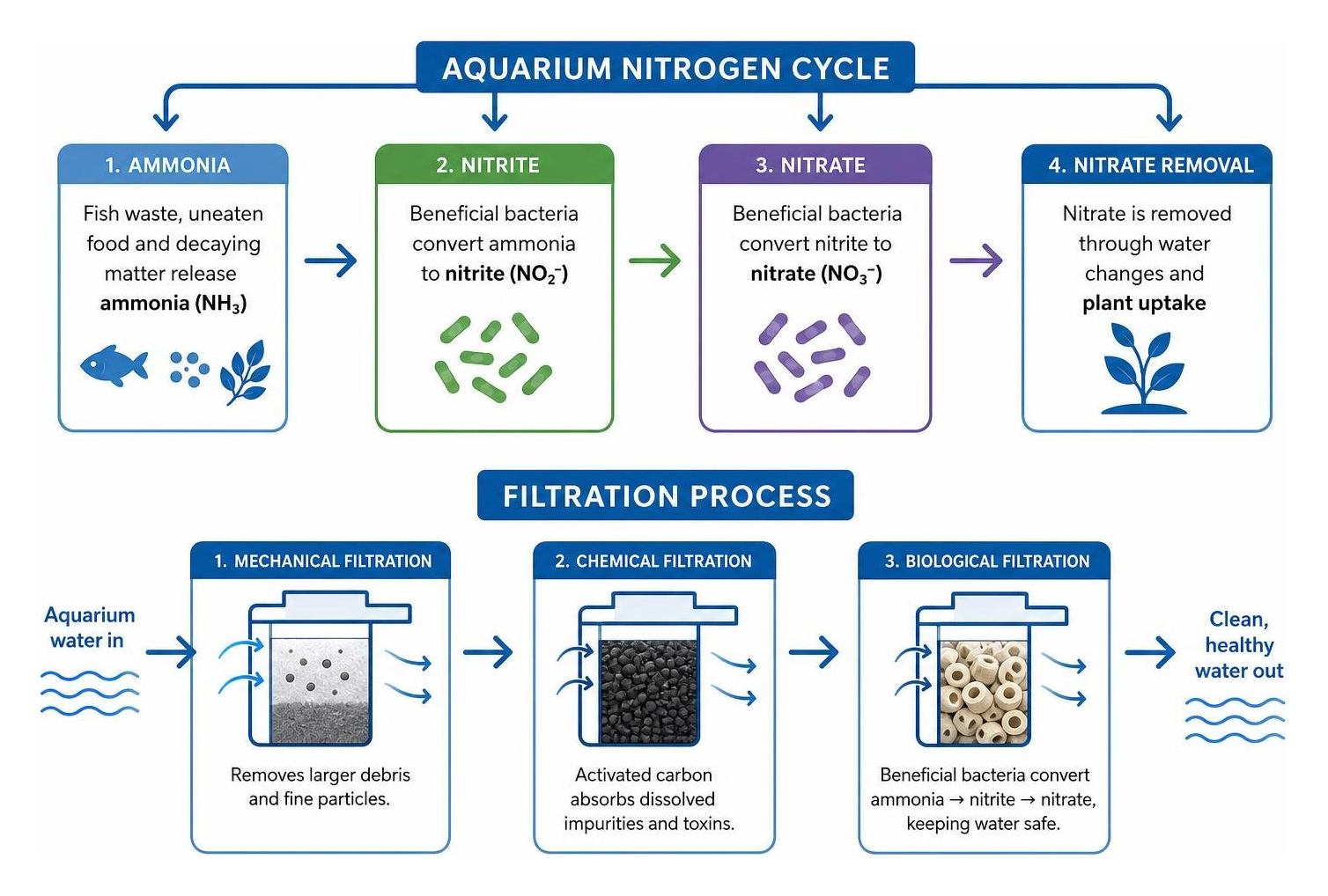
The nitrogen cycle affects filter selection because beneficial nitrifying bacteria need surface area inside the filter media. These bacteria help convert toxic ammonia into nitrite and then nitrate, which is managed through water changes, plants, stocking control, and maintenance.
Compact filters should still provide useful biological media, such as ceramic rings, porous media, or open-cell foam. At Aquatees Fishland, we also stock FritzZyme 7 in 236 ml, 473 ml, 946 ml, and 3.7 L options for aquarists who want a bottled nitrifying bacteria supplement during setup.
How Can You Reduce Excessive Water Flow in a Small Tank?
You can reduce excessive current by adjusting the filter’s built-in flow regulator or fitting a suitable porous pre-filter sponge over the intake. A simple outflow baffle made from coarse sponge can also spread the current more gently across the aquarium.
This is one area where bigger is not automatically better. When I am helping someone choose a water filter for a small aquarium, I usually ask what fish or shrimp they plan to keep before looking at the highest flow number.
When Should Livestock Be Rehomed Due to Water Quality Issues?
Livestock should usually be upgraded or relocated to a larger aquarium first if biological filtration remains overwhelmed despite careful maintenance. A bigger tank can provide more water volume, more stable parameters, and more room for filtration media.
If another suitable home aquarium is not practical, rehoming fish through local aquarium clubs, trusted community hobbyists, or reputable aquarium stores may be a responsible secondary option. The goal is to reduce stress on the livestock while restoring a stable setup.
Choosing the Right Water Filter for a Small Aquarium
Selecting the right water filter for a small aquarium comes down to balancing tank capacity, livestock requirements, flow strength, and ease of maintenance. For many beginner freshwater setups, the Seachem Tidal 35 is a practical all-in-one HOB choice. For larger small-to-medium community aquariums, the Tidal 55 provides extra turnover and media capacity.
If you keep shrimp, fry, or gentle-flow species, a compact sponge filter may be the better starting point. My practical advice is to choose the filter that you will clean consistently, not just the one with the biggest flow number. A slightly simpler setup that is maintained well often supports a more stable aquarium than an overpowered filter that is hard to manage.
At Aquatees Fishland, our approach is to help hobbyists match filtration to the actual aquarium rather than push every product into one setup. To compare suitable options, explore: