

Why Choosing the Right Aquarium Fish Food Matters
Selecting the correct aquarium fish food is the most critical factor in maintaining a healthy aquatic environment. The food you provide directly influences the water chemistry, biological filtration load, and the physical health of your fish. Providing a balanced diet ensures your fish receive the necessary nutrients to support their immune systems and natural colours.
Quick answer: Best aquarium fish food by tank type
| Tank Type | Recommended Food Format |
|---|---|
| Goldfish & tropical community | Granules or flakes |
| Cichlids & active tropicals | Colour-enhancing pellets |
| Koi & pond fish | Floating sticks |
| Marine & saltwater fish | Marine pellets or flakes |
| Bottom feeders & algae eaters | Sinking wafers |
| Turtles & aquatic reptiles | Floating sticks or pellets |
Getting this right matters more than most beginners realise. Research suggests fish fed a varied, species-appropriate diet can show up to 30% better colour vibrancy and immune response compared to fish fed a single food type. Overfeeding is consistently one of the leading causes of poor water quality in home aquariums, with uneaten food responsible for a significant portion of ammonia spikes in beginner tanks.
When fish consume low-grade food, their bodies cannot absorb the nutrients efficiently. This is similar to burning wet wood in a fireplace, which produces excessive ash and smoke. In an aquarium, this undigested material is excreted as solid waste, which quickly breaks down into toxic ammonia.
Using highly digestible diets reduces the amount of waste your filtration system must process. This helps prevent sudden ammonia spikes and keeps the water clear.
At Aquatees Fishland, we focus on providing balanced nutritional options that support both fish health and water clarity. Understanding the relationship between diet and filtration is key to long-term success.
When you are starting a freshwater aquarium, establishing a proper feeding routine is essential. One of the most common beginner aquarium mistakes is overfeeding or using low-quality options. Poorly formulated foods contain fillers that fish cannot digest, leading to excess waste in the substrate.
Using reliable options like Seachem Products helps ensure your fish receive highly digestible proteins and essential vitamins.
Understanding Aquarium Fish Food Types
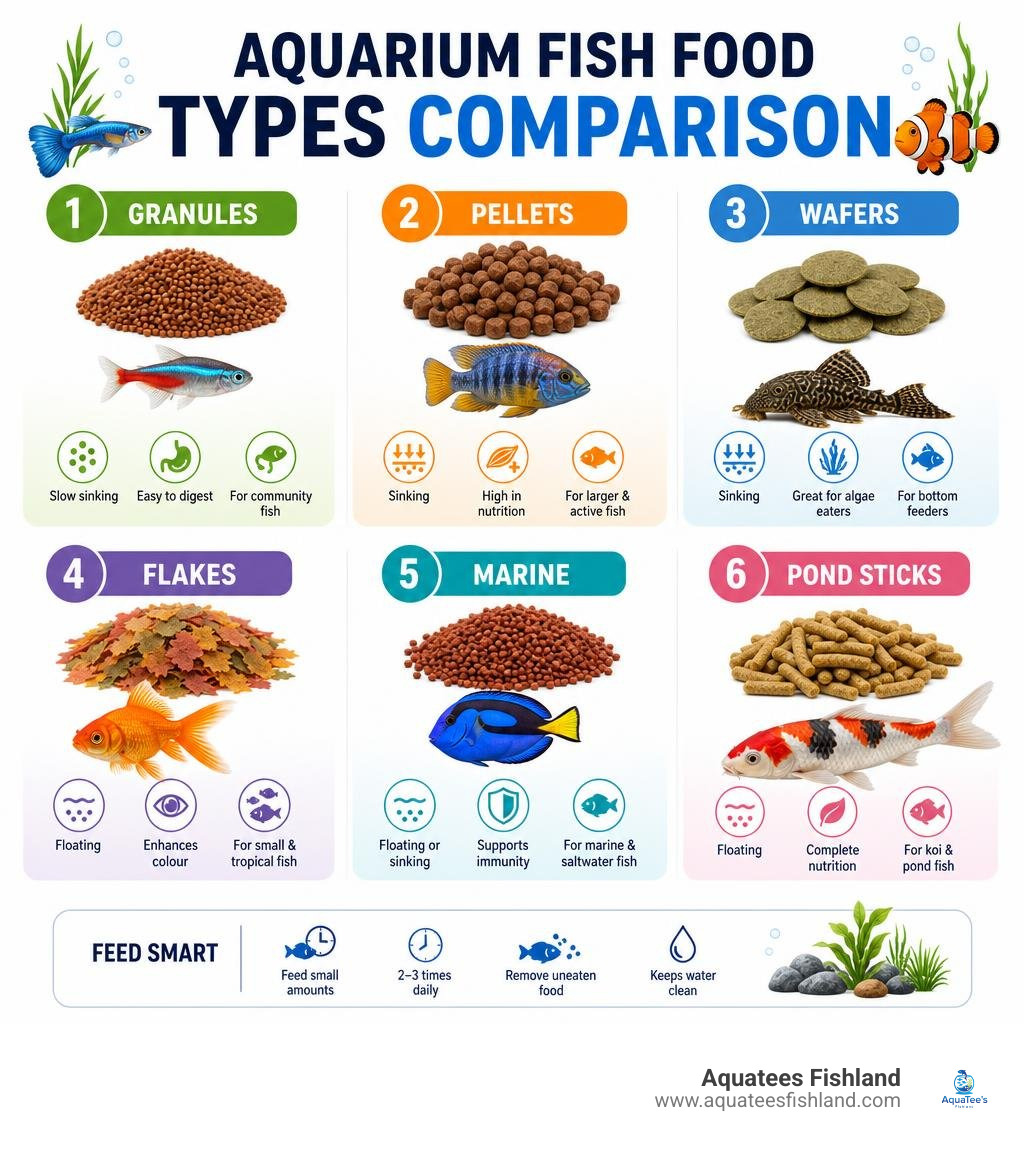
Aquarium fish food is available in several formats, each designed to match the natural feeding habits of different species. Matching the food format to where your fish feed in the water column ensures all inhabitants receive adequate nutrition.
- Flakes: These lightweight pieces float on the surface, making them ideal for top-feeding species like guppies and hatchetfish.
- Granules and Crisps: These slowly sink through the water column, allowing mid-water feeders like tetras and discus to feed naturally.
- Pellets and Sticks: These dense options are suitable for larger fish like cichlids and goldfish that require substantial bites.
- Sinking Wafers: These drop quickly to the bottom, allowing plecos and loaches to graze without the food dissolving prematurely.
- Freeze-Dried Treats: These concentrated options, such as brine shrimp, add variety and provide natural proteins.
Using trusted options like Hikari Products ensures your fish get the exact shape and buoyancy they require.
Staple Daily Aquarium Fish Food Options
Staple daily fish foods provide complete everyday nutrition while maintaining water clarity and enhancing natural colours. A reliable staple diet forms the foundation of your daily fishkeeping routine.
For an everyday balanced option, the Aquatees Staple Deluxe Granules is designed for both goldfish and tropical community tanks. This formula supports water clarity while providing natural colour enhancers like spirulina and garlic extract. Because these granules sink slowly, they are easily intercepted by fish at all levels of the tank. This reduces the amount of uneaten food that reaches the substrate and decays.
Colour-Enhancing Premium Foods for Tropical Fish & Cichlids
Colour-enhancing foods use natural pigments like carotenoids to support growth and bring out vibrant tones in active display fish. Active species require nutrient-dense diets to support their high energy levels.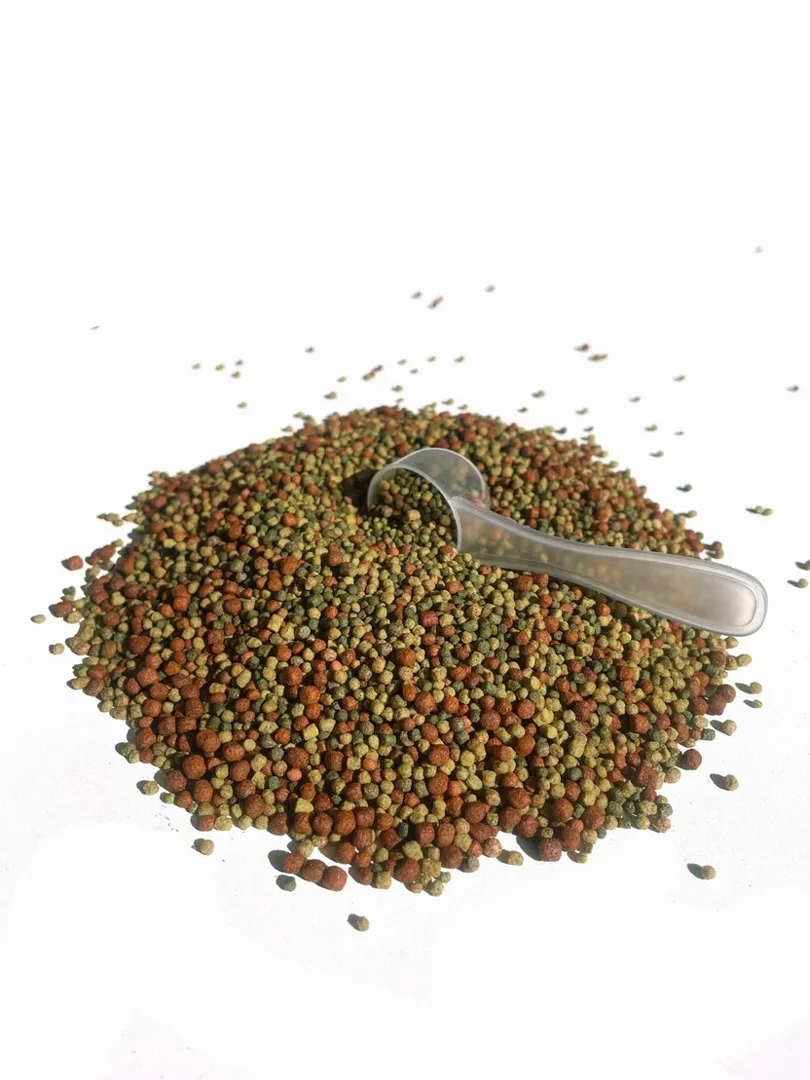
For these active species, the Aquatees Premium Tropical & Cichlid Food provides a high-protein formula with natural colour boosters. This food is ideal for tetras, angelfish, and cichlids that require clean energy sources.
Maintaining a consistent Betta Fish Tank Maintenance routine alongside proper feeding ensures your display tank remains healthy and clean.
Marine Fish Nutrition and Sinking Pellets
Marine fish nutrition requires a specialised blend of algae and marine-derived proteins to support gut health and disease resistance. Saltwater species have evolved to consume seaweed, krill, and sponge proteins rather than land-based grains.
To support these sensitive marine systems, we offer specialised saltwater options:
- Dymax Marine Complete: This balanced marine diet includes prebiotic support for gut health, reducing waste output.
- Dymax Marine Superior: This formula is loaded with spirulina and carotenoids to support vibrant colouration in reef-safe species.
Using highly digestible marine diets helps lower the waste load on your filtration systems, keeping delicate saltwater parameters stable.
Feeding Frequency, Portion Control, and Water Quality
Fish should generally be fed one to three times daily, only offering an amount they can completely consume within one to two minutes. Because fish are cold-blooded, they do not burn energy to maintain body temperature, meaning they require very little food.
Understanding How Often to Feed Fish is one of the most important skills for maintaining water quality. When you overfeed, the uneaten food decays rapidly, causing dangerous ammonia spikes and cloudy water.

To keep your tank running smoothly, use this simple guide to manage portion sizes and frequency:
| Fish Type | Daily Feeding Frequency | Portion Size Guideline |
|---|---|---|
| Active Tropical Community | 1–2 times daily | Only what they eat in 1 minute |
| Juvenile Fish & Fry | 3–4 times daily | Very small pinches, highly controlled |
| Goldfish | 1–2 times daily | Only what they eat in 2 minutes |
| Bottom Feeders & Plecos | 1 time daily (ideally at night) | 1 wafer per 2–3 bottom fish |
Consistency and restraint matter far more than quantity. If you ever accidentally dump too much food in, scoop it out immediately with a net or siphon it out before it dissolves.
Choosing the Right Aquarium Fish Food for Your Setup
Finding the right food for your tank involves matching the dietary needs and swimming levels of your specific livestock. A single food type rarely meets the needs of a diverse community tank.
- Bottom Feeders & Algae Eaters: Species like plecos and loaches need a heavy food that sinks instantly. Hikari Algae Wafers contain spirulina and chlorella in a long-lasting disc shape that lets bottom dwellers graze naturally.
- Turtles & Aquatic Reptiles: Reptiles need calcium, vitamins, and protein to support shell strength and healthy growth. Aquatees Reptile Turtle Food Sticks offer a balanced floating stick format that supports immune health.
- Pond Fish & Koi: Large outdoor fish need highly digestible, floating sticks that they can easily grab from the surface. Our Aquatees Premium Pond Sticks support colour, immunity, and digestion during warmer water conditions.
Frequently Asked Questions About Aquarium Fish Food
How often should I feed my aquarium fish?
Most adult aquarium fish should be fed once or twice daily with small portions they can consume within two minutes. Skipping feeding for one day each week can also help clear the digestive tract of adult fish. Younger fish and fry require three to four smaller meals daily to support their rapid growth rates.
Why does excess fish food cause cloudy water?
Excess fish food causes cloudy water because the uneaten organic matter dissolves and triggers a rapid bacterial bloom. This sudden explosion of bacteria creates a milky haze in the water column. This process is often accompanied by dangerous ammonia and nitrite spikes that stress your fish.
Can I feed marine food to freshwater fish?
You can occasionally feed marine food to freshwater fish as a treat, but it should not be their primary diet. Marine formulas contain higher levels of sodium and specific marine fats that freshwater fish cannot process long-term. Continuous feeding of marine food can put unnecessary strain on the kidneys of freshwater species.
How should aquarium fish food be stored to maintain its nutritional value?
Aquarium fish food should be stored in a cool, dry place in an airtight container to prevent exposure to moisture and air. Exposure to oxygen and humidity degrades essential vitamins and causes fats to go rancid over time. For best results, use opened food within six months or freeze larger portions for long-term storage.
Selecting the Best Aquarium Fish Food for Your Tank
Selecting the best aquarium fish food requires matching the diet to your species' natural feeding behaviours and nutritional needs. Providing a high-quality, varied diet ensures your fish remain active, display their natural colours, and maintain a robust immune system.
By feeding responsibly and avoiding overfeeding, you protect your water quality and reduce the biological load on your filtration systems.
Understanding how different food formats behave in the water column helps ensure all fish in a community tank receive adequate nutrition. Sinking wafers, slow-sinking granules, and floating flakes each serve a specific purpose in preventing uneaten food from decaying. This careful management of feeding habits directly supports a stable and healthy aquatic ecosystem.
If you are looking to stock up on quality nutrition, water treatments, or equipment, visit Aquatees Fishland Australia's Complete Fish Supplies Store to find everything you need to keep your tank running beautifully. Take your time, observe how your fish feed, and make informed choices that support a thriving aquatic ecosystem.