

Aquarium Tank Filter Basics: What Your Filter Actually Does
Your aquarium filter plays a key role in maintaining a healthy, stable tank. Beyond removing visible debris, filtration keeps water circulating, supports beneficial bacteria and helps break down fish waste before harmful ammonia and nitrite can build up. Choosing the right filter means matching your tank’s size, stocking levels and filtration needs.
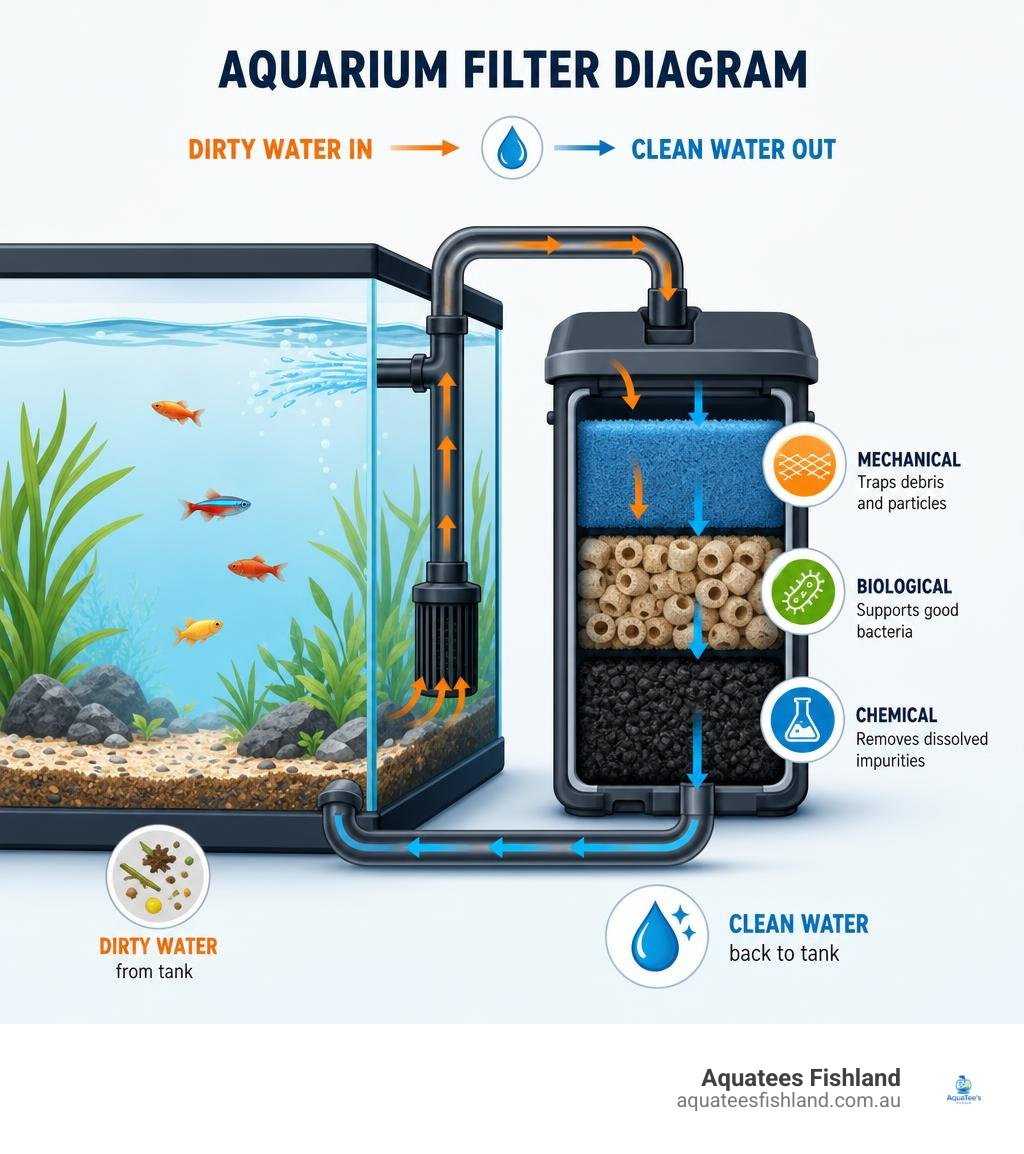
Think of your filter as the support system that keeps the aquarium stable while fish, plants, food and waste constantly change the water chemistry. Mechanical media catches particles, biological media supports the nitrogen cycle and optional chemical media polishes the water when it is needed.
| Filter Type | Best For | Main Strength | Common Limitation |
|---|---|---|---|
| Internal filter | Small to medium tanks | Compact and easy to install | Takes up space inside the aquarium |
| Sponge filter | Fry, shrimp and gentle-flow tanks | Safe intake and strong biological filtration | Needs an air pump and may look bulky |
| Hang-on-back filter | Community aquariums | Easy access for cleaning | Needs rim space and enough clearance behind the tank |
| External canister filter | Larger or heavily stocked tanks | High media capacity and flexible media layout | More parts to clean and set up |
A filter should match the size of the tank, the amount of livestock and the type of fish you keep. A lightly stocked planted tank may not need the same flow or media capacity as a messy goldfish or cichlid setup.
I’m Nemo Sulaiman from the eCommerce and warehouse team at Aquatees Fishland, where I help customers choose aquarium equipment, fish and supplies for their setups. Filtration comes up often because the right filter needs to suit the tank, its inhabitants and the amount of waste it produces. But with so many filter types available, how do you know which one is actually right for your aquarium?
How to Choose an Aquarium Tank Filter for Your Fish Tank
Choosing an aquarium tank filter starts with three practical questions: how much water it must move, how much waste the tank produces and how easy it will be to maintain. The right option is usually the filter that gives you enough flow and media space without creating stressful current or a cleaning routine you will avoid.
Match the Filter to Your Tank Size and Bioload
A filter should typically suit the aquarium size shown on the product rating, but the label is only a starting point. Messy fish, crowded tanks, bare-bottom setups or heavily fed aquariums may need stronger filtration, extra media space or a second filter to keep waste under control.
Bioload is just as important as litres. A tank with a few small tetras produces far less waste than the same-sized tank with goldfish. Plants, leftover food, decaying leaves and substrate debris also affect how hard the filter has to work.
For a beginner-friendly check, look at the filter’s recommended tank size and flow rating, then choose a model with enough capacity for your actual setup rather than picking the smallest option that technically fits. If your tank is heavily stocked or the water clouds quickly after feeding, step up to a higher-capacity filter or combine filtration types.
Once the filter is running, watch the aquarium rather than relying only on the box rating. Slowing flow, waste collecting in corners, cloudy water or rising ammonia and nitrite readings can all suggest the filter needs cleaning, more media capacity or a different flow position.
Understand the Three Filtration Stages
The three main stages of aquarium filtration are mechanical, biological and chemical filtration. Mechanical media should usually come first because it catches debris before water reaches the biological media.
- Mechanical filtration catches visible waste, uneaten food and plant matter using foam, floss or sponge. A biological filter sponge can also provide extra surface area for bacteria.
- Biological filtration gives nitrifying bacteria a place to grow. These bacteria convert ammonia into nitrite, then nitrite into the less harmful nitrate that is managed through regular water changes.
- Chemical filtration uses media such as activated carbon or specialised resins to remove dissolved impurities, odours, medication residue or yellow staining when needed.
Biological media is the part to protect most carefully. Rinsing it under untreated tap water can damage the bacterial colony, especially if the water contains chlorine or chloramine. During maintenance, gently swish biological media in old aquarium water instead.
Compare the Main Aquarium Filter Types
Each aquarium filter style suits a different setup, so it helps to choose by use case rather than by size rating alone.
- Internal filters sit inside the tank and are simple to fit, making them useful where there is no cabinet space. An internal tank filter can suit many smaller aquariums, but it does reduce swimming space.
- Sponge filters are air-driven, gentle and safe for fry, shrimp and delicate fish. They are also useful as backup biological filtration because the sponge can stay seeded with bacteria.
- Hang-on-back filters sit on the rim of the aquarium and are easy to access for media cleaning. They work well for many community tanks but need enough clearance behind the aquarium.
- External canister filters sit outside the tank and offer more room for layered media. They are often chosen for larger tanks, planted displays or setups where stronger filtration is needed. Our canister filter guide explains how to compare canister layouts and media capacity.

Choose the Right Flow Pattern
Flow should move water around the whole aquarium without blasting fish into corners. Dead spots behind decorations, heavy plants or tall hardscape can trap waste, so position the outlet where it gently circulates water across the tank.
Fish behaviour is a useful clue. If fish constantly hide from the current, reduce flow, redirect the outlet or add a pre-filter sponge. If debris collects in one area, adjust the outlet or add supplementary circulation.
Aquarium Tank Filter Maintenance FAQs
How often should you clean filter media?
You should typically clean mechanical sponges or pads every two to four weeks, depending on how quickly the flow slows down. Chemical media such as activated carbon is usually replaced on a schedule rather than rinsed and reused.
Biological media rarely needs heavy cleaning. If it becomes clogged, rinse it gently in old tank water during a water change so you remove sludge without stripping away too much beneficial bacteria.

Can you run multiple filters on one tank?
Yes, you can run multiple filters on one aquarium, and it can be useful for redundancy and better circulation. Many hobbyists combine a canister filter with a sponge filter or use two smaller filters instead of relying on one large unit.
This approach spreads bacteria across more media and gives you a safety buffer if one filter fails. It can also help in long tanks where one outlet does not move water evenly from end to end.
How do you clean a filter without killing bacteria?
Clean a filter by rinsing media in water removed from the aquarium, not directly under untreated tap water. This helps preserve the nitrifying bacteria that process ammonia and nitrite.
Work in stages rather than replacing every piece of media at once. Clean the impeller, intake guard and mechanical sponge when flow drops, but keep mature biological media in service unless it is physically breaking down.
When should you replace aquarium filter media?
Replace media when it is falling apart, compacted, clogged beyond rinsing or no longer serving its purpose. Foam and ceramic biological media can often last a long time, while fine floss and carbon are usually short-term media.
Avoid replacing all media on the same day. If you need to change several parts, stagger the changes over a few weeks so enough beneficial bacteria remain in the filter.
What filter media should beginners use first?
Beginners should usually start with coarse sponge or foam for mechanical filtration and a reliable biological media for bacteria. Chemical media can be helpful for specific issues, but it is not a substitute for cycling, water testing and regular maintenance.
For new setups or filter resets, Aquatees Fishland’s water filters range can help you compare practical options. A bacterial starter such as Seachem Stability may also support new biological filtration when used according to the product directions.
Aquarium Tank Filter Takeaways for a Healthier Fish Tank
Choosing the correct aquarium tank filter is about matching filtration to tank volume, livestock, waste levels and maintenance habits. A filter that is easy to clean and large enough for the bioload will usually do more for fish health than an oversized unit that creates stressful flow or gets neglected.
Focus first on biological stability, then water movement and debris removal. Clean mechanical media before it clogs, protect biological media from untreated tap water and use chemical media only when it solves a clear problem such as odour, staining or medication removal.
If you are unsure which filter, media or setup your aquarium actually needs, Aquatees Fishland can help you narrow it down based on your tank size, fish, current equipment and maintenance routine. That way, you can avoid buying equipment you do not need while still choosing filtration that supports a healthier, more stable aquarium.
Before you buy or upgrade a filter, check:
- Your tank volume and target flow rate.
- The waste level of your fish and feeding routine.
- Whether the filter has enough room for mechanical and biological media.
- How easy the unit will be to access, clean and restart.
For related Aquatees Fishland guidance and products, you can explore:
- Water filters for aquarium filtration options.
- Biological filter sponge guidance for sponge-based filtration.
- Freshwater tank filter guide for choosing filtration in freshwater setups.