

Why Does My Fish Tank Smell Bad?
Most smelly fish tank causes come from accumulated organic matter, decaying food, fish waste, plant detritus, or bacterial imbalances producing waste faster than your filtration system can process it. A sour or fishy odour often points to rotting food, trapped debris, or ammonia issues, while a rotten egg smell can indicate oxygen-depleted substrate releasing sulphur gases.
I am Nemo Sulaiman. I am part of the eCommerce and warehouse team at Aquatees Fishland with two years of experience helping customers choose fish, equipment, and products.
A healthy aquarium ecosystem typically produces a very faint, earthy aroma reminiscent of a clean forest floor or a fresh stream. This mild scent is produced by beneficial nitrifying bacteria actively processing biological waste through the nitrogen cycle.
When an aquarium begins to emit a distinct, offensive odour, it generally indicates that the biological balance within the water column has been disrupted. An enclosed glass tank operates as a miniature ecosystem where all biological inputs remain present until physically removed or converted.
In home and office aquariums, foul smells generally stem from accumulated organic matter breaking down faster than your filtration system can manage. When excess proteins, fish waste, and plant detritus gather in stagnant areas, heterotrophic bacteria decompose these compounds rapidly.
During this rapid breakdown, bacteria release volatile organic gases into the water and surrounding room. Water movement then carries these airborne compounds into your living space.
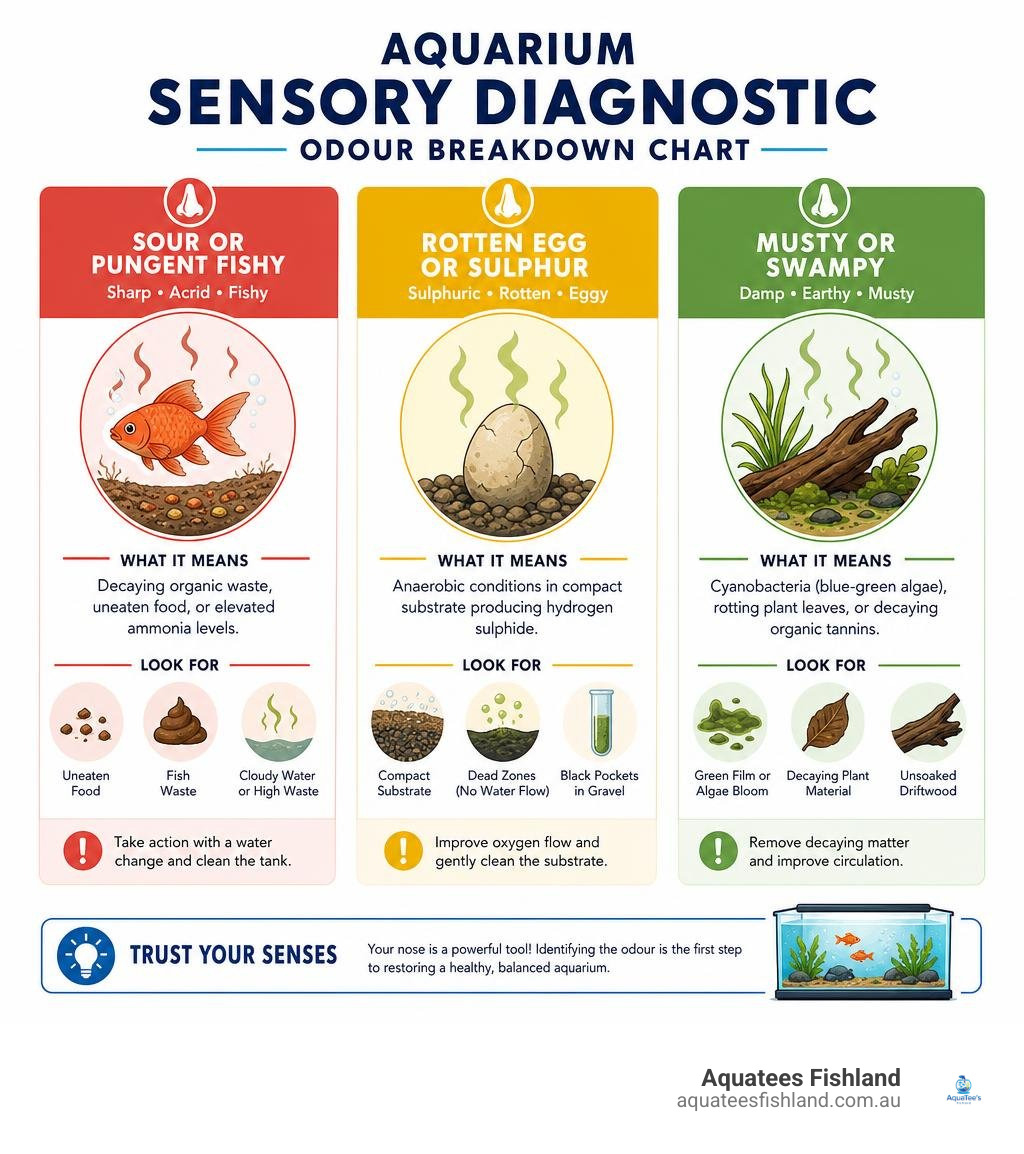
Understanding the specific scent your aquarium produces provides immediate diagnostic feedback:
- Sour or pungent fishy odour: Often indicates decaying organic waste, uneaten food rotting in the substrate, or elevated ammonia levels.
- Rotten egg or sulphur smell: Points to anaerobic conditions in compact sand or gravel where oxygen-depleted bacteria produce hydrogen sulphide.
- Musty or swampy damp scent: Can be caused by cyanobacteria (blue-green algae), rotting plant leaves, or decaying organic tannins from unsoaked driftwood.
- Sharp chemical or medicinal smell: Frequently linked to overdosing sulphur-based water conditioners or introducing unrinsed artificial decorations.
By identifying the scent profile, you can often pinpoint where biological decomposition is occurring and apply targeted remedies to restore water quality.
What Are the Most Common Smelly Fish Tank Causes and How Do You Fix Them?
Diagnosing an unpleasant aquarium odour requires a methodical inspection of your water column, substrate, and equipment. Aquariums are closed aquatic environments, meaning any excess organic compound introduced into the tank remains there until it is biologically processed, filtered mechanically, or removed via manual water changes.
| Scent Profile | Primary Biological Cause | Immediate Fix | Long-Term Prevention |
|---|---|---|---|
| Rotten Fish / Sour | Uneaten food, dead fish, decaying plants | Siphon waste, net dead organic matter | Controlled feeding, weekly plant pruning |
| Rotten Egg (Sulphur) | Anaerobic pockets in deep substrate | Gentle, staggered substrate vacuuming | Aerate gravel, maintain proper water flow |
| Sharp / Pungent | Elevated ammonia, uncycled filter | 20% water change, add biological bacteria | Monitor bioload, avoid sudden fish additions |
| Earthy / Swampy | Cyanobacteria bloom, dirty filter sponges | Clean filter media in old tank water | Regular filter maintenance, adjust lighting |
When bad smells develop, we recommend tracing the issue through the physical layout of your aquarium, starting with surface debris, progressing down to the substrate, and finishing with your filter components.
Decaying Organic Matter and Overfeeding
The single most frequent trigger for a foul-smelling fish tank is the accumulation of uneaten food and decomposing organic debris. When flakes or pellets settle into hard-to-reach crevices, heterotrophic bacteria rapidly colonise the food, consuming dissolved oxygen and releasing pungent byproducts.
A commonly overlooked factor during mealtime is pellet sizing. When fish receive dry foods that are too large for their mouths, they often chew and expel fragmented particles through their gills.
These fine food clouds drift across the tank and settle into low-flow areas behind rocks and ornaments, where they decay invisibly. Uneaten proteins quickly rot beneath decor pieces and between stones.
According to scientific research on volatile odor compounds, the decomposition of aquatic proteins and mucus leads directly to the formation of volatile amines, particularly trimethylamine (TMA), which creates a pungent, rotting fish stench.
Similarly, deceased snails or small fish that become lodged in decor can decompose rapidly, causing severe organic spikes and sharp odours within twenty-four hours.
To resolve this issue:
- Inspect the entire tank: Look behind decorative ornaments, dense plant bunches, and heater mounts for deceased livestock or melting plant leaves. Net and remove any decaying tissue immediately.
- Siphon out leftover food: Use a manual siphon to pull trapped food out from corners and underneath hardscape features.
- Adjust feeding routines: Learning how often to feed fish helps maintain pristine water conditions. Offer only what your livestock can completely finish within two minutes, offering quality options like Hikari micro-pellets or Dymax flakes tailored to your fish species' mouth size.
- Prune aquatic vegetation: Remove melting leaves and decaying stems before plant tissues disintegrate into fine organic sludge.
Alongside physically removing accumulated waste, a bacterial product such as FritzZyme Turboclean can help break down organic matter such as fish waste and leftover food. It should complement regular aquarium maintenance rather than replace waste removal and water testing.
_compressed.webp?alt=media&token=2bd0121f-aa58-4ec5-93b3-c918c3a1b3d4 "user-inserted")
Anaerobic Substrate and Hydrogen Sulfide Buildup
If your aquarium water smells like rotten eggs, the issue is often rooted in your substrate bed. When fine sand or deep gravel remains undisturbed for extended periods, water flow can diminish at the lower levels, depleting dissolved oxygen and creating anaerobic pockets.
Under these conditions, specialised anaerobic microorganisms take over the decomposition process. When sulfur-reducing bacteria break down organic detritus without oxygen, they produce hydrogen sulphide gas.
Hydrogen sulphide produces a distinct rotten egg smell and can be toxic to fish and invertebrates if large gas pockets escape into the water column simultaneously.
Fine sand beds are especially prone to compacting when organic detritus sinks beneath the upper layer. Without regular maintenance, these compaction zones turn grey or black.
To manage and prevent anaerobic substrate odours safely:
- Vacuum in sections: Avoid stirring up your entire substrate bed in a single afternoon. Instead, vacuum approximately one-third of the gravel bed during each scheduled water change. This gradually releases trapped gases and extracts decaying detritus without shocking your livestock.
- Improve bottom circulation: Position powerheads or adjust filter return nozzles to eliminate stagnant dead zones along the substrate floor.
- Utilise burrowing species: In freshwater setups, adding Malaysian Trumpet Snails can naturally churn sand beds, preventing compact zones from forming.
- Inspect natural hardscape: Ensure driftwood and porous rocks are properly prepared according to manufacturer guidelines, checking that dense wood is not rotting internally.
Inadequate Filtration and Ammonia Spikes
Your filter is the biological heart of your aquarium. When filter media becomes packed with brown sludge, water flow drops and dissolved oxygen levels inside the canister or internal housing decline.
This drop in oxygen causes beneficial nitrifying colonies to suffocate, stalling the nitrogen cycle and allowing toxic ammonia to build up in the water column.
Ammonia emits a sharp, pungent, or sour smell. This is particularly common in new setups that have not had time to establish strong colonies of nitrifying bacteria. Understanding how to cycle aquarium environments properly is essential to keeping these compounds under control.
If you notice a sharp smell, follow these corrective steps:
- Test your parameters: Use a reliable water quality test kit or Fritz 6 in 1 Test Strips to measure ammonia, nitrite, and nitrate levels. Ammonia should ideally read 0 ppm.
- Clean mechanical media safely: Rinse dirty filter sponges and floss in a bucket of discarded tank water during your water change. Avoid washing biological media under chlorinated tap water, as chlorine can harm beneficial bacteria.
- Incorporate chemical media: Add activated carbon or synthetic resins to your filter chamber to actively adsorb dissolved organic compounds and eliminate persistent odours.
- Supplement beneficial bacteria: If ammonia is present, review strategies on how to fix high ammonia in fish tanks and dose the tank with FritzZyme 7 (available in 236 ml, 473 ml, 946 ml, and 3.7 L bottles) or Seachem Stability to rapidly reinforce the biological filter. As an Australian supplier of aquarium equipment and supplies, Aquatees Fishland provides these water treatments and filtration media to support stable biological balance in home aquariums.
Algae Blooms and Cyanobacteria Infestations
Cyanobacteria, commonly referred to as blue-green algae, produces a characteristic musty or swampy odour. This organism forms thick, slimy sheets that coat plants, gravel, and decor, trapping rotting biological matter beneath its surface.
When blue-green algae sheets smother aquatic plants, the underlying plant tissue dies and decomposes rapidly in an oxygen-deprived layer. This combination of bacterial growth and decaying foliage generates persistent earthy smells.
To eradicate musty cyanobacteria odours:
- Manually remove sheets: Siphon out large mats using rigid airline tubing before completing a partial water change.
- Reduce light exposure: Limit photoperiods to six or seven hours daily and keep the tank away from direct natural sunlight.
- Enhance water flow: Direct internal pump currents towards dead spots where cyanobacteria mats tend to settle.
What Are the Frequently Asked Questions About Smelly Fish Tank Causes?
Is a smelly fish tank harmful to my fish?
A smelly fish tank is generally harmful because the chemical compounds causing the foul odour can compromise water quality and fish health. Elevated ammonia, decaying organic proteins, and depleted oxygen levels cause physiological stress in aquatic life.
Fish experiencing poor water conditions may exhibit surface gasping, clamped fins, lethargy, or loss of appetite. When carrying out a water change, condition replacement tap water appropriately before adding it to the aquarium. FritzComplete Water Conditioner treats chlorine, chloramine and heavy metals and can also provide support when ammonia, nitrite or nitrate are a concern. Always follow the manufacturer's dosage instructions.
What should I do if my tank still smells after cleaning?
If your aquarium still smells bad after cleaning, the odour source is likely trapped inside filter pipework, beneath heavy ornaments, or along the aquarium rim. Decomposing mulm often settles inside filter intake tubes, powerhead impellers, and hollow resin decorations.
Check under the tank lid for mildew caused by trapped condensation and clean internal surfaces with plain water. Additionally, replace old activated carbon in your filter, as carbon becomes saturated after four to six weeks and loses its capacity to capture organic odours.
Can decaying live plants cause my fish tank to smell bad?
Decaying live plants can cause noticeable swampy or rotten odours when melting leaves collect in low-flow areas of the aquarium. As plant tissue dies, bacteria consume oxygen to decompose the cellulose, releasing organic gases into the water column.
Pruning dying foliage weekly and siphoning plant detritus during routine maintenance prevents organic debris from accumulating. Providing suitable lighting and fertiliser helps keep aquatic plants healthy and actively filtering the water.
How can I prevent my fish tank from smelling in the future?
Preventing recurring odours requires a consistent maintenance schedule rather than reactive deep cleans. Performing a 10% to 20% water change weekly or fortnightly, rinsing mechanical filter sponges in discarded tank water, and pruning decaying plant leaves helps keep organic waste low. Following a structured aquarium maintenance checklist helps balance feeding loads and equipment servicing to sustain fresh, stable aquarium conditions.
Conclusion: Resolving Smelly Fish Tank Causes
Understanding smelly fish tank causes allows aquarium keepers to identify biological imbalances before water quality degrades significantly. Scent profiles such as fishy, rotten egg, or sharp ammonia notes provide direct diagnostic clues pointing to decaying food, anaerobic substrate conditions, or compromised biofiltration.
Restoring a balanced aquatic environment relies on steady husbandry routines. Vacuuming waste in manageable sections, sizing food portions correctly, and maintaining filter media in dechlorinated water support the beneficial bacteria responsible for clean, odourless aquarium systems.
Carrying out routine water testing, addressing dead zones with adequate flow, and removing decomposing plant matter keeps aquatic habitats clean, stable, and healthy for your livestock over the long term.
- Browse tank cleaning tools to remove trapped waste safely.
- Explore the Fritz collection for water testing, conditioning, and biological filtration support.
- Shop fish health products when water-quality issues are affecting your aquarium livestock.