

Comprehensive Guide to Low Maintenance Pet Fish
Low maintenance pet fish are species that are generally hardy, adapt well to stable aquarium conditions, accept prepared foods and have straightforward care requirements when their tank size, temperature and social needs are met. For beginners, popular options include Betta Fish, Neon Tetras, Zebra Danios, White Cloud Mountain Minnows, Harlequin Rasboras, Corydoras Catfish, Guppies and Platies.
Choosing a low maintenance fish does not mean choosing a pet that needs little care. Every aquarium still needs appropriate filtration, water treatment, regular maintenance and stable water conditions. The easiest fish to keep are those whose natural needs match the aquarium you can realistically maintain.
I’m Nemo Sulaiman, part of the eCommerce and warehouse team at Aquatees Fishland. Over the past two years, I’ve helped customers compare beginner fish, choose suitable tank equipment and troubleshoot common aquarium setups. This includes helping with betta tanks that need steadier heating, community aquariums that require gentler filtration and new tanks where cycling and water treatment are often the biggest challenges.
What are the easiest low maintenance pet fish to care for?
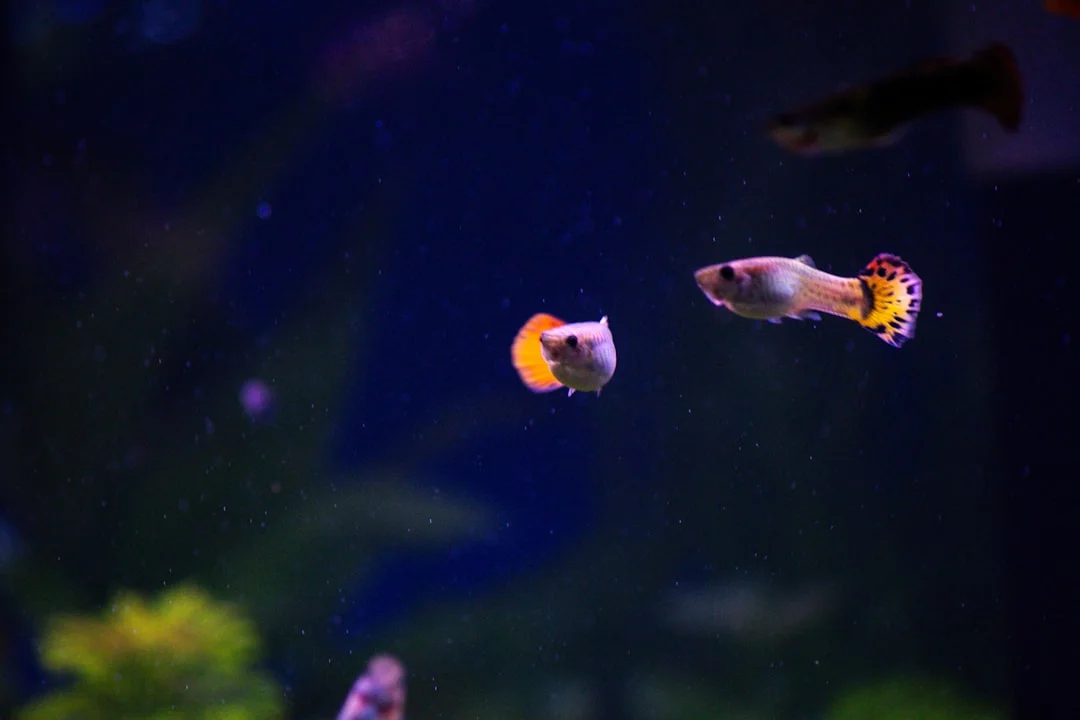
The easiest fish to care for are usually hardy freshwater species that stay small, eat prepared foods, and do not need highly specialised water conditions. Bettas suit single-fish setups, while neon tetras, zebra danios, white cloud mountain minnows, and harlequin rasboras work well in peaceful schools.
| Species | Minimum Tank Size | Ideal Temperature | pH Range | Social Behaviour |
|---|---|---|---|---|
| Betta Fish | 5 gallons (19 L) | 24 to 28°C (75 to 82°F) | 6.5 to 7.5 | Solitary (males fight) |
| Neon Tetra | 10 gallons (38 L) | 21 to 26°C (70 to 78°F) | 6.0 to 7.0 | Peaceful schooling (6+) |
| Zebra Danio | 10 gallons (38 L) | 18 to 24°C (65 to 75°F) | 6.5 to 8.0 | Active schooling (6+) |
| White Cloud Minnow | 10 gallons (38 L) | 15 to 22°C (60 to 72°F) | 6.0 to 8.0 | Peaceful schooling (5+) |
| Harlequin Rasbora | 10 gallons (38 L) | 23 to 28°C (73 to 82°F) | 6.0 to 7.5 | Peaceful schooling (6+) |
| Corydoras Catfish | 15 to 20 gallons (57 to 75 L) | 22 to 26°C (72 to 78°F) | 6.5 to 7.8 | Peaceful bottom shoaler (4+) |
| Platies & Guppies | 10 gallons (38 L) | 22 to 28°C (72 to 82°F) | 7.0 to 8.2 | Active livebearers |
What fish can live together in a beginner aquarium?
Beginner fish can live together when they share similar temperature ranges, pH preferences, adult sizes, and temperaments. A simple community tank might combine peaceful schooling fish with bottom-dwelling corydoras, while male bettas are generally better kept alone or with carefully chosen, non-nipping tank mates.
- Betta Fish (Betta splendens): Famous for their rich colours and flowing fins, bettas make interactive pets. While often sold in small containers, they generally thrive in a dedicated 5-gallon tank equipped with gentle filtration and a steady heater. If you are asking how to keep a betta setup stable, the betta tank maintenance guide explains the routine in more detail.
- Neon Tetras (Paracheirodon innesi): Reaching around 1.5 inches in length, neon tetras bring vivid blue and red iridescent streaks to community displays. They are peaceful schooling fish that feel most secure in groups of six or more.
- Zebra Danios (Danio rerio): Exceptionally hardy and energetic, zebra danios tolerate a broad range of water conditions and prefer cooler temperatures around 21°C. Their surface activity brings vibrant motion to the upper levels of the tank.
- White Cloud Mountain Minnows (Tanichthys albonubes): A classic cool-water favourite, these minnows do well in unheated indoor tanks between 15°C and 22°C. Keeping a group of five or more brings out their playful shoaling behaviour and sparkling body tones.
- Harlequin Rasboras (Trigonostigma heteromorpha): Recognised by their distinctive black triangular patch, harlequin rasboras are gentle schooling fish that thrive in soft to neutral water. A 10-gallon tank easily accommodates a standard school of six.
- Corydoras Catfish (Corydoras spp.): These charming, armoured bottom dwellers explore the substrate searching for sunken morsels. They prefer living in groups of at least four of their own kind over fine sand.
- Guppies & Platies (Livebearers): Highly colourful and active, livebearers readily accept prepared flake foods. Because females can store sperm and produce fry over multiple months, housing single-sex groups is a practical way to manage population levels.
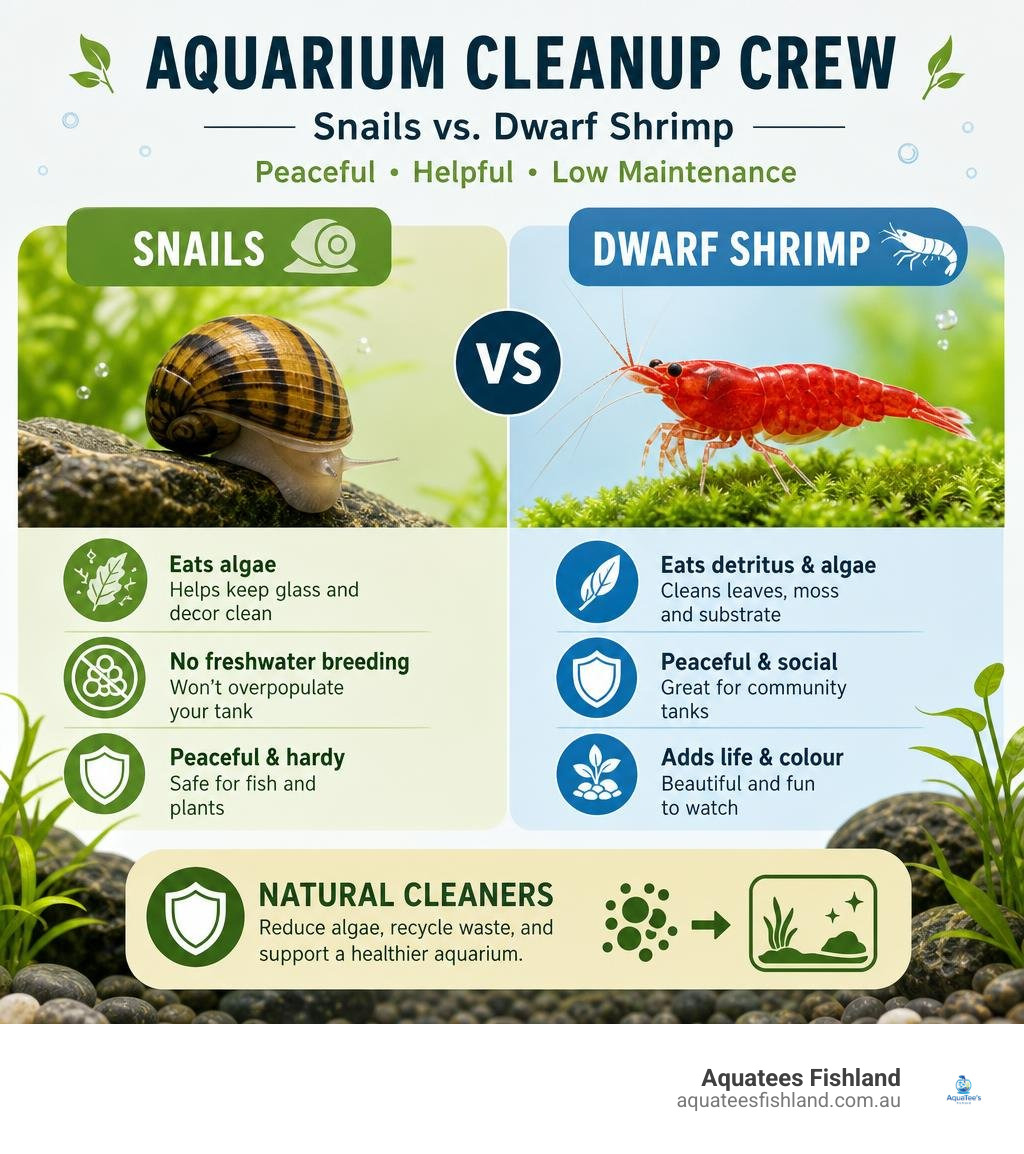
To help keep your glass and decor tidy between routine cleanings, consider introducing low-bioload scavengers:
- Nerite Snails: Excellent for consuming diatom film and soft green algae on glass without reproducing in freshwater.
- Amano Shrimp: Sturdy, active detritivores that graze across plant leaves and mosses.
- Cherry Shrimp: Small, colourful scavengers that help break down leftover flake fragments in well-established planted aquariums.
How big should a beginner aquarium be?
A beginner aquarium should usually be at least 10 gallons (roughly 38 litres), because larger water volume helps buffer ammonia spikes, pH swings, and temperature changes. Very small bowls and nano tanks can look simple, but they often require more careful monitoring because waste builds up quickly.
| Beginner Setup Question | Practical Answer | Why It Helps |
|---|---|---|
| Minimum beginner tank size | 10 gallons (38 L) for most small community fish | More stable water chemistry |
| Betta-only setup | 5 gallons (19 L) with gentle filtration and heating | Gives a single betta room and steady conditions |
| Schooling fish group size | Usually 5 to 6+ of the same species | Reduces stress and supports natural behaviour |
| Stocking approach | Start conservatively and add fish slowly | Prevents waste from overwhelming filtration |
What equipment do low maintenance pet fish need?
Low maintenance pet fish still need reliable filtration, safe treated water, suitable substrate, moderate lighting, and stable heating when they are tropical species. Rather than overcomplicating your display with complex plumbing, focus on core essentials that keep water conditions steady.
| Equipment | Beginner-Friendly Choice | Care Purpose |
|---|---|---|
| Filter | Sponge filter or internal bio-filter | Supports oxygenation and beneficial bacteria |
| Heater | Preset submersible heater for tropical fish | Keeps temperature around 24°C to 26°C |
| Water conditioner | Conditioner suited to chlorine and chloramine treatment | Makes tap water safer for fish and biofilters |
| Substrate | Soft sand or rounded gravel | Protects bottom-dwelling fish and anchors plants |
| Lighting | LED light on a 6 to 8 hour timer | Supports viewing and plant growth while limiting algae |
- Filtration: A durable air-driven sponge filter or an internal bio-filter provides vital surface agitation and mechanical trapping. More importantly, high-porosity foam functions as an effective biological filter sponge, which helps answer the next beginner question: where do beneficial bacteria live?
- Heating: For tropical species like bettas, tetras, and rasboras, a submersible preset heater maintains a steady temperature between 24°C and 26°C. Cool-water species like white cloud minnows and zebra danios can often manage without a heater if your room remains consistently warm.
- Water Preparation: Tap water can contain chlorine and chloramines that may damage delicate fish gills and disrupt beneficial biofilters. If you are asking how to make tap water safe, the Seachem Prime guide explains how conditioner supports safer water changes.
- Substrate & Natural Decor: Soft aquarium sand or rounded gravel protects sensitive barbels on corydoras and loaches. Adding smooth driftwood, terracotta caves, and hardy live plants like Java Fern and Anubias provides natural security and can help absorb excess nitrates. Inspect natural decor and follow manufacturer preparation guidelines rather than attempting risky boiling methods.
- Lighting: Standard LED aquarium fixtures set to run 6 to 8 hours daily provide adequate light for viewing and plant growth without encouraging heavy green algae blooms.
Beginner Freshwater Aquarium Care FAQs
Keeping an aquarium healthy does not require hours of daily labour. Understanding standard maintenance principles and using reliable aquarium care supplies can help you establish an effortless routine for low maintenance pet fish.
What is the nitrogen cycle and why is it important before adding fish?
The nitrogen cycle is the biological process where colonies of beneficial bacteria establish themselves in your filter media and substrate to neutralise harmful waste. When fish eat, they produce waste and excrete ammonia through their gills. Ammonia is toxic even in small concentrations.

Beneficial nitrifying bacteria gradually convert ammonia into nitrite, and another bacterial group converts nitrite into less harmful nitrate. If your next question is how to prepare a new tank before fish arrive, the cycling an aquarium guide explains the process step by step.
To help safely establish your biological filtration, bacterial treatments like FritzZyme 7 (available in 236 ml, 473 ml, 946 ml, and 3.7 L sizes) can introduce active nitrifying strains to jumpstart biological cycling.
How often do beginner fish need feeding and water maintenance?
Most beginner fish need feeding once daily or six days per week, and tanks generally require a partial water change of 20% to 30% every one to two weeks. In an aquarium, uneaten food rapidly decays into dissolved waste that strains filtration.
| Care Task | Beginner Frequency | Extractable Rule of Thumb |
|---|---|---|
| Feeding | Once daily or six days per week | Feed only what fish eat in 1 to 2 minutes |
| Partial water change | Every 1 to 2 weeks | Change about 20% to 30% of the water |
| Substrate cleaning | During water changes as needed | Siphon visible debris without over-cleaning the tank |
| Water testing | Weekly in new tanks, then as needed | Watch ammonia, nitrite, nitrate, and pH trends |
| Lighting | 6 to 8 hours daily | Use a timer to reduce algae swings |
Fish digest their meals over 16 to 24 hours, so offering only what they can consume within one to two minutes protects water clarity. If you are deciding portions or fasting days, the how often to feed fish guide connects feeding habits to tank bioload.
For routine upkeep, conducting a weekly or fortnightly partial water change of 20% to 30% helps keep nitrate levels comfortably below 20 ppm. Using a simple gravel siphon to vacuum heavy debris from the substrate while draining water removes accumulated detritus before it degrades water quality.
Can low maintenance pet fish live in a bowl or small tank?
Low maintenance pet fish should not be kept in traditional bowls because bowls lack adequate water volume, surface area for gas exchange, and space for filtration. In a tiny, unheated bowl, waste concentrations rise quickly and temperatures fluctuate with room drafts, causing biological stress.
Starting with an aquarium of at least 10 gallons provides a stable body of water that resists sudden environmental swings, making ongoing maintenance significantly easier for both you and your fish.
Low Maintenance Pet Fish Care Summary for Beginners
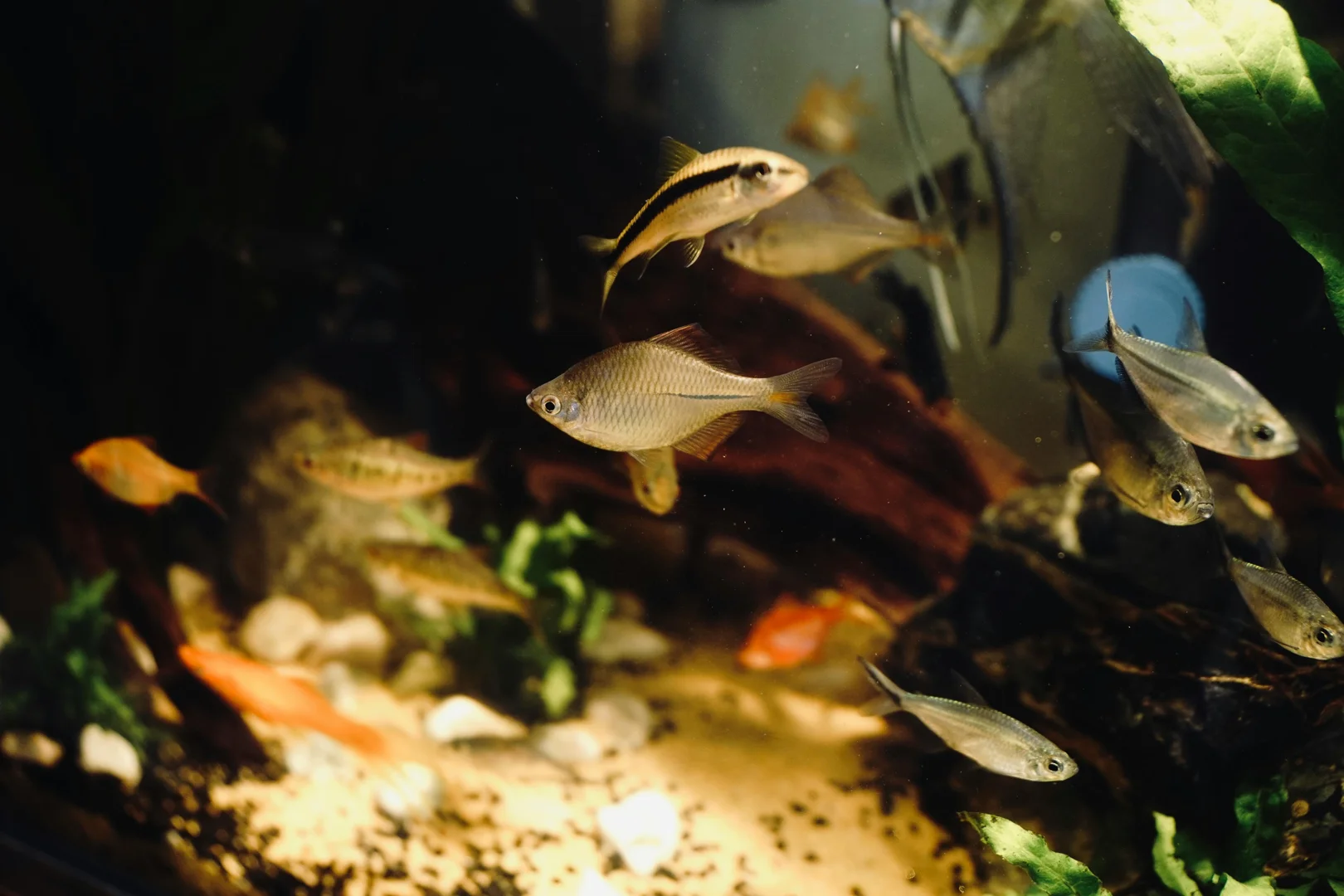
Low maintenance pet fish are easiest to care for when beginners choose hardy, compatible species and set up a stable aquarium before adding livestock. Bettas, neon tetras, zebra danios, white cloud mountain minnows, harlequin rasboras, corydoras, guppies, and platies can all suit beginner aquariums when their tank size, temperature, social behaviour, and water requirements are matched carefully.
A low-effort freshwater setup still depends on core care basics: adequate tank volume, conservative stocking, reliable filtration, safe water preparation, suitable substrate, moderate lighting, and a fully established nitrogen cycle. Regular partial water changes, sensible feeding portions, and routine checks for waste build-up help keep ammonia, nitrite, and nitrate under control without turning aquarium care into a daily chore.
Aquatees Fishland supports beginner and experienced aquarium owners with practical fishkeeping guidance, aquarium care supplies, filtration options, and water treatment products suited to home and office setups across Australia.
- Browse essential aquarium care supplies for routine water changes, cleaning, and maintenance.
- Compare water filter options to support stable biological filtration in your aquarium.