

Why Every Fish Tank Needs a Biological Filter to Survive
A biological filter for aquarium systems is the single most important piece of equipment keeping your fish alive. It is a living system of beneficial bacteria that breaks down toxic ammonia from fish waste into less harmful compounds, making the water safe to live in.
Without this system, ammonia builds up quickly and fish begin to suffer within days. Think of it as a tiny wastewater treatment plant operating inside your tank, working constantly to neutralise invisible toxins.
Here is a quick snapshot of what a biological filter does and why it matters:
- Converts ammonia (toxic fish waste) into nitrite, then into nitrate
- Houses billions of bacteria on porous media surfaces inside your filter
- Accounts for roughly 80% of effective aquarium filtration
- Takes 4 to 8 weeks to fully establish in a new tank
- Requires minimal maintenance once stable, but must never be disrupted carelessly
Most water quality problems in home aquariums trace back to one root cause: the biological filter is either not established, not working properly, or has been accidentally damaged during cleaning.
Understanding how it works is the fastest way to fix a struggling tank and keep it stable long-term. Over the past two years, our team has helped countless hobbyists troubleshoot their setups, from brand new tanks that never cycled properly to established tanks thrown off balance by a well-meaning but too-thorough clean.
This guide covers everything you need to know to get it right from the start.
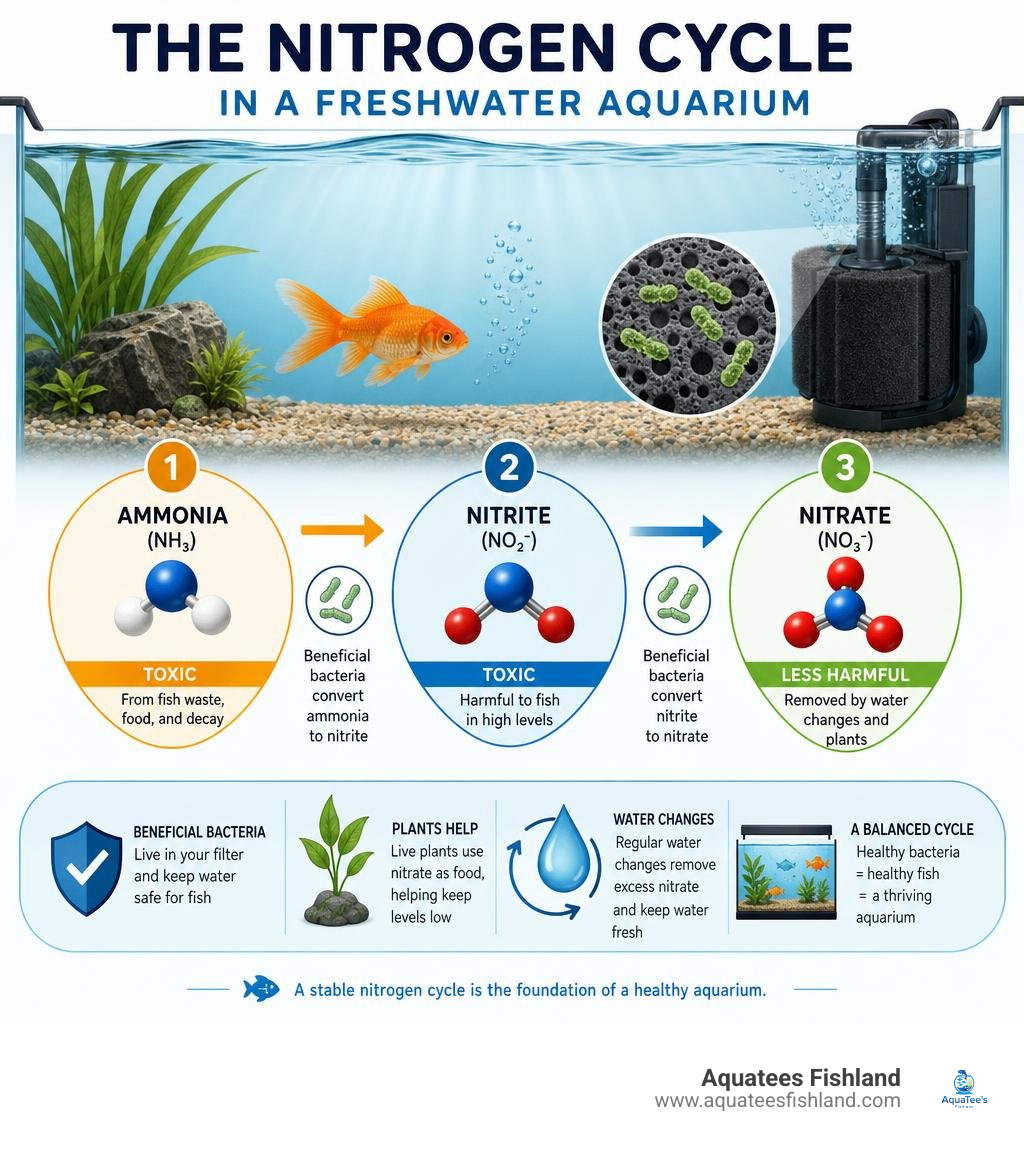
How a Biological Filter for Aquarium Systems Keeps Water Safe
An aquarium biofilter works by providing a physical home for living microorganisms that process dissolved chemical waste in the water. While mechanical filters trap solid debris, the biological filter chemically transforms invisible, highly toxic compounds into safer forms.
In any home aquarium, fish constantly release ammonia through their gills and waste. Uneaten fish food and decaying plant matter also break down into ammonia. Even at low levels, such as 0.1 ppm, free ammonia causes severe gill damage and prevents fish from absorbing oxygen.
As the biological filter matures, a community of autotrophic and heterotrophic bacteria colonises the filter media. Autotrophic nitrifying bacteria oxidise the ammonia into nitrite, which is also highly toxic to fish at levels as low as 1.0 ppm. From there, another group of beneficial bacteria converts the nitrite into nitrate.
Nitrate is much less harmful and is generally tolerated by freshwater fish up to 50 ppm, though it must eventually be exported via regular water changes. Biological filtration is easily 80% of the game when it comes to maintaining a healthy aquarium. Without these invisible microbial helpers, no amount of physical water polishing can keep the environment habitable.
The Nitrogen Cycle: How Beneficial Bacteria Convert Toxins
The nitrogen cycle in an aquarium is the natural process where biological waste is converted from toxic ammonia to nitrite, and finally to relatively safe nitrate. This cycle relies entirely on specific groups of nitrifying bacteria establishing themselves on your filter media.
During the initial phase of setting up a new tank, you must go through the process of how to cycle aquarium environments to safely build up these bacterial colonies. Initially, ammonia-oxidising microbes like Nitrosomonas convert ammonia into nitrite.
Following this, nitrite-oxidising bacteria, historically identified as Nitrobacter and Nitrospira, convert the toxic nitrite into nitrate. This sequence represents the classic understanding of biological filtration in aquatic systems.
When these colonies are fully established, they act as a continuous chemical processing plant. The filter is not just hardware; it is a living biological system that needs steady water flow, oxygen, and stable conditions to keep processing waste safely.
Comammox Nitrospira and the Microbial Community in a Biological Filter for Aquarium Tanks
Recent scientific research has expanded our understanding of the exact microbes driving the nitrogen cycle, revealing that a single organism can sometimes handle the entire conversion process. Specifically, comammox (completely ammonia-oxidising) Nitrospira are microbes capable of converting ammonia directly into nitrate within a single cell.
A landmark study on biofilters showed that comammox Nitrospira genes were detected in all 38 freshwater aquarium biofilter samples analysed and were the most abundant ammonia oxidisers in 30 of those samples.
In contrast, saltwater systems show a different microbial profile. No comammox Nitrospira were detected in any marine biofilters, which are instead dominated by ammonia-oxidising archaea (AOA) or ammonia-oxidising bacteria (AOB).
This means the biological community in a freshwater tank behaves differently at a microscopic level compared to a reef setup, influencing how each system responds to bio-load changes.
Comparing Bio Media: From Ceramic Rings to a Biological Filter Sponge
Choosing the right media for your biological filter for aquarium systems depends on maximising the usable surface area for bacterial colonisation while maintaining excellent water flow. Aquatees Fishland stocks several biological media options, so the best choice depends on your tank size, filter type, and maintenance routine.
A classic choice is the biological filter sponge, which provides a brilliant dual-purpose option for smaller setups by offering mechanical trapping alongside a porous surface for bacterial biofilms. For canister and internal filters, Aquatees Fishland also offers options such as Seachem Matrix, Aquatees Matrix [Repack], Aquatees Ceramic Glass Rings, Sera Siporax, Dymax Bio Max, AQQA Fluidized Moving Bed Bio Filter Media, Aquatees K3 Bio Filter Media, and Aquatees bio balls.
Ceramic rings, sintered glass media, porous matrix-style media, moving bed media, and sponge filters all support beneficial bacteria in different ways. Rather than chasing a single “best” media, match the product to the filter design: sponges are excellent for air-driven and pre-filter use, ceramic rings and sintered glass suit submerged filter chambers, moving bed media works best with strong aeration, and bio balls are useful where high oxygen exposure is available.
| Media Type Available at Aquatees Fishland | Good Fit | Why It Helps |
|---|---|---|
| Air Driven Bio-Sponge Filter for Aquarium | Fry tanks, shrimp tanks, quarantine tanks, and small aquariums | Combines gentle mechanical filtration with biological surface area |
| Seachem Matrix / Aquatees Matrix [Repack] | Canister filters, internal filters, and media baskets | Porous media for high biological capacity in compact spaces |
| Aquatees Ceramic Glass Rings / Sera Siporax | Standard submerged filter chambers | Ring-shaped media supports water flow and bacterial colonisation |
| AQQA Fluidized Moving Bed Bio Filter Media / Aquatees K3 Bio Filter Media | Moving bed and heavily aerated setups | Constant motion helps keep media exposed to oxygen and water flow |
| Aquatees Bio Balls / Aquatees Ceramic Bio Balls | Wet-dry, sump, and high-flow biological compartments | Durable media suited to oxygen-rich filtration zones |
Why Mechanical Filtration is Essential to Support Your Biological Filter for Aquarium
Mechanical filtration and biological filtration must work together because physical debris will quickly smother and clog the delicate pores of your biological media if left unchecked. When biological media becomes covered in fish waste and uneaten food, water flow drops, oxygen levels deplete, and the beneficial bacteria starve.
Furthermore, heterotrophic bacteria, which break down dissolved organic compounds into simpler elements, multiply incredibly fast (doubling in as little as 15 minutes). The surface area required for heterotrophic biofiltration to deliver crystal-clear water and optimum fish health is twenty times the biofiltration surface area that autotrophic ammonia-oxidising bacteria require.
If your mechanical filtration fails to trap solid waste, heterotrophic bacteria will overrun the biological media, causing bacterial blooms and oxygen depletion.
When browsing fish tank filters, look for designs that position mechanical sponges or wool pads before the biological media in the water flow path. Advanced setups might even explore a suspended biofilm approach, such as those detailed in the study on an inbuilt moving bed biofilm reactor, which uses constant aeration and movement to shed excess organic buildup automatically.
Freshwater vs Saltwater: Tailoring Your Bacteria Hotel
The physical and chemical environment of your aquarium dictates how your biological filter behaves and what parameters you must monitor to keep the bacteria healthy. Nitrification is highly sensitive to pH, carbonate hardness, and salinity.
In freshwater systems, nitrifying bacteria consume carbonate hardness (alkalinity) as they process ammonia. The normal recommended hardness for a community tank is approximately 150 ppm to prevent pH crashes, as nitrification virtually stops if the pH drops below 6.0. For detailed guidance on managing these parameters, refer to our freshwater tank filter guide.
In marine environments, maintaining stable biological filtration is more complex because saltwater holds less dissolved oxygen, and salinity fluctuations can stress the bacterial community. Australian marine keepers must pay close attention to evaporation and heat, as rapid water loss concentrates salt levels and stresses the biological filter.
Coral setups are particularly sensitive, as nitrates in coral tanks need to be kept very low, otherwise coral colours will be affected and growth diminished. To learn more about setting up these advanced marine systems, check out our reef tank filter guide.
Frequently Asked Questions
How long does it take for biological filtration to establish?
It typically takes 4 to 8 weeks for a biological filter to fully mature in a new aquarium. This process can be accelerated to just a few days by using nitrifying bacteria starters and maintaining optimal water temperatures between 25°C and 30°C.
What is the difference between ceramic rings and plastic bio balls?
Ceramic rings are highly porous and provide a massive internal and external surface area, making them ideal for submerged use in canister or internal filters. Plastic bio balls have a lower surface area but excel in high-oxygen, wet-dry trickle filters where they are less prone to clogging.
How often should I clean my aquarium's bio media?
You should gently rinse your biological media every 1 to 3 months, depending on your tank's stocking level and the efficiency of your mechanical pre-filter. Only rinse the media when physical debris begins to restrict water flow, and always use aquarium water to protect the bacteria.
How do I clean my biological filter without killing the bacteria?
You must rinse the media gently in a bucket of water siphoned directly from your aquarium during a water change. Never use chlorinated tap water, extreme temperatures, or harsh chemicals, as these will instantly destroy the delicate living biofilm.
To support your system, explore our curated collections at Aquatees Fishland, including water filters to house your bacteria, accurate water tests and treatments to monitor your parameters, and general aquarium care essentials to keep your aquatic environment thriving.
Key Takeaways for a Healthy Biological Filter for Aquarium Systems
Establishing a robust biological filter is the foundation of successful fishkeeping. By selecting high-surface-area media, protecting your bacterial colonies during routine maintenance, and ensuring your mechanical filtration prevents clogging, you can maintain clear water and a stable, healthy environment for your aquatic livestock.
Remember that the biological filter is a living ecosystem that requires oxygen, water flow, and a steady supply of nutrients to survive. Avoid sudden changes to the filter environment, and always monitor your water parameters regularly to ensure the nitrogen cycle is functioning correctly.
For those looking to support their biological filtration systems, we offer a range of equipment and maintenance supplies:
- Browse our Aquatees Water Filters to house your beneficial bacteria
- Monitor your nitrogen cycle with our Water Tests & Treatments
- Keep your system running smoothly with our essential Aquarium Care Products