

Why Is Your Pet Fish Not Eating?
When a pet fish suddenly stops eating, the most common reasons generally include poor water quality, sudden temperature fluctuations, stress from new environments, and underlying bacterial or parasitic infections. It is a critical warning sign that should never be ignored. In fact, over 90% of aquarium fish health issues are directly linked to poor water quality, making environmental stress the leading cause of appetite loss and mortality in pet fish.
When water parameters drift outside of a species' safe range, the fish's body must work much harder simply to maintain internal balance. This constant physiological strain suppresses their digestive system and eliminates their desire to feed. To help you identify what is happening in your aquarium, you can refer to this comprehensive guide on fish not eating and its common causes. Understanding whether your fish is reacting to temporary environmental stress or a developing illness is the first step toward restoring its appetite.
Is It Stress or Is It Illness?
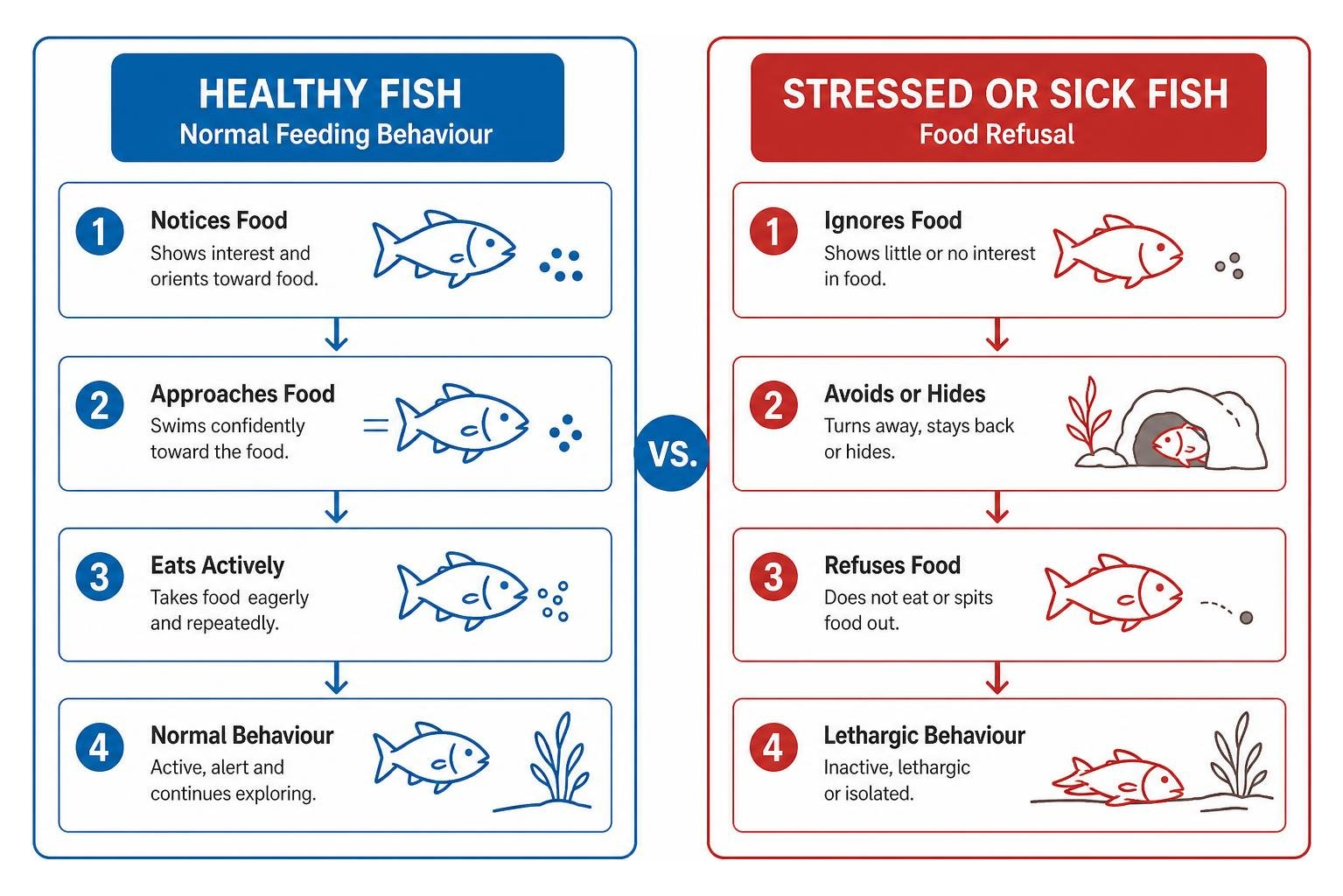
Differentiating between environmental stress and clinical illness requires close observation of your fish's physical appearance and daily behaviours. Stress is typically the primary trigger if the appetite loss occurs immediately after a significant event, such as a water change, tank clean, or the introduction of new tank mates. Stressed fish will often hide, hover near the filter output, or show a temporary lack of interest in food while otherwise swimming normally.
You can read more about these subtle behavioural shifts in our guide on the common signs of fish stress. For example, newly introduced fish commonly refuse food for 1 to 3 days due to transport stress and acclimation. Their appetite typically returns naturally once they adjust and water parameters stabilize.
On the other hand, physical illness is likely the cause if the refusal to eat is accompanied by distinct clinical symptoms. Watch closely for warning signs such as:
- Rapid, heavy breathing or gasping at the water surface.
- Clamped fins held tight against the body.
- Visible white spots, velvety dusting, or peeling slime coats.
- Severe abdominal bloating or pineconing scales.
- Erratic swimming, flashing (rubbing against decorations), or floating sideways.
How Long Can a Healthy Fish Safely Go Without Eating?
A healthy adult aquarium fish can generally go 3 to 5 days without eating before it becomes a major health concern. Many species can survive even longer because they are ectothermic, meaning they do not expend energy to generate body heat. However, while they can survive brief periods of fasting, prolonged food refusal beyond 5 to 7 days is a serious issue.
When a fish goes without food for too long, its body rapidly depletes its glycogen and fat reserves, eventually breaking down muscle tissue. This nutritional depletion severely weakens the immune system, leaving the fish highly vulnerable to opportunistic pathogens. To recognize the early warning signs of nutritional decline before physical wasting occurs, you can read about how to identify underfeeding signs in aquarium fish.
How Do Water Quality and Temperature Affect Appetite?
Water chemistry and temperature have an immediate, powerful impact on a fish's metabolism and appetite. When organic waste breaks down, it can cause toxic spikes in ammonia and nitrite. Even at very low levels, ammonia burns a fish's sensitive gills, severely restricting its ability to absorb oxygen and causing immediate appetite loss. If you suspect your water chemistry is out of balance, read our practical advice on how to handle high ammonia in your tank.
Because fish are ectotherms, their internal body temperature is determined entirely by the surrounding water. If the water is too cold, their metabolic rate and digestive enzymes slow down dramatically. For example, Betta fish kept below 25.5°C (78°F) show significantly reduced appetite and digestion, often refusing food entirely because their bodies cannot process it.
Similarly, in goldfish, cold water below 10°C (50°F) induces a state of torpor, causing a sharp drop in metabolism where they naturally stop eating. You can explore more about how temperature and environment affect these cold-water species in this expert review on why your goldfish is not eating.
What Immediate Steps Should You Take to Restore Your Fish's Appetite?

If your pet fish refuses to eat, you should immediately test your water parameters, perform a partial water change with conditioned water, verify that your heater is functioning correctly, and temporarily withhold food to prevent waste buildup. Adding uneaten food to a tank with an already stressed fish will only decay, causing toxic ammonia spikes and further lowering water quality.
When performing a partial water change, aim to replace 20% to 30% of the tank water. It is vital to use a high-quality water conditioner to neutralize harmful chlorine, chloramines, and heavy metals present in tap water. Using a premium treatment like Aquavitro Alpha for Reef and Freshwater is highly recommended, as it safely detoxifies ammonia and nitrites while protecting the delicate biological filter that keeps your aquarium stable.
How to Correct Water Parameters and Temperature Safely
To identify the exact cause of appetite loss, you must test your water chemistry using accurate liquid test kits rather than unreliable paper test strips. Regularly measuring ammonia and nitrite levels is essential, as these should always read 0 ppm. We recommend using a reliable testing option like the Sera Ammonium/Ammonia Test Kit to get precise, easy-to-read measurements of your water quality.
If you discover that your water temperature has drifted too low, adjust your aquarium heater gradually over 24 to 48 hours. Raising the temperature too quickly can cause severe temperature shock, which will stress the fish further and worsen its lack of appetite. A stable, species-appropriate temperature is critical for supporting the digestive enzymes and immune function your fish needs to stay healthy.
How to Address Feeding Issues, Stale Food, and Diet Variety
Sometimes, the issue is not the fish's health, but the food itself. Dry fish foods, such as flakes and pellets, lose their nutritional value, essential vitamins, and appealing scent within 6 months of opening. If you are offering stale food, your fish may ignore it or spit it out. To learn more about proper feeding schedules and portion sizes, read our guide on how often to feed fish for optimal health.
Overfeeding is another common issue that leads to constipation, bloating, and rapid water spoilage. If your fish is constipated, fasting them for 24 to 48 hours can help clear their digestive tract. When you resume feeding, offering high-quality, highly digestible options can stimulate a strong feeding response.
To entice picky or recovering eaters, try offering premium nutrition options such as Aquatees Staple Deluxe Fish Food Granules or specialized, highly palatable Hikari Algae Wafers for bottom dwellers.
How Tank Mates and Overcrowding Impact Feeding Behavior
The social dynamic inside your aquarium plays a major role in whether your fish feel safe enough to eat. Territorial aggression, bullying, and constant chasing by dominant tank mates can cause severe chronic stress, forcing passive fish to hide and refuse food. In crowded environments, highly active species often consume all the food before slower, more timid fish can reach it.
You can find more information on managing these community dynamics in our article on managing the dangers of an overcrowded fish tank. To resolve these issues, try adding more hiding places using rocks and plants, using a temporary breeding box to feed timid fish safely, or relocating bullied fish to a separate, peaceful tank setup.
How Can You Prevent Appetite Loss and Maintain Long-Term Tank Health?
Preventing appetite loss over the long term requires a consistent maintenance routine, regular water testing, appropriate stocking levels, and a varied, high-quality diet. Keeping your aquarium clean and stable prevents the environmental stress that triggers appetite loss in the first place.
Establishing a regular filter cleaning schedule is a key part of this routine. When maintaining your filter, always rinse the sponges in removed tank water rather than tap water to avoid killing the beneficial nitrifying bacteria. For species-specific tips on keeping delicate fish healthy, read our comprehensive guide to proper betta fish tank maintenance. Using biological stabilizers during water changes can also help keep your nitrogen cycle robust and prevent sudden water chemistry swings.
When Should You Seek Veterinary Help for a Non-Eating Fish?
While many cases of appetite loss can be resolved by correcting water quality or temperature, some situations require professional help. You should seek veterinary advice or isolate your fish in a dedicated quarantine tank if you notice severe clinical symptoms such as:
- "Pineconing" scales, where the scales stick out from a severely bloated body (often indicating dropsy).
- Persistent, deep red sores, ulcers, or rapidly eroding fins.
- Complete food refusal lasting longer than 7 days despite perfect water parameters.
- Multiple fish in the same tank showing rapid decline or dying simultaneously.
In these cases, a targeted treatment plan is necessary. For a deeper look into diagnosing complex symptoms, refer to this expert troubleshooting guide on fish not eating.
Frequently Asked Questions About Fish Appetite Loss
Why is my fish spitting out its food?
Fish often spit out food if the pellets or flakes are too large, too hard, or have lost their flavour due to stale age. It can also be an early sign of gill flukes or internal parasites, which make swallowing uncomfortable. Try soaking pellets in tank water to soften them, or switch to a fresh, high-quality food.
Why did my fish stop eating after a water change?
If your fish stops eating immediately after a water change, they are likely experiencing temperature shock or stress from a rapid shift in pH. Always ensure the new water closely matches the temperature and parameters of your tank, and always use a quality water conditioner to neutralize chlorine.
Can a dirty filter cause my fish to lose its appetite?
Yes, a dirty or clogged filter can cause organic waste to build up, leading to sudden spikes in ammonia and nitrite. This poor water quality severely stresses your fish, leading to a loss of appetite. To understand how water clarity and filtration link to fish health, read our guide on why aquarium water becomes cloudy and how to fix it.
Choosing the Right Supplies for a Healthy Aquarium
At Aquatees Fishland, we are proud to be Australia's specialist warehouse for high-quality aquarium supplies. We believe that preventing health and appetite issues starts with choosing the right filtration, heating, and water care products. By maintaining a stable, clean, and well-heated environment, you can ensure your aquatic pets remain active, colourful, and eager to feed.
To help you make the best decisions for your aquarium, we invite you to explore our carefully selected collections: